
Reviewed · WATERFALL TOURS
Bali: Hidden Canyon, Waterfall & Temples Small Group Tour
The most memorable part of this Bali day is the Beji Guwang Hidden Canyon, where you leave the road behind and move through water, over smooth rock, and between narrow canyon walls. This is not a stroll with a few photo stops. You may swim, climb, jump, and use your hands to find your way forward.
I like the way the tour pairs that active morning with two very different cultural sites. I also like the small maximum of five people, which gives your guide room to help with photos, explain local customs, and adjust the pace. The main catch is simple: the canyon is physically demanding, and the standard price does not include lunch or several entrance fees.
In This Review
- Key points at a glance
- Why this Bali day works so well
- Beji Guwang Hidden Canyon: the day’s main event
- Tegenungan Waterfall and its long staircase
- Lunch in a local restaurant
- Goa Gajah, the Elephant Cave
- Gunung Kawi and the rice terraces
- The guide makes the difference
- Transport, timing, and pickup areas
- What the $73 price really buys
- Who should book this day?
- Should you book the Hidden Canyon and temples tour?
- FAQ
- How long does the tour last?
- Is hotel pickup included?
- How many people are in the group?
- Is lunch included?
- Are entrance tickets included?
- How much are the stated entrance fees?
- Do I need to swim during the canyon visit?
- What should I wear?
- Who should not take this tour?
Key points at a glance
- Swim and climb through Beji Guwang: Expect slippery rocks, uneven footing, and sections where confident swimming matters.
- More than a waterfall photo stop: Tegenungan takes over 100 steps to reach up close, and heavy rain can make swimming unsuitable.
- Two distinct temple visits: Goa Gajah brings carvings and giant tree roots, while Gunung Kawi opens onto rice terraces and stone shrines.
- Smallest of small groups: With five participants maximum, your guide can offer more personal help than a large coach tour.
- Bring proper water shoes: They protect your feet from sharp stones and give you better grip in the canyon.
- Plan for extra cash: The canyon and temple fees add to the advertised $73 price, and lunch is separate.
Why this Bali day works so well
Bali is easy to experience as a string of viewpoints and cafés. This trip asks you to do more. You get wet, walk through a living piece of nature, climb temple steps, and spend time hearing about Balinese Hindu culture from a local guide.
The balance is the real strength. The canyon supplies the effort and excitement. Tegenungan supplies the classic Bali scenery. Goa Gajah and Gunung Kawi slow the day down and give the island’s architecture and beliefs a place in the story.
At $73 per person, the tour offers hotel transport, an air-conditioned vehicle, a guide, and a full day of sightseeing. That is useful in Bali, where road journeys can take time and arranging four separate stops yourself can be awkward. Still, the advertised rate needs careful reading. On the standard option, lunch and entrance tickets are not included, so budget extra money for the canyon, waterfall, and temples.
The small group limit of five is especially valuable here. At the canyon, you need direct instructions about where to step and when the current is stronger. At the temples, you have a better chance to ask questions instead of being left at the gate with a meeting time.
More waterfall trips around Bali:
- Ubud: Waterfall, Rice Terraces & Monkey Forest Tour
★ 4.9 · 4,269 reviews - Ubud: Spectacular Waterfalls Tour
★ 4.9 · 1,066 reviews - Ubud: Rice Terrace, Waterfall, & Elephant Cave
★ 4.9 · 862 reviews
Beji Guwang Hidden Canyon: the day’s main event
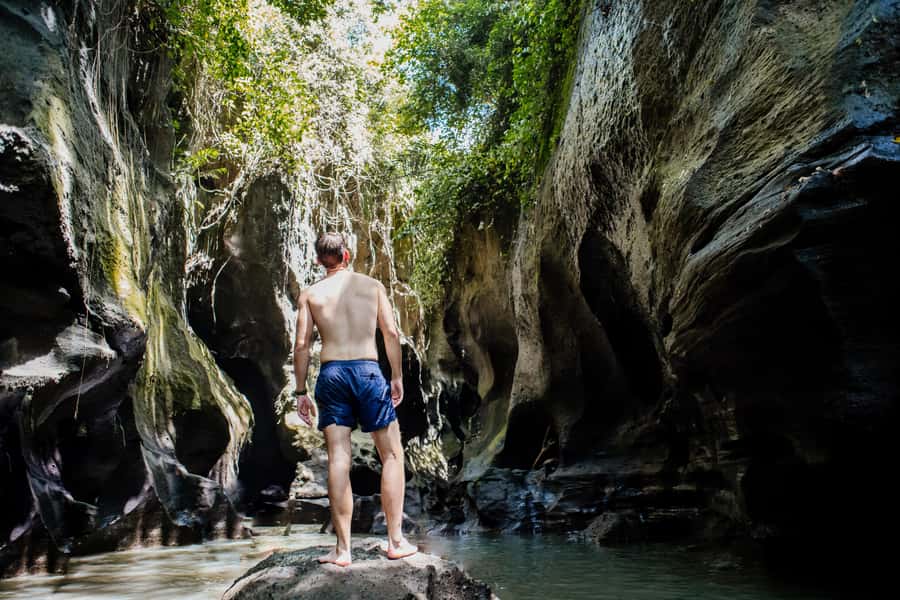
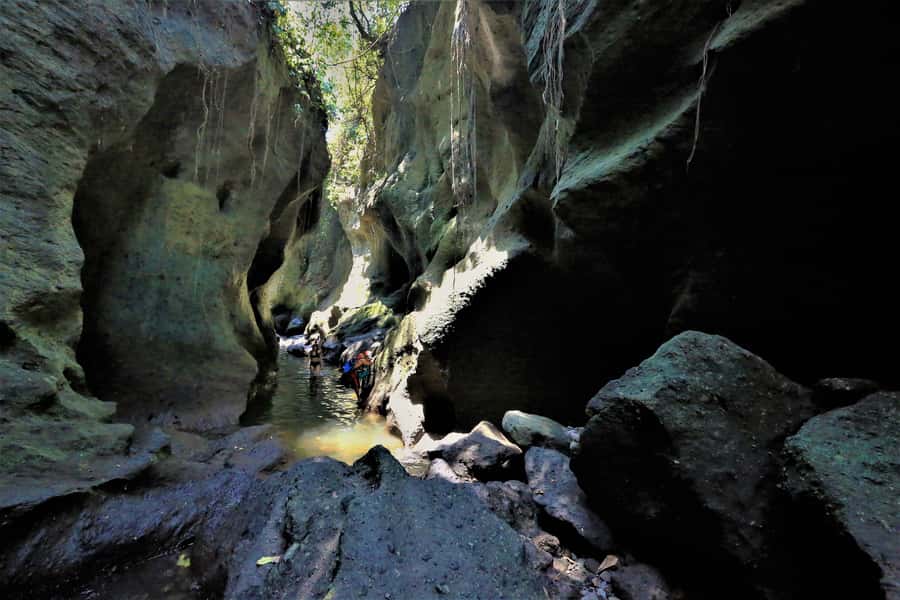
The canyon is the reason I would choose this trip over a standard Ubud sightseeing loop. You change into swimwear, leave bulky belongings in locker storage when included, and begin a route that uses the river itself as part of the path.
Expect to go barefoot or wear water shoes while moving through the gorge. The route can involve swimming, wading, scrambling over rocks, and climbing through tight sections. Some stretches are calm and refreshing. Others can feel more serious, particularly after rain or when the current is strong.
Your canyon guide is separate from the main driver in some arrangements. People such as Wayan and Putu have helped with footing, warned about rocks, and taken photographs during the route. That practical support matters more than a long speech about geology. A good canyon guide points out safe places to step, stays close when the water becomes difficult, and helps you keep your balance.
I would not book this section casually if you are uncomfortable in water. One solo participant enjoyed it but noted that the current was strong and that climbing was involved. Another described the canyon as more intense than expected. These are useful warnings, not reasons to skip it if you are fit and confident.
Water shoes are the best packing choice. Several people found the rocks sharp, slippery, or hard on bare feet. Choose shoes that stay attached and have a proper sole. Regular hiking shoes are not suited to the water, and flip-flops are a poor idea.
Wear shorts and a T-shirt rather than heavy clothing. Bring a dry change of clothes, sunscreen, insect repellent, and a waterproof way to protect valuables if you carry them. Towels, lockers, welcome drinks, and the canyon fee depend on the option selected, so check your booking details instead of assuming everything is included.
The canyon portion lasts about two and a half hours in the planned schedule. That gives you time to move carefully rather than sprint from one landmark to the next. It also explains why this is not a suitable activity for pregnant women, people with mobility limitations, or anyone with heart or respiratory problems. The minimum age is seven, but younger children still need to be comfortable in moving water and on uneven rock.
Tegenungan Waterfall and its long staircase
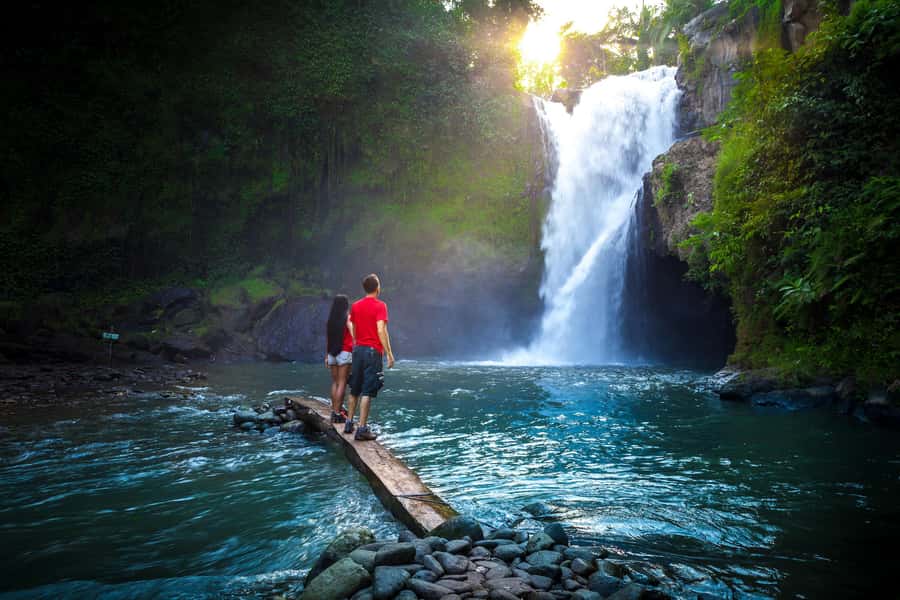
After the canyon, the tour continues to Tegenungan Waterfall, a popular stop near Ubud. The waterfall is reached by walking down more than 100 steps, so save a little energy for the return climb.
At the bottom, you get a closer view of the falling water and the surrounding vegetation. It is a strong photo stop, but do not expect solitude. Tegenungan is one of Bali’s best-known waterfall sites and can be crowded, especially at busy times.
Water conditions also change. Heavy rain can make the water cloudy or unsafe for swimming. One itinerary had to treat the waterfall as a viewing stop after bad weather, even though the site itself remained attractive. That is worth remembering if you are booking mainly for a swim.
The entrance fee is listed as IDR 20,000. It is modest, but it is still separate on the standard option. Wear comfortable shoes for the stairs and carry sun protection. The waterfall visit is scheduled for around 90 minutes, enough for the walk, photos, and a look around without turning the stop into a full afternoon.
Lunch in a local restaurant
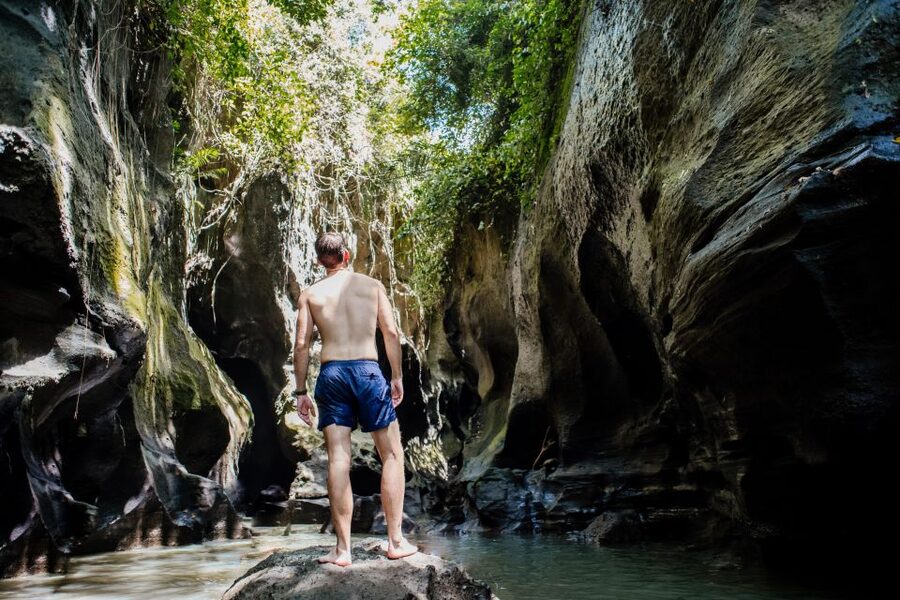
The day includes a break at a local restaurant, scheduled for about 90 minutes. Meals are not included, so bring cash and expect to pay for your own food.
This arrangement gives you more freedom than a fixed meal package. You can order what suits you, take a proper rest after the canyon, and use the time to change or dry off if needed. It also means you should not treat the $73 price as the final cost of the day.
One person specifically enjoyed a nasi goreng lunch, but the available information does not promise a set menu. Ask your guide what choices are available on the day and keep some Indonesian rupiah ready.
More temple visits around Bali:
- Bali Sunset: Uluwatu Temple, Kecak Dance and Jimbaran Bay
★ 4.7 · 2,397 reviews - Bali: Besakih Temple & Lempuyang Temple Gates of Heaven Tour
★ 4.8 · 2,323 reviews - North Bali: Sunrise Tour with Dolphins, Waterfalls & Temples
★ 4.6 · 831 reviews - Bali: Tanah Lot Temple Half Day Sunset Tour
★ 4.4 · 525 reviews
Goa Gajah, the Elephant Cave
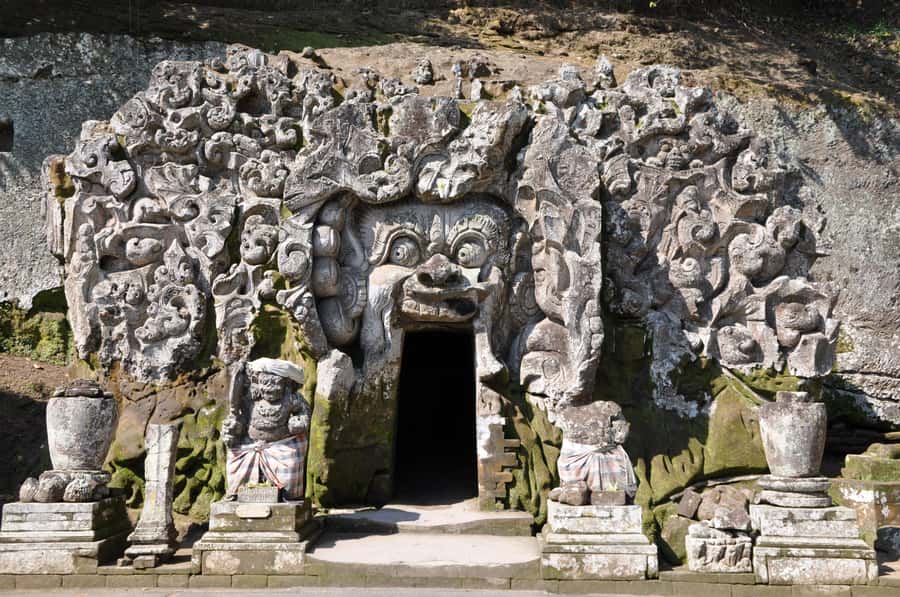
Goa Gajah is often called the Elephant Temple, although its name and symbolism are more complicated than that nickname suggests. The approach leads you toward an elaborately carved entrance, with stone details and large tree roots giving the place an old, almost theatrical appearance.
The site feels very different from the canyon. You are no longer testing your footing in water. Instead, you are looking closely at carvings, sacred spaces, and the way nature has grown around the monument. The broad roots and shaded stone create memorable photographs, but the main value is the chance to connect Bali’s present-day religious life with its older monuments.
Your guide can explain the meaning of the carvings and local temple customs. Several guides, including Komang and Dewa, have been praised for explaining Hindu beliefs, family life, and Balinese traditions in clear, friendly conversation. That personal context helps you see the temple as more than a dramatic doorway.
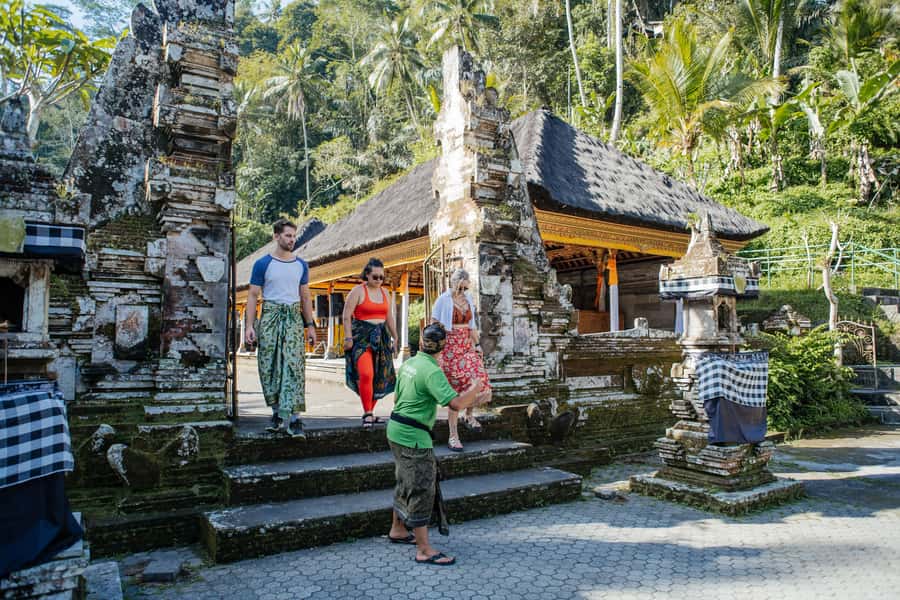
The entrance fee is listed as IDR 50,000. Dress respectfully. A sarong is important at Balinese temples, and the tour information recommends bringing one. A temple visit can also mean uneven paths and steps, so keep your comfortable shoes on. If rain arrives, an umbrella may be useful.
Gunung Kawi and the rice terraces
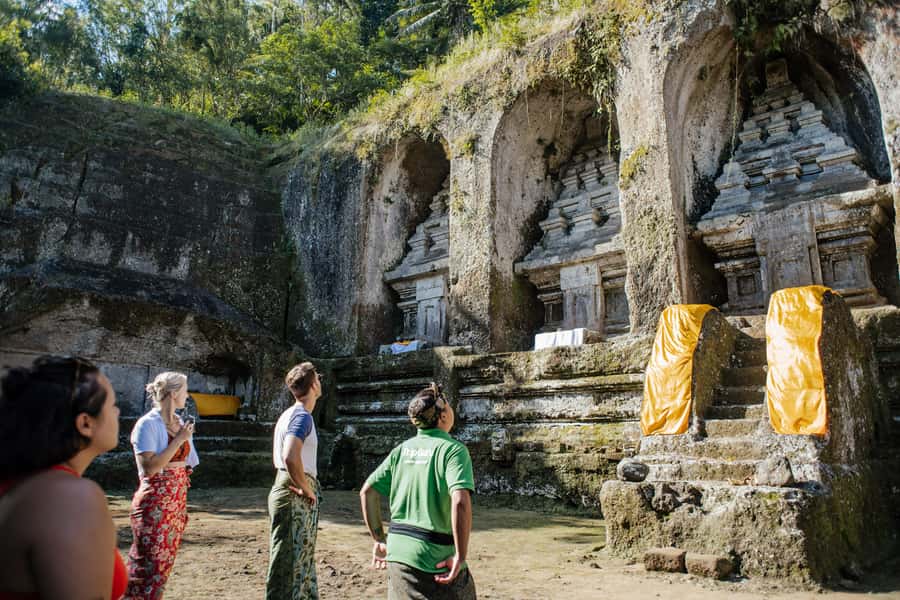
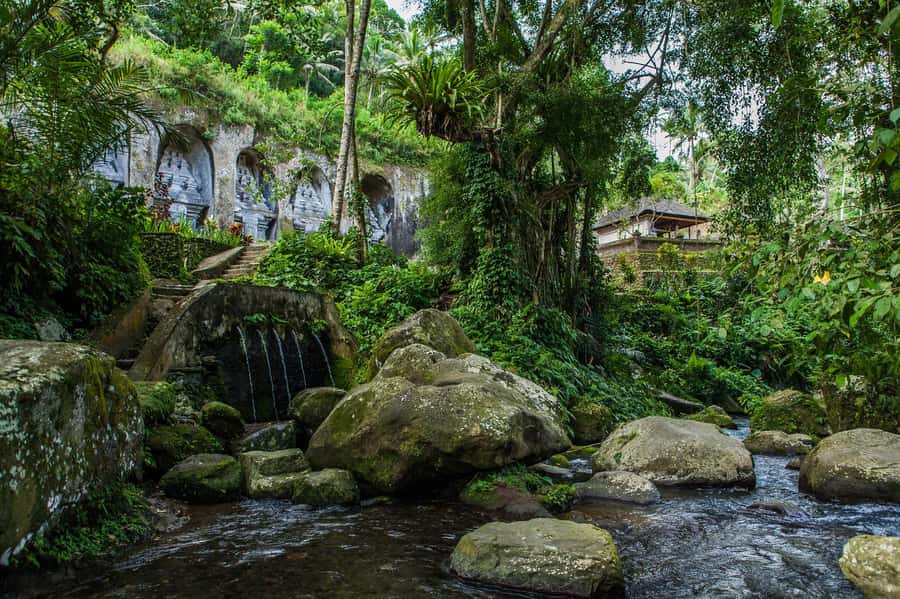
Gunung Kawi is the quieter and more atmospheric temple stop of the two. Reaching it means passing through Bali’s famous terraced rice fields, then walking down and back up a substantial set of steps.
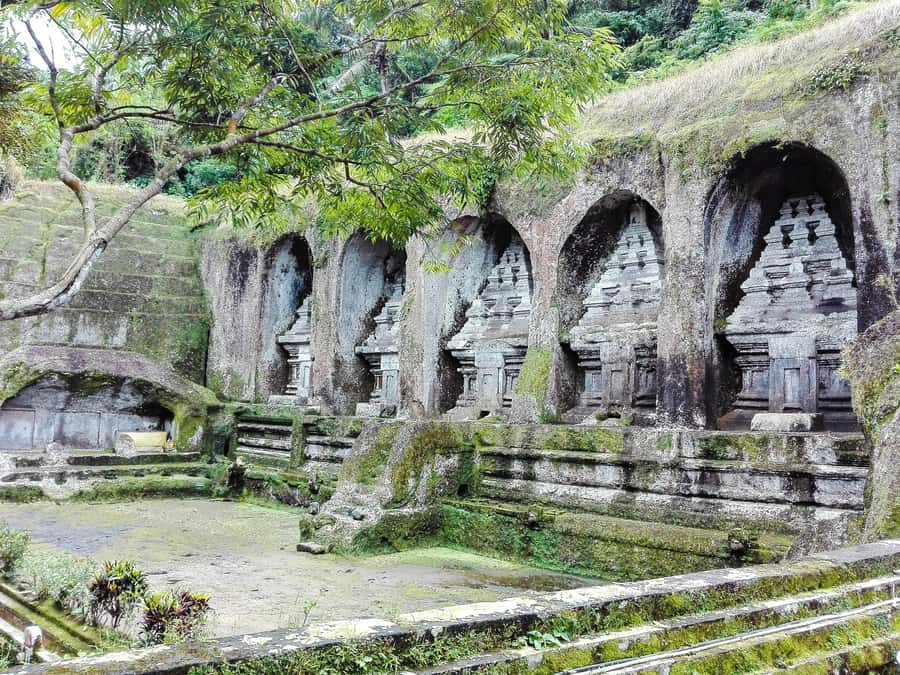
The monument is known as one of Bali’s oldest, and its stone shrines are cut into the cliff face. The setting is as important as the carvings. The walk gives you a close look at the rice-growing countryside, while the temple itself offers a calmer place to think about the island’s old royal and religious traditions.
Be ready for the return climb. This is not a quick roadside attraction, and your legs may already be tired from the canyon and Tegenungan. The reward is a site that feels more spacious and reflective than the waterfall.
The entrance fee is listed as IDR 50,000. As at Goa Gajah, you should wear a sarong or use one supplied according to local practice. Guides such as Alit, Putu, and Komang have been singled out for explaining the sites rather than simply pointing out where to take photographs.
The guide makes the difference
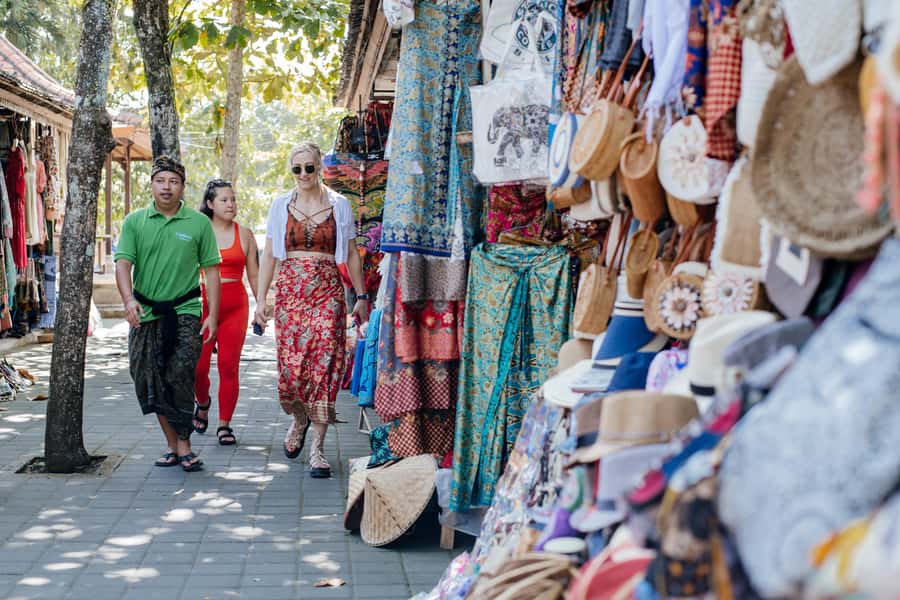
The driver often serves as your guide between stops. That can make the long road sections far more useful. Instead of sitting in silence, you can ask about Bali’s culture, religion, food, villages, and places to visit elsewhere in Indonesia.
Names associated with especially warm and helpful guiding include Komang, Dewa, Anom, Alit, Putu, Depik, Suma, and Agus. You should not expect the same person on every departure, but the pattern is clear: the guide role is central to the experience.
The best guides do three jobs at once. They keep the transport moving, explain what you are seeing, and watch your comfort. Komang, for example, has been noted for keeping people informed about the schedule, allowing time for photographs, and answering questions in good English. Dewa has helped solo participants feel at ease, while Depik has been praised for adding useful cultural details throughout the day.
Photo help is another small but useful benefit. At the canyon, guides can take pictures while you are in the water, where managing a phone yourself is difficult. Do not hand over an unprotected camera unless you have a safe plan for water and grip.
French, English, and German guiding is available according to the activity details. Confirm the language you need when booking.
Transport, timing, and pickup areas
The advertised duration is 510 minutes, or eight and a half hours. The day includes roughly 90 minutes of driving at each end in the planned schedule, though Bali traffic can affect the real timing.
Hotel pickup and drop-off are offered in areas including Kuta, Legian, Seminyak, Jimbaran, Sanur, Kerobokan, Canggu, Nusa Dua, and Ubud. There are many listed pickup points, but the exact time depends on everyone’s locations. Your driver is expected to contact you the evening before with the confirmed time.
That shared routing is the tradeoff for door-to-door transport. You may spend extra time collecting people from different parts of Bali, but you avoid arranging a private vehicle and navigating the stops yourself. Air conditioning is welcome after the canyon and on the return journey.
Pack light. Oversize luggage is not allowed, and you will want room for wet clothing, a towel, and a change of clothes. Sunglasses, a hat, water, cash, and a camera are sensible additions. Keep valuables to a minimum during the canyon.
What the $73 price really buys
The headline price is fair for a full day with transport, hotel pickup, a guide, and four major stops. The small group size improves the value because the guide can offer more direct attention, especially during the canyon.
The standard option does not include meals or entrance tickets. The stated fees are:
- Beji Guwang Hidden Canyon and guide: IDR 300,000
- Tegenungan Waterfall: IDR 20,000
- Goa Gajah: IDR 50,000
- Gunung Kawi: IDR 50,000
That adds IDR 420,000 before lunch. Some options include entry tickets and the canyon fee, so compare the inclusions before selecting a package. The price is strongest when you value the transport and canyon support, not just the sightseeing.
Free cancellation up to 24 hours before the activity and reserve-now, pay-later booking add useful flexibility. Still, the bigger decision is physical: you are paying for an active canyon outing followed by several walks, not a relaxed temple shuttle.
Who should book this day?
I would choose this tour if you want one day that mixes outdoor effort, classic scenery, and cultural sites. It suits first-time visitors who want an overview near Ubud without arranging separate drivers, tickets, and guides.
It is also a good fit for solo visitors. A small group can make the day more social, and the guide has time to talk during the long drives. Couples and families with children aged seven or older may enjoy it, provided everyone is confident with water and climbing.
I would choose another tour if you want a slow day, dislike getting wet, have mobility concerns, or mainly want temple photography. The canyon is not a minor add-on. It shapes the day, and the waterfall may be crowded or affected by rain.
Should you book the Hidden Canyon and temples tour?
Book it if the idea of swimming through a rocky gorge sounds exciting and you want your Bali sightseeing to include real movement. The strongest parts are the canyon guide support, the five-person maximum, and the contrast between nature and temples.
Before paying, check three things: your pickup area, the option’s included entrance fees, and your comfort with strong water and slippery rocks. Add IDR 420,000 plus lunch if those costs are not covered, pack water shoes and a sarong, and keep your schedule flexible for traffic.
FAQ
How long does the tour last?
The activity lasts 510 minutes, or about eight and a half hours. The planned schedule includes transport, the canyon, waterfall, lunch, and two temple visits.
Is hotel pickup included?
Yes. Pickup and drop-off are available for hotels in areas including Kuta, Legian, Seminyak, Jimbaran, Sanur, Kerobokan, Canggu, Nusa Dua, and Ubud. The driver confirms the exact time the evening before.
How many people are in the group?
The group is limited to a maximum of five participants.
Is lunch included?
No. Meals are not included, so bring cash for lunch at the local restaurant.
Are entrance tickets included?
They are included only if you select an option that includes them. On the standard option, prepare cash for the listed entrance fees.
How much are the stated entrance fees?
The Hidden Canyon fee and guide are listed as IDR 300,000, Tegenungan Waterfall is IDR 20,000, Goa Gajah is IDR 50,000, and Gunung Kawi is IDR 50,000.
Do I need to swim during the canyon visit?
The canyon experience includes swimming, wading, climbing, and moving over rocks. You should be confident in water and bring swimwear and water shoes.
What should I wear?
Comfortable shorts and a T-shirt are recommended. Bring swimwear, a change of clothes, comfortable or hiking shoes, water shoes, and a sarong for the temples.
Who should not take this tour?
The activity is not suitable for pregnant women or people with mobility impairments, heart problems, or respiratory issues. Participants must be at least seven years old.
Recently added around Bali
- Bali: Private Lempuyang Temple, Water Temple & Rice Terraces★ 5.0 · 3 reviews
- Bali: Mountain Bike Tour and River Rafting with Lunch★ 5.0 · 3 reviews
- Bali: Sidemen Waterfall tour and temple purification★ 5.0 · 3 reviews
- Bali: Padangbai Blue Lagoon Scuba Diving Private Tour★ 5.0 · 3 reviews
- Bali’s Mystical Jungle Trek & Hidden Waterfall Adventure★ 4.3 · 3 reviews
- From Bali: Mount Bromo & Ijen volcanic private tour★ 5.0 · 3 reviews
- Bali: 7 Day Solo Traveler’s Yoga Retreat In Ubud★ 5.0 · 3 reviews
- Bali: Photo Shoot with a Private Vacation Photographer★ 5.0 · 3 reviews
Waterfall Tours, compared.

Waterfall, Rice Terraces & Monkey Forest Tour
Read our review →
North Bali: Sunrise Tour with Dolphins, Waterfalls & Temples
Read our review →
Ubud Hot Springs and Waterfall Private Guided Tour
Read our review →
Lake Bratan, Handara Gate, Waterfall & Swing Tour
Read our review →
Bali Secret Waterfall Tour – Private and All-Inclusive
Read our review →
Blue Lagoon Snorkeling & Waterfall Tour with Lunch
Read our review →Browse the lists this tour appears in