
Reviewed · BALI
Bali: Making Canang Sari Make Offering for Ritual Bali
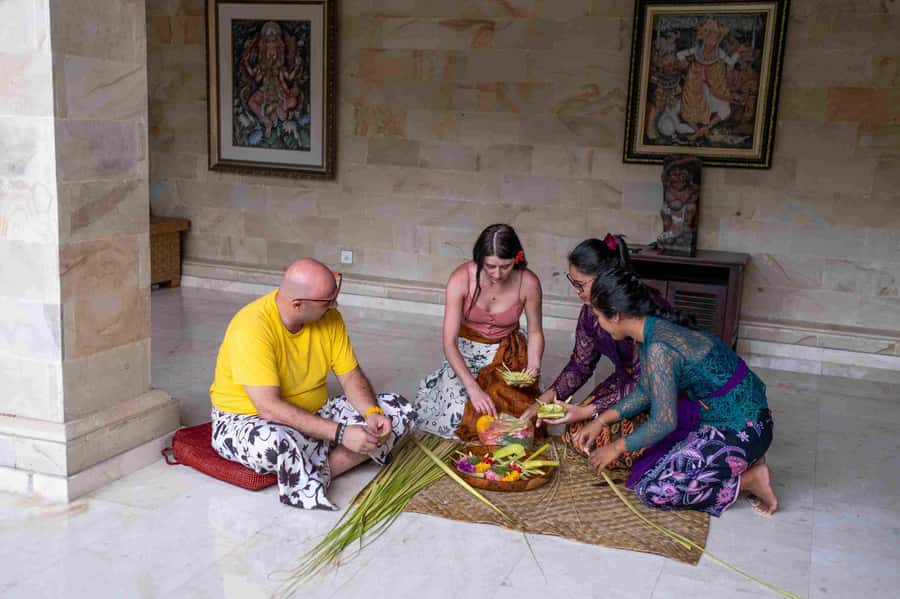
The most rewarding part of this Ubud class is not the finished flower basket. It is learning why you see small offerings outside homes, shops, temples, and doorways all over Bali. With local instructors including Tutnick and Mama MeiMei, you make your own Canang Sari while hearing how gratitude and devotion fit into everyday Balinese life.
I like the hands-on format and the chance to ask real questions about local customs. I also like the personal touch: you wear a sarung or Balinese clothes, learn each part of the offering, and may share a small ceremony connected with the family temple. The main consideration is that this is a gentle cultural class, not a packed sightseeing tour, so visitors wanting constant action may find 90 minutes slow.
In This Review
- Key points to know before booking
- Why Canang Sari matters in Bali
- Starting in Ubud with local guidance
- Making the offering step by step
- Wearing Balinese clothes and joining the ritual
- The conversation is part of the experience
- How much value do you get for $25?
- Who will enjoy this Ubud class?
- Practical tips for a smoother visit
- Should you book the Canang Sari class?
- FAQ
- How long does the Canang Sari class last?
- How much does the activity cost?
- What language is the class taught in?
- Is clothing provided?
- What does the class include?
- Is food included?
- Can I cancel the booking?
Key points to know before booking
- Make your own Canang Sari: Work with flowers, natural materials, and symbolic elements rather than simply watching a demonstration.
- Learn the meaning behind the craft: The class explains how the offering represents gratitude and devotion in Balinese Hindu life.
- Meet local instructors: Tutnick and Mama MeiMei are named in the experience feedback, with a friendly, personal teaching style.
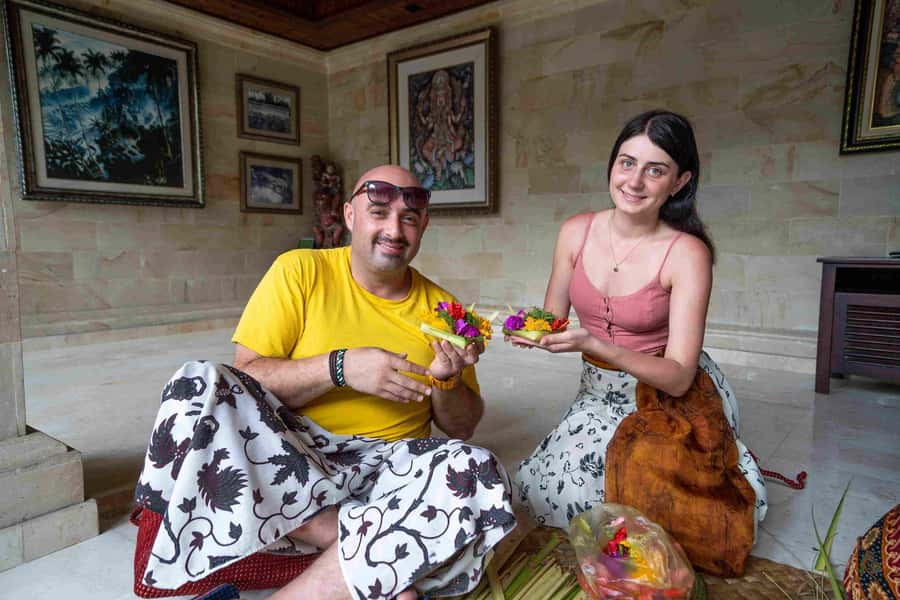
- Wear a sarung: Balinese clothing is provided, helping you approach the activity in a respectful way.
- Enjoy a small cultural setting: The class takes place at a neighborhood cultural center with a library, according to the experience description shared by participants.
- Good value at $25: For 90 minutes of instruction, materials, clothing, and local conversation, the cost is modest.
Why Canang Sari matters in Bali
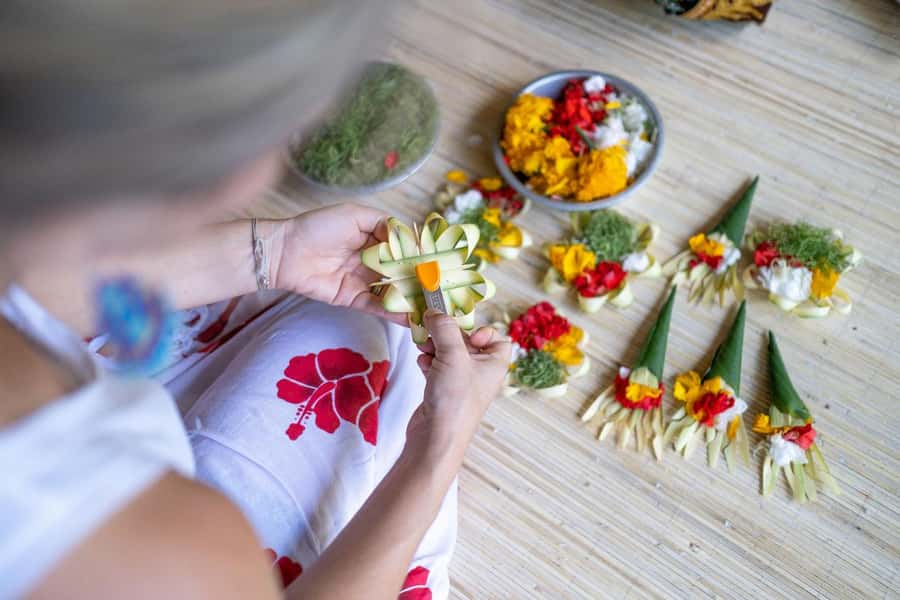
Canang Sari is a small Balinese offering made from natural materials, including woven palm leaves, flowers, fruit, and other symbolic items. You see these offerings placed in temples, family compounds, homes, and other sacred spaces.
They are part of daily Balinese Hindu practice. The offering expresses gratitude and devotion, and it is made with care rather than treated as a simple decoration. That distinction matters. If you have already noticed flower offerings on the pavement but were unsure what they meant, this class gives you a useful key to understanding the island.
I like that the lesson connects a simple object to daily life. You are not studying an old custom behind glass. You are learning about a practice that still shapes the rhythm of homes and communities in Bali.
The activity also helps correct a common misunderstanding. Canang Sari is not merely a souvenir craft. Making one is a ceremonial act with spiritual meaning. The class presents that meaning while still giving you a practical task, so you learn through your hands as well as through conversation.
Other Bali days people book on the same trip:
- Bali: Mount Batur Sunrise Guided Hike and Natural Hot Spring
★ 4.8 · 9,284 reviews - Bali: Full-Day Instagram Highlights Tour
★ 4.8 · 7,817 reviews - Bali: Sunrise Mount Batur Hike with Breakfast
★ 4.8 · 6,973 reviews
Starting in Ubud with local guidance
The experience lasts 90 minutes, though the included details describe one hour of Canang Sari making. I would keep the full 90 minutes free, since the extra time may include introductions, clothing, explanations, and the closing ritual.
You are asked to arrive 15 minutes early. That is sensible for a class involving materials and traditional clothing. It also gives you time to settle in rather than rushing through the opening explanation.
The instruction is in English. Tutnick and Mama MeiMei are associated with the warm, personal approach that makes this activity work well. The teaching is not just about folding palm leaves or arranging flowers. You learn what the separate parts mean and how the completed offering fits into Balinese Hindu practice.
One useful detail is the setting. The class takes place in a neighborhood cultural center with a library, rather than being described as a large commercial attraction. That gives the experience a community feel. It is still arranged for visitors, but the focus remains on conversation and participation instead of a quick photo stop.
Making the offering step by step
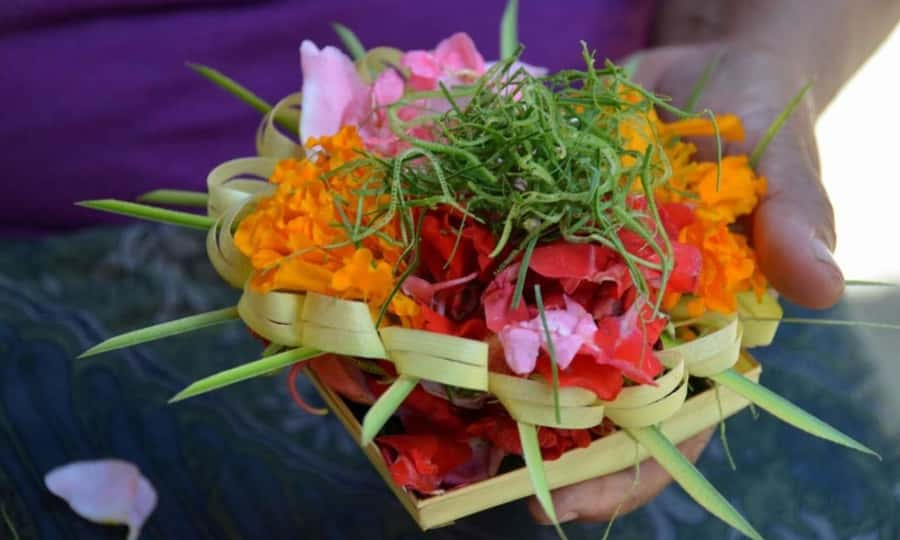
The class centers on creating your own Canang Sari. You receive the necessary equipment, and an experienced local instructor guides you through the process.
Expect to work with natural materials and flowers. The important point is not speed. You are learning to handle each part with care and understand its place in the offering. If you have never made one before, the instructor provides the structure you need.
I would pay close attention during the explanation of the flowers and other elements. The class is most useful when you connect each material with its symbolic role. Without that explanation, you would leave with a pretty basket. With it, you leave with a clearer sense of why these offerings appear throughout Bali.
The task should suit people who enjoy making things, but you do not need previous craft experience. The activity is designed for everyone, not only women. Traditionally, women have often taken responsibility for making these offerings, yet men are encouraged to join the class as well.
That inclusive approach is worth noting for couples, families with older children, and mixed groups. Everyone can take part rather than leaving one person to watch.
Wearing Balinese clothes and joining the ritual
Sarung or Balinese clothes are included. This is a small detail, but it helps set the right tone. You are not simply sitting at a table making a decorative item. You are being introduced to a practice with a religious and cultural setting.
The experience may include a small ceremony, and one participant was allowed to place the finished Canang Sari in the family temple. You should not assume that every class will follow exactly the same closing ritual, but the possibility shows how personal the activity can become.
This is also where respectful behavior matters. A Canang Sari is an offering, so handle it carefully and listen when the instructor explains what to do. Comfortable clothes are recommended under the provided clothing. Bring a camera if you want pictures, but keep the focus on the class rather than turning every step into a photo session.
Alcohol and drugs are not allowed. Pregnant women, babies under one year, and people over 95 are listed as unsuitable for the activity. Those restrictions are useful to know before you reserve, especially if you are arranging a family outing.
A different pace of day, same stretch of Bali coast:
- Bali/Nusa Penida: East & West Highlights Full-Day Tour
★ 4.7 · 6,263 reviews - Bali: Ubud Gorilla Face ATV and Ayung Rafting Trip with Meal
★ 4.8 · 4,765 reviews - Ubud: Waterfall, Rice Terraces & Monkey Forest Tour
★ 4.9 · 4,269 reviews - Mount Batur: Sunrise Jeep Tour & Natural Hot Spring
★ 4.8 · 2,512 reviews
The conversation is part of the experience
The strongest feature here may be the time spent talking with local people. One participant described spending a leisurely period speaking with Tutnick and Mama MeiMei about Balinese life. That is exactly the sort of exchange that can make a short activity worthwhile.
You can ask about the offerings you have seen around Ubud, the role of daily rituals, and the connection between household practice and temple ceremonies. The class gives you a natural reason to ask these questions, rather than forcing a guide to deliver a long lecture.
The instructor is expected to speak English, and the teaching has been described as clear and courteous. A cup of Balinese coffee may also be offered. It is a modest touch, but it adds to the feeling of sitting down with people rather than being processed through an attraction.
I would book this early in your Bali stay if you want cultural context for the rest of your visit. After the class, you may notice offerings differently and understand that the small flower arrangements you pass are part of a living routine.
How much value do you get for $25?
At $25 per person, this is reasonably priced for a 90-minute activity. The fee includes the Canang Sari class, a local professional instructor, equipment, and a sarung or Balinese clothing.
You are paying for more than materials. The real value is the explanation of the symbols and the chance to speak with local instructors in a relaxed setting. A craft class that only gave you a finished object would be less useful. Here, the cultural background is central.
The price also compares well with the time involved. You receive a focused lesson rather than a short add-on squeezed between major sights. If you value local contact, the personal instruction gives the activity good value.
There are limits. Food is not included, and the experience does not appear to include transport. Check the meeting details when booking, and plan your own route to the Ubud location. The class is also not designed as a full meal, market visit, or broad tour of Ubud, so do not book it expecting those extras.
Who will enjoy this Ubud class?
I would recommend it most strongly to people who want a calm, meaningful activity between sightseeing days. It suits solo visitors, couples, and small groups who like learning through conversation and making something by hand.
It is also a good choice for first-time visitors to Bali. The lesson explains a practice you will see repeatedly, so the knowledge keeps helping you after the class ends.
Families can consider it if everyone is comfortable with a seated craft activity and the listed age restrictions. The class is open to men and women, which makes it easy to plan for a mixed group.
You may want to skip it if you prefer high-energy outings, long scenic routes, food-based activities, or a schedule packed with several attractions. The appeal is quiet attention. You need to be willing to slow down and listen.
Practical tips for a smoother visit
Arrive 15 minutes before the start. This gives you a cushion for finding the location and getting ready in the provided clothing.
Wear comfortable clothes underneath the sarung. You will be handling materials, so choose something that allows easy movement and does not require constant adjustment.
Bring a camera, but ask before photographing people, the family temple, or any ceremony. The religious side of the experience deserves the same courtesy you would show at any Balinese temple.
The booking terms are flexible. You can cancel up to 24 hours before the activity for a full refund, and the reserve-now, pay-later option lets you hold a place without paying at once. Starting times depend on availability, so check the schedule before planning other Ubud activities around it.
Should you book the Canang Sari class?
Book it if you want to understand one of Bali’s most visible daily rituals and prefer a personal lesson to a standard sightseeing stop. At $25, the combination of instruction, materials, Balinese clothing, local conversation, and a finished offering is a fair deal.
I especially like the chance to speak with Tutnick and Mama MeiMei, hear about ordinary Balinese life, and possibly take part in a small ceremony. The class has earned a perfect 5 rating from 10 verified bookings, with praise focused on its kindness, spiritual meaning, and genuine local feel.
Skip it only if you want a fast-paced tour or need food and transport included. For everyone else, this is a thoughtful way to add cultural understanding to your time in Ubud.
FAQ
How long does the Canang Sari class last?
The activity duration is 90 minutes. The included details describe one hour of Canang Sari making, so allow the full 90 minutes for the complete experience.
How much does the activity cost?
The price is $25 per person.
What language is the class taught in?
The instructor teaches in English.
Is clothing provided?
Yes. A sarung or Balinese clothing is included. You should also wear comfortable clothes.
What does the class include?
The class includes Canang Sari-making instruction, a local professional instructor, the necessary equipment, and Balinese clothing.
Is food included?
No. Food is not included. Balinese coffee may be offered during the experience, but food is specifically listed as not included.
Can I cancel the booking?
Yes. You can cancel up to 24 hours in advance for a full refund. A reserve-now, pay-later option is also available.
Recently added around Bali
- Bali: Private Lempuyang Temple, Water Temple & Rice Terraces★ 5.0 · 3 reviews
- Bali: Mountain Bike Tour and River Rafting with Lunch★ 5.0 · 3 reviews
- Bali: Sidemen Waterfall tour and temple purification★ 5.0 · 3 reviews
- Bali: Padangbai Blue Lagoon Scuba Diving Private Tour★ 5.0 · 3 reviews
- Bali’s Mystical Jungle Trek & Hidden Waterfall Adventure★ 4.3 · 3 reviews
- From Bali: Mount Bromo & Ijen volcanic private tour★ 5.0 · 3 reviews
- Bali: 7 Day Solo Traveler’s Yoga Retreat In Ubud★ 5.0 · 3 reviews
- Bali: Photo Shoot with a Private Vacation Photographer★ 5.0 · 3 reviews