

Reviewed · TANAH LOT TOURS
Bali: Tanah Lot UNESCO World Heritage Sites Full-Day Tour
Bali packs a remarkable amount into one day here: royal temple courtyards, a volcanic lake, working rice terraces, and a sea temple glowing at sunset. I like the route because Taman Ayun and Jatiluwih offer more than quick photo stops. They show how Balinese religion, water, farming, and royal power fit together.
I also like the small group, air-conditioned vehicle, and guides such as Alit, Vicky, Putu, Frans, and Nyoman, who are praised for clear explanations, patient driving, and excellent photos. The trade-off is simple: 10 hours on Bali roads is a long day, and Ulun Danu Bratan and Tanah Lot can feel crowded.
In This Review
- Key points to know before booking
- Why this route works for a first full day
- Taman Ayun, Bali’s royal water temple
- Ulun Danu Bratan beside the crater lake
- Lunch and the road through Bali’s interior
- Jatiluwih, where rice farming still shapes daily life
- Tanah Lot at sunset
- The guide can make or break the day
- Timing, pickup, and the real length of the day
- What to bring and what to wear
- Is $20 good value?
- Who should book this tour?
- FAQ
- How long does the Bali temple and rice terrace tour last?
- Which places are included?
- Is hotel pickup available?
- Are entrance fees included?
- What languages are available?
- How large is the group?
- What should I wear to the temples?
- Is lunch included?
- Can I cancel the booking?
Key points to know before booking
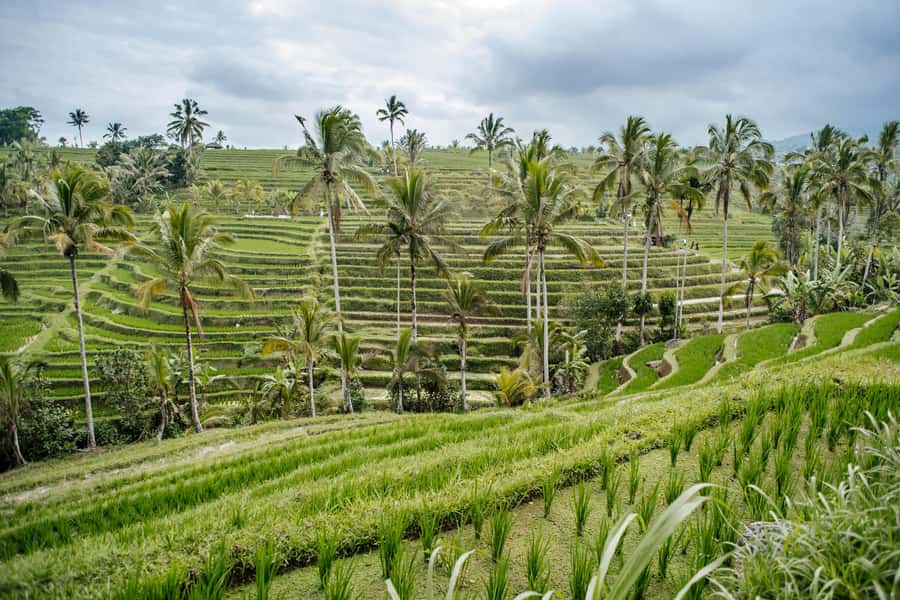
- Four major sights in one day: Visit Taman Ayun, Ulun Danu Bratan, Jatiluwih, and Tanah Lot without arranging separate transport.
- Jatiluwih is the quieter highlight: You see working rice terraces and local farming rather than only a temple courtyard.
- Tanah Lot gets the longest visit: The final stop lasts several hours, allowing time for the temple, surroundings, and sunset.
- Small groups matter: With a limit of five participants, the guide can answer questions and adjust the pace more easily.
- Entry fees depend on your booking option: If admission is not included, bring about IDR 210,000 per person in cash.
- Dress for temple rules: Cover your shoulders, back, underarms, and knees with suitable clothing or a sarong.
Why this route works for a first full day
I see this as a strong orientation tour for anyone who wants Bali’s major cultural sights without learning the island’s roads, traffic patterns, and parking arrangements. The route heads through several different parts of Bali, so you get a useful sense of how the island changes from temple towns to upland farms and then to the coast.
The order also builds well. Taman Ayun introduces Balinese temple design and royal tradition. Ulun Danu Bratan shifts the mood to cool mountain scenery. Jatiluwih gives you room to walk and look at daily farming life. Tanah Lot provides the grand visual finish.
At $20 per person, the price is unusually low for a 10-hour outing with hotel transfers, a guide, a vehicle, water, and possibly admission fees, depending on the option you select. Check that last point carefully. The cheaper option may require you to pay entrance charges yourself, with the total estimated at around IDR 210,000 per person.
The value is best for solo visitors, couples, or small groups who would otherwise hire a car and driver. You are paying for convenience and local guidance, not a slow, private exploration of every site. If you want long walks, quiet corners, or plenty of free time at each temple, the packed schedule may feel hurried.
More Tanah Lot sunset trips:
- Bali: South Coast Uluwatu, Tanah Lot, and Jimbaran Day Trip
★ 4.5 · 835 reviews - Bali: Tanah Lot, Jatiluwih Terrace, & Ulundanu Beratan Tour
★ 4.8 · 797 reviews - Bali: Tanah Lot Temple Half Day Sunset Tour
★ 4.4 · 525 reviews
Taman Ayun, Bali’s royal water temple
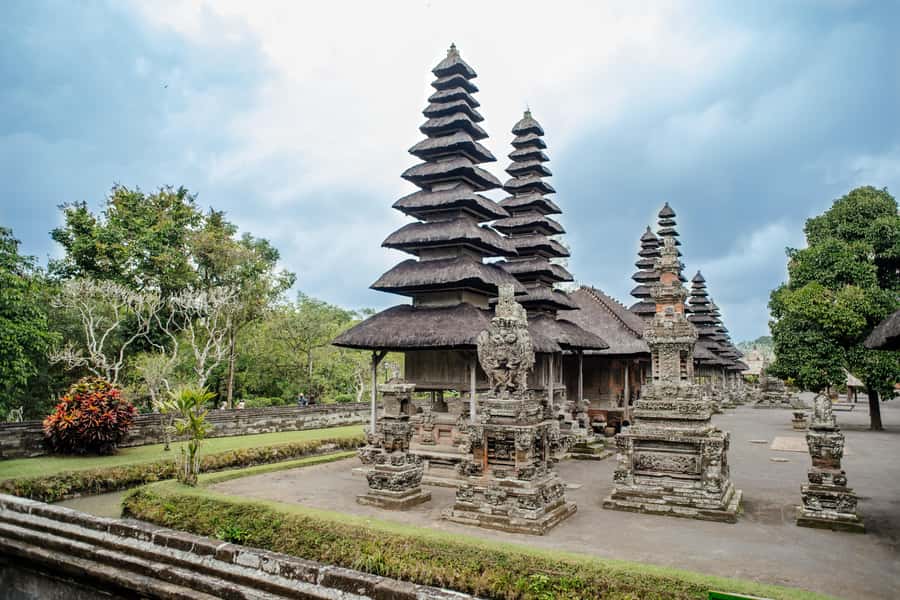
The first main stop is Pura Taman Ayun, an 18th-century royal temple surrounded by water-filled moats. The name is often translated as beautiful garden, and the setting helps explain why this temple feels calmer and more spacious than some of Bali’s famous coastal shrines.
UNESCO describes Taman Ayun as the largest and most architecturally distinguished example of its type on the island. Your guide can help you notice the layered meru towers, gates, courtyards, and the way water separates the sacred compound from the outside world.
Plan on about 90 minutes here. That is enough time for a guided walk, photographs, and an explanation of Balinese religious ideas. I would pay close attention to the guide at this stop because the structures can look decorative at first glance. Their placement and height carry meaning, and a good guide turns a series of ornate buildings into a readable religious space.
You generally view the temple grounds rather than treating them like an ordinary attraction. Dress modestly from the beginning of the day. Clothing that exposes shoulders, underarms, backs, or knees is not allowed at some sites, and the rule is enforced.
Ulun Danu Bratan beside the crater lake
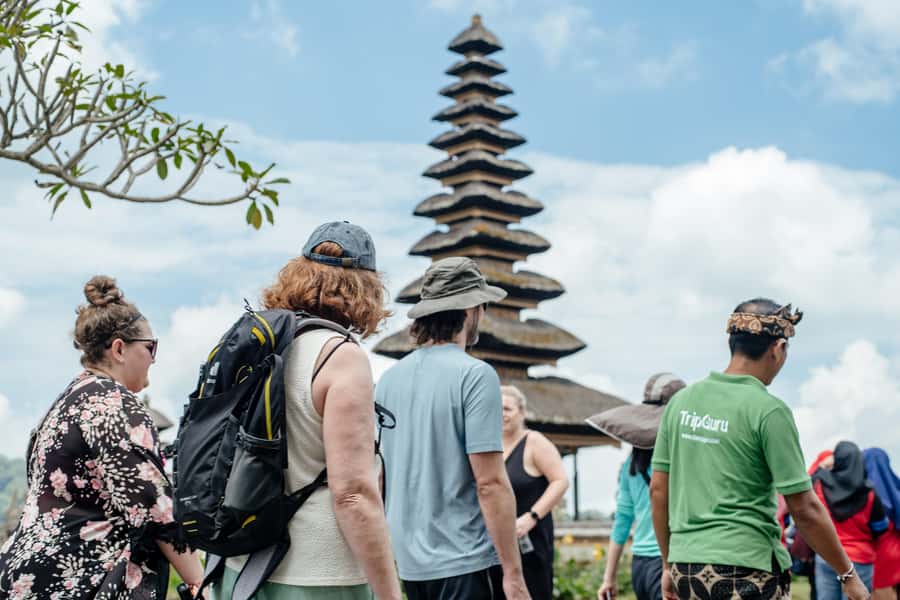
From Taman Ayun, the tour continues toward Pura Ulun Danu Bratan, the water temple on Lake Bratan. The setting is one of Bali’s most recognizable views: temple buildings near the lake edge, with the highland crater scenery behind them.
The lake is regarded as the source of springs and rivers across Bali, so this is not simply a pretty location. Water is central to Balinese farming and worship, and the temple’s position makes that connection easy to understand.
The listed visit is about 30 minutes, making this the quickest temple stop. That short period is worth noting. You should have time to see the principal view, listen to the guide, and take photographs, but not to wander every path at a leisurely pace.
Crowds can be noticeable here. I would set your expectations accordingly. The view is impressive, but the atmosphere is more popular attraction than quiet sanctuary. Bring a light long-sleeved layer if you are sensitive to cooler air, and keep your camera ready because the lake setting is the main prize.
Lunch and the road through Bali’s interior
Lunch is at a local restaurant, but the meal is not included in the tour price. That gives you some flexibility, though you should carry cash for food and personal purchases.
The road sections are part of the day, not dead time. Your guide is available to explain Balinese customs, farming, and everyday life while you travel. Guides including Alit, Vicky, Putu, Frans, Agus, and Nyoman are specifically praised for answering questions, explaining each site, and making the drive comfortable.
Several guides are also happy to take photographs. That sounds minor, but it is useful when you are traveling as a couple or small group. The strongest guide feedback centers on patience, safe driving, clear English, and flexibility. Some guides have adjusted the schedule or suggested an additional stop along the route, though you should confirm any changes with your own guide rather than assume they are included.
The vehicle is air-conditioned, which matters during a full day in Bali. You will still want water, sunscreen, sunglasses, and a hat because the temple grounds and rice terraces are exposed in places.
A few more Bali experiences worth comparing
- Bali: Private UNESCO World Heritage Sites Tour
★ 4.9 · 193 reviews - Private Tour: Bali UNESCO World Heritage Sites
★ 5.0 · 62 reviews - Bali Unesco World Heritage Sites Tour (Private & All-Inclusive)
★ 5.0 · 91 reviews - Private Tour: Bali Heritage Sites
★ 5.0 · 11 reviews
Jatiluwih, where rice farming still shapes daily life
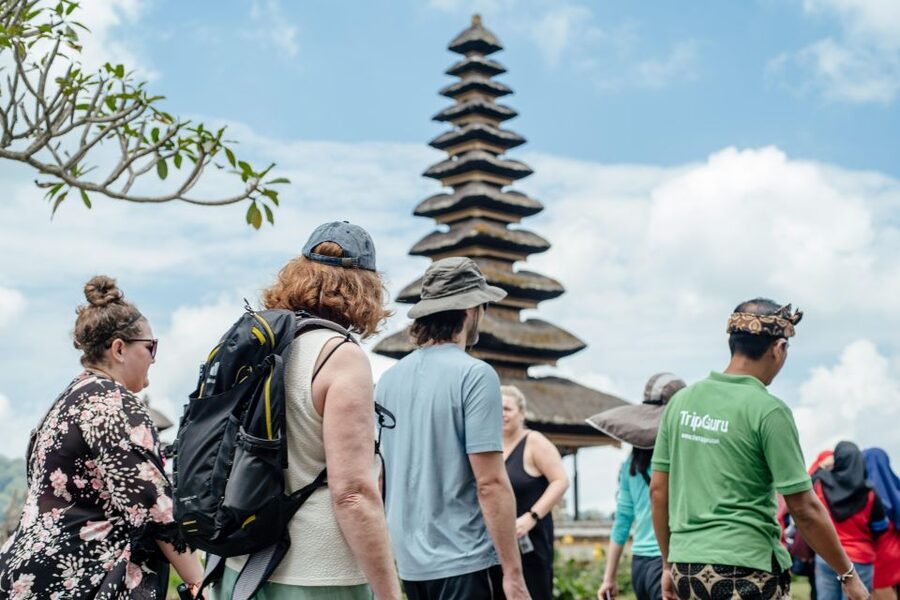
Jatiluwih is the stop I would protect from being rushed. The tour allows about an hour, and this is the place where you get a break from courtyards and crowds.
The rice terraces are among Bali’s oldest and best examples of terraced paddy farming. Their importance is not just visual. Local communities still work the fields using sustainable methods, and the terraces show how religious practice, water management, and agriculture support one another.
You can expect a guided visit with scenic views and some walking. Comfortable shoes are essential. The ground may be uneven, and the experience is much better when you can move beyond the first viewpoint instead of treating the terraces as a single photograph.
An hour gives you a useful taste, not a full hike. If you enjoy walking through rural areas, you may wish the stop were longer. Still, Jatiluwih adds something the temple visits cannot: you see Bali as a working place, not only as a collection of monuments.
The scale changes as you look across the stepped fields. Small details matter too, including paths, water channels, and people tending the paddies. Ask your guide how the local water system works. The explanation helps connect Jatiluwih with the water temples you visited earlier.
Tanah Lot at sunset
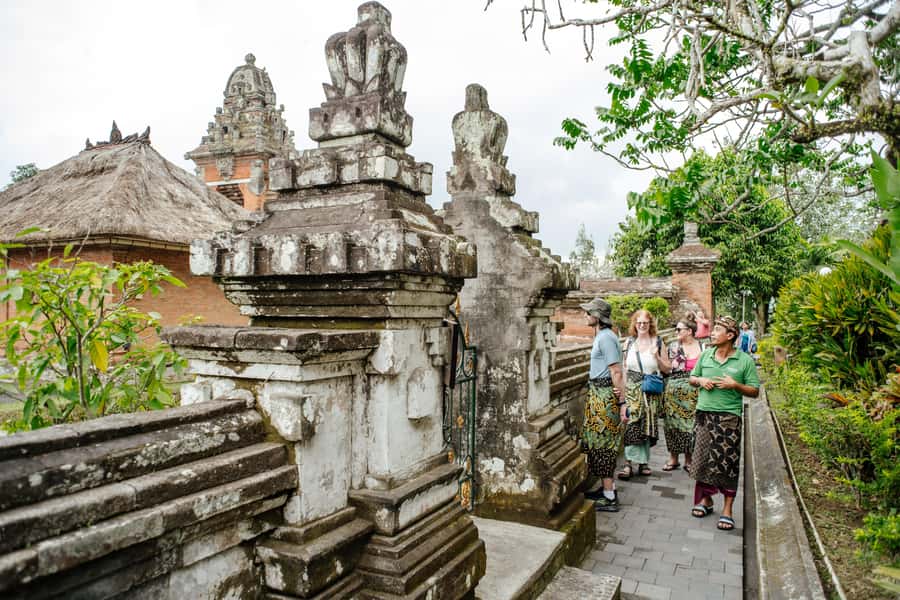
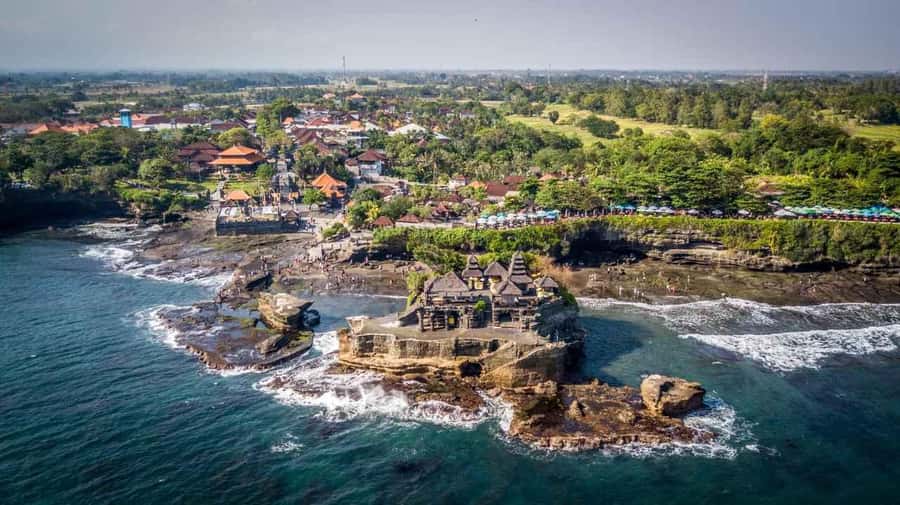
The final stop is Tanah Lot, meaning land in the sea. The 16th-century temple sits on a rocky formation at the water’s edge and is associated with worship of the sea gods.
This is the dramatic finale, and the schedule allows about 4 hours and 35 minutes here. That is far longer than the time listed for the other stops. It gives you room to explore the surrounding area, find a viewing place, take photographs, and wait for the sunset rather than arriving moments before the sun disappears.
Tanah Lot is also the most tourist-oriented stop on this route. Expect more people, more commercial activity, and a stronger focus on the famous coastal view. I would not come here expecting solitude. Come for the setting, the temple silhouette, and the changing light over the water.
Your guide can explain the temple’s role and the local traditions connected with the sea. Access to the temple itself may depend on conditions and site rules, so follow local instructions and do not treat the rocks or water as a casual playground.
Bring cash for personal expenses here. The tour does not cover meals or personal purchases, and a long final stop makes it sensible to carry some local currency. Keep your belongings compact because large bags and luggage are not allowed.
The guide can make or break the day
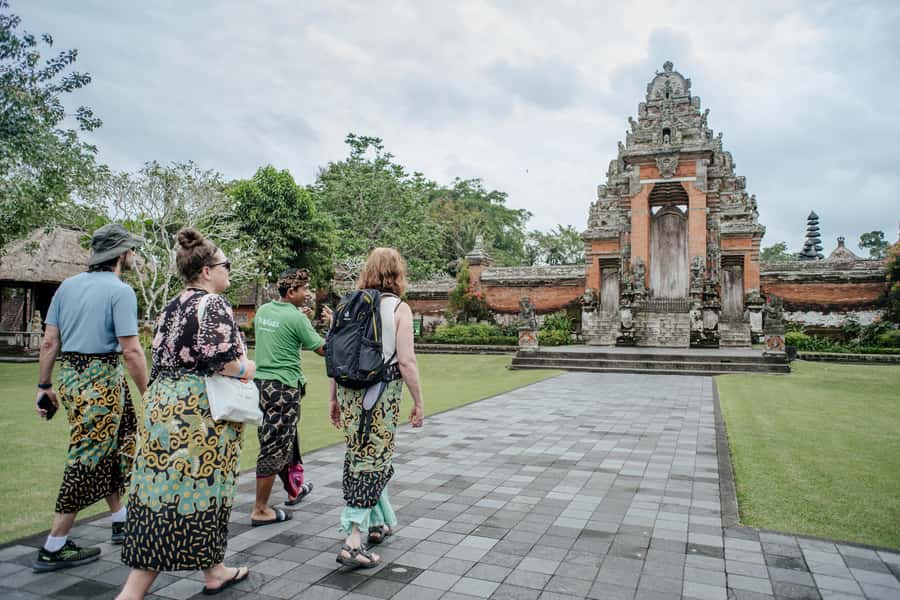
This is a small-group experience limited to five participants, which is one of its strongest practical features. A small vehicle and fewer people make it easier to hear explanations, stop for photographs, and ask questions without holding up a large coach.
The guide serves as both driver and cultural interpreter. Names connected with especially strong experiences include Alit, Frans, Vicky, Putu, Nyoman, Dewa, Komang, Agus, and Sudiatmika. The common strengths are clear English, punctuality, safe driving, warmth, and a willingness to explain Balinese culture beyond the basic facts at each site.
Vicky is praised for giving detailed explanations, taking group photos and videos, and answering questions about daily life. Alit is noted for history explanations, patience, and helping with photographs. Frans is described as courteous, professional, and flexible with the schedule. Putu is singled out for an informative and relaxed approach.
Guide assignments can vary, so you cannot guarantee a particular person when booking. Still, the repeated pattern is useful: the quality of this tour depends heavily on the individual guide. If you get someone who engages with your questions, the long drives become part of the experience instead of merely transport.
Timing, pickup, and the real length of the day
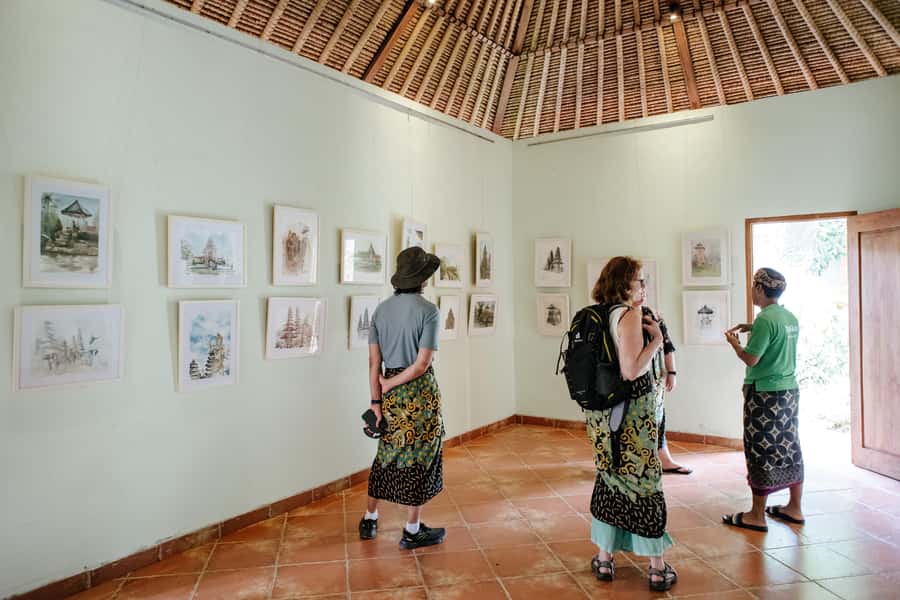
The first attraction visit begins at 8:30 a.m., while your hotel pickup time depends on where participants are staying. The driver contacts you the evening before to confirm the exact time, and you should wait in the hotel lobby at the agreed hour.
Hotel transfer is available for Kuta, Legian, Seminyak, Jimbaran, Sanur, Kerobokan, Canggu, Nusa Dua, and Ubud. The listed drop-off areas also include Denpasar, North Kuta, Kuta Selatan, and other Bali locations. Confirm your exact pickup point when selecting the option.
The tour lasts 10 hours, but Bali traffic can make a full day feel even longer. You should wear comfortable clothes, bring water, and avoid scheduling an evening flight or another fixed appointment immediately afterward.
The route covers a lot of ground. That is its appeal, but also its cost. You trade depth for range. You will see four major places in one day, but each stop has a planned window, and the road between them takes time.
What to bring and what to wear
Pack light. Large bags and luggage are not allowed, but a small day bag should hold the essentials:
- Comfortable walking shoes
- Sunscreen, sunglasses, and a hat
- Insect repellent
- Cash for food, personal costs, and possible entry fees
- A camera or phone
- A long-sleeved shirt and long pants
- A sarong, scarf, or sweater for temple coverage
Do not wait until the first temple to think about clothing. Shoulders, underarms, backs, and knees must be covered at some sites. A light cover-up is the easiest solution, especially if you are wearing shorts or sleeveless clothing for Bali’s heat.
The tour is not suitable for people with heart problems, respiratory issues, or mobility impairments. The long day, road travel, temple grounds, and walking at Jatiluwih require a reasonable level of comfort and stamina.
Is $20 good value?
Yes, if you want a broad introduction to Bali and value transport over private control. Hotel pickup and drop-off, an air-conditioned vehicle, a live guide, water, and a small group would normally make this a useful package even before counting admission fees.
The price requires careful reading. Entry fees are included only with certain booking options. If yours does not include them, bring around IDR 210,000 per person, plus cash for lunch and personal expenses.
I would compare this with the cost and effort of arranging a private driver for the same route. A private car may offer more control, but this tour gives you a guide, a planned route, and the chance to meet a few other people. For a first visit, that can be a sensible deal.
Free cancellation up to 24 hours before departure and the option to reserve now and pay later also reduce the risk if your plans are still moving. These policies are useful, but the more important decision is still whether you enjoy a long, tightly organized day.
Who should book this tour?
Book it if you want Bali’s best-known cultural sights in one day, dislike driving in unfamiliar traffic, and appreciate a guide who can explain what you are seeing. It is especially useful for a first visit, a short stay, or a day when you want to cover the western and central parts of the island.
Couples and solo visitors will benefit from the small group and photo help. Families with older children may also enjoy the variety, though the long road time and temple rules may test younger children.
Think twice if you want a quiet spiritual visit, extensive walks through Jatiluwih, or complete control over lunch and timing. Ulun Danu Bratan and Tanah Lot can be crowded, and the schedule is ambitious.
I would book this tour for the combination of Taman Ayun, Jatiluwih, and sunset at Tanah Lot. Those three stops give the day its strongest range: royal ceremony, working agriculture, and coastal drama. Just arrive dressed for temples, carry cash, and accept that seeing this much of Bali means spending plenty of time in the car.
FAQ
How long does the Bali temple and rice terrace tour last?
The tour lasts 10 hours. The first attraction visit begins at 8:30 a.m., while the exact hotel pickup time depends on the locations of the participants.
Which places are included?
The route includes Pura Taman Ayun, Pura Ulun Danu Bratan, the Jatiluwih rice terraces, and Tanah Lot Temple. Lunch is also scheduled at a local restaurant, but the meal is not included.
Is hotel pickup available?
Yes. Pickup is available from hotels in Kuta, Legian, Seminyak, Jimbaran, Sanur, Kerobokan, Canggu, Nusa Dua, and Ubud. The driver confirms the exact time the evening before, and you should wait in the hotel lobby.
Are entrance fees included?
Entrance fees depend on the option selected when booking. If you choose an option without included admission, bring about IDR 210,000 per person in cash.
What languages are available?
Live guiding is available in English, German, and French.
How large is the group?
The tour is limited to five participants, making it a small-group experience.
What should I wear to the temples?
Wear clothing that covers your shoulders, underarms, back, and knees. Bring a sarong, scarf, or sweater if your clothing does not meet the temple dress code.
Is lunch included?
No. Lunch is taken at a local restaurant, but you pay for your own meal. Personal expenses are also not included.
Can I cancel the booking?
You can cancel up to 24 hours in advance for a full refund. The activity also offers a reserve-now-and-pay-later option.
More Full-Day in Bali
- Bali: Full-Day Instagram Highlights Tour
★ 4.8 · 7,817 reviews - Bali/Nusa Penida: East & West Highlights Full-Day Tour
★ 4.7 · 6,263 reviews - Bali: Nusa Penida All-Inclusive Full-Day Tour with Transfers
★ 4.6 · 1,867 reviews - Bali: Full-Day Nusa Penida Highlights Tour with Transfer
★ 4.5 · 1,798 reviews
Recently added around Bali
- Bali: Private Lempuyang Temple, Water Temple & Rice Terraces★ 5.0 · 3 reviews
- Bali: Mountain Bike Tour and River Rafting with Lunch★ 5.0 · 3 reviews
- Bali: Sidemen Waterfall tour and temple purification★ 5.0 · 3 reviews
- Bali: Padangbai Blue Lagoon Scuba Diving Private Tour★ 5.0 · 3 reviews
- Bali’s Mystical Jungle Trek & Hidden Waterfall Adventure★ 4.3 · 3 reviews
- From Bali: Mount Bromo & Ijen volcanic private tour★ 5.0 · 3 reviews
- Bali: 7 Day Solo Traveler’s Yoga Retreat In Ubud★ 5.0 · 3 reviews
- Bali: Photo Shoot with a Private Vacation Photographer★ 5.0 · 3 reviews
Tanah Lot Tours, compared.

South Coast Uluwatu, Tanah Lot, and Jimbaran Day Trip
Read our review →
Tanah Lot, Jatiluwih Terrace, & Ulundanu Beratan Tour
Read our review →

Tanah Lot Tour with Ubud Monkey Forest, Rice Terraces, and Waterfalls
Read our review →
Tanah Lot Temple Sunset Kecak & Fire Dance Show Ticket
Read our review →
Ubud, Tegalalang, and Tanah Lot Temple Day Trip
Read our review →
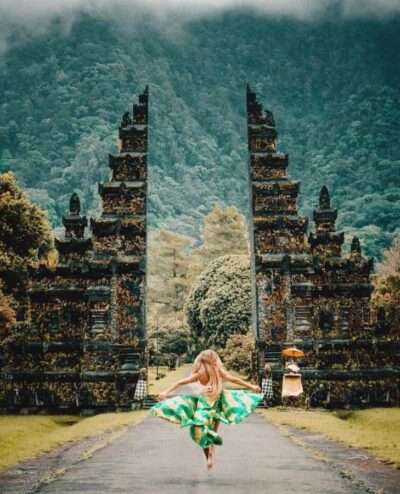
Jatiluwih UNESCO, Bratan Lake, Iconic Gate & Tanah Lot
Read our review →Browse the lists this tour appears in