
Reviewed · EAST BALI TOURS
Candidasa Hidden Activities
At a family home near Candidasa, you get a close look at daily Balinese life rather than another quick photo stop. Wayan and his family show you how they cook, pray, make incense, care for animals, and turn coconuts into oil over a wood fire. You may even see a local coconut climber at work.
I like the hands-on cooking and the calm setting among banana and coconut trees. I also like the chance to make a canang sari offering, visit the family temple, and see customs explained by the people who practice them every day.
The main consideration is comfort. This is a working home, not a polished cooking school, and one past participant specifically warned that the setting may not suit anyone very sensitive about hygiene. The activity is also marked unsuitable for people over 70.
In This Review
- Key points
- A family home instead of a standard Bali attraction
- The welcome: coconut coffee, fruit, and village water
- Watching coconut oil made over a wood fire
- Cooking five Balinese dishes with the family
- Making incense and canang sari offerings
- Farm animals and the everyday work of a household
- What the five hours feel like
- What the $55 price includes
- Who should book this Candidasa experience
- Practical advice before you go
- Should you book it?
- FAQ
- Where does the activity take place?
- How long does the activity last?
- Is hotel pickup included?
- What food and drinks are included?
- Is the tour conducted in English?
- How far in advance should I book?
Key points
- Wayan and his family host you at their home, offering a personal look at village life near Candidasa.
- Five Balinese dishes and desserts are prepared, with fresh ingredients and lunch served during the visit.
- Coconut oil is made over a traditional wood fire, a slow household process rarely seen on a standard sightseeing tour.
- You make incense sticks and canang sari, then pray together at the family temple.
- The five-hour small-group format keeps the visit personal, with no more than 10 participants and an English-speaking guide.
- Hotel pickup, return transport, drinks, fruit, and Balinese snacks are included in the $55 price.
A family home instead of a standard Bali attraction
The heart of this experience is simple: you spend time with a Balinese family and see how their home works. Wayan guides the visit in English, introducing you to the household, its shrines, food preparation, animals, and daily rituals.
This matters because Balinese culture is not only found in large temples or dance performances. It is practiced at home, in small offerings placed around the property, in the kitchen, and in the careful use of ingredients grown nearby. You get a better sense of that rhythm here than you would from a short cultural presentation.
The setting is quiet and rural, with banana trees, coconut trees, and a family garden. Fresh young coconut, bananas, and other simple refreshments help make the visit feel connected to the land around the house. You also taste coconut flour coffee, a local detail that adds something unusual to the welcome.
The group limit of 10 is useful. You are not lost in a crowd, and you should have room to watch, ask questions, and take part. The experience is still a shared group activity, but its small size suits the personal nature of the visit.
A few more Karangasem Regency experiences worth comparing
- Bali: Blue Lagoon Beach Snorkeling Tour with Lunch
★ 4.5 · 426 reviews - Bali/Amed: Underwater Temple Snorkeling Experience
★ 4.8 · 134 reviews - Bali: Snorkeling on 2 spots with Lunch and Transport
★ 4.8 · 123 reviews
The welcome: coconut coffee, fruit, and village water
Your pickup begins at the hotel where you are staying, followed by a drive to a traditional market before reaching the village setting. The exact starting time depends on availability, so you need to check the schedule when booking.
At the home, you receive a welcome drink, mineral water, Balinese cake, bananas, and fresh young coconut from the family garden. Coconut flour coffee is also offered for tasting. These are modest touches, but they set the tone: this is a family welcome, not a commercial buffet.
The experience also includes a look at well water drawn straight from the ground. That detail may be interesting if you want to understand how a rural household gets its basic supplies, though it is not presented as a separate attraction.
You should bring a camera and some cash. Cash is listed for souvenir shopping, which is optional. There is no need to plan around alcohol, and alcohol and drugs are not allowed.
Watching coconut oil made over a wood fire
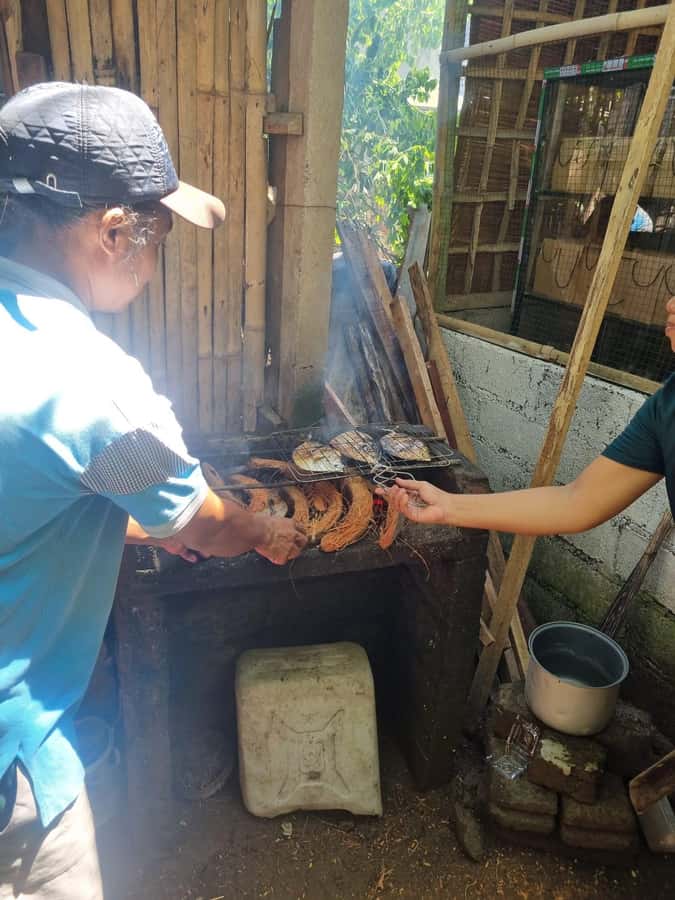
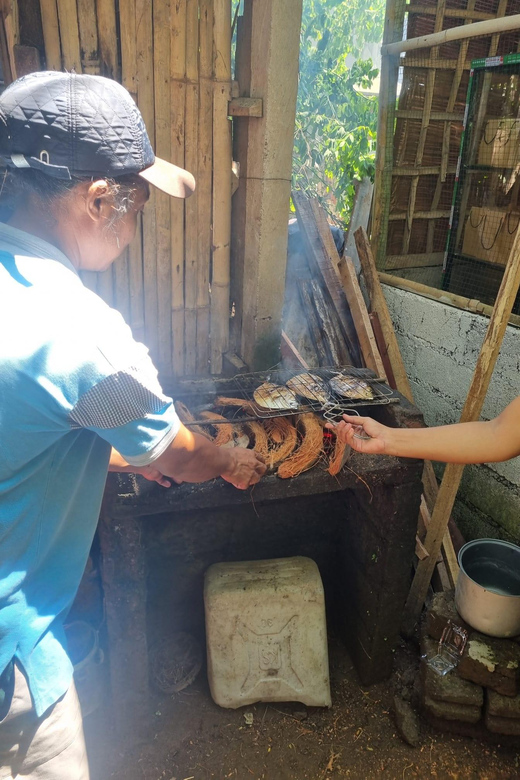
One of the most distinctive parts of the visit is the natural coconut oil demonstration. You see coconuts processed and cooked on a traditional firewood stove, using a household method rather than an industrial one.
This is a good example of why the activity offers more than a cooking class. Coconut is part of everyday life in Bali, and here you see it used as food, drink, fuel, and oil. The wood fire also shows the time and labor behind a product that is often sold in a small bottle with little explanation.
The process may appeal to you if you enjoy practical demonstrations. It is not a quick souvenir-making session. Traditional cooking over fire takes patience, and the surroundings are basic. You should expect smoke, heat, and a working kitchen rather than a modern studio with neat workstations.
There is also a chance to see a monkey man climb a coconut tree. The supplied details do not promise a fixed performance schedule, so treat this as part of the village activity rather than a guaranteed show. If the timing works, it gives you a memorable view of how coconuts are gathered.
Cooking five Balinese dishes with the family
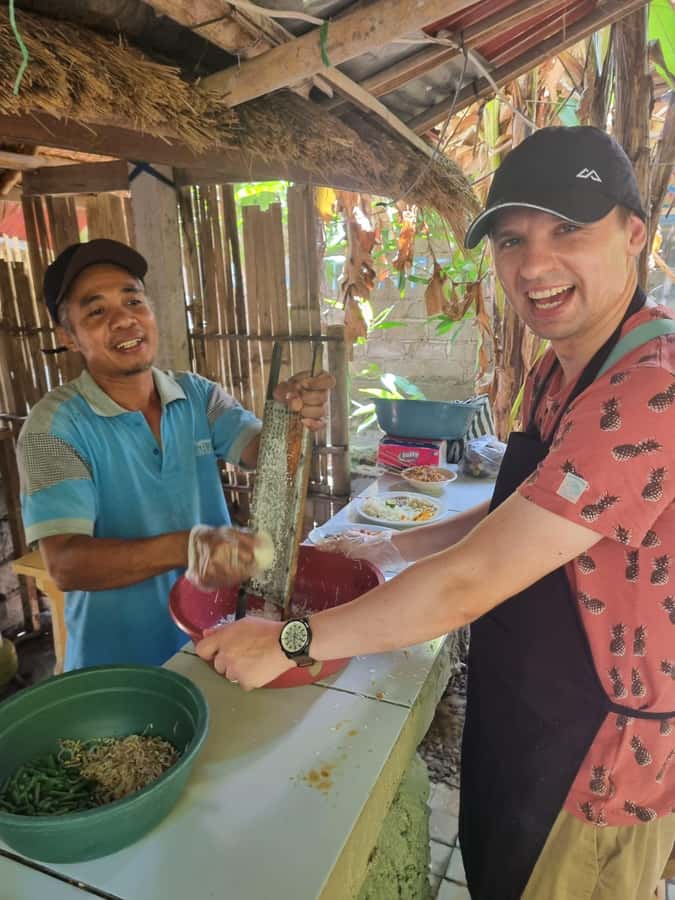
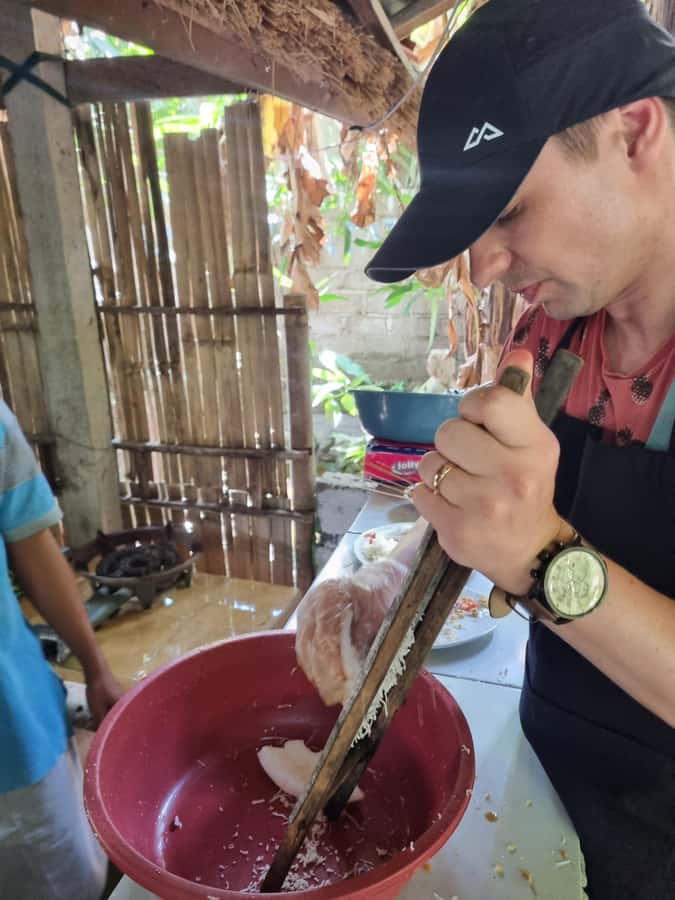
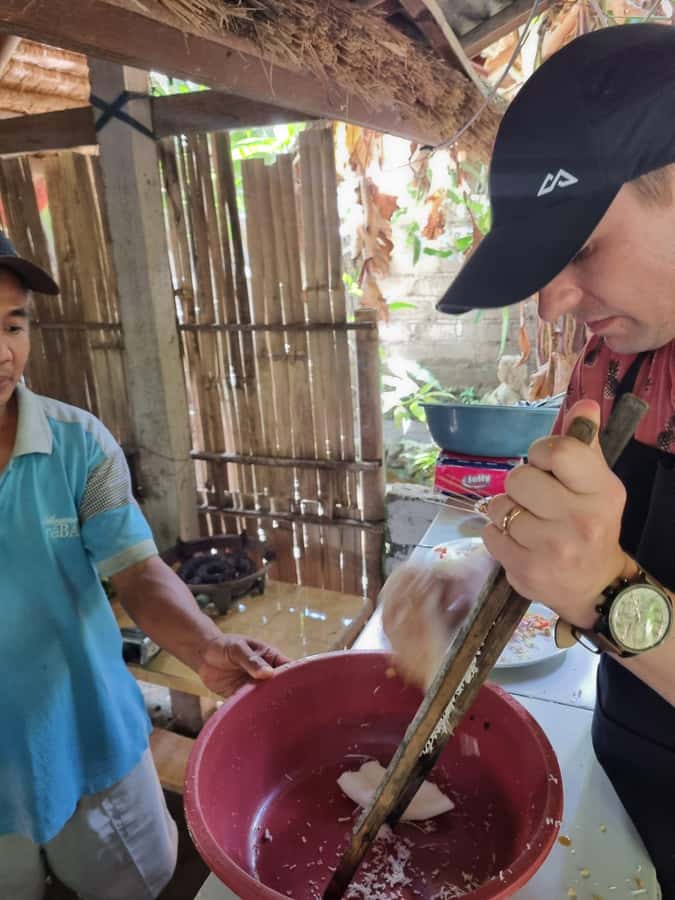
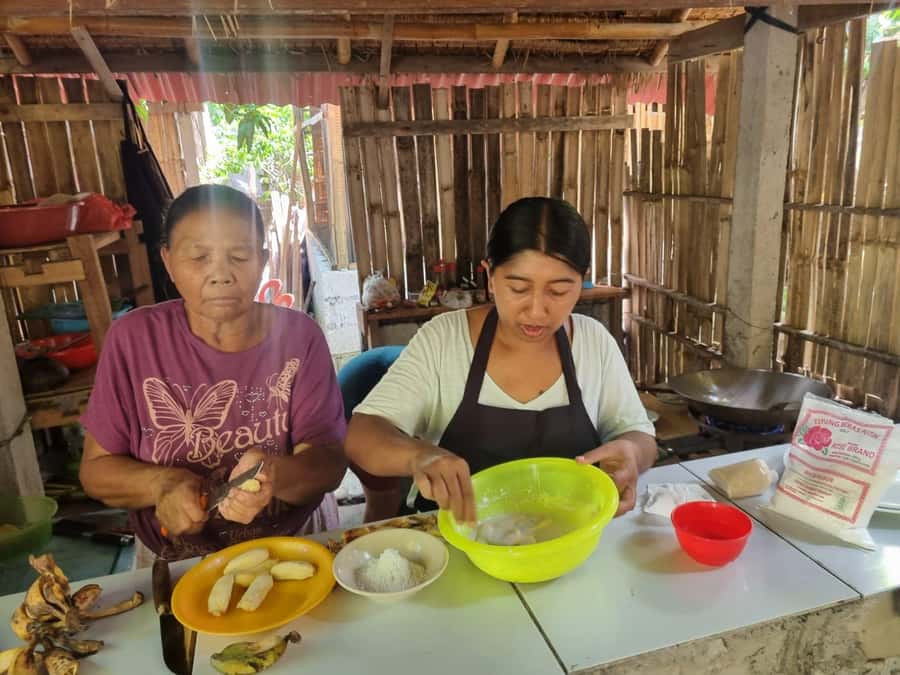
The cooking demonstration is the main hands-on section. You help prepare five different Balinese foods plus desserts, then sit down for lunch.
The ingredients are described as fresh, with bananas and coconuts coming from the family garden. One meal also included fish caught fresh that day, although you should not assume the same fish will be served every time. The menu can depend on what is available.
I like this approach because you see the full chain from ingredient to meal. You are not simply handed a finished plate. You watch the preparation, take part in the cooking, and then understand the food better when it reaches the table.
The class is best viewed as a cultural demonstration with participation, not a formal culinary course. The focus is on how a Balinese household prepares food and shares it. If you want exact recipes, measured ingredients, or a certificate, this may feel informal. If you want to learn through watching and doing, it fits well.
Lunch gives the five-hour visit a natural center. It also means you should not book this expecting only snacks. Food is a major part of the experience, and the included meal adds real value to the $55 price.
A different pace of day, same stretch of Bali coast:
- Bali: Lempuyang Temple, Tirta Gangga, and Temesi Waterfall …
★ 4.9 · 120 reviews - Bali: Telaga Waja White Water River Guided Rafting & Lunch
★ 4.7 · 88 reviews - East Bali: Lempuyang Temple, Tirta Gangga, and Taman Ujung
★ 4.9 · 35 reviews - Bali: Most Iconic Spot Private Tour (All Inclusive)
★ 5.0 · 24 reviews
Making incense and canang sari offerings
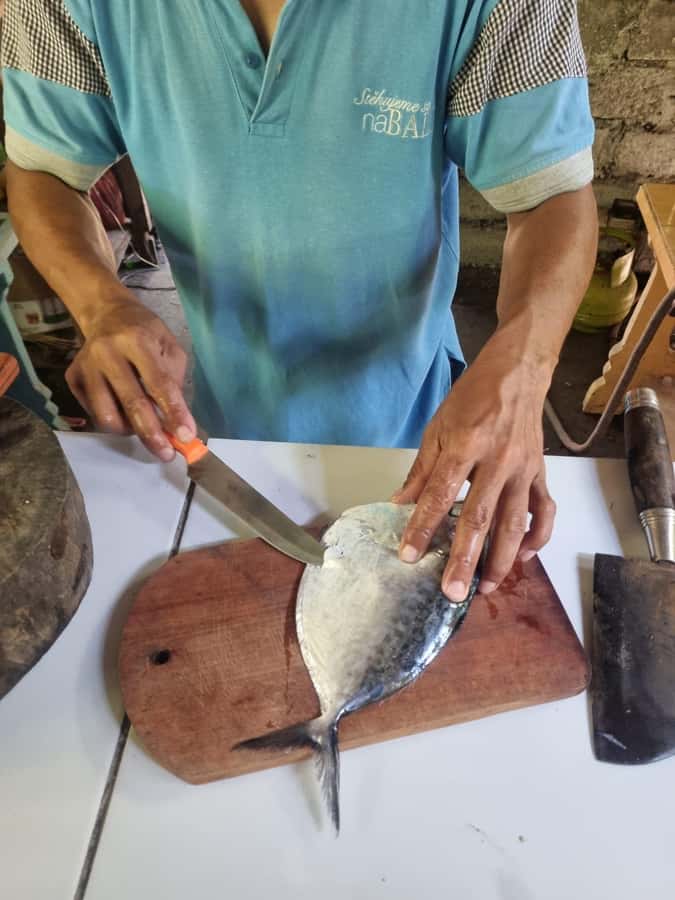
Balinese homes and temples use daily offerings, and this visit lets you take part in two related traditions. You see how incense sticks are made for temple ceremonies, then make a canang sari, the small offering associated with daily prayer.
These activities are valuable because they explain religion through ordinary objects. Incense is not just a pleasant smell, and the offering is not just a craft project. Both connect household routines with prayer and respect.
After making the canang sari, you pray together at the family temple. The visit includes small shrines on the property, giving you a sense of how spiritual spaces fit into a Balinese home. The setting is personal and local, rather than a grand public temple with a large crowd.
You should approach this part with respect. Follow Wayan’s instructions about how to handle the offering and where to stand. The activity is designed to include you, but it is still a real religious practice for the family, not a staged photo opportunity.
Farm animals and the everyday work of a household
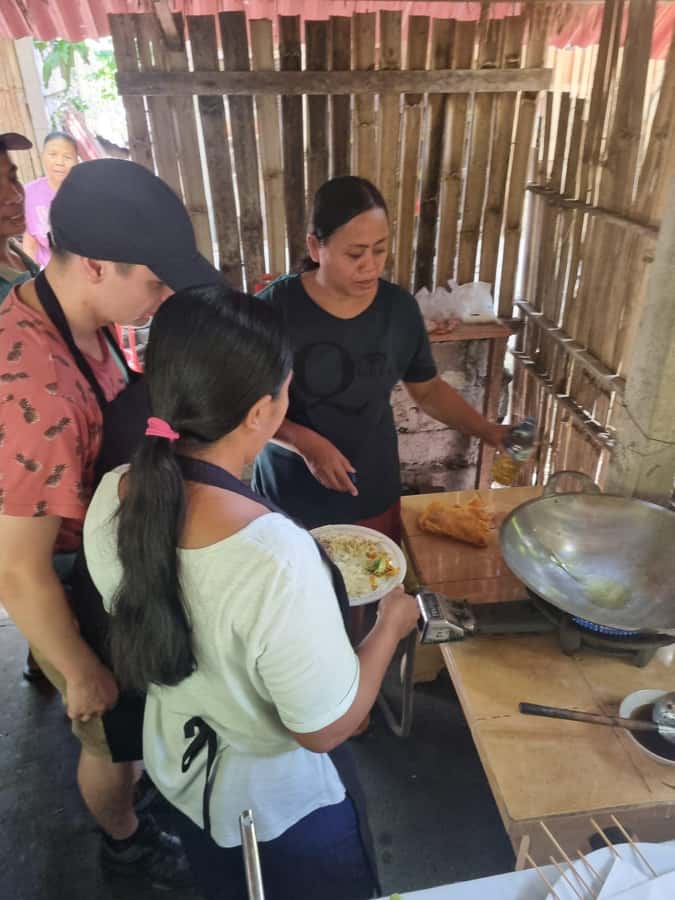
The family also shows you home animals such as cows and chickens. This may sound ordinary, but that is exactly its value. You get a picture of household life that includes food production, animal care, cooking, religious practice, and garden work all in one place.
I find these practical details more useful than a long list of cultural facts. You can see how several parts of village life connect. The garden supplies fruit, coconuts become oil and drinks, animals form part of the household, and the kitchen becomes the place where the group shares the results.
Do not expect a farm tour with a large collection of animals. The details describe a small home setting, so the number and type of animals may be limited. This is a brief look at family life, not a dedicated agricultural attraction.
What the five hours feel like
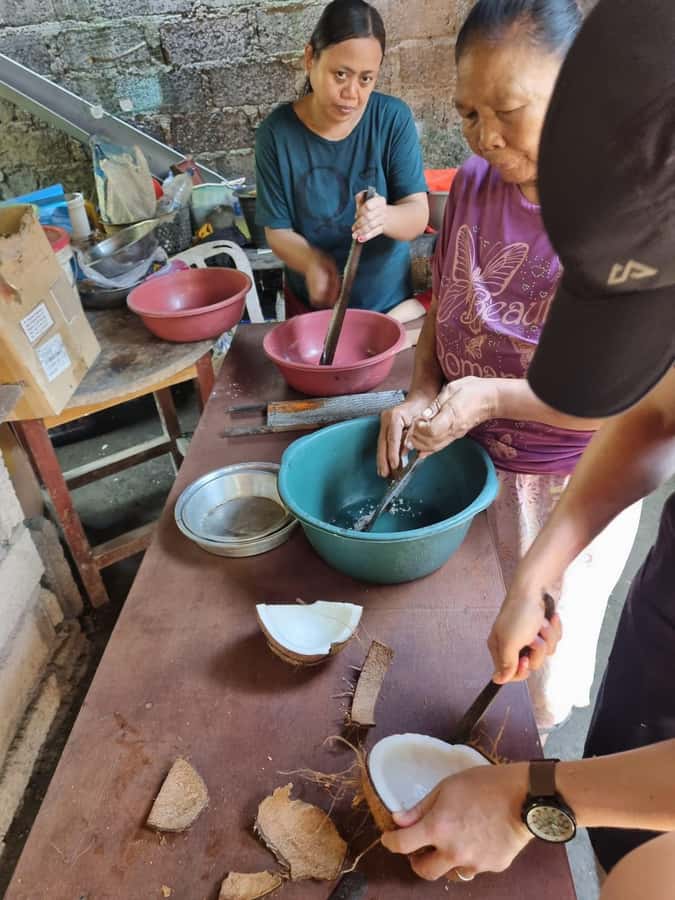
The pace is relaxed. You move through welcome drinks, household introductions, demonstrations, cooking, offering preparation, prayer, and lunch without the pressure of a large sightseeing schedule.
That slower rhythm is a major strength. Candidasa is known for a quieter side of Bali, and this experience matches that mood. You have time to notice the garden, listen to the family, and take part without rushing from one major sight to the next.
At the same time, five hours is long enough that the rustic setting will matter. You may spend time standing, sitting in a family home, working near a stove, and moving around the property. The activity is not presented as suitable for people over 70, and anyone with mobility or stamina concerns should consider that warning carefully.
The group is limited to 10 participants, and the guide speaks English. That combination should make it easier to ask about ingredients, rituals, and family routines. The quality of the experience depends heavily on the conversation with Wayan, so his role as host is central.
What the $55 price includes
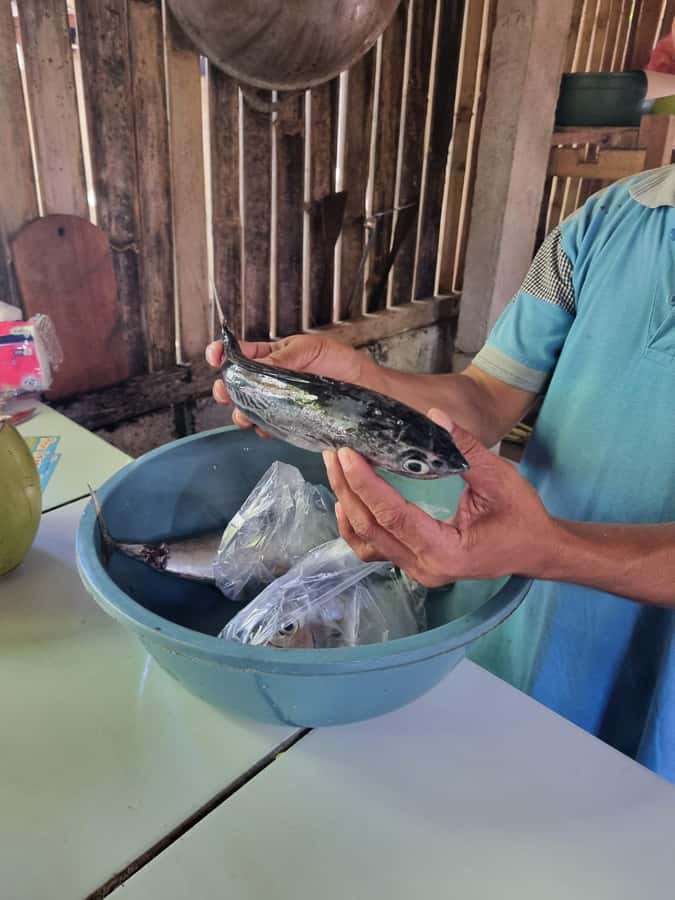
At $55 per person, the price is reasonable if you value personal contact and participation. You receive hotel transfers in both directions, a welcome drink, mineral water, Balinese cake, coconut flour coffee, fruit, fresh young coconut, the cooking session, demonstrations, and lunch.
The transport is important in Bali. A return transfer saves you from arranging a separate driver for a village location, and it makes the five-hour visit easier to fit into a Candidasa stay. The initial stop at a traditional market adds a local touch before the home visit begins.
The price is less compelling if you only want a meal. You could find food more cheaply elsewhere. Here, you are paying for the host’s time, the family setting, instruction, demonstrations, transport, and the chance to take part in temple and household customs.
Souvenir purchases are not included, so carry cash if you want to buy something. No specific souvenirs or prices are provided, so treat shopping as optional rather than part of the main value.
Free cancellation is available up to 24 hours before the activity for a full refund, and you can reserve now and pay later. You need to book at least one day ahead so the family can arrange the visit.
Who should book this Candidasa experience
I would choose this for you if you want a quiet, personal look at Bali and enjoy learning by doing. It suits people interested in food, family life, Hindu customs, village routines, and traditional household methods.
It is also a good choice for repeat visitors who have already seen Bali’s major temples and want something less formal. The experience gives you a reason to slow down and spend time with local people rather than collecting another quick landmark.
Families and couples may appreciate the welcoming tone, but the activity is still best for anyone comfortable joining a shared small group. Solo participants can also fit into the group because the guide remains with you throughout.
You should think twice if you prefer air-conditioned venues, strict schedules, modern kitchens, or highly polished demonstrations. The home setting is part of the point, but it also means uneven surfaces, smoke from the wood stove, ordinary household conditions, and a less controlled environment.
The hygiene warning deserves attention. One participant found the setting unsuitable for anyone particularly sensitive about cleanliness. That does not mean the activity is unsafe, but it does mean you should expect a traditional working home, not a restaurant kitchen.
Practical advice before you go
Wear comfortable clothing that allows you to cook and move around the property. Bring your camera, but ask before photographing family members, religious spaces, or ceremonies.
Keep some cash with you for optional shopping. Mineral water is included, but it is still sensible to bring any personal items you need during a five-hour outing.
Book at least one day ahead. The provider needs time to confirm the reservation and arrange the family visit. Hotel pickup is included, but you should check that your accommodation falls within the pickup plan when you reserve.
English is the stated tour language. If you want to ask detailed questions about ingredients or religious practice, prepare a few questions in advance. That can turn a pleasant visit into a much more useful cultural exchange.
Should you book it?
Book this experience if your idea of a good Bali day includes cooking with a family, making an offering, watching coconut oil prepared over firewood, and sharing lunch in a village home. The strongest parts are the personal welcome from Wayan and his family, the hands-on food preparation, and the chance to see religion woven into daily household life.
Skip it if you need polished facilities, strict hygiene standards, or a low-effort sightseeing stop. For the right person, $55 buys much more than lunch. It buys time, context, transport, and a direct look at the quiet side of Balinese life.
FAQ
Where does the activity take place?
The experience takes place near Candidasa in Bali, at a Balinese family home and village setting surrounded by banana and coconut trees.
How long does the activity last?
The activity is valid for five hours. Starting times depend on availability.
Is hotel pickup included?
Yes. Return hotel transfer is included, and the provider will pick you up at the hotel where you are staying.
What food and drinks are included?
You receive a welcome drink, mineral water, Balinese cake, coconut flour coffee, bananas, and fresh young coconut. The activity also includes a cooking demonstration with five Balinese foods and desserts, followed by lunch.
Is the tour conducted in English?
Yes. The live tour guide speaks English.
How far in advance should I book?
You should book at least one day before the planned visit so the provider can confirm the reservation and arrange the activity.
Recently added around Karangasem Regency
- Bali: Gate Of Heaven and Water Palace Tirta Gangga Package★ 4.7 · 3 reviews
- Bali:Heaven Gate, TirtaGangga Palace, and Beach Escape Tour★ 5.0 · 3 reviews
- Blue Lagon Snorkeling, Waterfall, and Celuk Village Tour★ 5.0 · 3 reviews
- Lempuyang Temple: Gate of Heaven★ 5.0 · 3 reviews
- Bali: Sidemen silver class experience★ 5.0 · 3 reviews
- Bali: Mount Agung Sunrise Trekking Tour with Hotel Pickup★ 5.0 · 3 reviews
- The Gate of Heaven Tour by VW Safari Classic Car★ 3.7 · 3 reviews
- Bali: Private Snorkeling Trip to Blue Lagoon & Tanjung Jepun★ 4.3 · 3 reviews
East Bali Tours, compared.
Lempuyang Quick Access, Waterfall, Water Palace & More
Read our review →
Open Water Course in Tulamben – Get Certified in Bali
Read our review →

Bali Diving for Beginners: Tulamben Liberty Wreck
Read our review →
Discover Scuba Diving in Tulamben – Diving Initiation in Bali best diving sites
Read our review →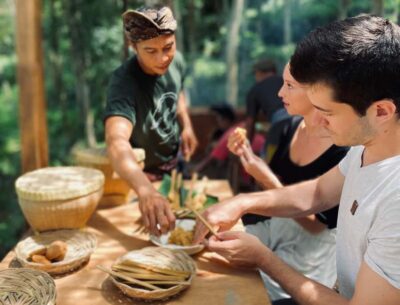


Advanced Open Water Course – Advanced Certification in Tulamben
Read our review →Browse the lists this tour appears in