
Reviewed · BALI
Elephant Care Experience with Mud Bath at Bali Zoo
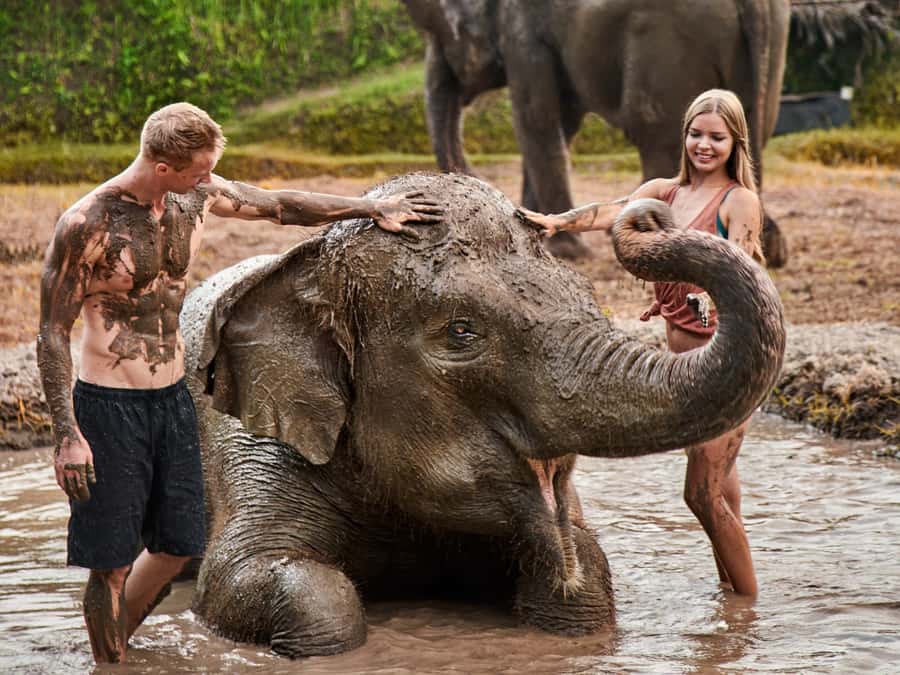
The main event here is wonderfully messy: you feed rescued Sumatran elephants, follow them into a mud-and-sand spa, then walk with them to the River Wos for a wash and splash. I like the close contact paired with clear instructions from the mahouts, and I like that lunch, a shower, and zoo admission are included. The elephants set the pace, so an activity may change if an animal is not willing.
I also like the easy hotel transfer from much of southern Bali and Ubud. Guides such as Madda, Niki, and Boy are praised for explaining elephant behavior in a friendly way. The main catch is price: at $93 per person, it is a major Bali outing, and professional photos can cost extra.
In This Review
- Key points to know before you book
- Meeting rescued Sumatran elephants at Bali Zoo
- Feeding fruit before the mud bath
- Getting dirty in the elephant mud and sand spa
- Walking to the River Wos with the elephants
- Showers, lunch, and the rest of Bali Zoo
- Is the orangutan breakfast upgrade worth it?
- What the $93 price really covers
- Practical preparation for a muddy morning
- Who should book this Bali Zoo elephant experience?
- Should you book it?
- FAQ
- Where does the Bali Zoo elephant experience start?
- How long does the experience last?
- Is hotel pickup available?
- What should I bring?
- Can young children join the mud bath?
- Is breakfast with orangutans included?
Key points to know before you book
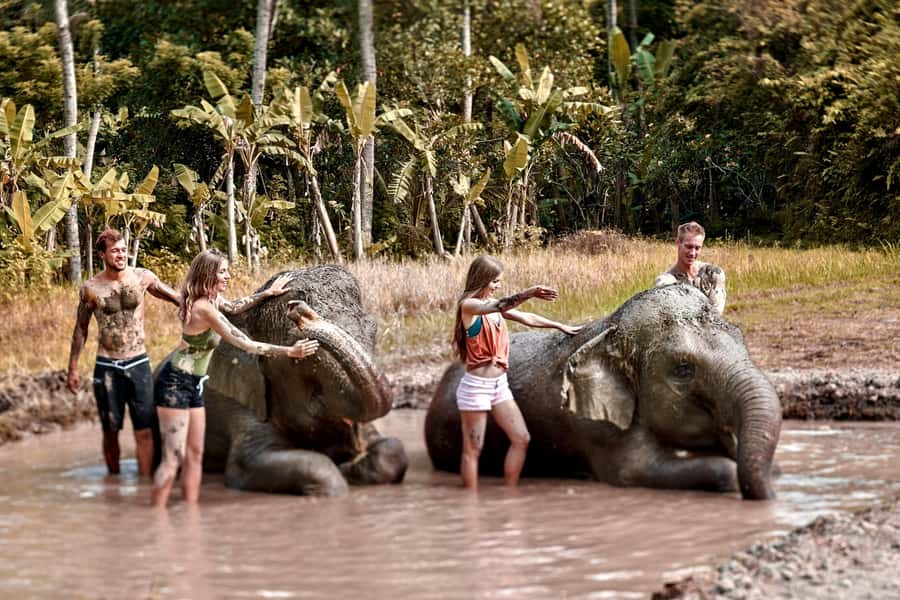
- Mud, fruit, and river water are the heart of the day: You do not simply watch the elephants. You feed them, get dirty beside them, and help scrub them clean.
- The elephants choose the activity: No elephant is forced to feed, bathe, play, or enter the water.
- A mahout leads the contact: Expect safety guidance and facts about elephant care, behavior, and their life before arriving at Bali Zoo.
- Bring a complete change of clothes: Swimwear, sandals, sunscreen, insect repellent, and a towel are useful. The zoo provides a towel, showers, and changing time.
- The $93 cost includes more than the elephant session: Zoo entry, welcome snacks, drinks, lunch, insurance, and sometimes transfers are part of the package.
- The orangutan breakfast is an optional extra: It adds another memorable zoo experience, but you should not assume close contact with the orangutans.
Meeting rescued Sumatran elephants at Bali Zoo
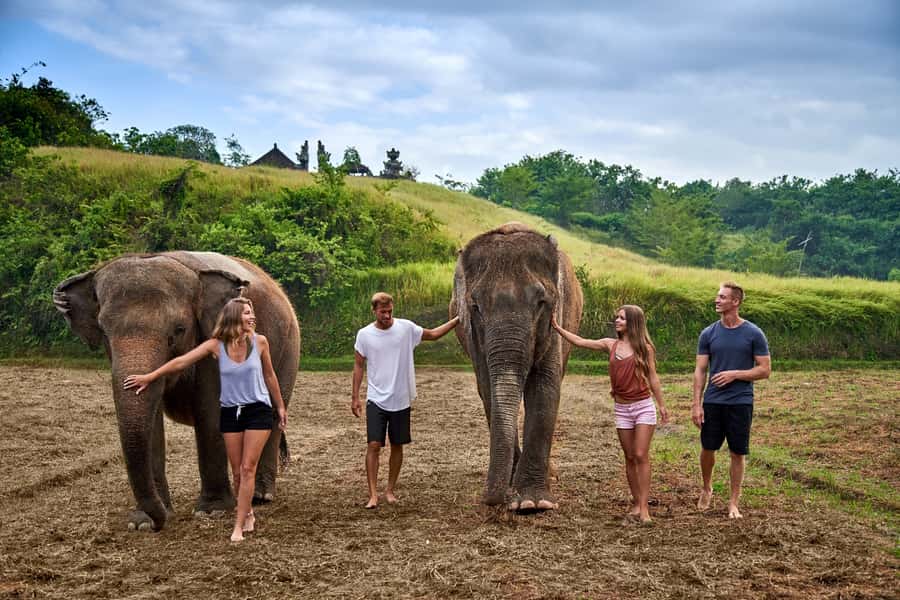
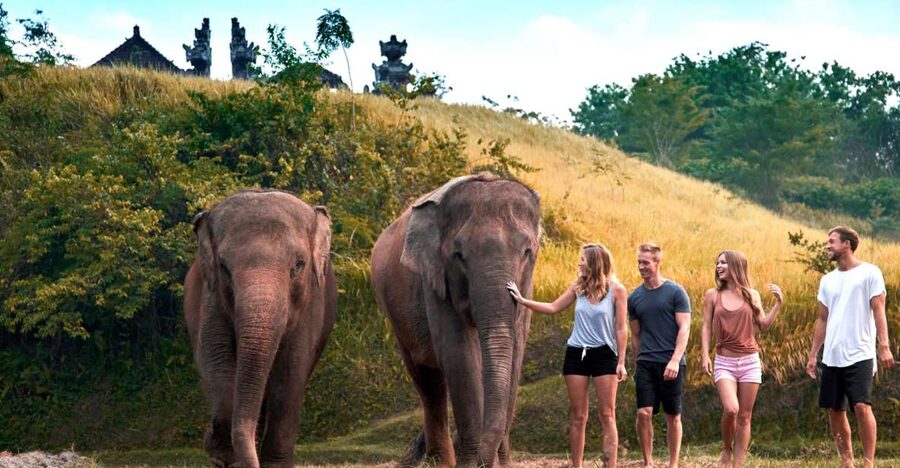
This is not a quick elephant photo stop. The elephant program takes much of the day and gives you time to see the animals eat, walk, bathe, and play. The elephants are rescued from Sumatra, and the opening talk helps explain their behavior and daily care.
You begin at Kampung Sumatra inside Bali Zoo. If you arrange a hotel transfer, pickup is scheduled around 6:30 a.m. from Kuta, Seminyak, Canggu, Nusa Dua, Tanjung Benoa, and Jimbaran. Pickup from Ubud and Sanur is around 7 a.m. Without transport, meet at the zoo’s main entrance on Jl. Raya Singapadu.
That early start matters. Bali traffic can be slow, especially around southern resorts, and this is a full-day plan rather than a short morning attraction. Return transfers are available only with selected options, so check the booking choice carefully before paying.
At Kampung Sumatra, you receive a welcome snack and coffee or tea. Then an English-speaking or Indonesian-speaking mahout introduces the elephants and explains how to behave around them. This briefing is not filler. It tells you how elephants communicate, how handlers care for them, and how to avoid getting in the way of an animal that weighs many times more than you do.
Guides named Madda, Niki, and Boy have been singled out for warm, useful explanations. Your guide may be someone else, but the important point is that this is a handled program with staff directing the contact, not a free-for-all beside large animals.
More animal parks in Bali:
- Bali Zoo: Breakfast with the Orangutans
★ 4.5 · 725 reviews - Bali Zoo Entrance Ticket
★ 4.6 · 411 reviews
Feeding fruit before the mud bath
You receive fruit to feed the elephants, which gives you a gentle first meeting. Feeding helps you notice how the animals use their trunks and how quickly they can sort through a pile of food.
The session also gives you a chance to settle down before the mud. You can watch the mahouts demonstrate safe positions and learn when to move aside. I like this gradual approach because it gives the animal and the person time to get used to one another.
The elephants may be friendly and relaxed, but they are still powerful animals. Follow the mahout’s instructions, keep your attention on the elephant beside you, and do not assume that a calm animal wants every type of touch or game. The program specifically states that the elephants are not forced to do an activity they do not want to do.
This is one of the more important ethical details. The quality of the experience depends on contact, but the animal’s choice comes first. If an elephant is tired, distracted, or uninterested, the schedule may shift. That is a sensible trade-off, not a flaw.
Getting dirty in the elephant mud and sand spa
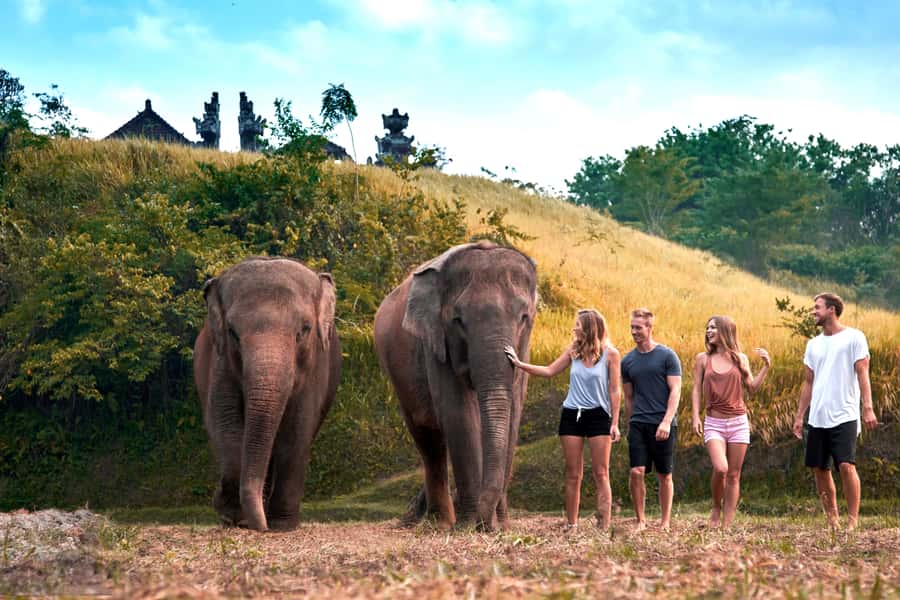
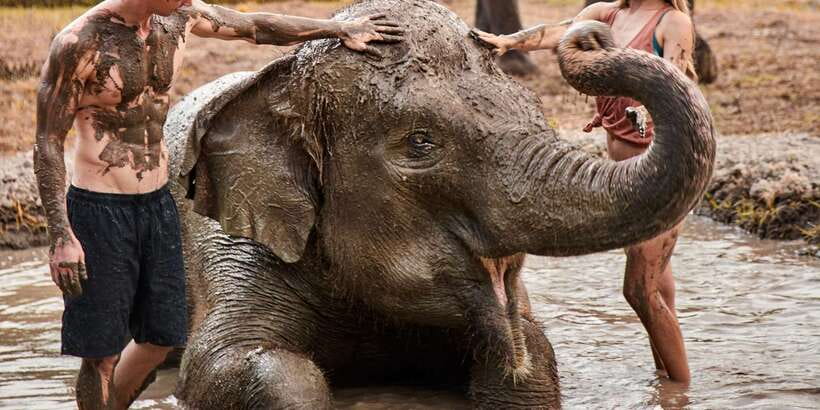
After feeding, you walk with the elephants to the mud and sand area. Here, earth and water become part of the activity. You can expect to get properly muddy while the elephants roll, splash, and play nearby.
The mud bath is the part that makes this experience different from a standard zoo visit. You are not standing behind a fence watching a scheduled show. You take part in the same basic routine, then observe how the elephants use mud on their bodies.
The explanation about mud is useful. During hot summer months, elephants bask in mud because it helps protect their skin and cool their bodies. The activity turns that simple fact into something you can see at close range.
Do not wear anything you care about. A swimsuit is the practical choice, even if you plan to keep a shirt or shorts over it. Sandals are easier than walking shoes once the ground is wet, though you should bring footwear suitable for walking between areas.
The minimum height rule is important for families. Children must be at least 120 centimeters tall, or about 3 feet 9 inches, to enter the mud fun area. Anyone at that height is charged the adult price, and children below the limit cannot take part in the mud section. The program is listed as suitable for ages 12 and above, so this is not a small-child activity.
Walking to the River Wos with the elephants
Once the mud play is finished, you walk with the elephants down to the nearby River Wos. This is a change of pace after the lively mud session. The river gives the animals a chance to rinse off, and you can join them for a splash and scrub.
The river section is also where the day feels most outdoorsy. You are moving between the zoo’s managed facilities and a natural water setting, while staying under the mahouts’ direction. You may bathe and play with the elephants, but the animals still decide how much they want to participate.
Expect to be wet. The mix of river water, mud, and tropical heat makes a change of clothes essential. Bali Zoo provides a towel, and showers are available after the activity, but your own dry clothes and a plastic bag for wet swimwear will make the end of the morning easier.
This part may not suit everyone. The program is not recommended for pregnant women or people with mobility impairments. You walk between areas, stand on wet ground, and take part in water and mud activities. If you have trouble with uneven or slippery surfaces, this is not the right Bali Zoo option.
A different pace of day, same stretch of Bali coast:
- Bali: Mount Batur Sunrise Guided Hike and Natural Hot Spring
★ 4.8 · 9,284 reviews - Bali: Full-Day Instagram Highlights Tour
★ 4.8 · 7,817 reviews - Bali: Sunrise Mount Batur Hike with Breakfast
★ 4.8 · 6,973 reviews - Bali/Nusa Penida: East & West Highlights Full-Day Tour
★ 4.7 · 6,263 reviews
Showers, lunch, and the rest of Bali Zoo
After the elephant session, you return to the zoo to shower and change. Lunch follows, and it is included in the $93 price. If the booking has more than 20 people, lunch is served as a buffet instead of the standard arrangement.
The meal matters because this is a long outing. You may leave your hotel before breakfast, spend a substantial period outdoors, and then continue exploring the zoo. A welcome snack and coffee or tea help at the start, but lunch is the pause that turns the program into a full-day visit rather than an expensive activity followed by another meal hunt.
After lunch, you can explore Bali Zoo on your own. Admission is included, with more than 300 rare and exotic animals across the wider zoo. Listed animals include Komodo dragons, Sumatran tigers, orangutans, and Bali starlings.
Set aside real time for this portion. The elephant activity is the clear focus, but zoo access adds value if you enjoy seeing other species. On a rainy day, however, you may be ready to change and leave rather than walk the grounds. One especially wet outing ended with the elephant and orangutan activities taking priority over the wider zoo, which is a useful reminder to keep expectations flexible.
Finding Kampung Sumatra can also be confusing once you arrive. The elephant area is a walk from the main gate, and signage may not make the route obvious. Ask at the entrance where to go, and allow extra time rather than wandering around in swimwear with a bag of dry clothes.
Is the orangutan breakfast upgrade worth it?
The optional breakfast with orangutans adds a second animal experience to the day. Bali Zoo presents it as a meal at the orangutan playground, which makes breakfast more memorable than eating in an ordinary restaurant.
I would treat this as a separate choice, not an automatic reason to book the elephant program. The elephant session already fills the morning, and the upgrade increases the cost. Also, breakfast with orangutans does not necessarily mean touching or posing right beside one. One account describes seeing orangutans in nearby trees and keeping at least three feet away for photos.
That distance is worth understanding before you pay for the add-on. You may get a close view in the orangutan area, but the animals are not there for a guaranteed handling session. If your priority is physical interaction, the elephant program is the stronger part of the day.
If you enjoy animal observation and want to make the most of your zoo admission, the breakfast may be worthwhile. If your budget is tight, keep the standard elephant experience and use the extra time to see the zoo collection instead.
What the $93 price really covers
At $93 per person, this is not a budget Bali attraction. The value comes from the amount packed into the day:
- Bali Zoo admission
- Welcome drink and snack
- Coffee or tea
- An English-speaking or Indonesian-speaking mahout
- Fruit for feeding the elephants
- The mud and sand session
- The River Wos bathing session
- Lunch
- Towel
- Insurance
- Return transfers, if included with your selected option
- Orangutan breakfast, only with the relevant upgrade
For comparison, the price is easier to justify if you need transport, want a full zoo visit, and would otherwise pay separately for meals and an elephant activity. It is harder to justify if you only want a short animal encounter or plan to skip the zoo after lunch.
Transfers add practical value. Pickup is offered from Kuta, Seminyak, Canggu, Nusa Dua, Tanjung Benoa, Jimbaran, Sanur, and Ubud. The driver is not always an English-speaking guide, so do not confuse a transfer with a guided cultural tour. Some drivers are highly praised for punctuality, English, and local conversation, while one booking had a driver who did not speak English and did not provide guiding.
Professional photos are another budget point. Photographers take pictures during the activity, but the photo package can cost around 90 euros or about $150 Australian dollars, based on the prices reported during the experience. You can take your own photos, and the staff may include you in pictures, so decide in advance how much you are willing to pay for the official set.
Practical preparation for a muddy morning
Pack for a water activity, not a normal zoo visit. You should bring:
- Swimwear
- A full change of clothes
- Sandals or walking shoes
- Sunscreen
- Insect repellent
- A bag for wet clothing
Bali Zoo supplies a towel, but your own towel may still be useful if you want extra drying time. Keep phones and valuables protected from mud and river water. The program does not state that every item can be kept dry during the activity, so use a waterproof pouch if you want your phone with you.
Parents need to plan carefully. Bali Zoo does not provide babysitting. Children left at the restaurant remain their parents’ responsibility, and children under 120 centimeters cannot enter the mud fun area. The age guidance also lists the program as suitable for adults and children 12 years old and above, so families should confirm the rules for their children before booking.
The activity lasts about 7 to 10 hours, depending on the selected option and start time. That includes transport when chosen, the elephant program, lunch, and time to explore the zoo. It is a poor fit for a tightly packed Bali schedule, but a good fit if you want one substantial day near Ubud.
Free cancellation is available up to 24 hours before the activity for a full refund, and reserve-now-pay-later booking is offered. Still, check the exact option, pickup location, start time, and inclusions before confirming, since breakfast and transfers depend on the package.
Who should book this Bali Zoo elephant experience?
I would recommend it to couples, families with older children who meet the height rules, and animal lovers who want more than a viewing platform. The strongest part is the guided contact: feeding, mud play, bathing, and the chance to watch the elephants behave at close range.
It also suits you if you value a structured day. The mahouts give instructions, staff manage the transitions, showers are available, lunch is included, and the zoo remains open to you afterward. That organization takes much of the stress out of planning a full outing.
I would hesitate if you dislike getting dirty, cannot manage wet or uneven ground, are pregnant, or have limited mobility. I would also think twice if $93 is near the top of your activity budget, especially if you are tempted by the extra photo package and orangutan breakfast.
Should you book it?
Book this if the idea of getting muddy beside rescued Sumatran elephants sounds better than simply taking a picture with one. The feeding, river bathing, and mahout-led explanations create a fuller experience than a brief encounter, and the included lunch, towel, showers, and zoo entry help explain the price.
Choose the standard option if you want the best balance of cost and time. Add the orangutan breakfast only if you want a second zoo activity and understand that it may involve watching the orangutans rather than touching them. Pack a swimsuit, dry clothes, and modest expectations about the schedule, then let the elephants decide the rhythm of the morning.
FAQ
Where does the Bali Zoo elephant experience start?
It starts at Bali Zoo’s main entrance, Jl. Raya Singapadu, Singapadu, Sukawati, Gianyar, Bali 80582. The activity ends back at the meeting point.
How long does the experience last?
The full activity lasts about 7 to 10 hours. Starting times vary, so check availability when choosing a date.
Is hotel pickup available?
Yes. Transfers are available from Kuta, Seminyak, Canggu, Nusa Dua, Tanjung Benoa, Jimbaran, Sanur, and Ubud. Pickup is around 6:30 a.m. from several southern Bali areas and around 7 a.m. from Ubud and Sanur.
What should I bring?
Bring swimwear, a change of clothes, sandals or walking shoes, sunscreen, and insect repellent. Bali Zoo provides a towel, showers, and changing facilities after the elephant activity.
Can young children join the mud bath?
Children must be at least 120 centimeters tall to enter the mud fun area. Children at that height are charged the adult price, and children below 120 centimeters cannot enter the mud area. The program is listed as suitable for ages 12 and above.
Is breakfast with orangutans included?
No. Breakfast with orangutans is an optional upgrade. The standard experience includes zoo admission, welcome refreshments, the elephant program, lunch, and other listed inclusions, but not the orangutan breakfast.
Recently added around Bali
- Bali: Private Lempuyang Temple, Water Temple & Rice Terraces★ 5.0 · 3 reviews
- Bali: Mountain Bike Tour and River Rafting with Lunch★ 5.0 · 3 reviews
- Bali: Sidemen Waterfall tour and temple purification★ 5.0 · 3 reviews
- Bali: Padangbai Blue Lagoon Scuba Diving Private Tour★ 5.0 · 3 reviews
- Bali’s Mystical Jungle Trek & Hidden Waterfall Adventure★ 4.3 · 3 reviews
- From Bali: Mount Bromo & Ijen volcanic private tour★ 5.0 · 3 reviews
- Bali: 7 Day Solo Traveler’s Yoga Retreat In Ubud★ 5.0 · 3 reviews
- Bali: Photo Shoot with a Private Vacation Photographer★ 5.0 · 3 reviews