
Reviewed · BALI
From Bali: 24-Hour Trip to Ijen Crater & Javanese Breakfast
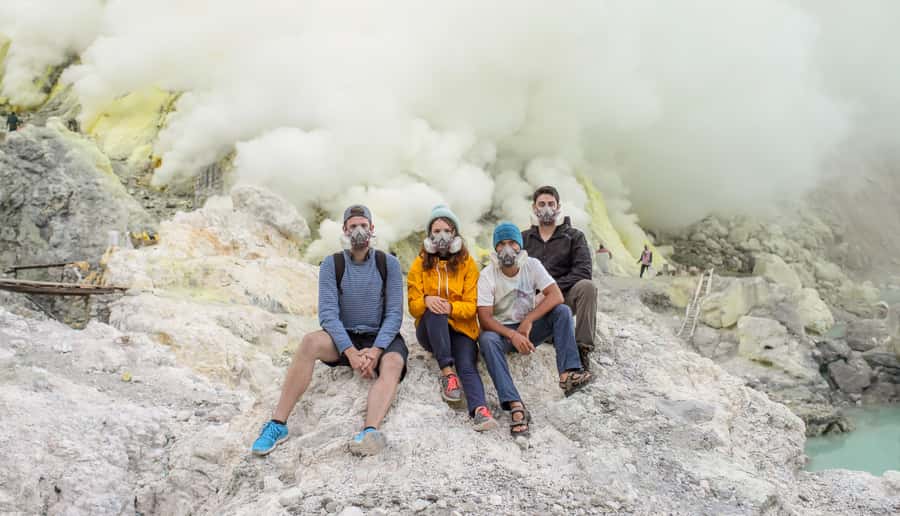
The most unusual part of this trip is not simply reaching a volcano. It is descending into the crater before dawn, where sulfur gas, miners, and the rare blue fire create a scene unlike a normal mountain hike. Then, as daylight arrives, you see Kawah Ijen’s huge acid lake from the crater rim.
I like the way this trip handles the hard logistics. Drivers, ferries, accommodation, meals, entrance fees, equipment, and guides are arranged for you. I also like the local touch: you sleep in East Java, eat home-cooked food, and finish with a hearty Javanese breakfast rather than rushing straight back to Bali. The drawback is the long journey, little sleep, and a steep hike that is not suitable for anyone with mobility problems.
In This Review
- Key points to know before booking
- Why Kawah Ijen is worth the long trip from Bali
- The 1:00 PM departure from Seminyak
- The 75-minute ferry crossing to Java
- Dinner and a few hours of sleep in East Java
- The climb to Kawah Ijen’s 2,370-meter rim
- Descending into the crater before sunrise
- Blue fire, sulfur gas, and the acid lake
- The Javanese breakfast after the hike
- The long return to Seminyak
- What the $128 price really buys
- Who should book this Ijen trip?
- Should you book From Bali to Kawah Ijen?
- FAQ
- Where does the trip start?
- How long does the activity last?
- How do I reach Kawah Ijen from Bali?
- Is accommodation included?
- Is breakfast included?
- What equipment is provided?
- Is the blue fire guaranteed?
Key points to know before booking
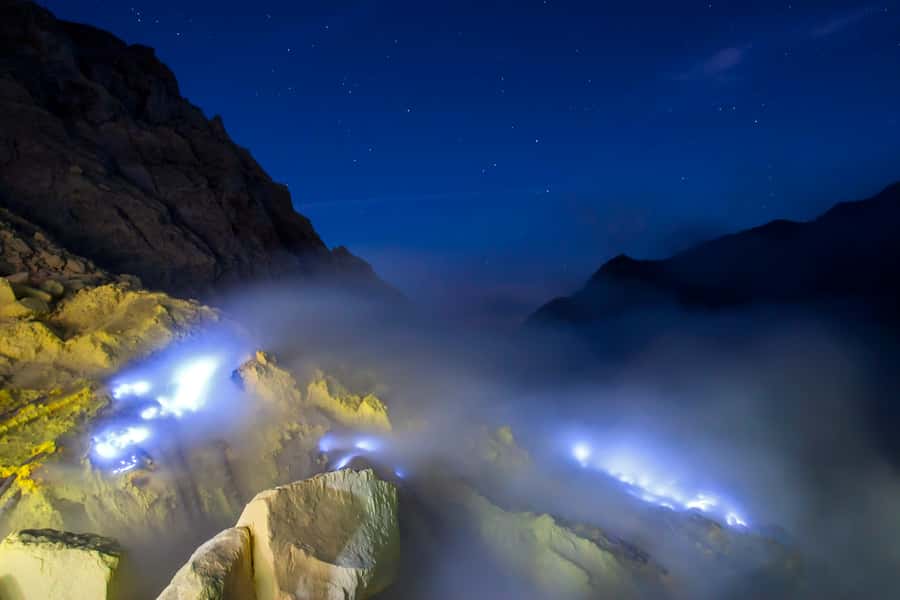
- The blue fire requires a pre-dawn crater descent: It is one of the tour’s great draws, but volcanic conditions and smoke can prevent a clear view.
- You travel by road and ferry: The journey from Seminyak includes about 4.5 hours by van, a 75-minute ferry crossing, and another hour on Java.
- You get a short rest in East Java: A private room, dinner, and several hours of sleep make the night hike more manageable.
- The trail is steep in places: Good trekking shoes, warm clothing, and a reasonable level of fitness matter more than speed.
- Former miners guide the crater walk: Guides including Hari and Pur have experience on the mountain and help with difficult sections.
- The package covers the practical essentials: Transport, return ferry, accommodation, meals, entrance fees, English-speaking guides, gas masks, headlights, and gloves are included.
Why Kawah Ijen is worth the long trip from Bali
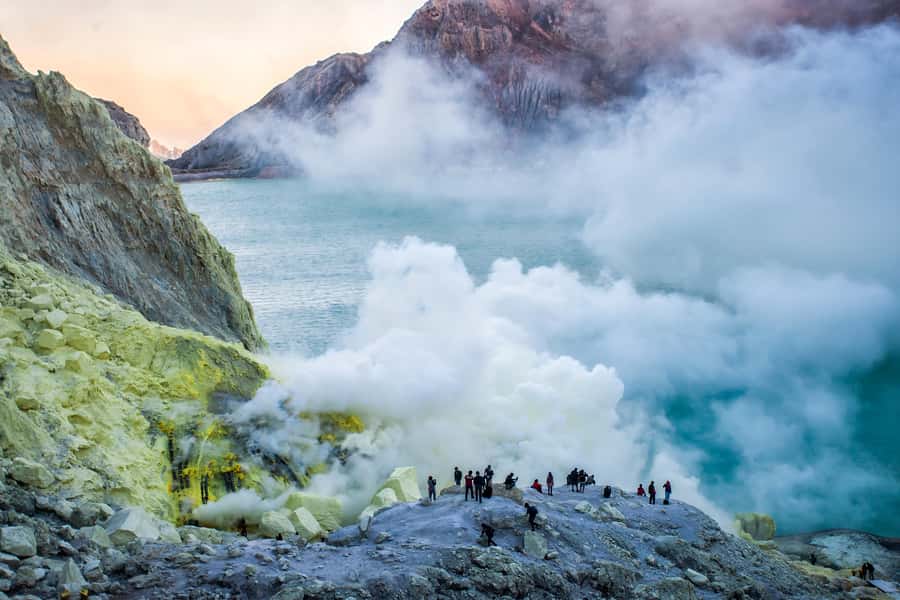
Kawah Ijen is an active volcano in East Java, reached from Bali by a combination of road travel and ferry. Its crater contains what is described as the world’s largest acid lake, and the mountain is also a working sulfur mine.
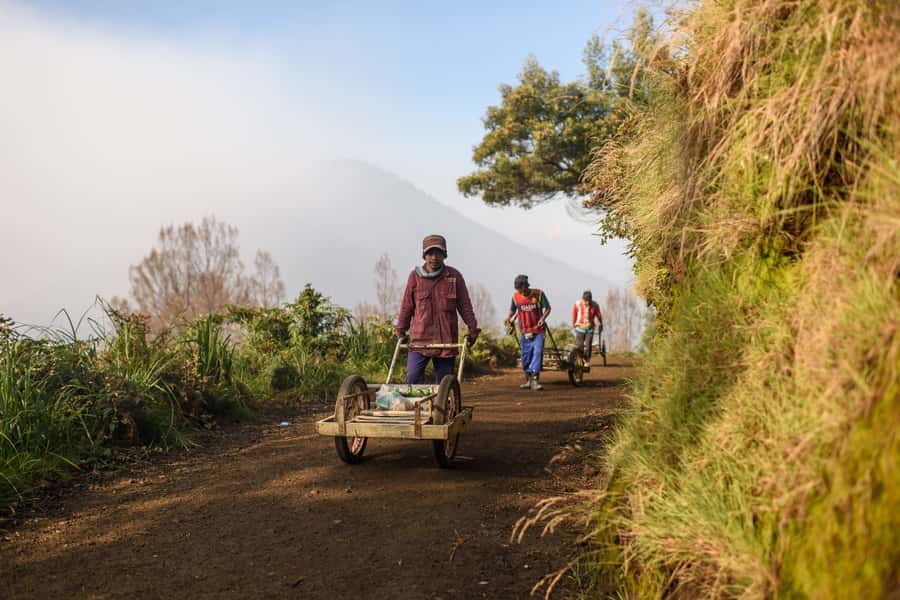
That combination gives the visit real substance. You are not just walking to a viewpoint for a quick photograph. You see a volcanic environment that is still tied to local work, with Javanese miners carrying sulfur from the crater. The setting can feel raw and confronting, especially when you are wearing a gas mask and watching workers deal with fumes as part of their daily routine.
The blue fire is caused by burning sulfur gases. It is usually seen in darkness during the descent, before sunrise. Keep your expectations sensible: the view depends on volcanic activity, smoke, weather, and official access conditions. Some departures have seen the blue flames clearly, while others have found the crater too smoky or closed because of heavy volcanic activity.
The sunrise is the more dependable reward when access is permitted. From the upper crater, changing light reveals the lake and the surrounding volcanic slopes. The view is dramatic, but the hike is a serious part of the day rather than a short stroll.
Other Bali days people book on the same trip:
- Bali: Mount Batur Sunrise Guided Hike and Natural Hot Spring
★ 4.8 · 9,284 reviews - Bali: Full-Day Instagram Highlights Tour
★ 4.8 · 7,817 reviews - Bali: Sunrise Mount Batur Hike with Breakfast
★ 4.8 · 6,973 reviews
The 1:00 PM departure from Seminyak
The meeting point is Gusto Gelato Cafe on Jalan Mertanadi in the Seminyak Kerobokan area. The trip is designed to collect you in the afternoon, leaving Bali at about 1:00 PM.
Your first van ride takes roughly 4.5 hours. This is a useful time to understand the tradeoff involved. You save yourself the trouble of arranging separate Bali transport, ferry tickets, Java accommodation, and crater access, but you spend a substantial part of the trip sitting in a vehicle.
If you are staying in western Bali, the pickup is more convenient. If you are coming from farther away, the road time may feel especially long. Some departures use separate transport arrangements for Seminyak and Ubud pickups, which can help keep the transfer organized, but the full journey is still lengthy.
Bring a small backpack only. Large bags and luggage are not allowed, so leave your main suitcase at your Bali accommodation if possible. Carry your passport or another photo identity document, since you need identification for the trip and ferry crossing.
The 75-minute ferry crossing to Java
After the first van transfer, you cross by ferry to East Java. The crossing takes about 75 minutes and is part of the adventure, but it also adds to the stop-start nature of the journey.
This is not a private speed transfer. You should expect waiting and shared transport procedures around the ferry. The advantage is that the crossing gives you a break from the van and marks the change from Bali to Java.
After the ferry, you continue by van for about an hour to your East Java accommodation. The guide or driver helps keep the connections in order, which is important because a missed ferry or delayed road transfer would affect the night climb.
Dinner and a few hours of sleep in East Java
You arrive in the early evening and have a local dinner before resting in your room. Accommodation is included, and the stay has been praised for being clean, comfortable, and more pleasant than some people expect from a short volcano stop.
The rest period is not a full night. The itinerary allows about six hours before the next transfer toward Ijen, so think of it as a useful recovery break rather than a proper hotel holiday. Even a few hours in a private room can make a major difference before walking uphill in the dark.
The food is one of the strongest parts of the package. Dinner is home-cooked Javanese food, and vegetarian meals have been provided when requested in advance. The breakfast afterward is also substantial, with local dishes, fruit, and distinctive pancakes mentioned as memorable touches.
This is where the package earns much of its $128 price. You are paying not only for a volcano entrance ticket but also for the long cross-island transport, ferry, accommodation, two meals, equipment, and several people coordinating the journey.
A different pace of day, same stretch of Bali coast:
- Bali/Nusa Penida: East & West Highlights Full-Day Tour
★ 4.7 · 6,263 reviews - Bali: Ubud Gorilla Face ATV and Ayung Rafting Trip with Meal
★ 4.8 · 4,765 reviews - Ubud: Waterfall, Rice Terraces & Monkey Forest Tour
★ 4.9 · 4,269 reviews - Mount Batur: Sunrise Jeep Tour & Natural Hot Spring
★ 4.8 · 2,512 reviews
The climb to Kawah Ijen’s 2,370-meter rim
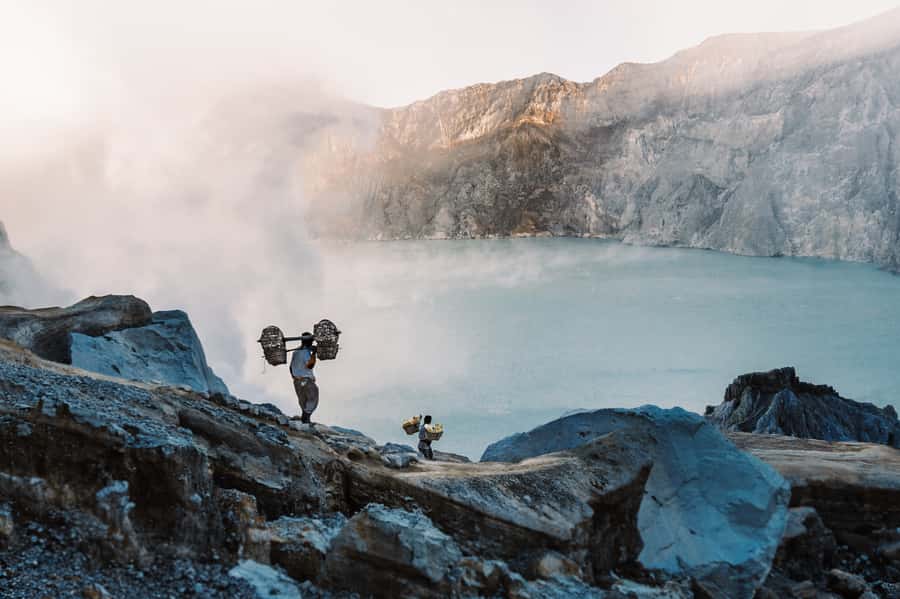
After the rest stop, you travel by van for about an hour to the Ijen area. The guided mountain portion lasts around six hours and includes the climb, crater access, views, and time around sunrise.
The trail rises to the rim of the 2,370-meter volcano. It is described as manageable for people with a basic level of fitness, but steep sections make it a genuine trek. You will find rest points along the route, and your guide should help you set a pace that you can maintain.
Good footwear is essential. Choose sports or trekking shoes with firm grip, not smooth-soled trainers. The route can be difficult underfoot, particularly during the descent into the crater, where solid footholds and careful movement matter.
Warm layers are just as important. Bring socks, a T-shirt, sweatshirt, warm jacket, raincoat, and cap or hat. Temperatures at the summit can feel cold, with one departure noting around 12 degrees Celsius in January. Conditions may change, so pack for wind and rain rather than assuming Bali’s warmth will continue at altitude.
The supplied gas mask, headlight, and gloves are practical rather than decorative. The headlight helps you manage the dark trail, while gloves protect your hands on rough sections and reduce the temptation to touch your eyes around sulfur fumes.
Descending into the crater before sunrise
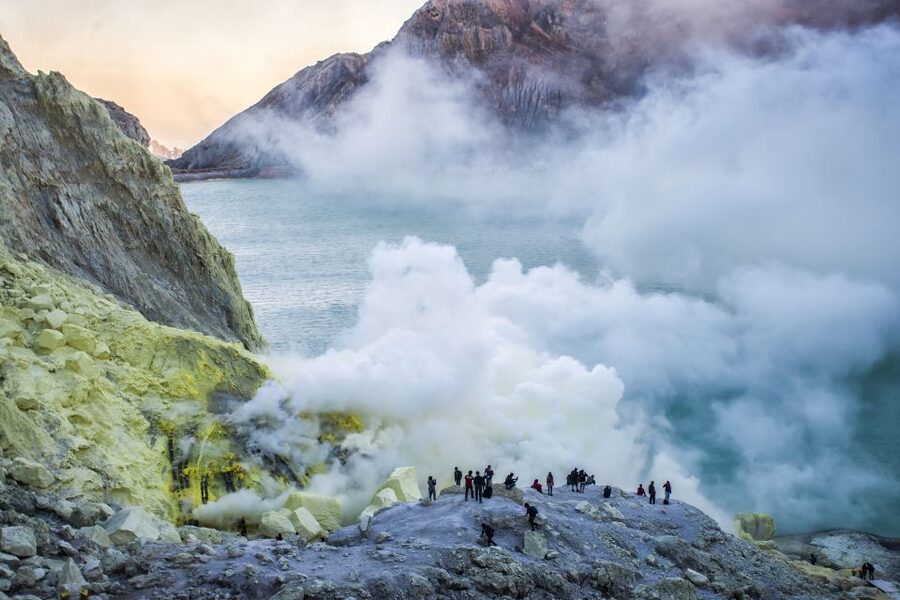
The crater descent is the most demanding and unusual part of the outing. It is also the section where you should listen closely to your guide and avoid rushing for photographs.
At the crater floor, the environment changes from a mountain walk to an active industrial and volcanic site. You may see sulfur being collected and carried by Javanese miners. The sulfur deposits and fumes explain why a gas mask is supplied and why the crater route requires care.
The guides are especially valuable here. Hari, Harry, and Pur are among the guides praised for their help on the mountain. Pur and some other guides have worked as sulfur miners, giving them direct experience of the terrain and working conditions.
That does not make the descent easy or risk-free. The path can be steep, smoke can reduce visibility, and volcanic conditions can change. Stay with the guide, use the provided mask properly, and accept that the blue fire may not be visible. A responsible operator may limit access or change the plan when the volcano is too active.
This is also a good place to keep the human side of the visit in view. The sulfur mining is not staged entertainment. You are seeing difficult work carried out in a hazardous setting. A respectful attitude, low-key photography, and attention to instructions are appropriate.
Blue fire, sulfur gas, and the acid lake
If conditions cooperate, the blue fire appears before dawn as glowing blue sulfur flames. It is a strange, fleeting sight and one of the main reasons people choose Ijen over a more conventional sunrise hike.
The phenomenon is not guaranteed. Heavy smoke has prevented some departures from seeing it, and official volcanic restrictions can stop the crater descent altogether. The tour has sometimes offered a return visit when volcanic activity made the main climb impossible, but you should confirm the current arrangement before booking if the blue fire is your single reason for going.
As the sky lightens, the acid lake becomes the focus. From beside the crater, you can see the water and the volcanic walls in a completely different way than in darkness. The sunrise section does not require the blue fire to be successful. Even when smoke blocks the flames, the upper views and sulfur mine can still make the outing worthwhile.
Bring a camera, but protect it from moisture and sulfur fumes. Your guide can help with photographs, yet the best pictures are usually the ones you take after listening to safety advice rather than stepping into an unsafe position.
The Javanese breakfast after the hike
Once the guided visit ends, you return by van for about an hour to East Java and stop for a buffet-style Javanese breakfast. This is scheduled for roughly 1.5 hours.
The timing is excellent. After a steep climb, a hot, generous local meal feels like part of the attraction rather than a routine stop. The food has included home-cooked specialties, fruit, vegetarian options, and unusual pancakes.
This meal also gives you time to slow down before the return journey. You have already been awake for the climb, so the breakfast stop is a practical reset. It is one reason I would choose this organized trip over trying to arrange the same route independently in a hurry.
The long return to Seminyak
After breakfast, the return journey reverses the route: about an hour by van, 75 minutes by ferry, then roughly 4.5 hours by van back to the meeting point on Jalan Mertanadi.
The trip is advertised as one day and lasts about 24 hours, but the schedule includes an overnight rest, a night climb, and extensive transport. Read that as a compact overnight expedition, not a relaxed day tour.
The long return is the main weakness. You may be tired, and the final van ride can feel even longer after the hike. Still, having the same general transport chain arranged for you is a major convenience. You do not need to negotiate Java transfers at dawn or work out how to reconnect with Bali on your own.
The activity ends back at Gusto Gelato Cafe. Pickup and drop-off from Bali, the return ferry, entrance fees, and the English-speaking guide are included.
What the $128 price really buys
At $128 per person, this is not a low-cost local hike. It is a cross-island package with a lot of moving parts.
The price includes:
- Bali pickup and return
- Van transport in Bali and Java
- Return ferry travel
- East Java accommodation
- Local dinner
- Buffet Javanese breakfast
- Kawah Ijen entrance fees
- English-speaking guides
- Gas mask
- Headlight
- Gloves
I consider the value good if you have limited time in Java and want the logistics handled. Booking each element separately might offer more control, but it would require careful timing around the ferry, a night arrival, accommodation, entrance rules, equipment, and a guide for the crater.
The price does not include personal needs, insurance, or extra guide services. You should bring money for anything beyond the included meals and carry your own travel insurance. The reserve-now-and-pay-later option and free cancellation up to 24 hours before departure add useful flexibility, especially because volcanic conditions can change.
Who should book this Ijen trip?
I would recommend it to a fit visitor staying in Bali who wants one major Java experience without giving up several days to planning. It suits solo visitors particularly well because the team handles the transfers, accommodation, meals, equipment, and mountain guidance. Solo departures can still receive close attention, and the guides help with photographs as well as safety.
It is also a good choice if you care about local food and working culture, not only scenic viewpoints. The Javanese meals, sulfur mining, and former-miner guides add context to the volcano.
I would not choose it if you dislike overnight travel, have trouble with steep trails, or need a guaranteed blue fire sighting. The itinerary is physically demanding, and volcanic activity can change access or visibility. People with mobility impairments should not book this activity.
Should you book From Bali to Kawah Ijen?
Book it if you want a tightly organized, high-impact volcano trip and accept the long road journey, short sleep, and real hike. The strongest reasons are the rare blue fire possibility, the acid lake at sunrise, the chance to see sulfur mining, and the capable local guides, especially Hari and Pur.
Skip it if you want a gentle Bali day excursion or if the blue fire is the only result you will consider worthwhile. For the right person, though, this is a memorable way to reach Ijen from Bali, with the difficult details handled and the local food and human side of East Java included.
FAQ
Where does the trip start?
The meeting point is Gusto Gelato Cafe on Jalan Mertanadi in the Seminyak Kerobokan area of Bali.
How long does the activity last?
The activity is described as a 24-hour trip lasting one day. The schedule includes an overnight stay in East Java, a night climb, and the return journey to Bali.
How do I reach Kawah Ijen from Bali?
You travel by van from Bali, take a ferry for about 75 minutes to Java, continue by van to East Java, and then travel onward to the Ijen area.
Is accommodation included?
Yes. Accommodation in East Java is included, along with a local dinner before the climb.
Is breakfast included?
Yes. A buffet-style Javanese breakfast is included after the Ijen visit.
What equipment is provided?
The tour provides a gas mask, headlight, and gloves. You still need to bring trekking or sports shoes, warm clothing, rain protection, a small backpack, and identification.
Is the blue fire guaranteed?
No. The blue fire depends on volcanic conditions, smoke, visibility, and official access. Heavy volcanic activity can also prevent access to parts of Kawah Ijen.
Recently added around Bali
- Bali: Private Lempuyang Temple, Water Temple & Rice Terraces★ 5.0 · 3 reviews
- Bali: Mountain Bike Tour and River Rafting with Lunch★ 5.0 · 3 reviews
- Bali: Sidemen Waterfall tour and temple purification★ 5.0 · 3 reviews
- Bali: Padangbai Blue Lagoon Scuba Diving Private Tour★ 5.0 · 3 reviews
- Bali’s Mystical Jungle Trek & Hidden Waterfall Adventure★ 4.3 · 3 reviews
- From Bali: Mount Bromo & Ijen volcanic private tour★ 5.0 · 3 reviews
- Bali: 7 Day Solo Traveler’s Yoga Retreat In Ubud★ 5.0 · 3 reviews
- Bali: Photo Shoot with a Private Vacation Photographer★ 5.0 · 3 reviews