
Reviewed · PRIVATE DRIVERS
Bali: Countryside Bird Watching Tour with Hotel Transfer
Ubud’s rice fields are the real draw here. At dawn or late afternoon, you may watch kingfishers flash past irrigation channels, herons work the paddies, and sunbirds hover around flowers while a local guide identifies calls you would likely miss. Guides such as Agung, Agus, and Suker are praised for sharp eyes and a strong feel for Bali’s countryside.
I like the mix of quiet village walking and useful transport, especially if you have only half a day in Bali. I also like that the tour includes binoculars, a telescope, entry fees, and hotel pickup for $48. The main consideration is simple: this is a general Ubud nature outing with birdwatching, not a tightly focused expedition for expert bird photographers.
In This Review
- Key points at a glance
- What this Ubud birdwatching tour is really like
- Rice terraces and village paths near Ubud
- Petulu Village and the white-plumed herons
- Tjampuhan Ridge and early morning bird activity
- The birds you might see
- Guides, equipment, and the value of local knowledge
- Timing, transport, and optional extras
- Is $48 a fair price?
- What to bring and how to improve your sightings
- Who should book this Ubud bird tour?
- FAQ
- How long does the birdwatching tour last?
- What areas does the tour visit?
- Are hotel transfers included?
- Is birdwatching equipment provided?
- What birds might I see?
- Is the tour suitable for beginners?
- What should I wear?
- Can I add coffee tasting or a massage?
- Can I cancel the booking?
Key points at a glance
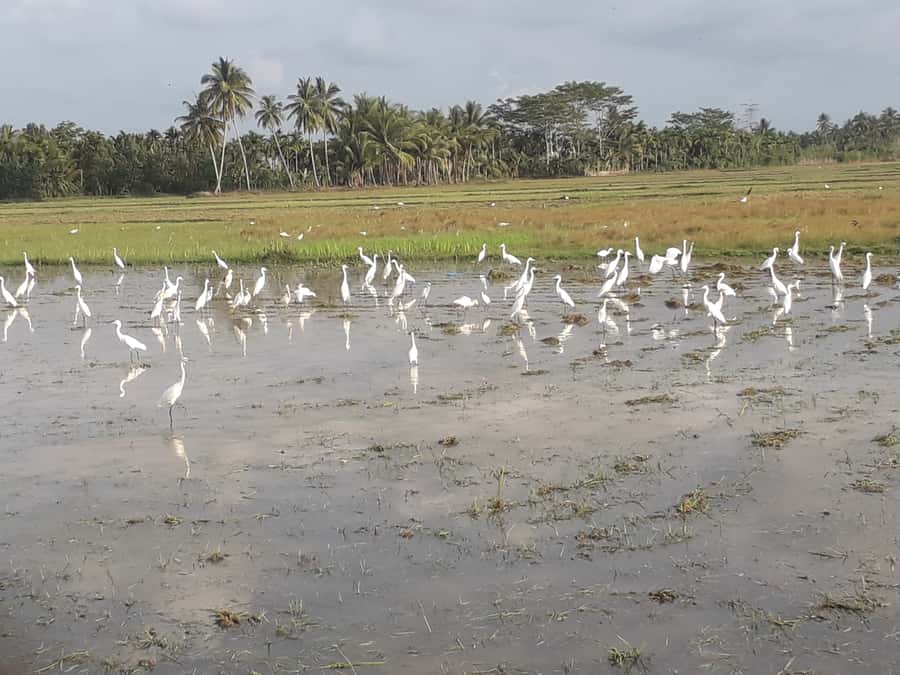
- Petulu Village’s heron trees: See white-plumed herons and Java pond herons gathering and nesting around the village.
- Three contrasting birding settings: Search rice fields, forested paths, and the open trails of Tjampuhan Ridge.
- Guides who listen as well as look: Agung and several other guides are noted for identifying birds by their calls and spotting them at a distance.
- A flexible half-day plan: Earlier starts can improve bird activity and help you avoid busy periods.
- More than a bird list: Guides often explain rice growing, Balinese faith, temples, village life, plants, insects, lizards, and squirrels.
- Good value for casual birders: Transport, equipment, tickets, water, and a small group of up to 10 are included.
What this Ubud birdwatching tour is really like
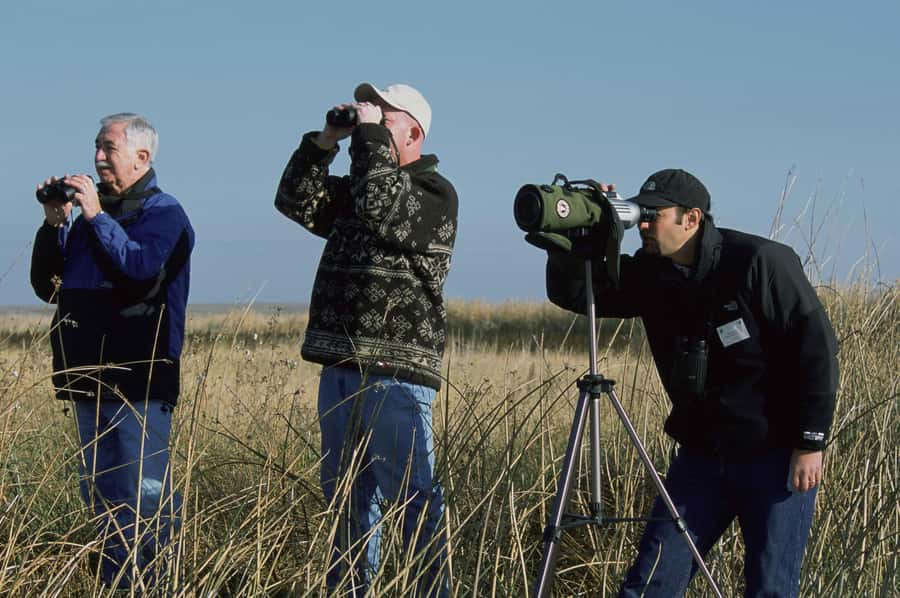
This five-hour outing gives you a practical introduction to Bali’s common and less obvious birds without asking you to organize several remote locations yourself. You walk on village trails, rice-field paths, natural tracks, and ridge paths, with road transfers between some areas.
The pace is generally relaxed. You stop often, listen, scan trees and paddies, and move on when the guide finds a better position. That makes the outing suitable for a curious beginner who wants to learn what is flying around Ubud, as well as for a casual birder adding a few new species to a Bali trip.
I would set your expectations carefully. Bird activity changes with season, weather, and time of day. You could see kingfishers, herons, egrets, orioles, munias, bulbuls, and sunbirds, but no guide can promise a particular bird. Several people had excellent sightings, including four Javan kingfishers or even ten in the rice fields, while others had a quieter morning with fewer birds.
That uncertainty is part of birdwatching, but it matters when you are deciding how to spend your limited time. If you need a guaranteed list of rare species, choose a specialist birding service with a more targeted itinerary. If you want birds plus scenery, culture, and an easy introduction, this tour makes more sense.
More private drivers in Bali:
- Bali: Full-Day Nusa Penida Highlights Tour with Transfer
★ 4.5 · 1,798 reviews - Bali: ATV Mason Jungle Buggy Adventure with Lunch & Transfer
★ 4.2 · 152 reviews - From Bali: Ijen Volcano Sunrise Hike with Transfer & All Fee
★ 4.8 · 139 reviews
Rice terraces and village paths near Ubud
The countryside portion usually provides the strongest sense of place. You walk beside rice paddies and through traditional village areas, seeing the narrow irrigation channels and working farmland that give Ubud its rural character.
The rice fields are not just a pretty backdrop. They attract herons, egrets, pond birds, kingfishers, and small seed-eating birds. Open water and grass give you a better chance of spotting birds in the open, while nearby trees offer cover for orioles, bulbuls, sunbirds, and other canopy species.
Your guide may also point out signs of everyday Balinese life. Several guides are especially good at explaining rice cultivation, local beliefs, temples, and village customs. That cultural layer helps the walk feel less like a checklist of species and more like a look at how the countryside works.
Wear shoes with a firm sole. These are natural paths, not polished park walkways. After rain, some sections may be muddy or slippery, and the route includes uneven ground and inclines. You should be comfortable walking for several hours and managing open sun, damp patches, and insects near paddies.
Petulu Village and the white-plumed herons
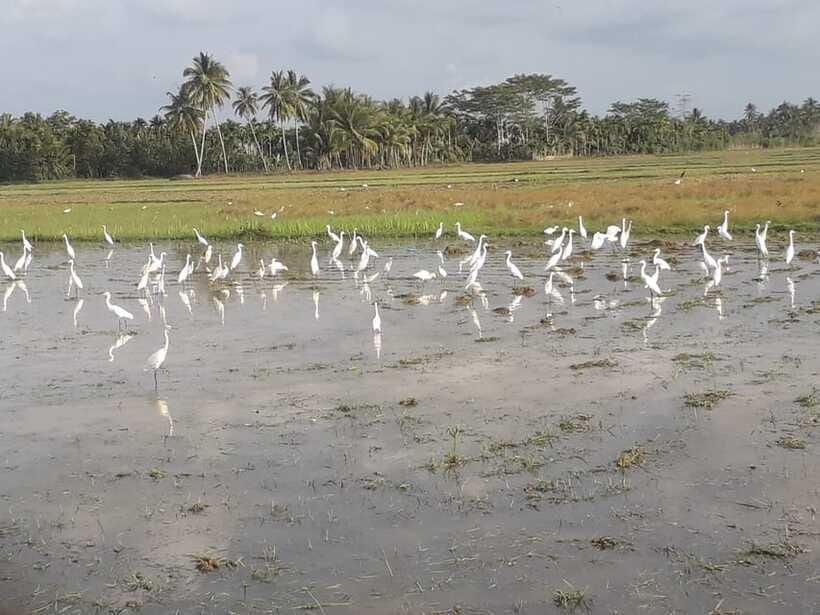
Petulu Village is the tour’s most distinctive stop. It is known for large gatherings of white-plumed herons and Java pond herons, with birds resting and nesting in trees around the village.
Seeing hundreds of egrets gathered in the trees can be striking, especially later in the day when they return to roost. This stop offers a different kind of birding from the quiet search for one bird in a hedgerow. Instead of waiting for a single flash of movement, you can watch the habits of a large colony and photograph the trees filled with birds.
There is a tradeoff. One person found the heron site underwhelming and felt that more time at Tjampuhan Ridge, especially at 5 or 6 a.m., would have been better. That is a fair point if your priority is a longer species search. Petulu is memorable for scale and setting, but it may not be the most exciting stop for an experienced birder who wants rare forest birds.
Ask about timing when you book. The best choice depends on your interests. If you want to see the village colony and enjoy a broad Ubud outing, keep it in the plan. If you are chasing specific birds, ask whether more time can be spent at the ridge or rice fields.
Tjampuhan Ridge and early morning bird activity
Tjampuhan Ridge is one of Ubud’s pleasant walking spots and a useful place to scan trees and open areas. The ridge combines a natural path with views over Ubud’s surrounding countryside, giving you a scenic walk even during a slow birding period.
Early starts matter here. Birds are often most active in the early morning, before heat and human activity build. One guide suggested leaving earlier to improve the morning, and another person specifically wished the ridge walk had begun around 5 or 6 a.m. If birding is your main goal, request the earliest available departure rather than treating the start time as a minor detail.
At the ridge, keep noise low and watch the treetops as well as the path ahead. Your guide may hear an oriole, bulbul, sunbird, or kingfisher before you see it. The supplied binoculars and telescope help, but your guide’s ability to locate a bird quickly is often more useful than the equipment alone.
The ridge is not a wheelchair-friendly promenade. Uneven ground, slopes, and natural paths make this a poor fit for wheelchair users, people with significant mobility problems, or anyone with a low level of fitness.
A different pace of day, same stretch of Bali coast:
- Bali: Mount Batur Sunrise Guided Hike and Natural Hot Spring
★ 4.8 · 9,284 reviews - Bali: Full-Day Instagram Highlights Tour
★ 4.8 · 7,817 reviews - Bali: Sunrise Mount Batur Hike with Breakfast
★ 4.8 · 6,973 reviews - Bali/Nusa Penida: East & West Highlights Full-Day Tour
★ 4.7 · 6,263 reviews
The birds you might see
The tour description names several regular Bali species, and the sightings reported on different outings add useful detail. You might find:
- Javan pond heron in paddies and wet areas
- Black-naped oriole high in the trees
- White-headed munia in grassy open ground
- Yellow-vented bulbul around gardens and village vegetation
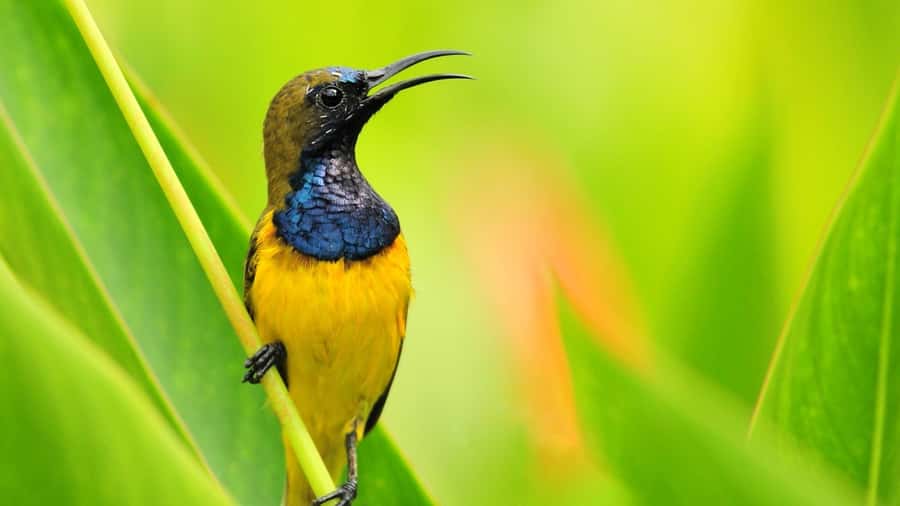
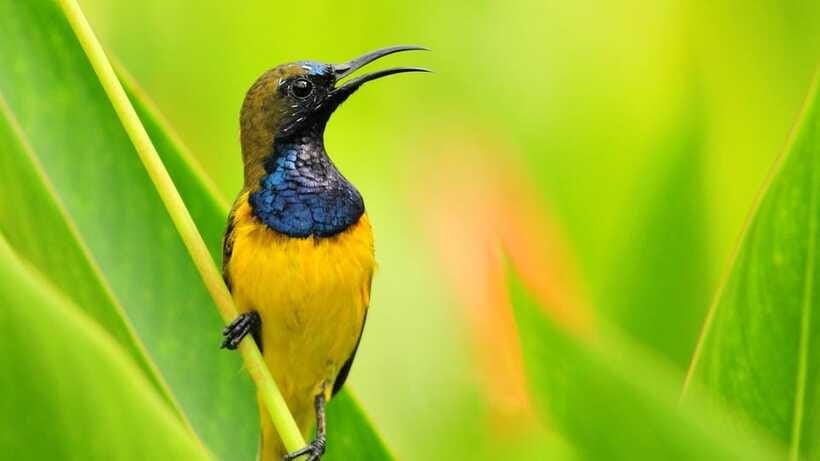
- Olive-backed sunbird feeding near flowers
- Javan kingfisher and white-collared kingfisher near suitable water and woodland
- Chestnut malkoha, greater coucal, flameback woodpecker, and colorful pigeons
The Javan kingfisher is a particular target for many people, and the guides have taken birders to places where these birds were found. One person saw a kingfisher almost immediately after leaving the car, while another group saw four. Those are excellent results, but you should regard them as fortunate sightings rather than a promise.
The guide’s ear can be as important as the telescope. Agung, Agus, Suker, and other guides have been praised for recognizing bird calls and locating birds far from the path. Beginners may find this especially helpful because Bali’s trees can look full of movement without making identification easy.
You may also see more than birds. Insects, lizards, squirrels, native plants, and trees can add interest when the birds are quiet. That wider focus is a strength for most visitors, but it explains why the tour may feel too broad for an expert who wants uninterrupted bird photography.
Guides, equipment, and the value of local knowledge
Guide quality is one of the strongest reasons to book this particular outing. Agung is repeatedly singled out for his patience, friendly manner, ability to spot distant birds, and skill at identifying calls. Agus and Suker are also praised for bird knowledge, local culture, and adapting the outing to changing conditions.
Guides have adjusted departure times, changed locations during bad weather, and found alternative viewing spots when conditions were poor. One guide moved the outing to a cafe overlooking rice paddies, where the change in setting produced another group of birds. That kind of flexibility can save a morning when rain or heat changes bird activity.
The cultural explanations are not filler. You may hear about Balinese spirituality, temples, rice farming, village customs, and local history as you move between stops. If you want only species names and habitat notes, tell your guide clearly at the start. If you enjoy connecting the wildlife to daily life, this is one of the tour’s best features.
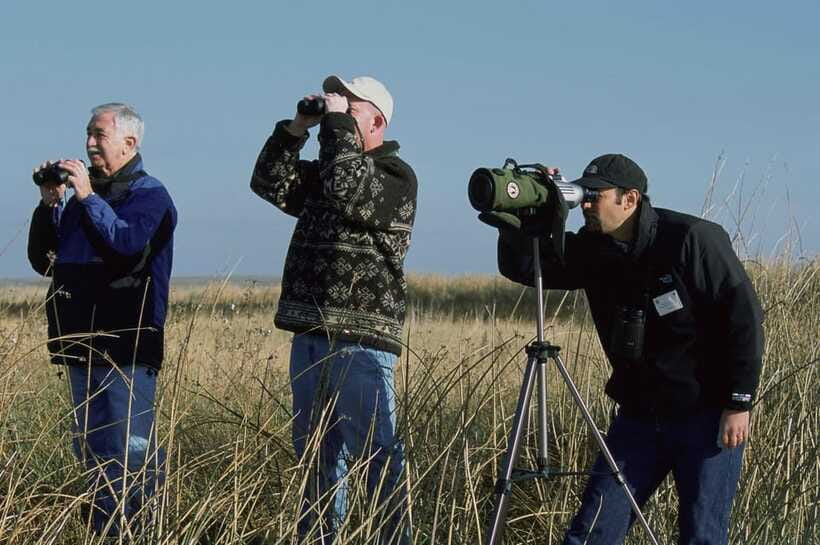
Binoculars and a telescope are included, along with mineral water. One person preferred using personal binoculars, so bring your own if you already have a pair that fits your eyes well. A camera is welcome, but avoid flash, which can disturb birds.
Timing, transport, and optional extras
Hotel pickup and drop-off are included, and you should be ready in the lobby five minutes before the start. This matters in Bali, where driving between areas can take patience. Having a local driver is a real benefit, particularly if you are unfamiliar with the roads and traffic.
The group is limited to 10 people, though some outings may be much smaller. A one-on-one walk gives you more freedom to stop for photographs or focus on a target species. In a larger group, you may need to share the telescope and move at the guide’s pace.
The available add-ons can include coffee tasting and a traditional massage, depending on the option you choose. Confirm what is included before booking. A coffee stop may appeal if you want a wider cultural experience, but one person felt a coffee establishment took time away from searching for kingfishers and seemed commercially driven.
That is useful advice for planning. If you choose an add-on, understand that you are trading birding time for another activity. For a first visit to Bali, that trade may be worthwhile. For a short, serious birding session, skip extras if the booking option allows it.
Is $48 a fair price?
At $48 per person, the price is reasonable for a five-hour guided outing that includes hotel transport, entry tickets and donations, binoculars, a telescope, water, and an English-speaking guide. You are also paying for local route knowledge and the time saved by not having to locate several countryside sites yourself.
The value is strongest if you are staying outside central Ubud, have limited time, or do not want to arrange transport. It is also good for beginners who lack equipment or do not know Bali’s bird calls.
The value is weaker if you already have excellent binoculars, a private driver, and a detailed birding plan. In that case, you may want a guide who specializes more narrowly in serious bird photography or rare species. The tour’s broad mix of nature and culture is helpful for most people, but it is not designed as an all-day specialist survey.
You also get the comfort of free cancellation up to 24 hours before the start and the option to reserve now and pay later. Those terms are useful if your Bali schedule is still moving around.
What to bring and how to improve your sightings
Wear lightweight, comfortable clothing in neutral colors. Bright clothing can make it harder to approach birds, while a hat, sunscreen, and sunglasses protect you in the open rice fields.
Good-grip walking shoes are essential. Add insect repellent, especially if you start at dawn or finish near dusk. Carry a camera if photography matters to you, but keep the flash off and be ready for birds to move quickly.
At the start, tell your guide what you want. You may be interested in kingfishers, photography, calls, local culture, or simply a pleasant walk with a few birds. Clear priorities can help the guide decide how long to stay at a site and whether to favor the ridge, rice paddies, forest paths, or Petulu Village.
Keep your voice low and move slowly near viewing spots. Ask the guide to repeat a call or point out the exact branch. If you are new to birding, request a list of species after the tour. One guide later sent a list and photographs to help with identification, a thoughtful follow-up that can make the morning more useful.
Who should book this Ubud bird tour?
You should book it if you want a half-day nature outing with real birding value, local transport, and plenty of cultural context. It suits beginners, casual birders, photographers with limited time, and people who want to see the Ubud countryside without planning every stop.
You should also consider it if you are staying outside Ubud. Hotel pickup, local driving, and a guide who knows where to pause can make the $48 fee worthwhile.
Think twice if you have significant mobility limits, use a wheelchair, are pregnant, or find several hours of uneven walking difficult. You should also choose a more specialized service if your main goal is a strict species list, rare birds, or advanced photography.
For most visitors, I would request the earliest start, ask for a bird-focused route, and confirm whether coffee or other add-ons are part of the chosen option. Book it for the combination of rice fields, village life, and skilled local spotting, not for guaranteed birds.
FAQ
How long does the birdwatching tour last?
The tour lasts five hours.
What areas does the tour visit?
The experience includes Ubud’s countryside and rice fields, Petulu Village, and Tjampuhan Ridge. Exact timing at each location can vary.
Are hotel transfers included?
Yes. Hotel pickup and drop-off are included. You should be ready in your hotel lobby five minutes before the start.
Is birdwatching equipment provided?
Yes. Binoculars and a telescope are included. You can also bring your own binoculars and camera.
What birds might I see?
Possible sightings include Javan pond herons, white-plumed herons, black-naped orioles, white-headed munias, yellow-vented bulbuls, olive-backed sunbirds, kingfishers, malkohas, coucals, woodpeckers, and pigeons. Sightings depend on weather, season, and time of day.
Is the tour suitable for beginners?
Yes. The English-speaking guide can help identify birds by sight and call, and the tour also includes explanations of Balinese culture and the countryside.
What should I wear?
Wear comfortable walking shoes with good grip and neutral-colored clothing. Bring a sun hat, sunglasses, sunscreen, and insect repellent. Some paths may be muddy or slippery after rain.
Can I add coffee tasting or a massage?
Optional add-ons can include coffee tasting and traditional massage, but availability depends on the tour option. These extras are not included in the $48 base price.
Can I cancel the booking?
Yes. You can cancel up to 24 hours in advance for a full refund. The activity also offers reserve-now, pay-later booking.
Recently added around Bali
- Bali: Private Lempuyang Temple, Water Temple & Rice Terraces★ 5.0 · 3 reviews
- Bali: Mountain Bike Tour and River Rafting with Lunch★ 5.0 · 3 reviews
- Bali: Sidemen Waterfall tour and temple purification★ 5.0 · 3 reviews
- Bali: Padangbai Blue Lagoon Scuba Diving Private Tour★ 5.0 · 3 reviews
- Bali’s Mystical Jungle Trek & Hidden Waterfall Adventure★ 4.3 · 3 reviews
- From Bali: Mount Bromo & Ijen volcanic private tour★ 5.0 · 3 reviews
- Bali: 7 Day Solo Traveler’s Yoga Retreat In Ubud★ 5.0 · 3 reviews
- Bali: Photo Shoot with a Private Vacation Photographer★ 5.0 · 3 reviews
Private Drivers, compared.

Full-Day Nusa Penida Highlights Tour with Transfer
Read our review →
Bali Blue Lagoon Snorkeling with Private Transfer & Lunch
Read our review →
Private Car Charter in Bali with an English-speaking Driver
Read our review →

Bali and Trawangan: Fastboat with Optional Bali Transfer
Read our review →
Bali Private Car Charter with English Speaking Driver Or Guide
Read our review →Browse the lists this tour appears in