Reviewed · SEMINYAK TOURS
Bali Traditional Village Experience
Taro gives you something Bali’s busy resort towns rarely can: a look at daily family life inside a traditional Balinese compound. You’ll meet the local host and his family, see where relatives live, learn about the family temple, and take part in customs rather than simply watching them from the sidelines.
I like the hands-on offering lesson, especially because you make two styles of Canang Sari. I also like the gentle rhythm of morning tea, local cookies, and conversation before the visit to the sacred water site. The main consideration is that the temple donation is not included, and the three-hour schedule leaves little room for a long village walk or an extended ceremony.
In This Review
- Key points to know before you book
- Why Taro feels different from a resort visit
- The family compound and its living spaces
- Morning tea, Bali cookies, and a slower start
- Making Canang Sari by hand
- Preparing for the holy-water temple
- Receiving the Balinese Hindu blessing
- Private transfers and the meeting-point detail
- Is $35 a fair price?
- Who will enjoy this experience most?
- Practical advice for a smooth morning
- Should you book the Taro village experience?
- FAQ
- Where does the experience take place?
- How long does the experience last?
- Is hotel pickup included?
- Is the activity private?
- What is included in the price?
- Do I need to pay anything extra?
- Can I cancel for a full refund?
Key points to know before you book
- A real family compound: Walk through the host’s home compound and learn how its different family spaces are arranged.
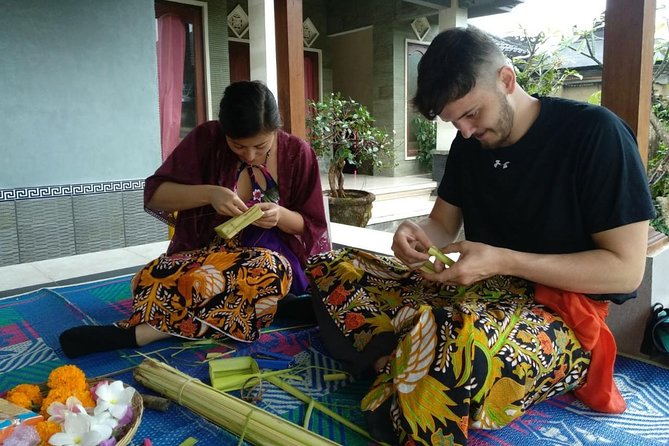
- Two offering styles: Make Canang Sari, the small Hindu offerings seen throughout Bali, with help from your host.
- Tea with the family: Coffee or tea and Balinese cookies are included during the visit.
- A sacred water ritual: Take the offerings to a holy-water site and receive a traditional Hindu blessing.
- Private and personal: Only your group takes part, with pickup and return transfers from the Ubud area.
- Bring cash and suitable clothes: A small temple entrance fee or donation is payable locally, and swimwear or clothes that can get wet are useful if you choose the cleansing ritual.
Why Taro feels different from a resort visit
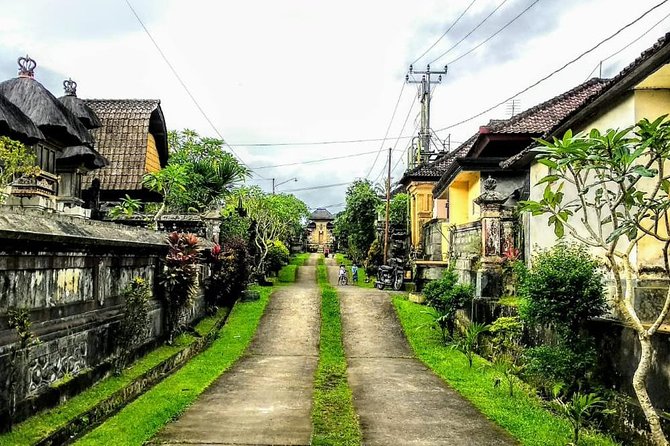
Taro is about 18 kilometers, or roughly 12 miles, north of Ubud. That distance is not huge on a map, but it takes you away from the familiar hotel strip and into a village setting where family, worship, and household space are closely connected.
The central idea is simple: spend half a day with a local family instead of moving from one photo stop to another. Your host leads you through the family compound and explains where each part of the extended family lives. He also introduces the family temple, an important feature of Balinese Hindu homes.
That setting gives the experience its value. You are not only told that family and religion matter in Bali. You see how those ideas fit into a home. The compound visit is also useful for anyone who has passed Balinese gates and shrines without understanding what lies behind them.
This is a private activity, so you do not have to match the pace of a large group. You can focus on the offering lesson, ask questions, and take your time with the parts that interest you most. The tradeoff is that a private village visit depends heavily on the communication and personality of your local host. Here, the host and his wife welcome you into their family setting, which gives the visit a warm, personal feel.
A few more Seminyak experiences worth comparing
- Bali Full-Day Traditional Village Sightseeing Trip All Inclusive
★ 5.0 · 3,069 reviews - Experts Bali Driver : Best Bali Private Driver for Tour in Bali
★ 5.0 · 1,339 reviews - Bali Hai Sunset Dinner Cruise
★ 5.0 · 1,173 reviews
The family compound and its living spaces
The visit begins at Delodsema Traditional Village on Delodsema Road in Taro. Your driver brings you to the village, and your host takes over from there.
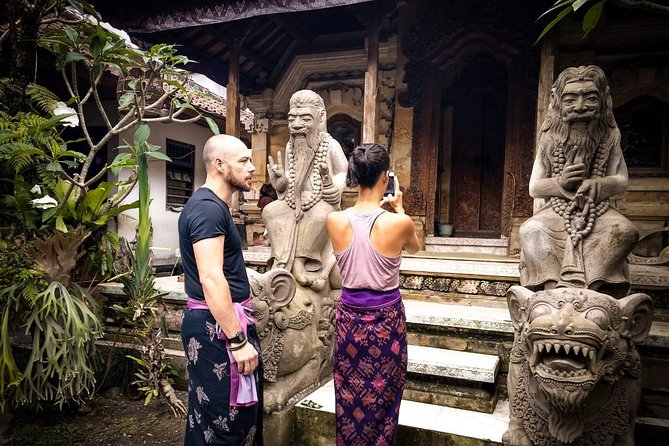
The compound tour is the first important part of the experience. Instead of treating the home as a backdrop, your host explains where different family members live and points out the family temple. This helps you read the space around you. In Bali, a family compound is not simply one house with a yard. It can include several living areas and places set aside for worship.
I like this introduction because it sets up the rest of the morning. The Canang Sari lesson and water blessing make more sense when you have first seen the setting in which Balinese Hindu customs are practiced.
You should also approach the compound with respect. This is a family home, not a museum. Keep your voice low, follow your host’s instructions, and ask before taking photographs of people or private areas. The activity is designed for participation, but it still takes place in someone’s home.
The visit is short enough to fit neatly into a busy Bali schedule. It is not meant to be a full-day village study or an in-depth tour of every part of Taro. Instead, it offers a focused introduction to one family’s home and religious customs.
Morning tea, Bali cookies, and a slower start
After the compound tour, you share a traditional Balinese morning drink with the family. Coffee or tea is included, along with Balinese cookies and snacks.
This pause may sound minor, but it gives the experience a more natural pace. You are not rushed from one activity to the next. There is time to sit, taste something local, and settle into the family setting before beginning the offering work.
The snacks are also a useful part of the cultural lesson. Food served in a home can tell you something different from a restaurant meal, even when the portion is small. Expect a simple tasting rather than lunch. Lunch is not included, so plan another meal before or after the three-hour activity.
The morning tea is particularly suitable if you want a quiet cultural experience rather than a packed sightseeing program. Families with children may also appreciate the break, though the supplied information does not specify a children’s program or special arrangements for young participants.
Making Canang Sari by hand
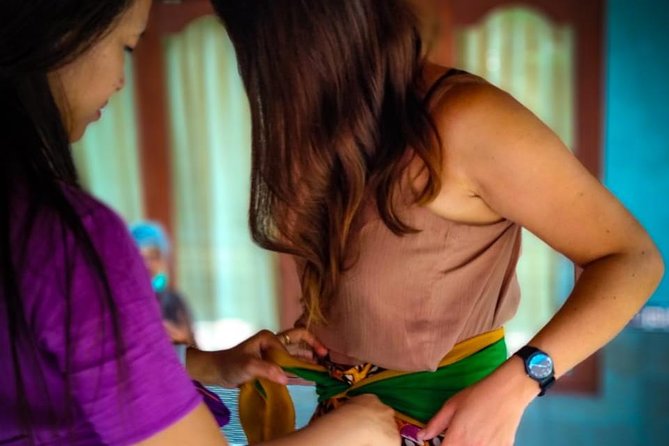
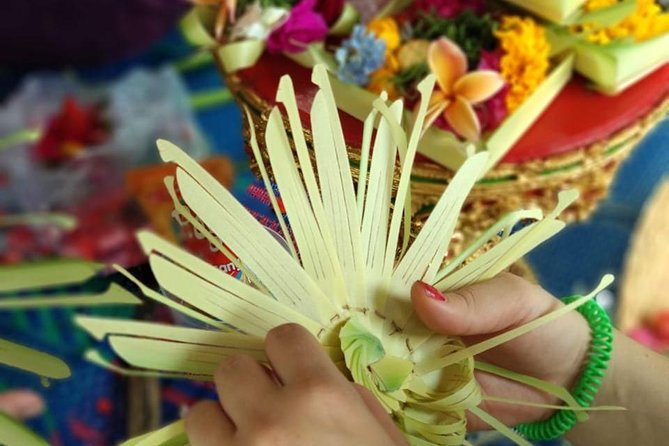
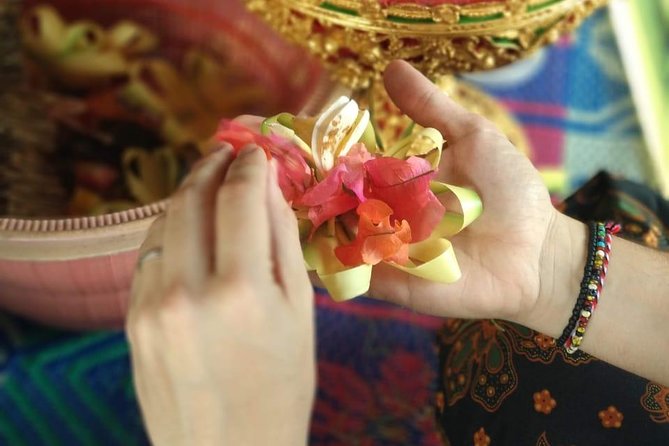
The most hands-on portion is the Canang Sari lesson. Your host teaches you to make Balinese Hindu offerings, including two different styles.
Canang Sari are small offerings made from natural materials and flowers. You see them placed around Bali, but making one gives you a better sense of the care behind the daily ritual. The point is not to produce a perfect souvenir. It is to learn how an everyday act of devotion is prepared.
Follow your host’s pace and expect to use your hands. This is the sort of activity where a demonstration makes more sense than a long explanation. You can watch how the materials are arranged, then try the process yourself.
The two styles add useful variety. You are not repeating one quick craft and moving on. You get a closer look at how offerings can differ in form while serving a place within Hindu practice.
This activity suits you if you enjoy learning through doing. It is less suitable if you want a fast list of landmarks or a highly polished performance. The offering lesson is deliberate and modest. Its appeal comes from taking part in a household custom.
Because the offerings are later used in the blessing ceremony, the lesson also connects directly to the next stop. You are not making an object that gets put aside. Your work becomes part of the ritual that follows.
A different pace of day, same stretch of Bali coast:
- Bali: Mount Batur Sunrise Guided Hike and Natural Hot Spring
★ 4.8 · 9,284 reviews - Bali: Full-Day Instagram Highlights Tour
★ 4.8 · 7,817 reviews - Bali: Sunrise Mount Batur Hike with Breakfast
★ 4.8 · 6,973 reviews - ️Nusa Penida by Private Boat – Snorkeling 4 spots, Swim with Mantas + Land Tour
★ 5.0 · 6,424 reviews
Preparing for the holy-water temple
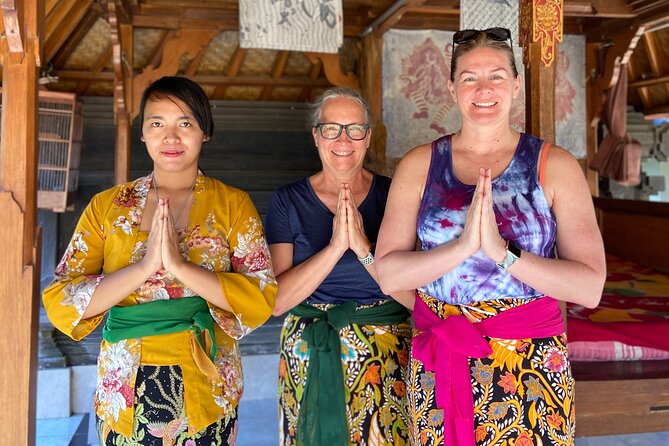
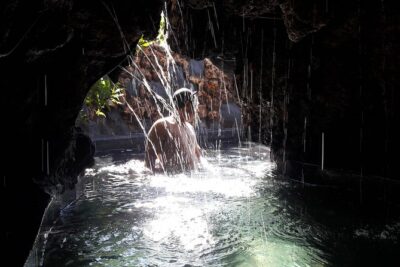
After the family visit, your host takes you to a sacred holy-water site. A small entrance fee or donation is payable in cash, and it is not included in the tour price.
You must wear a sarong and sash to enter the site. These are provided, which makes the dress requirement easy to manage. You should still arrive in clothing that is respectful and practical for changing.
If you choose to take part in the cleansing ritual, wear swimwear underneath or bring clothes that can get wet. The description specifically allows time to change at the site, but it does not say that changing rooms, towels, or dry clothing are provided. Pack accordingly.
The water ceremony is optional in the sense that you can choose whether to enter the water for cleansing. You can still visit the sacred site and receive the Hindu blessing without treating the ritual as a casual swim. Follow the instructions given by your host, especially around the order of the ceremony and the use of the offerings.
A sacred temple is a place of worship, so this part requires more care than the craft lesson. Wear the sarong and sash properly, avoid treating the ceremony as a stage for photographs, and let your host explain where you should stand and what you should do.
Receiving the Balinese Hindu blessing
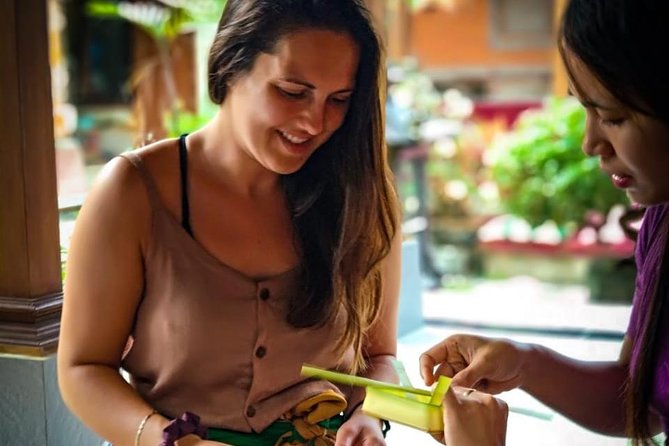
The Canang Sari you made earlier are used during the blessing ceremony. You receive a traditional blessing with holy water at the sacred site.
This connection between the family compound, the offering lesson, and the temple is the strongest feature of the itinerary. Each part leads into the next. You first see the family’s religious space, then prepare offerings, then carry them to a place where the blessing takes place.
The experience does not present Hinduism as a distant topic. It gives you a respectful introduction through a family, a household practice, and a ceremony. That makes the morning more meaningful than a quick stop at a temple where you have no context.
You should keep your expectations in check. This is a short cultural visit, not a formal religious course. You will receive an introduction to Balinese Hindu customs, but the three-hour format cannot explain every belief, festival, or temple rule.
The blessing may be the most memorable part for you, especially if you are comfortable taking part in a spiritual practice outside your own tradition. If you prefer to observe rather than participate, tell your host and follow the available guidance. The supplied details confirm that the cleansing ritual is a choice, while the blessing forms the main closing activity.
Private transfers and the meeting-point detail
The experience includes two-way private transfers from an address in the Ubud area. That is helpful because Taro is outside central Ubud, and arranging a separate taxi can add time and uncertainty to a short activity.
The tour ends back at the meeting point, Delodsema Traditional Village. The listed tour location is Seminyak, but the actual meeting and return details point to Taro, with transfers described for the Ubud area. If you are staying in Seminyak or elsewhere outside Ubud, confirm pickup coverage before booking. Do not assume that a Seminyak hotel transfer is included simply because Seminyak appears as the location.
The private vehicle also gives you a calmer start than organizing a ride on your own. You can focus on arriving at the village rather than watching the clock or negotiating a fare.
The total activity lasts about three hours. Transfer time from your hotel may be separate, so allow extra time around the scheduled start. The information provided does not give an exact pickup window or a full door-to-door duration.
Is $35 a fair price?
At $35 per person, the cost is reasonable if you value direct contact with a local family and a private format. You are paying for a compound visit, the host’s time, the offering lesson, tea and snacks, sarong and sash use, the water blessing, and private two-way transfers from the Ubud area.
The price is less attractive if you mainly want a temple visit. A simple temple stop can take less time, and this activity asks you to spend much of the morning on the family compound and offering lesson before reaching the water site.
The private setup improves the value for couples, families, or small groups who want to ask questions without strangers around. It also means you are not paying for a large coach tour with a fixed script. Only your group participates.
Budget a little extra for the holy-water temple’s entrance fee or donation. Lunch is also on your own. These costs are small compared with the tour price, but carrying cash is important because the temple payment is made locally.
Who will enjoy this experience most?
I would choose this experience if you want to understand a little of how Balinese Hindu customs fit into everyday life. It is a good match for first-time visitors who want more than temple photographs, and for returning visitors looking for a quieter morning away from the main resort areas.
It also suits you if you like small-group activities, simple local food, and practical lessons. The Canang Sari workshop gives children and adults something to do with their hands, though no special children’s facilities are listed.
Couples may appreciate the private setting and the calm pace. Solo visitors can also take part, but the value depends on the per-person price and the appeal of a family-hosted visit.
You may want a different activity if you prefer a long cultural tour with several temples, a large amount of historical explanation, or a full meal. This is a compact experience centered on one family compound and one sacred water site.
Most travelers can participate, according to the activity information, but you should consider your comfort with wet clothing, sarong dress, and participation in a Hindu blessing. The details do not provide specific accessibility information, so ask the provider if you need particular arrangements.
Practical advice for a smooth morning
Wear modest, comfortable clothing that works with a sarong and sash. If you plan to take part in the cleansing ritual, wear swimwear underneath or bring clothes that may get wet.
Bring cash for the holy-water site. The entrance fee or donation is not included, and the exact amount is not provided.
Leave room in your schedule for transportation. The activity itself lasts about three hours, but the drive from your Ubud-area address is extra. If you are starting from Seminyak, confirm the transfer arrangement before paying.
Do not plan on lunch during the activity. Tea, coffee, cookies, and snacks are included, but lunch is not.
Finally, let the host guide the religious portions. The best experience comes from paying attention to the meaning of the offering and blessing, not from trying to rush through them for a photograph.
Should you book the Taro village experience?
Book it if you want a personal introduction to Balinese family life, a hands-on offering lesson, and a respectful water blessing in one short private visit. The family compound gives the tour its character, while the offerings provide a clear link between daily life and Hindu worship.
At $35 per person, it offers good value for anyone staying in the Ubud area who wants private transport and a local host rather than a standard sightseeing circuit. The main limits are the short duration, the separate temple donation, and the unclear transfer coverage for visitors staying outside Ubud.
You can cancel for a full refund up to 24 hours before the start time. Changes or cancellations within 24 hours are not refunded. If the meeting point and pickup area work for you, this is a thoughtful way to spend a half-day in Bali without turning culture into a rushed checklist.
FAQ
Where does the experience take place?
The activity takes place in Taro, at Delodsema Traditional Village on Delodsema Road, Taro, Tegallalang, Gianyar Regency, Bali 80561, Indonesia.
How long does the experience last?
The activity lasts approximately three hours, not including any extra transfer time from your accommodation.
Is hotel pickup included?
Two-way private transfers are included from an address in the Ubud area. If you are staying outside that area, confirm pickup coverage before booking.
Is the activity private?
Yes. Only your group participates in the activity.
What is included in the price?
The price includes coffee or tea, Balinese cookies and snacks, a Balinese sarong, and the private experience with transfers from the Ubud area.
Do I need to pay anything extra?
You must pay a small entrance fee or donation at the holy-water temple in cash. Lunch is also not included.
Can I cancel for a full refund?
Yes. You can cancel at least 24 hours before the experience starts for a full refund. Cancellations or changes made within 24 hours are not refunded.
Recently added around Seminyak
- Bali: Denpasar Market Food Tour with 7 Tastings Must-Try★ 3.9 · 3 reviews
- Gong Sound Healing on Nusa Lembongan, Bali★ 5.0 · 3 reviews
- Ubud: Healing & Purification with Shaman at Hidden Temple★ 3.3 · 3 reviews
- Bali: Customized Uluwatu Tour Including Transfer Hotel★ 3.9 · 3 reviews
- Private Tour: Half Day Tanah Lot Sunset Tours★ 5.0 · 3 reviews
- Bali: Blue Lagoon Snorkeling Tour with Bali Quad Bike★ 3.4 · 3 reviews
- Royal Orchid Spa 90 Minutes Relaxing Massage.★ 4.5 · 3 reviews
- Full-Day Customized Amazing Private Tours in Bali★ 5.0 · 3 reviews
Seminyak Tours, compared.
Bali Full-Day Traditional Village Sightseeing Trip All Inclusive
Read our review →

Ubud Hot Springs and Waterfall Private Guided Tour
Read our review →
Bali Secret Waterfall Tour – Private and All-Inclusive
Read our review →