
Reviewed · TEMPLE TOURS
Ubud: Healing & Purification with Shaman at Hidden Temple
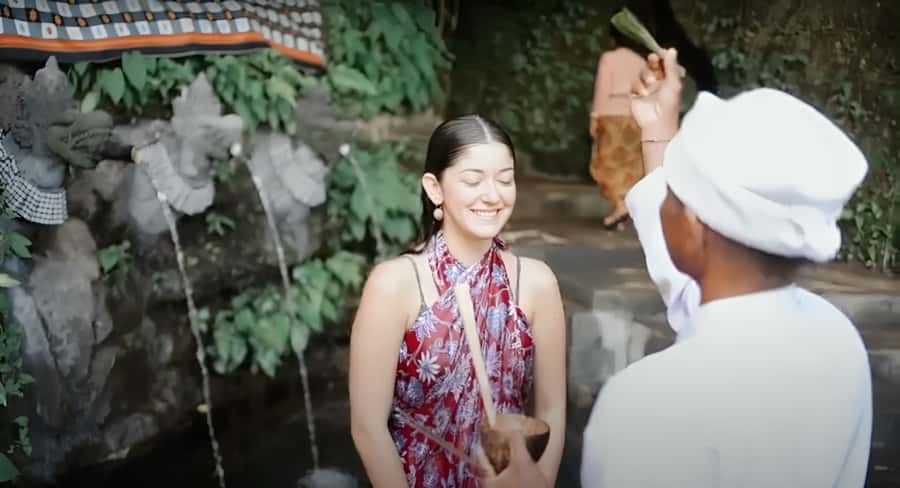
The most unusual part of this Ubud experience is its setting: Petirtan Ki Pasung Grigis, a sacred water site between two prajapati temples above a village cliff. I like the slow, nature-filled mood, with river water, wind, rice fields, and swamps replacing the usual sightseeing bustle. I also like that a Balinese Hindu priest leads the ritual and explains its meaning instead of leaving you to guess what each fountain is for.
The main consideration is that this is a religious ceremony, not a spa treatment or a quick photo stop. Women during menstruation cannot take part in the purification, and everyone must wear the provided sarong and scarf. The listed duration ranges from 90 minutes to six hours, so check the exact option and pickup details before booking.
In This Review
- Key points to know before you go
- Arriving at Petirtan Ki Pasung Grigis
- Meeting the Jero Mangku priest
- The three fountains and the order of the ritual
- Understanding Bhur, Bwah, and Swah
- What the included offerings add
- Is the $12 price good value?
- Who will appreciate this quiet temple visit?
- Practical preparation for the fountains
- The limits of the experience
- Should you book the Petirtan Ki Pasung Grigis purification?
- FAQ
- Where does the purification take place?
- How much does the experience cost?
- How long does the activity last?
- Who leads the purification ritual?
- Are a sarong and scarf provided?
- Are temple offerings included?
- Is hotel pickup available?
- Can women take part during menstruation?
Key points to know before you go
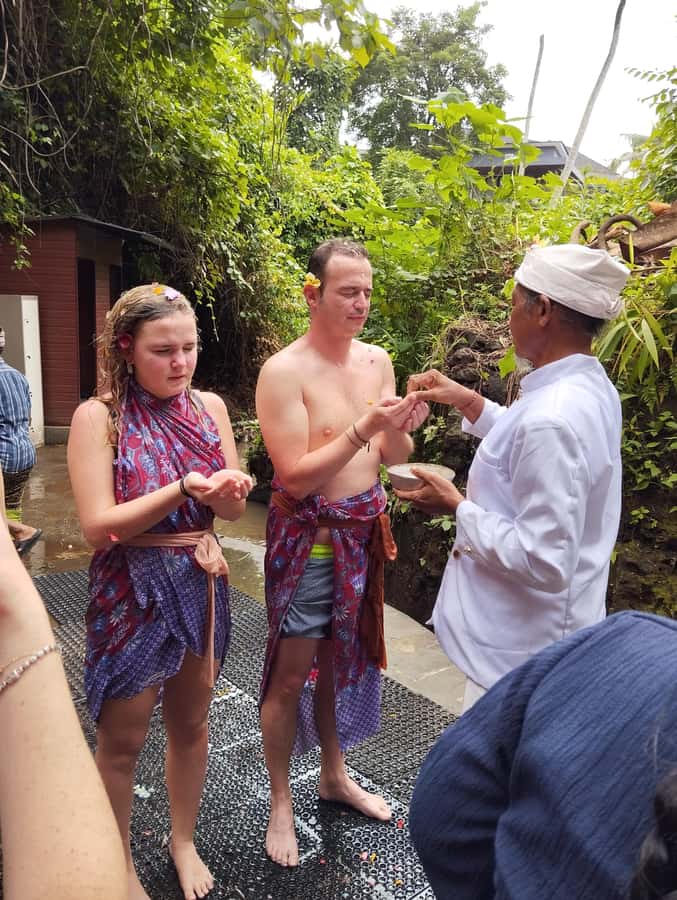
- Three fountains, three stages of cleansing: You visit the left, center, and right fountains as part of one guided ritual.
- A real Hindu setting: The ceremony takes place at Petirtan Ki Pasung Grigis, between two prajapati temples.
- Jero Mangku leads the purification: A Balinese Hindu priest explains the ritual and guides each step.
- Your basic ceremony items are covered: The price includes temple donations, Pejati and Canang Sari offerings, a sarong, and a scarf.
- The $12 price is unusually low: It offers strong value if you want a short spiritual experience rather than a full-day cultural tour.
- Hotel pickup costs extra or depends on the option: Meeting directly at the temple may be simpler if you already have transport in Ubud.
Arriving at Petirtan Ki Pasung Grigis
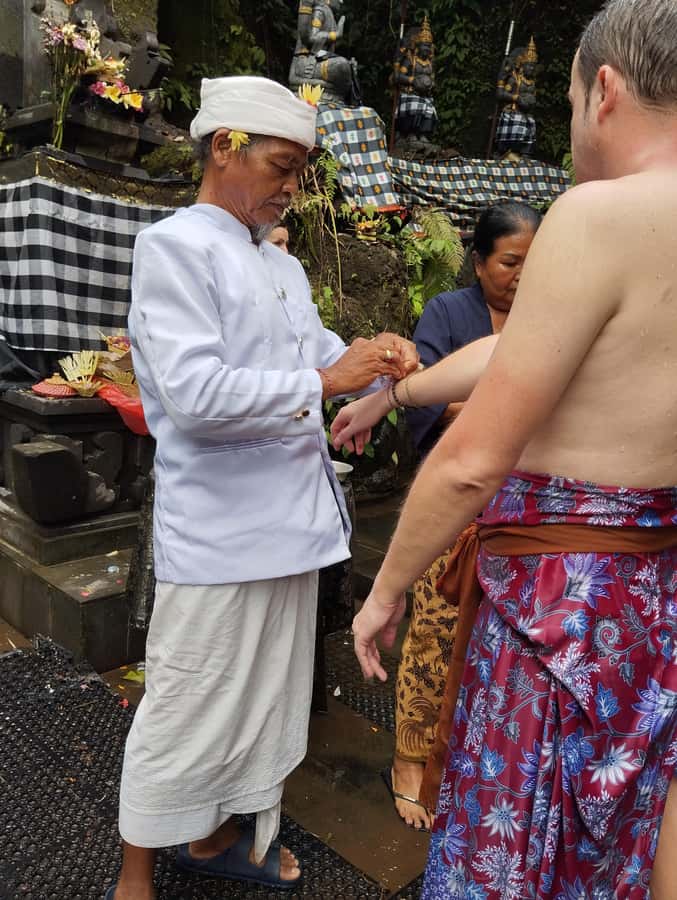
Petirtan Ki Pasung Grigis sits on Jl. Ir Soetami in Br Tengkulak Mas, Kemenuh, Sukawati, in the Gianyar area near Ubud. The site is described as a quiet place for spiritual focus, with a river below and rice fields and swamps nearby.
That setting matters. You are not being taken through a large attraction with a long line of people waiting for the next photograph. The sound here comes from moving water and wind through the fields. For a purification ritual, that calm can make it easier to pay attention to the priest and the meaning of the ceremony.
The temple is positioned between two prajapati temples. A prajapati temple is associated with death and cremation rites in Balinese Hindu practice, so this is not simply a pretty water site. The surrounding setting gives the ritual a more serious religious frame, even though the visit itself is fairly short.
You can meet at the temple, or choose an option with hotel pickup and drop-off from your lobby. Since the duration may be 90 minutes or as long as six hours, transportation becomes important. A short direct visit is one thing. A longer option with transfers can take a much larger part of your day, so look carefully at the starting time and total duration when you reserve.
More temple visits around Gianyar:
- Ubud: Mangening Water Temple Tour with Spiritual Cleansing
★ 4.9 · 54 reviews - Ubud: ATV Bike Tour Kingkong Temple Cave,Waterfall-Free pool
★ 4.8 · 9 reviews - Balinese Purification at holy water temple with Local
★ 5.0 · 6 reviews
Meeting the Jero Mangku priest
A Jero Mangku, the Balinese Hindu priest conducting the ceremony, guides you through the purification. The activity is offered in English, with a local English-speaking assistant included.
That combination should help you understand what you are doing rather than simply copying movements. The priest explains the meaning of each stage, while the assistant can help with practical questions. One verified booking rated the experience four out of five and specifically praised the warm welcome, the charismatic shaman, and the guide’s willingness to answer questions. Those are useful signs for anyone who wants personal explanation instead of a silent ritual.
The term shaman is used in the activity description, while the ceremony is also identified as a purification by a Balinese Hindu priest. I would treat the Jero Mangku as a religious leader first. Approach the experience with respect, listen closely, and avoid treating the ceremony as a performance arranged only for visitors.
You will be given a Balinese sarong and scarf, known as a selendang. These are required during purification. Wear clothing that can be changed easily afterward, since you should bring a dry change of clothes. The dress requirement is not a costume detail. It is part of entering the sacred space properly.
The three fountains and the order of the ritual
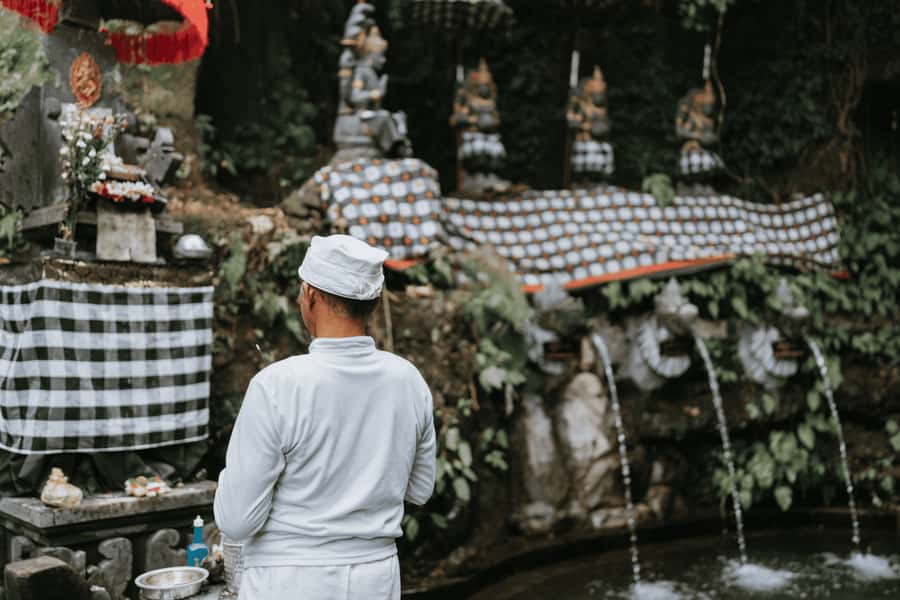
The central activity is a visit to three sacred fountains: the left, center, and right fountains. The priest leads you through the process and explains the purpose of each step.
The supplied details do not assign separate meanings to the three fountains, so you should not expect a fixed list of labels such as body, mind, and spirit for each one. Instead, the ceremony presents the fountains as three distinct parts of a single cleansing practice.
You will use the holy water as directed by the Jero Mangku. The water is intended to connect physical, mental, and spiritual concerns. That makes this more than a simple wash, but the value depends heavily on your attitude. If you want a clear explanation of each action and take time to reflect, the visit can feel focused and personal. If you are looking for a dramatic show or a long list of sightseeing stops, it may seem too quiet.
The three-fountain structure also gives the ceremony a clear rhythm. You are not asked to wander around a temple and figure out what to do. There is a beginning, a sequence of stages, and a closing period for reflection.
Because the ritual takes place in holy water, bring only what you need. Weapons and sharp objects are not allowed, and alcohol and drugs are prohibited. The activity also states that women during their menstruation cannot take part in the purification. This is a firm participation rule, so plan another temple visit if it applies to your travel dates.
Understanding Bhur, Bwah, and Swah
The purification is connected with the Hindu concept of Bhur, Bwah, Swah. The experience presents these ideas as a way to think about the relationship between the physical, mental, and spiritual realms and the wider universe.
You do not need a background in Balinese Hinduism to take part. The Jero Mangku explains the significance as the ceremony unfolds. Still, I would listen carefully rather than reduce the concept to a vague wellness slogan. The ritual belongs to a living religious tradition, and its meaning is larger than simply feeling refreshed after washing in water.
This is one reason the English-speaking guidance adds value. At $12 per person, the experience costs little, but the explanation gives the visit its cultural substance. Without it, you would mainly have a scenic water stop and a set of unfamiliar actions. With it, you have a chance to understand why the fountains, offerings, clothing, and temple setting belong together.
The experience ends with time for reflection in the quiet surroundings. That closing pause may be the most satisfying part for some people. You can absorb the sound of the river, the open view toward the village, and the feeling of having completed a formal religious practice rather than rushing straight to the next stop.
A few more Gianyar experiences worth comparing
- Bali: Blue Lagoon Snorkeling & Waterfall Tour with Lunch
★ 4.7 · 637 reviews - Celuk Bali Silver Class – Make Your Own Silver Jewelry
★ 4.9 · 162 reviews - Bali: Magical Fireflies Tour in Taro Village with Dinner
★ 4.8 · 104 reviews - Ubud: Horse Riding, Zip-Line Tour & Waterfall Tour
★ 4.8 · 71 reviews
What the included offerings add
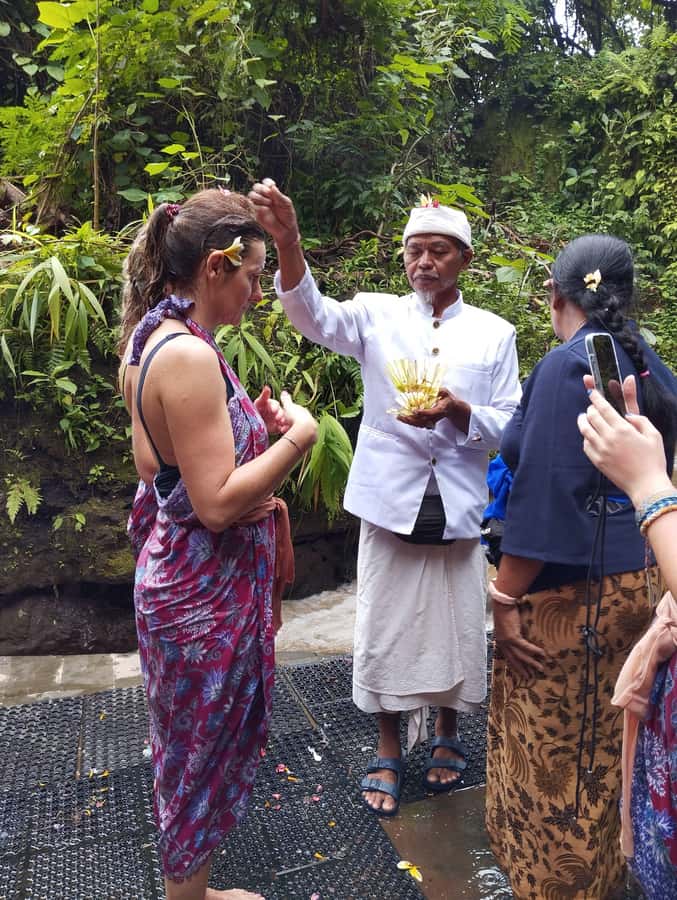
The price includes Pejati and Canang Sari offerings, along with donations to the temple. These offerings are important because they help place the ritual within Balinese Hindu practice.
Canang Sari are daily offerings commonly seen around Bali. Pejati offerings are used in ceremonial settings. You do not need to arrange them yourself, which makes the experience easier for a first-time visitor and helps ensure that the ceremony has the items it requires.
The inclusion of the offerings and temple donation is a strong point at this price. You are not paying $12 for access to water alone. You are also covering the basic ritual materials, the priest’s purification guidance, the clothing needed for the ceremony, and an English-speaking assistant.
Personal expenses are not included, and gratitude is also listed separately. The wording suggests you should budget for any personal purchases and consider an appropriate thank-you for the people assisting with the ceremony. No fixed gratuity amount is provided, so do not assume that a specific tip is required.
Is the $12 price good value?
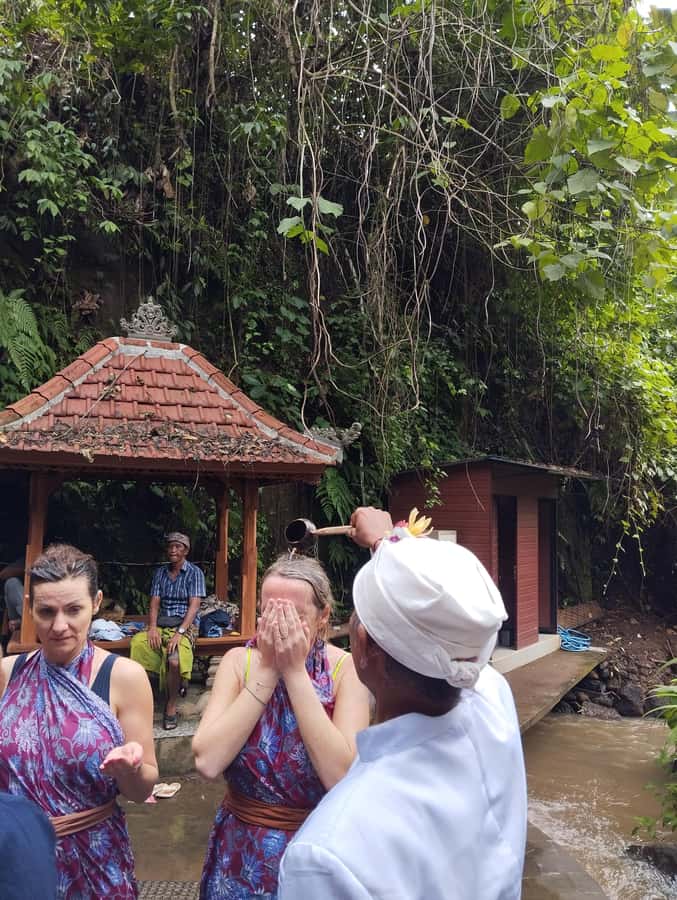
At $12 per person, this is one of the least expensive ways to add a guided cultural ritual to an Ubud itinerary. The fee includes several items that can otherwise complicate a temple visit: clothing, offerings, a temple donation, priest-led purification, and language assistance.
The value is best if you want a focused 90-minute experience. You receive a specific activity rather than just entrance to a religious site. You also avoid having to learn the ceremony on your own or arrive with your own sarong and offerings.
The value is less clear if you choose a six-hour option without understanding what fills the additional time. The supplied information gives a duration range of 90 minutes to six hours but does not spell out every difference between the options. Check whether the longer duration includes pickup, drop-off, waiting time, or additional arrangements.
Hotel transport can also change the practical value. Pickup and drop-off are available if selected, and the pickup point is your hotel lobby. That can be useful if you do not have transport to Kemenuh. If you are already staying nearby, meeting at Petirtan Ki Pasung Grigis may keep the outing simpler and shorter.
The activity allows free cancellation up to 24 hours before the start for a full refund. You can also reserve and pay later, which is helpful when your Bali plans are still shifting. These policies add flexibility, but they do not change the need to check the exact time and duration of your chosen option.
Who will appreciate this quiet temple visit?
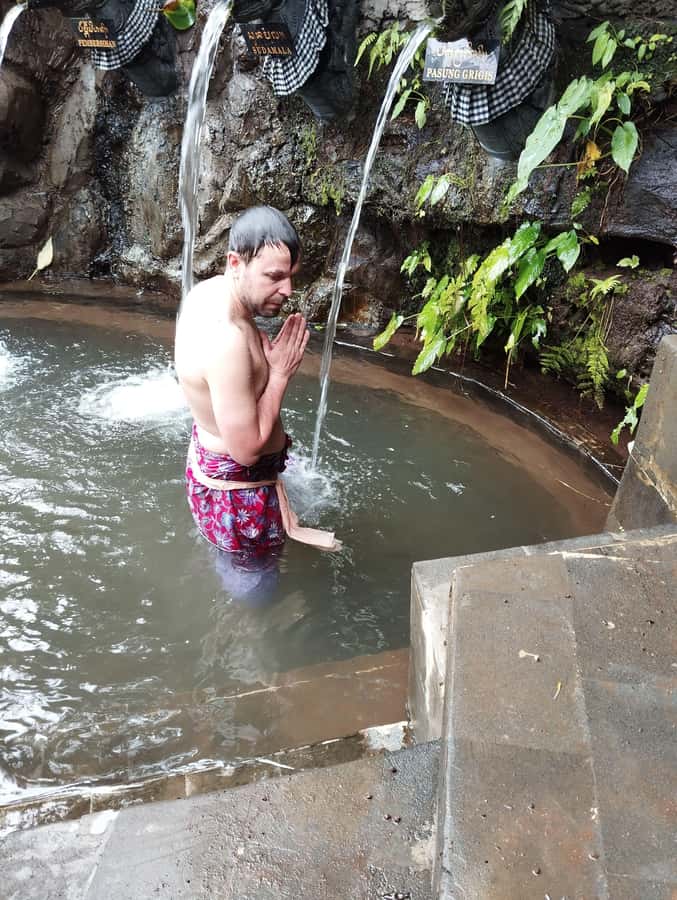
I would recommend this for you if you want a small, meaningful cultural activity between Ubud’s more active sights. It suits people who enjoy ritual, quiet nature, and clear guidance. It can also work well for a first visit to Bali, since the assistant and priest help explain what is happening.
It is a good fit if you want to learn about Hindu ideas through participation rather than through a museum label. The three fountains, offerings, required clothing, and temple setting give you several details to notice and ask about.
You may want to skip it if you dislike getting wet, do not want to follow religious customs, or prefer a fast sightseeing stop. It is not presented as a luxury wellness session, and there is no promise of massage, private spa facilities, or medical benefits.
You should also be comfortable with the participation restriction for women during menstruation. This is not a minor note. The activity does not allow purification during that period.
Group size is not provided, so do not book expecting a guaranteed private ceremony. If having a private experience is important to you, ask the provider before paying. The listed provider is Bali Performances, and the activity is offered in English.
Practical preparation for the fountains
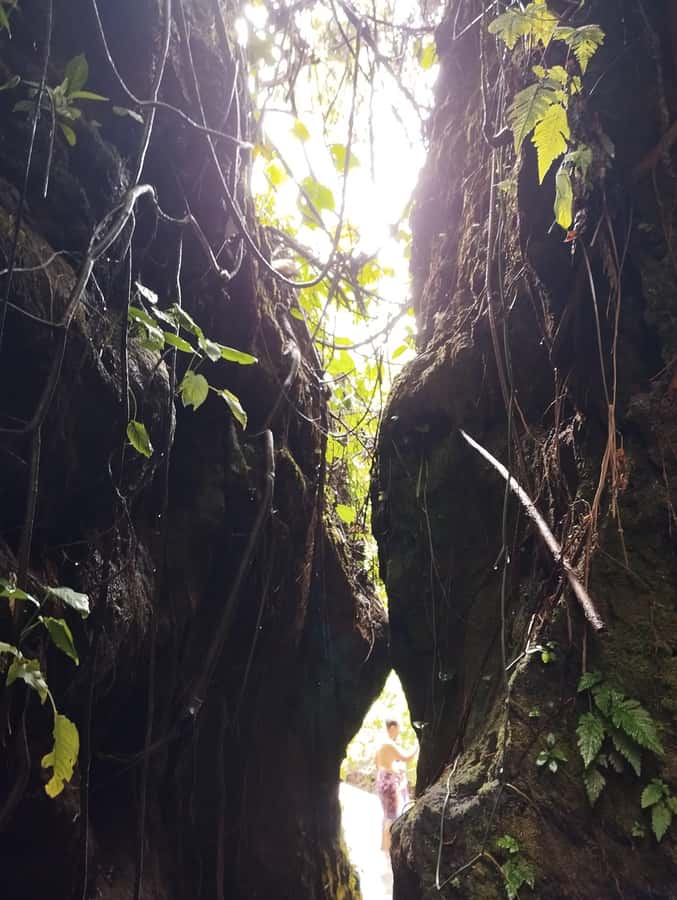
Bring a complete change of clothes. Even if you plan to dry off quickly, this is the one item the instructions specifically call for, and it is better to have it ready.
Wear something that makes changing straightforward. The activity supplies the sarong and scarf, but you will still need suitable clothing underneath and dry clothes for afterward.
Plan to follow the priest’s instructions at every fountain. The ceremony is guided, so you do not need to memorize a sequence. Listen first, then act. That simple approach shows respect and prevents confusion.
Keep prohibited items out of your bag. Weapons and sharp objects are not allowed, and alcohol and drugs are forbidden. The instructions do not provide a full storage policy, so avoid bringing anything unnecessary.
If you are meeting at the temple, confirm how you will reach Jl. Ir Soetami in Br Tengkulak Mas, Kemenuh, Sukawati, Gianyar. If you select hotel pickup, confirm that your accommodation is covered and wait at the lobby at the appointed time.
The limits of the experience
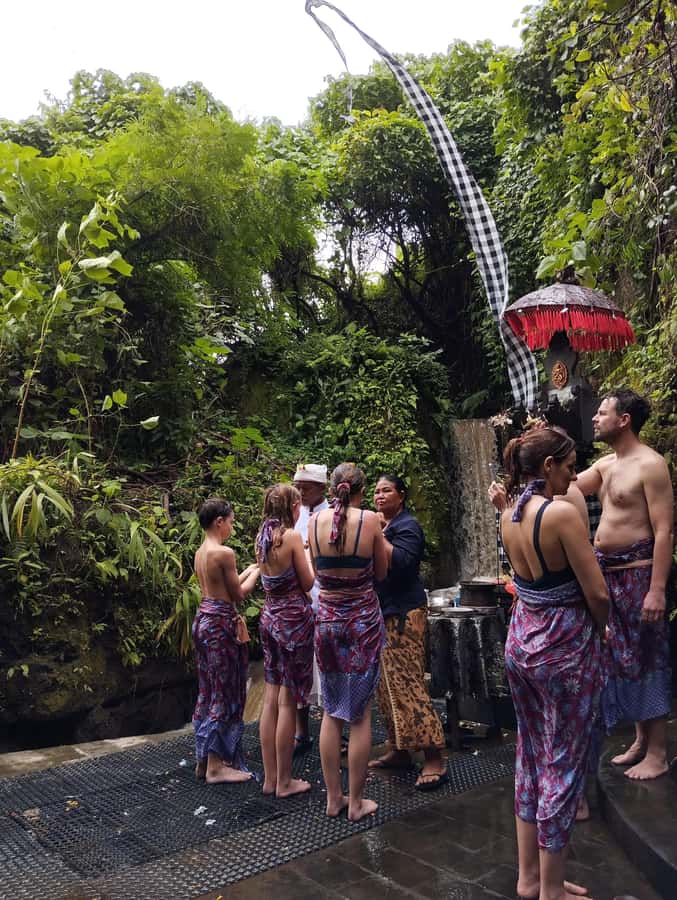
The small review sample means you should keep expectations sensible. The overall rating supplied for three reviews is 3.3, while the specific verified booking rated it four out of five. That points to a generally positive experience for at least one participant, but it is not enough evidence to promise that every visit will feel the same.
The strongest praise focuses on the welcome, the priest’s presence, and the guide’s ability to answer questions. Those are exactly the parts that matter most here. The experience is not selling a long list of attractions, so the quality of the explanation and the tone of the religious setting will shape your impression.
The unclear duration is the biggest planning issue. Ninety minutes is easy to fit into a day around Ubud. Six hours requires more commitment. Read the available options closely, especially if transport is included or selected separately.
Also keep in mind that the quiet setting is part of the appeal, but it may not suit everyone. If you want constant activity, shopping, or several temples in one outing, this visit could feel slow. If you want space to focus, that same slowness is the point.
Should you book the Petirtan Ki Pasung Grigis purification?
Book this experience if you want an inexpensive, priest-led introduction to Balinese Hindu purification in a peaceful temple setting. The combination of three fountains, ritual offerings, provided clothing, and English guidance gives the $12 price real value.
I would book the 90-minute option if your priority is the ceremony itself. Choose hotel pickup if reaching Kemenuh is inconvenient, but check why the selected option lasts longer. Bring dry clothes, respect the temple rules, and arrive ready to listen rather than simply collect photographs.
Skip it if you want a spa service, a private experience guaranteed in advance, or a packed sightseeing tour. For the right visitor, this is a quiet and thoughtful pause in Ubud. For everyone else, it may feel too formal and too slow.
FAQ
Where does the purification take place?
It takes place at Petirtan Ki Pasung Grigis on Jl. Ir Soetami, Br Tengkulak Mas, Kemenuh, Sukawati, Gianyar, Bali.
How much does the experience cost?
The listed price is $12 per person.
How long does the activity last?
The duration is listed as 90 minutes to six hours. Check the available options for the exact timing.
Who leads the purification ritual?
A Balinese Hindu priest known as a Jero Mangku leads the purification. A local English-speaking assistant is also included.
Are a sarong and scarf provided?
Yes. A Balinese sarong and scarf, called a selendang, are provided and required during purification.
Are temple offerings included?
Yes. The price includes Pejati and Canang Sari offerings, as well as donations to the temple.
Is hotel pickup available?
Yes, pickup and drop-off are available if you select that option. Pickup is from your hotel lobby.
Can women take part during menstruation?
No. The activity states that women during their menstruation period are not allowed to take part in the purification.
Recently added around Gianyar
- Bali: A Full-Day Tour to Goa Raja, Tibumana and Tukad Cepung★ 5.0 · 3 reviews
- Bali: 3 best waterfall and tegalalang rice terrace★ 5.0 · 3 reviews
- Bali: Barong Dance Show, Ricefields Tegallalang & Waterfall★ 5.0 · 3 reviews
- Bali: Sacred Water Temple Ritual and Balinese Healing Spa★ 3.6 · 3 reviews
- Chasing Cascades: Bali Waterfall Tour★ 4.6 · 3 reviews
- Bali: HIGHLIGHTS OF BALINESE ART TOUR★ 4.5 · 3 reviews
- Bali: Temples, waterfall, and Rice Terrace Guided Tour★ 5.0 · 3 reviews
- Unwind & Float: Discover Bali Hidden Gems on a River Tubing★ 5.0 · 4 reviews
Temple Tours, compared.
Kecak Fire Dance Show & Uluwatu Temple Entry Ticket
Read our review →
Bali Sunset: Uluwatu Temple, Kecak Dance and Jimbaran Bay
Read our review →
Besakih Temple & Lempuyang Temple Gates of Heaven Tour
Read our review →
North Bali: Sunrise Tour with Dolphins, Waterfalls & Temples
Read our review →
Hidden Canyon, Waterfall & Temples Small Group Tour
Read our review →
Munduk Waterfalls Trek, Twin Lakes and Temple Tour
Read our review →
Monkey Forest, Water Temple, Rice Terrace, Waterfall
Read our review →
Twin Lake Jungle Hike, Ulun Danu Temple, & Waterfall
Read our review →Browse the lists this tour appears in