
Reviewed · RICE TERRACE TOURS
From Ubud: Downhill Bike Tour with Rice Terraces and Meal
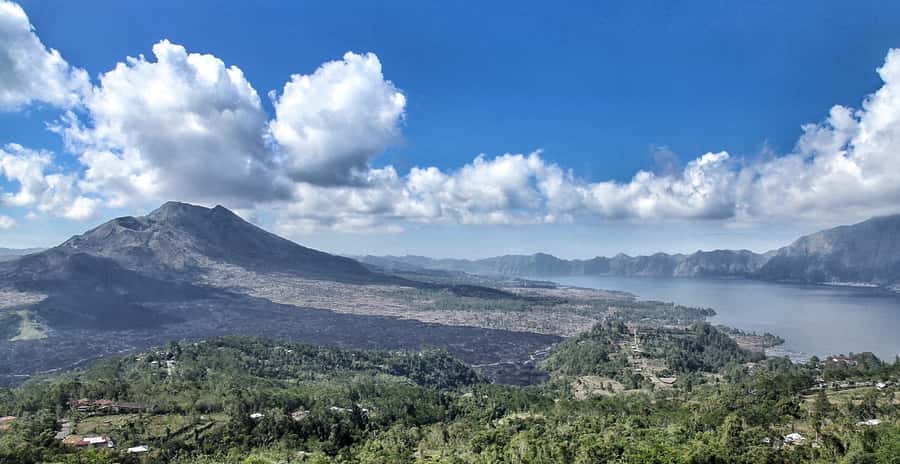
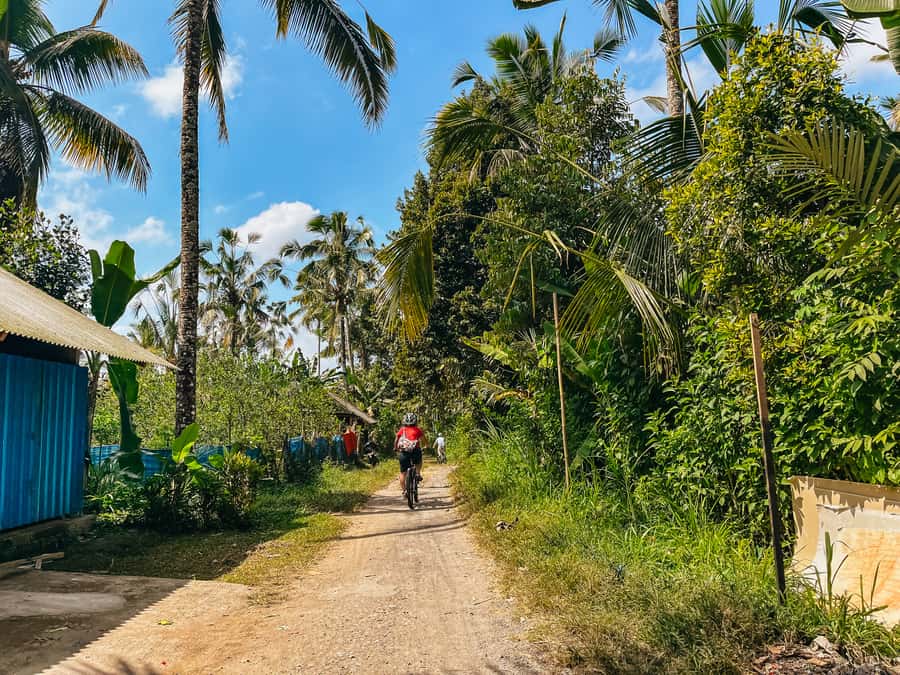
From the cool slopes of Kintamani volcano, you coast downhill toward Ubud through rice fields, village lanes, temples, and ordinary Balinese life. The ride is mostly easy, with very little pedaling, so the real attraction is the view and the chance to see places a car tour simply rushes past.
I like the mix of gentle cycling and serious cultural insight. Guides such as Agus and Wayan explain family customs, temples, houses, farming, and the subak irrigation system in clear, friendly English. I also like that coffee tasting, breakfast, lunch, transport, bikes, and entrance fees are included.
The main thing to understand is that this is a cultural bike tour, not an off-road adventure. Most of the route is paved and downhill, but you will ride near cars and motorcycles at times, and braking for much of the 23-kilometer run can tire your hands.
In This Review
- Key points at a glance
- Starting high above Ubud in Kintamani
- Coffee, tea, and breakfast before the ride
- A 23-kilometer ride through rural Bali
- Rice terraces and the subak system
- Schools, temples, homes, and craft villages
- Lunch in Ubud after the final stretch
- What the $40 price really covers
- Who should book this bike tour?
- Practical tips before you go
- FAQ
- How long does the downhill bike tour last?
- Where does the bike ride begin?
- Is the bike ride difficult?
- How far do you cycle?
- What food is included?
- Is hotel pickup included?
- Which languages are available for the guide?
- Should you book it?
Key points at a glance
- Start above Ubud on Kintamani volcano: Take in views of Mount Batur and Lake Batur before riding downhill.
- Coast roughly 23 kilometers: The route is mostly downhill, with little pedaling and regular stops.
- Visit coffee country first: Sample Balinese coffee and tea, enjoy breakfast, and browse products at an organic plantation.
- See daily village life: Stops can include a school, temple, traditional home, local family, and craft villages.
- Walk through UNESCO-listed rice terraces: Learn how the subak irrigation system supports Balinese farming.
- Finish with a local meal in Ubud: The $40 price includes hotel transfers in Ubud, food, bike, guide, and entrance fees.
Starting high above Ubud in Kintamani
The day begins with hotel pickup in the Ubud area. You ride in an air-conditioned minivan to the starting point on the slopes of Kintamani volcano, a scenic trip that can take longer than expected if the vehicle collects several people.
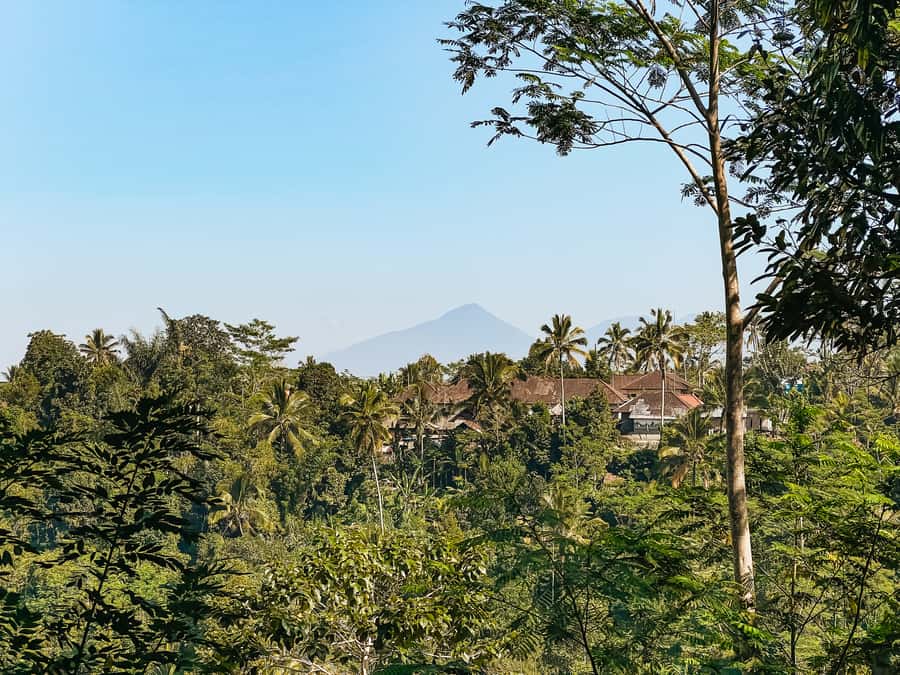
That drive is part of the experience. You gain altitude, leave Ubud’s traffic behind, and reach the volcanic highlands, where the air is cooler and the views open toward Mount Batur and Lake Batur. Clear weather gives you the best chance of seeing the volcano and lake, but cloud and rain can move in quickly.
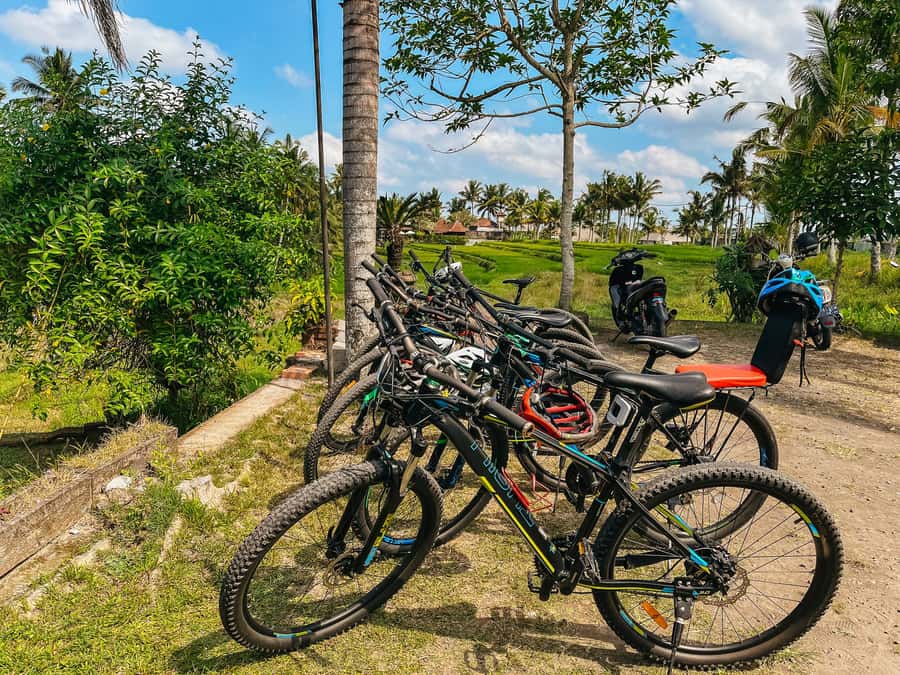
Before setting off, the crew supplies a bicycle suited to you and provides a helmet. Guides give a short briefing on hand signals and road safety. The support is reassuring: guides commonly ride at the front and rear, and a following vehicle may carry your belongings or help if you need assistance.
You should still check the brakes and saddle before leaving. The route is genuinely downhill, so good brakes matter more here than gears. One useful tip is to wear sunscreen on your hands and ears, as well as your face and shoulders. Those exposed spots can catch plenty of sun while you ride.
More rice terrace tours around Bali:
- Ubud: Waterfall, Rice Terraces & Monkey Forest Tour
★ 4.9 · 4,269 reviews - Ubud: Rice Terrace, Waterfall, & Elephant Cave
★ 4.9 · 862 reviews - Ubud: Monkey Forest and Rice Terrace Private Tour
★ 4.8 · 631 reviews
Coffee, tea, and breakfast before the ride
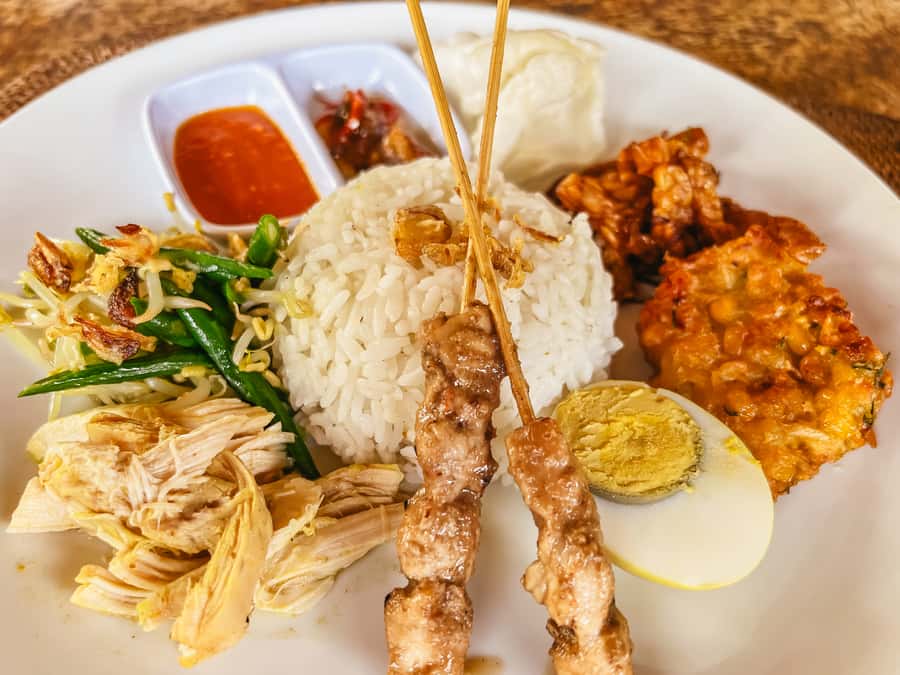
A stop at an organic coffee plantation usually comes before the cycling. You walk through the plantation area, learn about local products, and taste several coffees and teas. Breakfast is served here, often described as light, with pancakes and fruit among the foods provided.
This is not just filler before the bike ride. Bali’s coffee culture gives you a quick look at local farming and small-scale production. You can also buy coffee, cocoa, or tea if you find something worth taking home. Alcohol is not included, but it is available to purchase separately.
The plantation stop does add time to the morning. If you want nothing but continuous riding, it may feel like a pause you could skip. I think it works well for most people because it gives you food before the downhill route and lets you start the day at an easy pace.
Breakfast timing can vary. One person found lunch late in the day and wished there had been a snack between meals, so carry a small snack if you know you get hungry. Water is provided, but bringing extra water is sensible in Bali’s heat.
A 23-kilometer ride through rural Bali
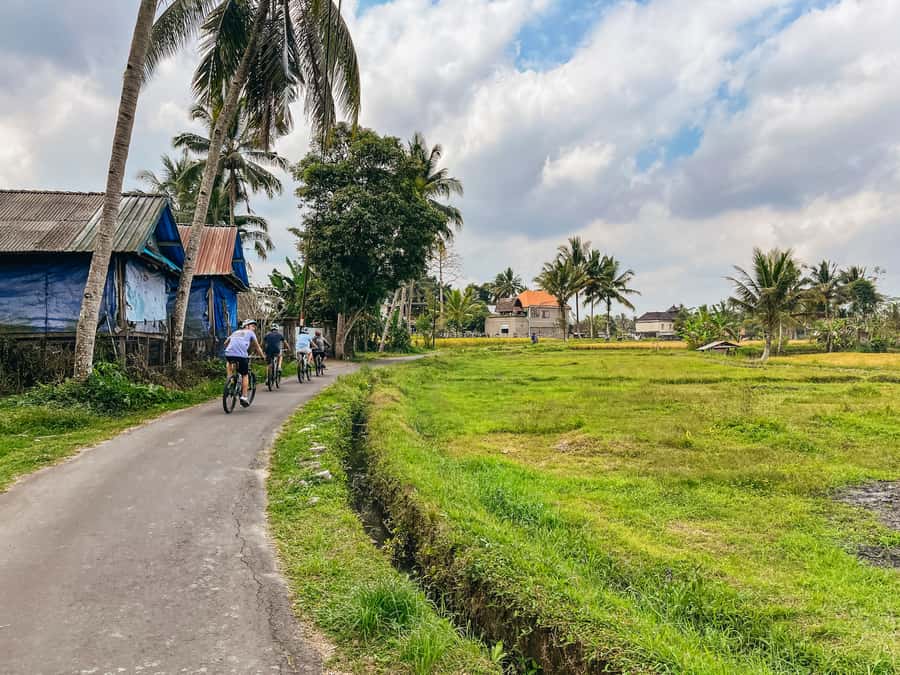
The cycling begins high in the hills and gradually heads toward Ubud. You coast for most of the route, with some accounts estimating that around 95 percent requires little effort. This makes the tour suitable for people who do not cycle often, including families with teenagers and people returning to a bike after a long break.
The easy pace does not mean you can ignore the road. You will use the brakes often, especially when following another rider downhill. Your hands may become more tired than your legs. Keep a safe gap, listen for the guide’s signals, and do not race ahead.
Much of the route follows paved roads through villages and countryside. Some stretches are quiet and scenic, while others bring you close to cars and motorcycles. The guides help manage the group and direct riders through traffic, but this is still road cycling in Bali, not a protected cycle path.
Regular stops make the ride more than a long downhill roll. You may pause for photographs, local explanations, and short walks. Guides take pictures and, in some cases, video while you ride. The trip feels calm when the road is quiet, but traffic can briefly break that spell.
Rain does not necessarily end the day. The crew may provide a poncho, and the ride can continue through wet conditions. Still, rain may reduce mountain views and make roads more slippery. Bring clothing that dries quickly and protect phones and cameras.
Rice terraces and the subak system
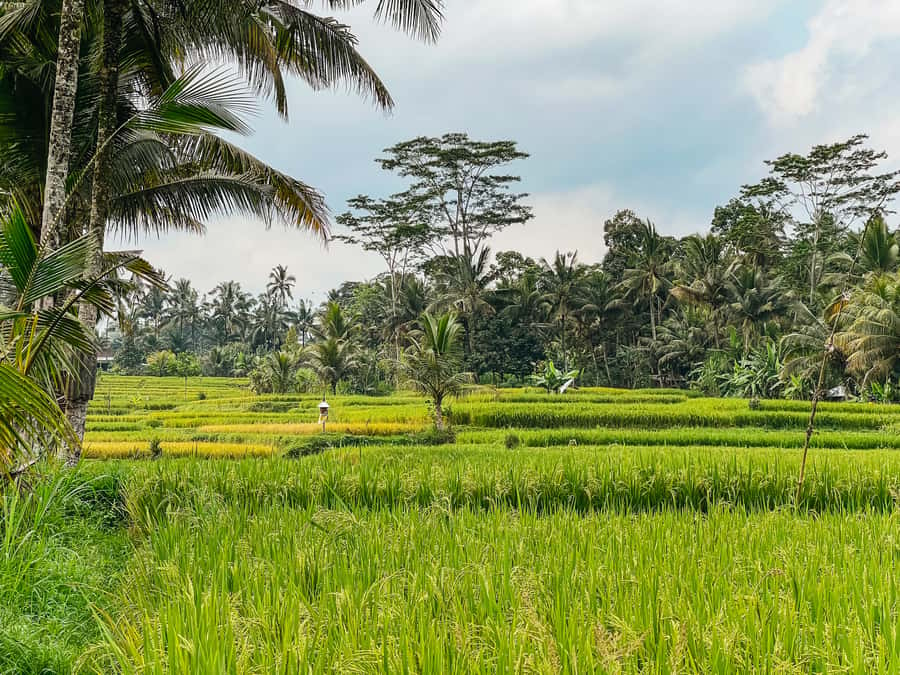
The rice terraces are the visual heart of the trip. You leave the bike for a walk through the paddies and get a closer look at the irrigation channels, footpaths, and working farmland. The terraces are part of the UNESCO World Heritage cultural area around Bali’s subak system.
Your guide explains why subak matters. It is a cooperative way of managing water, linking farmers, temples, and village communities rather than treating each field as a separate business. That detail changes how you see the terraces. They are not simply pretty green steps for photographs. They are part of a social and religious system that has helped organize farming for generations.
The walking section is useful because a bicycle moves too quickly for this kind of explanation. You can stop, look across the fields, and ask questions about planting, water, and village life. Paths can be uneven or damp, so shoes with a little grip are more useful than smooth sandals.
The exact color and condition of the fields depend on the season. You might see bright green rice, recently harvested plots, or muddy fields being prepared. The setting remains scenic, but it is also a working place, so follow the guide’s instructions and stay on the paths.
A few more Bali experiences worth comparing
- Mount Batur: Black Lava Cycling Tour w/ Natural Hot Spring
★ 3.8 · 63 reviews - Jatiluwih (UNESCO Site) 2-Hour E-Bike Cycling Tour
★ 4.3 · 49 reviews - Bali Downhill Cultural Cycling Tour
★ 4.8 · 42 reviews - Bali: Jatiluwih Rice Terraces 1 Hour Electric Bike Tour
★ 4.7 · 41 reviews
Schools, temples, homes, and craft villages
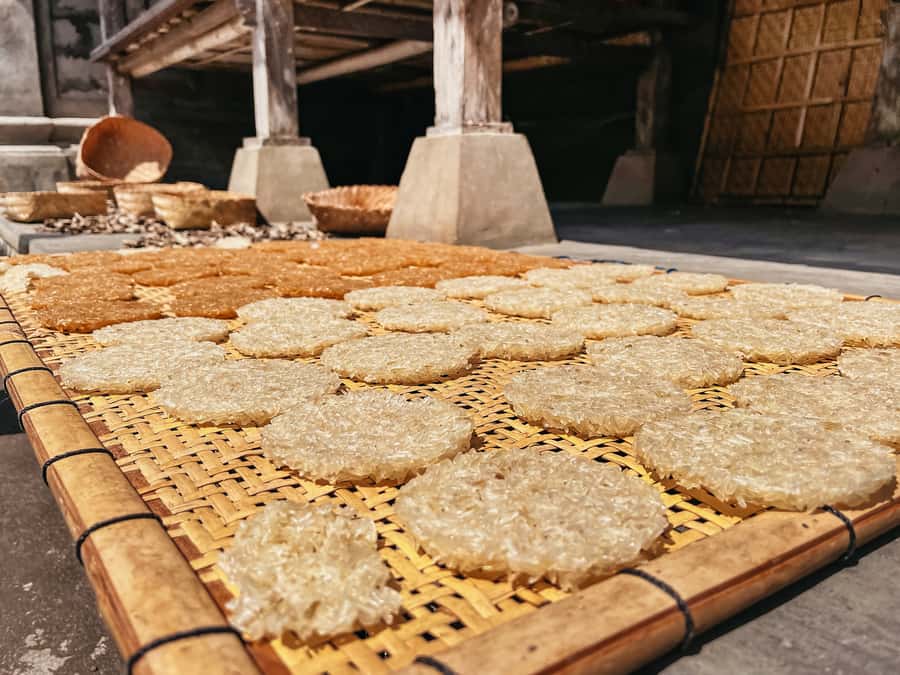
The strongest part of the tour is the contact with ordinary places. Stops can include a local elementary school, a temple site, a traditional Balinese home, or a local family’s house. The exact combination may vary, but the purpose is the same: to connect the scenery with the people who live there.
A school visit helps put village life in context. A family home shows how buildings, courtyards, shrines, and shared spaces fit together. At a temple, your guide can explain rituals and religious customs that are easy to miss when you visit alone.
Guides often add personal detail. Agus and Wayan have been especially good at explaining family life, faith, education, and village customs in a way that makes sense to first-time visitors. Some guides also share their own connection to the area, including former schools or family links. That personal approach is a large part of the tour’s appeal.
The route also passes through Ubud-area craft villages. Depending on the stop, you may see wood carving, silver jewelry, or woven textiles made with traditional methods. These are working craft communities, though some visits can naturally lead toward buying souvenirs. Feel free to browse, but do not feel pressured to purchase.
This cultural focus makes the tour different from a standard cycling excursion. You spend less time testing your fitness and more time asking why homes look the way they do, how rice is grown, and how local businesses support village life.
Lunch in Ubud after the final stretch
The ride ends in or near Ubud, where you have a meal at a local restaurant. Lunch is included, and it gives you a comfortable finish after the cycling and walking. Food is described as good local fare, and dietary needs have been accommodated on some outings, but you should state your requirements when booking.
Timing can be late, especially if hotel pickups take longer or the group moves slowly. Bring a snack if that matters to you. The meal is not a small extra squeezed into the schedule. It is one of the included parts that helps make the $40 price sensible.
The tour also includes breakfast, so you are not expected to start the ride without food. Alcohol is the one clearly listed extra and can be bought separately if available at the restaurant.
After lunch, the minivan returns you to your Ubud hotel. The advertised duration is six hours. Allow extra time if you are staying outside the normal pickup area, since an additional fee may apply and the day can run longer. One outing was extended by vehicle trouble and multiple pickups, so a tight evening reservation is not wise.
What the $40 price really covers
At $40 per person, this is strong value if you want several Bali experiences packed into one half-day outing. The price includes Ubud hotel pickup and drop-off, air-conditioned transport, bicycle use, guide, entrance fees, breakfast, and lunch or dinner.
You are also paying for the logistics. Getting from Ubud to Kintamani, arranging suitable bikes, managing riders on public roads, carrying belongings, and returning everyone to their hotels would be awkward to organize alone. The guide’s cultural explanations add value that is hard to get from a self-guided ride.
The price is less compelling if you want a serious cycling challenge. The route is mostly a downhill coast, not a demanding mountain-bike workout. It also includes stops that may not appeal to someone who wants uninterrupted riding.
Pickup outside Ubud costs extra. Confirm the charge before booking if you are staying in another part of Bali. The tour offers free cancellation up to 24 hours before departure and a reserve-now, pay-later option, which is useful when your schedule is still changing.
Who should book this bike tour?
I would choose this for first-time visitors to Bali who want to see beyond central Ubud without giving up comfort. It suits couples, families with teenagers, solo visitors, and mixed-ability groups because the cycling is gentle and the guide controls the pace.
It is also a good fit if you care more about culture than speed. You will learn about Balinese homes, temples, family life, farming, coffee, crafts, and village routines while moving through the countryside.
You should think twice if you dislike riding near traffic, have trouble using hand brakes for a long period, or want muddy trails and technical descents. The route is not an off-road sport tour. It is a scenic road ride with cultural stops.
The available guide languages are English, Indonesian, French, Italian, and Spanish. Guide quality is central to the experience, and names commonly associated with the operation include Agus, Wayan, and Ari, though your assigned team can differ. A strong guide turns a pleasant bike ride into a far better introduction to Bali.
Practical tips before you go
- Wear closed shoes or secure sandals with a firm sole.
- Apply sunscreen to your hands and ears, not just your face.
- Bring a small snack in case lunch is delayed.
- Keep your phone and camera protected if rain is likely.
- Test the brakes before setting off.
- Leave room between bikes on downhill sections.
- Expect traffic on some paved roads.
- Tell the operator about food requirements ahead of time.
- Avoid scheduling an important evening activity immediately afterward.
- Confirm the extra pickup fee if your hotel is outside Ubud.
FAQ
How long does the downhill bike tour last?
The activity lasts about six hours, including hotel pickup, transport to Kintamani, the stops, cycling, meal, and return to your hotel.
Where does the bike ride begin?
The ride begins high on the slopes of Kintamani volcano, after transport from your hotel in the Ubud area.
Is the bike ride difficult?
The ride is mostly downhill and requires little pedaling. You will need to use the brakes often, and some roads have nearby cars and motorcycles.
How far do you cycle?
The route is approximately 23 kilometers from Kintamani toward Ubud, based on the stated ride details.
What food is included?
Breakfast is included, usually at the coffee plantation, along with lunch or dinner at a local restaurant in Ubud.
Is hotel pickup included?
Pickup and drop-off are included for hotels in the Ubud area. Pickup outside Ubud may be possible for an additional charge.
Which languages are available for the guide?
Guides are available in English, Indonesian, French, Italian, and Spanish.
Should you book it?
Book this tour if you want an easy ride with fine scenery and a real look at Balinese culture. The coffee plantation, rice terraces, school, homes, temples, and craft villages give the day more substance than a simple downhill excursion.
At $40, the included transport, bike, meals, guide, and entrance fees make it a practical buy. Just set your expectations correctly: this is a relaxed cultural ride on paved roads, not a rugged mountain-bike test. If that sounds like your kind of Bali day, it is one of the better ways to leave Ubud’s traffic behind and see how the countryside actually works.
Recently added around Bali
- Bali: Private Lempuyang Temple, Water Temple & Rice Terraces★ 5.0 · 3 reviews
- Bali: Mountain Bike Tour and River Rafting with Lunch★ 5.0 · 3 reviews
- Bali: Sidemen Waterfall tour and temple purification★ 5.0 · 3 reviews
- Bali: Padangbai Blue Lagoon Scuba Diving Private Tour★ 5.0 · 3 reviews
- Bali’s Mystical Jungle Trek & Hidden Waterfall Adventure★ 4.3 · 3 reviews
- From Bali: Mount Bromo & Ijen volcanic private tour★ 5.0 · 3 reviews
- Bali: 7 Day Solo Traveler’s Yoga Retreat In Ubud★ 5.0 · 3 reviews
- Bali: Photo Shoot with a Private Vacation Photographer★ 5.0 · 3 reviews
Rice Terrace Tours, compared.

Waterfall, Rice Terraces & Monkey Forest Tour
Read our review →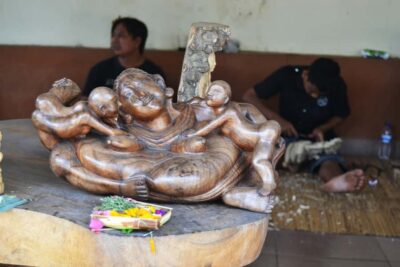


Monkey Forest, Water Temple, Rice Terrace, Waterfall
Read our review →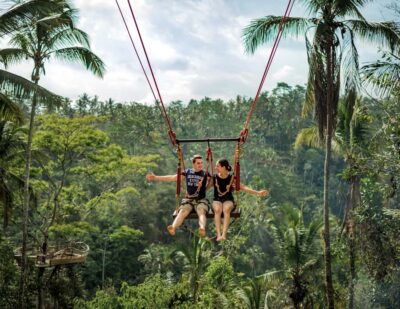
Swing with Falls, Rice Terrace, & Monkey Forest Option
Read our review →
Full-Day Eat Pray Love Tour with Rice Terraces & Yoga
Read our review →
Private Hidden Waterfalls and Rice Terrace Tour
Read our review →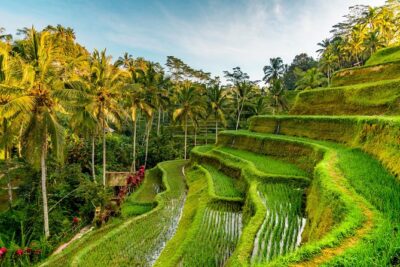
Tanah Lot Tour with Ubud Monkey Forest, Rice Terraces, and Waterfalls
Read our review →Browse the lists this tour appears in