Reviewed · SEMINYAK TOURS
Traditional Tempeh Making & Cooking Balinese Cuisine
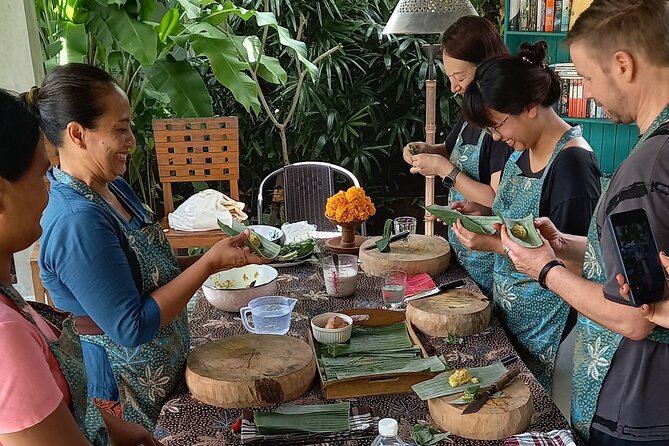
Tempeh is the star here, not a side note. You’ll learn how this Indonesian soy food is made from scratch, then use it in several dishes before sitting down to a seven-dish Balinese lunch in the garden of a local home. Ayu and Ngurah lead the class, which gives the morning a personal, home-based feel rather than a polished restaurant-school routine.
I like two things right away: the focus on tempeh, and the chance to work with the spices and plant-based ingredients that give Balinese food its character. I also like that the class remains small, with no more than 10 people, so you should get more help at the chopping board and stove.
The main consideration is location. The experience is marketed for Seminyak, but the stated meeting point is Canang Sari Homestay in North Denpasar, not central Seminyak. Check your route carefully and allow time to reach the 9:30 a.m. start.
In This Review
- Key points at a glance
- Why tempeh makes this Bali cooking class different
- Starting at 9:30 a.m. in North Denpasar
- Making tempeh instead of simply cooking with it
- Working with Bali’s spices and fresh ingredients
- The seven-dish Balinese lunch
- What the small-group size really means
- The hosts: Ayu and Ngurah
- Price, value, and who should book
- Practical details before you reserve
- Should you book this tempeh cooking class?
- FAQ
- Where does the Balinese tempeh cooking class meet?
- What time does the class start and finish?
- How long is the experience?
- Is the class suitable for vegans?
- How many people can join the class?
- What is the cancellation policy?
Key points at a glance
- Tempeh from scratch: Learn the process and the place tempeh has held in Indonesian food since at least the 1600s.
- Seven-dish lunch: Cook several tempeh recipes, vegetable urab, and other Balinese dishes before eating together.
- Vegan-friendly format: Chicken and tuna can be included, or skipped if you eat vegan.
- Small class size: The maximum is 10 people, with a private option available on request.
- Local home setting: The meal is served in a garden with a family-style atmosphere.
- Morning schedule: The class runs from 9:30 a.m. to about 12:30 p.m., including lunch.
Why tempeh makes this Bali cooking class different
Many Indonesian cooking classes revolve around a familiar set of dishes. This one takes a more focused route by using tempeh as the central ingredient. That makes it especially useful if you already know tofu and want to understand another important Indonesian soy food.
Tempeh is made from cooked soybeans that are bound together through fermentation. You won’t simply be handed a ready-made block and told to fry it. The class explains the making process and gives you a practical look at how this food is prepared.
The hosts also place tempeh in a wider food story. You’ll hear about its origins in Java and its long place in Indonesian cooking. The experience describes tempeh as a food known since the 1600s, valued for protein and nutrients and eaten by people from many walks of life.
That background matters because tempeh is not being presented as a recent meat substitute. It is an Indonesian food with its own cooking traditions. If you are vegan, vegetarian, or simply curious about regional food, this gives the lesson more substance than a standard recipe demonstration.
A few more Seminyak experiences worth comparing
- Bali Full-Day Traditional Village Sightseeing Trip All Inclusive
★ 5.0 · 3,069 reviews - Experts Bali Driver : Best Bali Private Driver for Tour in Bali
★ 5.0 · 1,339 reviews - Bali Hai Sunset Dinner Cruise
★ 5.0 · 1,173 reviews
Starting at 9:30 a.m. in North Denpasar
The class starts at 9:30 a.m. and ends around 12:30 p.m. at Canang Sari Homestay, Gg. Kaswari No. 6, Dangin Puri Kaja, North Denpasar, Bali 80234. The activity returns to the same meeting point.
The timing works well for anyone who wants a substantial lunch without using the whole day. You’ll spend the morning cooking, then eat what you made before heading on to another part of Bali. The early start also means you should not treat this as a casual midday drop-in. Plan your route the night before.
The location deserves special attention. The experience is listed in connection with Seminyak, but the meeting address is in Denpasar. Those are not the same area, so do not assume the class is within an easy walk of your Seminyak hotel. The information provided does not include hotel pickup or transport, so you should arrange your own way to the meeting point unless the operator confirms another plan.
A mobile ticket is provided, and confirmation comes at booking. That is handy, but it does not replace checking the address. In Bali, travel time can vary, and arriving late to a hands-on class is more awkward than arriving late at a sightseeing stop.
Making tempeh instead of simply cooking with it
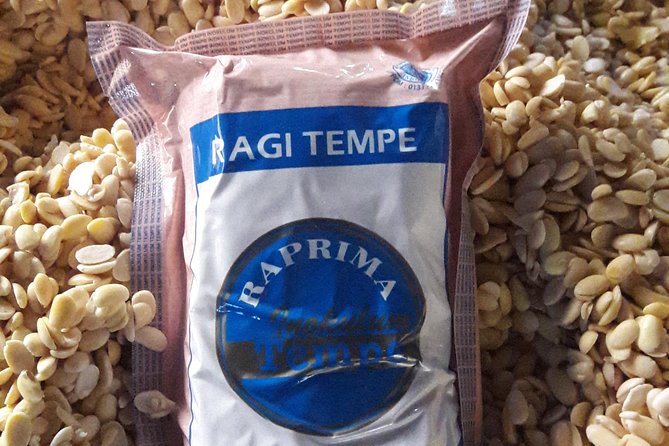
The first major lesson is tempeh making. You’ll learn the key stages from your host and see how the soybeans become the firm, sliceable food used in Indonesian kitchens.
The exact amount of hands-on work is not specified, so you should expect instruction in the process rather than assume you will complete every stage from raw beans to a fully fermented final product during the three-hour session. Fermentation takes time, and the class also includes several recipes and lunch.
Even so, this is the feature that gives the experience its identity. You’ll leave with a better understanding of what tempeh is, how it differs from tofu, and why it can be used in so many ways. One particularly useful touch is the tempeh-making guide provided for use at home. That makes the lesson more than a meal you enjoy once and forget.
If you are hoping for a technical food-science workshop, this may feel light. The activity is built as a cooking class with a tempeh focus, not as a specialist fermentation course. For most visitors, that balance is probably right: enough background to understand the food, followed by plenty of cooking and eating.
Working with Bali’s spices and fresh ingredients
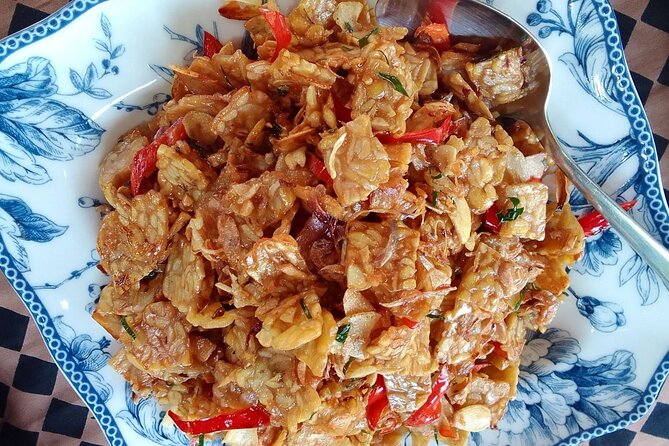
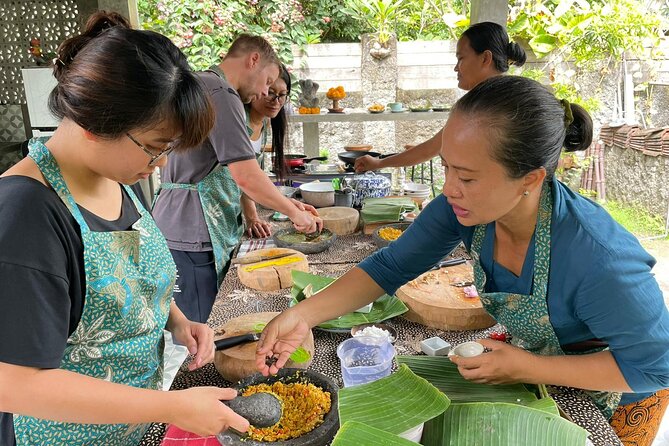
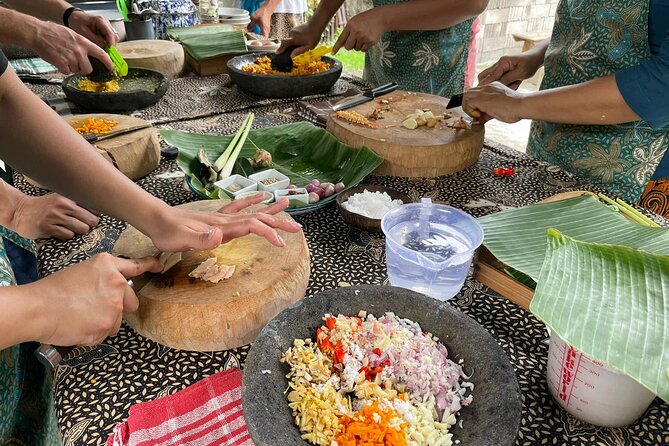
After the tempeh lesson, the class moves into Balinese cooking. The description emphasizes fresh plant-based ingredients and colorful Indonesian spices, all prepared from scratch.
This is where the class can teach you more than a list of recipes. Indonesian food often depends on how spices are combined, cooked, and balanced. You’ll get a chance to see those ingredients in action rather than only taste the finished result.
The available details do not name every spice or give a full recipe list, so you should not book expecting a fixed menu with each dish confirmed in advance. What is clear is that the class includes several traditional Indonesian recipes and uses tempeh in more than one way.
The hosts, Ayu and Ngurah, guide you through the steps and explain the food as you work. The strongest praise directed at the class centers on Ayu’s passion and clear teaching. That suggests the value lies as much in the instruction and conversation as in the final dishes.
For a home cook, the practical benefit is easy to see. You can ask how ingredients are combined, watch the preparation up close, and learn methods that are harder to pick up from a restaurant meal. You may still need to adapt recipes at home if certain Indonesian ingredients are difficult to find, but the supplied guide gives you a starting point.
A different pace of day, same stretch of Bali coast:
- Bali: Mount Batur Sunrise Guided Hike and Natural Hot Spring
★ 4.8 · 9,284 reviews - Bali: Full-Day Instagram Highlights Tour
★ 4.8 · 7,817 reviews - Bali: Sunrise Mount Batur Hike with Breakfast
★ 4.8 · 6,973 reviews - ️Nusa Penida by Private Boat – Snorkeling 4 spots, Swim with Mantas + Land Tour
★ 5.0 · 6,424 reviews
The seven-dish Balinese lunch
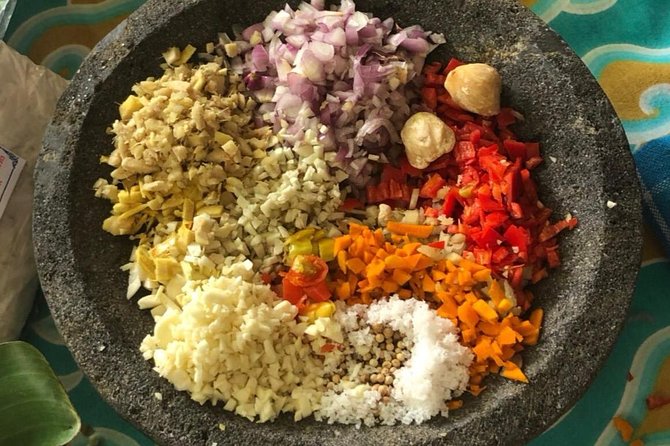
The payoff is lunch in the garden of the home. You’ll share the food you prepared in a family-style setting, with seven Balinese Indonesian dishes served as the final meal.
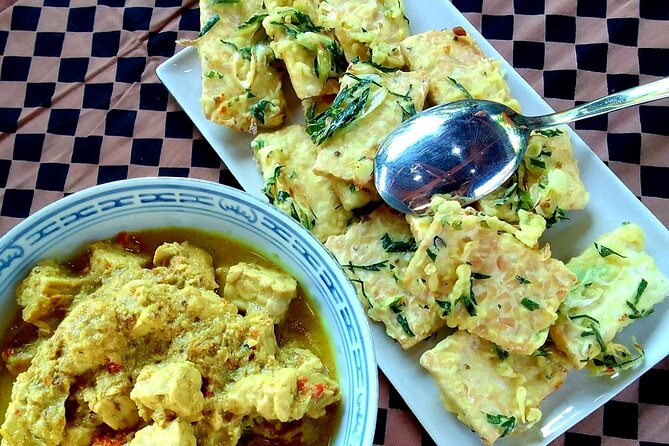
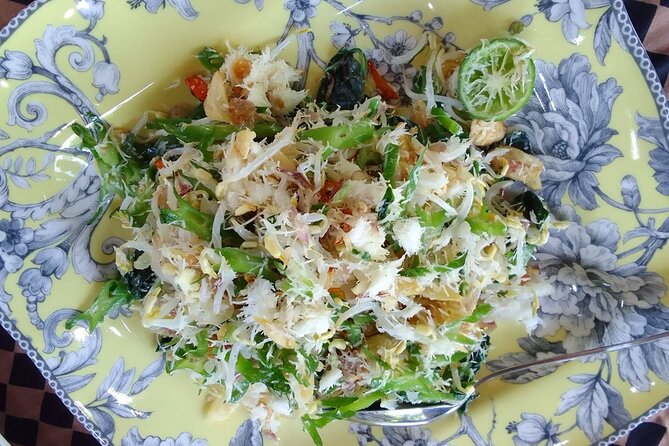
Tempeh appears in several preparations, including a tempeh fritter or fried tempeh dish. That is a useful detail for anyone who wants ideas beyond simply pan-frying slices. One dish specifically mentioned is sayur urab, a vegetable preparation made with greens and beans mixed with grilled grated coconut.
Sayur urab gives the menu a good balance. Tempeh can be hearty, while the vegetables and coconut bring a different texture and flavor. The meal is not presented as a single tempeh plate. It uses the ingredient as part of a wider lunch.
Chicken and tuna may also be included in the menu. If you eat vegan, you can skip these and focus on the plant-based dishes. This flexibility makes the class suitable for mixed groups, though it is sensible to state your dietary needs when booking.
The garden meal is also part of the lesson’s appeal. You are not just eating at a counter after class. You sit down with the hosts and the group in a home setting. That can make the experience feel more connected to everyday food culture, though anyone looking for a formal restaurant presentation should expect something simpler and more relaxed.
Tea, coffee, water, and a light snack are provided during the class. Lunch is included as part of the experience, so you should finish the morning well fed.
What the small-group size really means
The maximum group size is 10 people. That is small enough to keep the session personal, but it is not a private class. Your level of attention will depend on the final group and on how many people need help at once.
For most people, 10 is a workable number for a cooking lesson. You can watch the demonstrations, take part in the preparation, and ask questions without being one face in a large tour group. The format should suit couples, solo visitors, friends, and families who want more contact with the hosts.
A private class is available on request. That may be worth considering if you have specific dietary needs, want a slower pace, or are booking for a special occasion. The supplied details do not give a private-class price, so you will need to ask Ayu and Ngurah for the cost and arrangements.
The class also received a perfect rating from 18 reviews, with 100 percent recommending it. That is a small sample, but it does point to a consistent strength: the warmth of the hosts and the food itself. I would place more weight on those repeated themes than on the rating alone.
The hosts: Ayu and Ngurah
Ayu is the main host named in the experience details, and Ngurah also helps lead the class. The strongest praise focuses on Ayu’s enthusiasm for cooking, her explanations, and the care she gives to each step.
That matters in a class built around unfamiliar food. Tempeh making can seem simple once you see the finished product, but the process and spice combinations may not be obvious to a first-time cook. A host who explains why a step matters can help you reproduce the dish later.
The class also includes conversation about tempeh’s past and its place in Indonesian food. You are encouraged to ask questions as you cook, rather than sit through a long lecture before touching an ingredient.
The experience is presented as a family atmosphere at a cozy home. That means you should expect personal hospitality, a practical kitchen environment, and a meal shared with the hosts. It may not have the equipment, staging, or precise timing of a professional culinary school. For many people, that is exactly the point. The tradeoff is a less formal setup.
Price, value, and who should book
At $39 per person, the class offers three hours of instruction, tempeh preparation, several Balinese dishes, a seven-dish lunch, drinks, and a small snack. You are also paying for direct time with Ayu and Ngurah and for a lesson you can use after Bali, especially with the tempeh guide.
I consider that good value if you care about food and want more than a meal. The price becomes less attractive if you mainly want to taste Balinese dishes without cooking them, since the hands-on part is the heart of the experience.
This class is a strong fit for:
- Vegans and vegetarians who want local food without having to build a menu around meat
- Curious cooks who want to learn how tempeh is made
- Visitors who enjoy small classes and personal conversation
- Couples or families seeking a relaxed morning activity
- People who want a substantial lunch included in a half-day plan
It may be less suitable if you need a fully fixed menu, want an advanced culinary course, or are staying far from North Denpasar and do not want to arrange transport. The food is Indonesian and the class includes spices and ingredients you may not know, so a willingness to try unfamiliar flavors will improve the experience.
Practical details before you reserve
The activity requires good weather. If poor weather causes a cancellation, you are offered another date or a full refund. It also requires a minimum number of people, so a cancellation for that reason brings the same choice of another date or a refund.
You can cancel for a full refund up to 24 hours before the start time. Changes or cancellations made less than 24 hours before the 9:30 a.m. start are not accepted for a refund, and the cut-off uses Bali local time.
Tell the operator if you are vegan when booking. Chicken and tuna can be skipped, but advance notice is the sensible way to avoid confusion. Also confirm the meeting address, since the activity is associated with Seminyak while the stated start point is in North Denpasar.
Should you book this tempeh cooking class?
Book it if you want a personal, food-centered morning with a clear theme and a proper lunch at the end. The tempeh lesson and seven-dish meal give the class more substance than a basic demonstration, while the small group and home setting keep it friendly.
I would especially recommend it to vegan visitors, curious home cooks, and anyone who wants to understand an Indonesian ingredient in its own setting. Before paying, check the North Denpasar meeting point and confirm any dietary needs. If that location works for you, this $39 class offers a useful mix of cooking, culture, and a meal you have helped make.
FAQ
Where does the Balinese tempeh cooking class meet?
The stated meeting point is Canang Sari Homestay, Gg. Kaswari No. 6, Dangin Puri Kaja, Kec. Denpasar Utara, Kota Denpasar, Bali 80234, Indonesia.
What time does the class start and finish?
The class starts at 9:30 a.m. and finishes at about 12:30 p.m., including lunch.
How long is the experience?
The cooking class lasts approximately three hours.
Is the class suitable for vegans?
Yes. The class is vegan-friendly. Chicken and tuna can be skipped, allowing you to focus on the plant-based dishes and tempeh recipes.
How many people can join the class?
The maximum group size is 10 people. A private group is available on request.
What is the cancellation policy?
You can cancel at least 24 hours before the start time for a full refund. Cancellations or changes made less than 24 hours before the start time are not accepted for a refund. If bad weather or a lack of minimum participants cancels the class, you are offered another date or a full refund.
Recently added around Seminyak
- Bali: Denpasar Market Food Tour with 7 Tastings Must-Try★ 3.9 · 3 reviews
- Gong Sound Healing on Nusa Lembongan, Bali★ 5.0 · 3 reviews
- Ubud: Healing & Purification with Shaman at Hidden Temple★ 3.3 · 3 reviews
- Bali: Customized Uluwatu Tour Including Transfer Hotel★ 3.9 · 3 reviews
- Private Tour: Half Day Tanah Lot Sunset Tours★ 5.0 · 3 reviews
- Bali: Blue Lagoon Snorkeling Tour with Bali Quad Bike★ 3.4 · 3 reviews
- Royal Orchid Spa 90 Minutes Relaxing Massage.★ 4.5 · 3 reviews
- Full-Day Customized Amazing Private Tours in Bali★ 5.0 · 3 reviews
Seminyak Tours, compared.

Bali Full-Day Traditional Village Sightseeing Trip All Inclusive
Read our review →



Ubud Hot Springs and Waterfall Private Guided Tour
Read our review →
Bali Secret Waterfall Tour – Private and All-Inclusive
Read our review →