
Reviewed · SCUBA DIVING
Bali: 3-Days PADI Open Water Diving Course
The most memorable part of this three-day course is the quick change from pool practice to real underwater work around Bali’s Coral Triangle. You start with basic equipment and safety skills, then visit Padang Bai’s Blue Lagoon and the USAT Liberty wreck at Tulamben. I like the small groups, limited to four people, and the patient teaching style associated with instructors such as Ari, Eka, Ketut, and Tunas.
I also like that the $409 price includes hotel transfers, equipment, marine park fees, boat and porter costs, meals, PADI study materials, certification, and DAN insurance. The main consideration is the early start and long road trip to Tulamben, which can take about two and a half hours each way. Some sites may also feel crowded, especially for a first course.
In This Review
- Key points at a glance
- What the three-day PADI course is really like
- Day one: paperwork, study, and pool practice
- Day two: Blue Lagoon at Padang Bai
- Day three: Tulamben and the USAT Liberty
- Why the small group makes a difference
- What the $409 price includes
- Transport, hotel locations, and early starts
- Safety, health, and the flight rule
- The best fit for this experience
- Booking details worth checking first
- Should you book Bali’s three-day PADI course?
- FAQ
- How long does the PADI Open Water course take?
- Where does the course take place?
- How many open-water sessions are included?
- Is hotel pickup included?
- What languages do the instructors speak?
- What is included in the $409 price?
- What should I bring?
- How old must participants be?
- How long should I wait before flying?
Key points at a glance
- Three days to certification: Complete classroom work, pool skills, and four open-water training sessions.
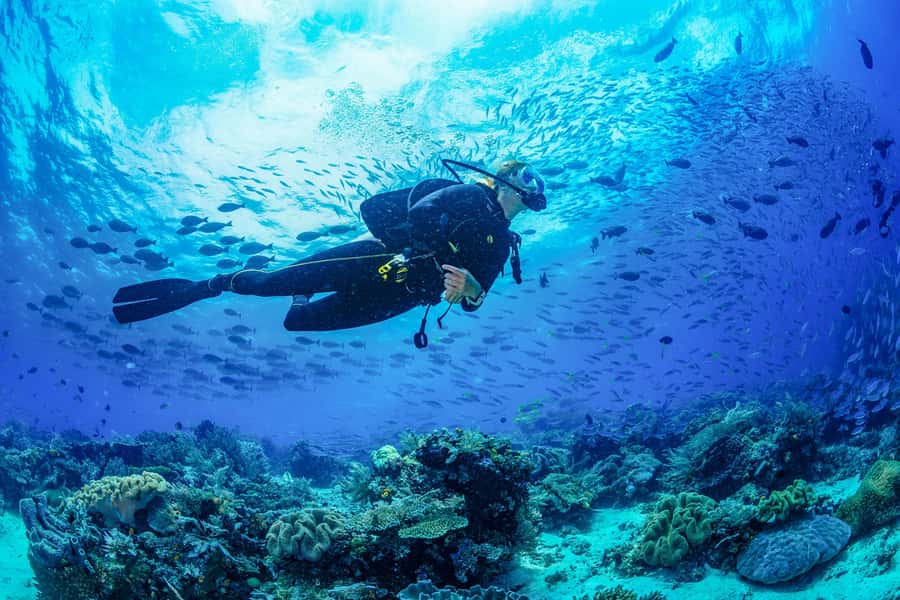
- Two very different settings: Practice in the pool, then train at Blue Lagoon and Tulamben.
- A famous wreck on the final day: The USAT Liberty gives the course a memorable finish.
- Small groups matter: With no more than four participants, instructors can adjust the pace and offer close supervision.
- A largely all-inclusive price: Meals, transfers, equipment, fees, materials, and certification are included.
- Plan around your flight: You need at least 18 hours between your final underwater session and departure.
What the three-day PADI course is really like
This is a full certification course, not a one-hour introductory swim with an oxygen tank. You will study, take quizzes and an exam, practice skills in a pool, and complete four training sessions in the sea. At the end, you receive your PADI Open Water certificate if you complete the required work and skills.
That structure is useful if you want a qualification you can use for future scuba trips. It also means the experience demands attention. You are not simply sightseeing underwater for three days. You are learning how to check equipment, manage yourself in the water, and respond correctly to basic situations.
The course is conducted in English or Indonesian. The group limit of four is one of its strongest practical features. New students often need different amounts of time to master breathing, buoyancy, clearing a mask, and other basic tasks. A small group gives the instructor room to slow down and explain a skill again instead of rushing everyone along.
The instructors named by participants include Ari, Eka, Ketut, and Tunas. The useful pattern is clear: students are given time to build confidence, and the instructors keep the mood friendly without treating safety as a joke. That balance matters when you are nervous during your first sea session.
More dive trips off Bali:
- Bali: Padangbai Blue Lagoon Beginner’s Dive Experience
★ 4.9 · 202 reviews - Bali: Tulamben Bay Beginner’s Dive Experience
★ 5.0 · 66 reviews - Bali: Tulamben Bay and the USAT Liberty Wreck Dive
★ 4.9 · 58 reviews
Day one: paperwork, study, and pool practice
The first morning begins at the scuba center with registration and course paperwork. Your instructor introduces the equipment and the course process before you work through PADI e-learning material, instructional videos, knowledge reviews, quizzes, and the final theory exam.
This part may feel less exciting than the ocean, but it is where the practical foundation is built. You learn why equipment checks matter, how to use basic scuba gear, and what you need to do to become a certified participant. Set aside enough mental energy for this work. The course moves quickly, so casual skimming is not a good plan.
Lunch and light refreshments are provided. Water, tea, and coffee are also available at the center, a small benefit on a day that combines study with physical practice.
The afternoon takes place in the swimming pool. Here you work through the basic skills required before entering the sea. The pool is a sensible first setting because you can focus on your breathing, equipment, and body position without waves, current, or a boat ride adding pressure.
You will also log the equipment used at the center and complete sign-off paperwork. The gear is then washed and stored for you, so you do not need to haul wet equipment back to your hotel each evening.
Day two: Blue Lagoon at Padang Bai
Day two begins early with equipment preparation and loading. Pickup times are generally between 7:00 and 7:15 in Nusa Dua, Jimbaran, Kuta, Legian, and Seminyak. Sanur pickups are usually between 7:30 and 7:45. Your exact time is confirmed by WhatsApp the day before.
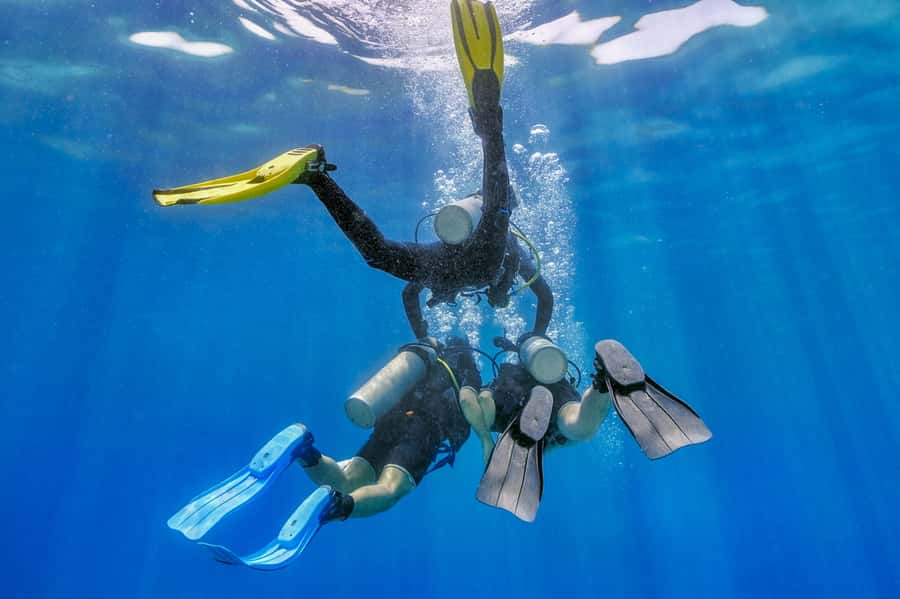
The group travels to Padang Bai, where you board a boat for the Blue Lagoon. The boat ride adds a pleasant break from the road and gives you time to organize yourself before the first open-water training session.
Your first sea session is not just a sightseeing stop. You continue practicing the skills learned in the pool while getting used to real conditions. This is where the instructor’s manner becomes important. Ari, Eka, Ketut, and Tunas are repeatedly singled out for patience, clear explanations, and helping students feel safe.
After the first session, you have time to rest on the boat deck or swim in the lagoon. Then comes the second open-water session. Two sessions in one day let you repeat skills while the lessons are still fresh, though you should expect to feel tired by the afternoon.
Lunch is served at Billabong Restaurant after returning to Padang Bai. The meal is included, as are light refreshments. You then return to the scuba center, where the day’s equipment is handled and stored.
Blue Lagoon is a good location for the second day because it offers a clear step up from the pool without making the entire day about travel. Still, conditions and site traffic can vary. One participant found the sites crowded and not especially varied in marine life. That is fair context: the purpose here is certification and training, not a carefully designed wildlife expedition.
Day three: Tulamben and the USAT Liberty
The final day takes you to Tulamben, home of the USAT Liberty wreck. This is the course’s headline attraction and the part most likely to stay with you after the certificate is in your hands.
The journey is long. One account puts the drive to the wreck at roughly two and a half hours, so bring patience and use the early morning well. The long transfer is the clearest drawback of the itinerary, especially if your hotel is in southern Bali and you must repeat the trip back after the last session.
At Tulamben, you complete the third and fourth open-water training sessions. Between them, lunch gives you time to eat and recover. The wreck adds a sense of occasion to the final day, and the underwater setting gives you something more memorable to focus on while completing the required skills.
The USAT Liberty is close enough to explore around, and one participant described being able to swim near and through parts of it. Exactly how much of the wreck you see depends on the training plan, conditions, and instructor guidance. You should treat it first as a certification site, not assume it will function like a specialized wreck tour.
After the last session, the equipment is packed up and you return to the center. The final certification and sign-off paperwork are completed there. If you pass the theory work and meet the practical requirements, your PADI Open Water certification is issued at the end of the three-day program.
A different pace of day, same stretch of Bali coast:
- Bali: Mount Batur Sunrise Guided Hike and Natural Hot Spring
★ 4.8 · 9,284 reviews - Bali: Full-Day Instagram Highlights Tour
★ 4.8 · 7,817 reviews - Bali: Sunrise Mount Batur Hike with Breakfast
★ 4.8 · 6,973 reviews - Bali/Nusa Penida: East & West Highlights Full-Day Tour
★ 4.7 · 6,263 reviews
Why the small group makes a difference
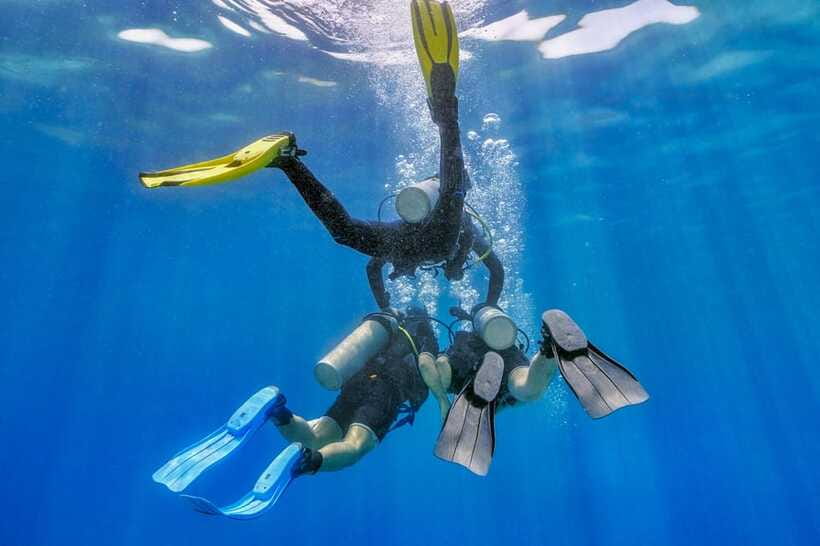
A group of four is small enough for personal attention without the cost of a private course. That matters most on day one, when students may have different comfort levels in the pool, and on the first sea session, when breathing and buoyancy can feel unfamiliar.
The instructors are also praised for adjusting the pace. Ari is described as patient and funny, Eka as professional and clear, Ketut as caring and responsible, and Tunas as easy to understand and reassuring. Those personal qualities are not decorative extras. A calm instructor can make the difference between a student who panics and one who regains control.
The course can include dive masters in training, adding extra support in the water. That may be useful, though you should still expect your main instructor to lead the training and sign-off process.
What the $409 price includes
At $409 per person, the course is priced as a package rather than a bare certification fee. It includes:
- Hotel transfers from covered parts of southern Bali
- All marine park entry fees
- Boat and porter fees
- Rental scuba equipment, tanks, and weight belts
- PADI e-learning materials and certification
- A professional instructor
- Lunch and light refreshments
- Water, tea, and coffee at the center
- Equipment washing and storage
- Towel, if requested
- DAN insurance cover
That list makes the price easier to assess. You are not paying only for four underwater sessions. You are also paying for instruction, transport to two east-coast locations, site access, equipment, food, paperwork, and the final qualification.
The value is strongest if you are starting from zero and would otherwise need to arrange each piece separately. The package also removes much of the usual friction. You do not need to rent tanks from one company, find a boat from another, and arrange transport to Tulamben yourself.
A GoPro is not included, but one can be rented at the center. Swimwear and sunscreen are also your responsibility. Bring a change of clothes, since you will spend much of days two and three moving between wet equipment, boats, restaurants, and vehicles.
Transport, hotel locations, and early starts
Pickup is included from central Nusa Dua, Jimbaran Beach, Kuta, Legian, Seminyak, and Sanur. Remote areas such as Uluwatu, Pecatu, Canggu, and Ubud require an additional IDR 350,000, listed as about $27, per group per day for pickup and drop-off.
Your hotel location can affect how comfortable the course feels. Sanur is a practical base because it may reduce the amount of time spent returning to a distant hotel after long days. If you stay in Canggu or Ubud, the extra pickup charge and longer road transfers should be part of your budget and planning.
The exact pickup time arrives by WhatsApp one day ahead. Keep your phone available and be ready early. A late morning start is not realistic for this course, since the group must prepare equipment and reach the coastal sites.
Transport has earned a 90 percent perfect score, which fits the way the program is organized. The shuttle, boat, porter support, and equipment handling are all built into the day. The weak point is not the organization but distance, especially on the Tulamben day.
Safety, health, and the flight rule
You need to be at least 10 years old to participate. The course is not suitable for pregnant women, wheelchair users, or people with heart, respiratory, or similar health problems listed in the activity information.
Be especially careful with your flight schedule. You must have at least 18 hours of rest after the final underwater session before flying, allowing nitrogen levels in your body to reduce. If you have less than 18 hours before your flight, you will not be allowed to take part.
This rule can affect the whole trip plan. Do not schedule the course to finish on the same day as an evening flight unless the timing clearly leaves the required gap. A safer plan is to complete the course well before departure and keep a spare day for flexibility.
The instructors’ safety-first approach is one of the course’s most praised qualities. That does not remove your responsibility. Listen carefully, tell the instructor if you feel unwell or anxious, and do not treat the certificate as a race prize.
The best fit for this experience
I would choose this course if you want a genuine scuba qualification and have three consecutive days available in Bali. It suits beginners who want warm-water training, direct instruction, and an organized route to certification.
It is also a good choice if you value a small group more than a luxury setting. The schedule is practical rather than leisurely, and the long Tulamben transfer is part of the trade-off for reaching the USAT Liberty.
You might prefer another option if you only want a single introductory swim, dislike early starts, or have little time before flying. The course includes theory, exams, equipment work, and four training sessions, so it asks more of you than a casual underwater excursion.
Marine life is an important part of the appeal, but keep expectations measured. The Blue Lagoon and Tulamben sites can be beautiful, and the wreck is a strong final attraction, yet the program’s central goal is safe certification. Site traffic and marine variety are not guaranteed.
Booking details worth checking first
The activity costs $409 per person and runs for three days. You can cancel up to 24 hours in advance for a full refund, and reserve now while paying later, which is useful if your Bali plans are still shifting.
Confirm your hotel’s pickup zone before booking. If you are in Ubud, Canggu, Uluwatu, or Pecatu, add the extra transfer cost and consider the time spent on the road.
Ask for a towel from the team if you want one. Bring swimwear, sunscreen, and dry clothes, and arrange any GoPro rental at the scuba center if recording the experience matters to you.
Should you book Bali’s three-day PADI course?
I would book it if you want to become certified quickly and prefer having transport, meals, equipment, fees, and instruction bundled together. The small four-person format, patient instructors, and final session at the USAT Liberty give the course real value beyond the certificate itself.
I would hesitate only if you are staying far from the pickup area, have a tight flight schedule, or want uncrowded wildlife viewing rather than structured training. For most first-time students with three free days, this is a well-organized way to learn in Bali, with the important caveat that the Tulamben road trip is long and the sites may be busy.
FAQ
How long does the PADI Open Water course take?
The course lasts three days. It includes classroom study, quizzes and an exam, pool training, four open-water training sessions, and final certification paperwork.
Where does the course take place?
Day one takes place at the scuba center and swimming pool. Day two includes boat-based training at the Blue Lagoon in Padang Bai. Day three takes you to Tulamben and the USAT Liberty wreck.
How many open-water sessions are included?
Four open-water training sessions are included. Two take place at Blue Lagoon on day two, followed by two at Tulamben on day three.
Is hotel pickup included?
Pickup and drop-off are included from major tourist areas including central Nusa Dua, Jimbaran Beach, Kuta, Legian, Seminyak, and Sanur. Uluwatu, Pecatu, Canggu, and Ubud require an additional IDR 350,000 per group per day.
What languages do the instructors speak?
Instruction is available in English and Indonesian.
What is included in the $409 price?
The price includes transfers, marine park fees, boat and porter fees, lunch, refreshments, scuba equipment, tanks, weight belts, PADI e-learning materials, certification, equipment washing and storage, and DAN insurance cover.
What should I bring?
Bring swimwear, a change of clothes, and sunscreen. A GoPro is not included, but it can be rented at the scuba center.
How old must participants be?
Participants must be at least 10 years old.
How long should I wait before flying?
You need at least 18 hours of rest after the final underwater session before taking a flight. If you do not have that amount of time, you will not be allowed to participate.
Recently added around Bali
- Bali: Private Lempuyang Temple, Water Temple & Rice Terraces★ 5.0 · 3 reviews
- Bali: Mountain Bike Tour and River Rafting with Lunch★ 5.0 · 3 reviews
- Bali: Sidemen Waterfall tour and temple purification★ 5.0 · 3 reviews
- Bali: Padangbai Blue Lagoon Scuba Diving Private Tour★ 5.0 · 3 reviews
- Bali’s Mystical Jungle Trek & Hidden Waterfall Adventure★ 4.3 · 3 reviews
- From Bali: Mount Bromo & Ijen volcanic private tour★ 5.0 · 3 reviews
- Bali: 7 Day Solo Traveler’s Yoga Retreat In Ubud★ 5.0 · 3 reviews
- Bali: Photo Shoot with a Private Vacation Photographer★ 5.0 · 3 reviews
Scuba Diving, compared.
Open Water Course in Nusa Lembongan – Get Certified on remote island (next Bali)
Read our review →
2 Days Discover Scuba Diving in Nusa Lembongan – Scuba Initiation
Read our review →
Open Water Course in Tulamben – Get Certified in Bali
Read our review →
Bali Diving for Beginners: Tulamben Liberty Wreck
Read our review →
Discover Scuba Diving in Tulamben – Diving Initiation in Bali best diving sites
Read our review →
Advanced Open Water Course – Advanced Certification in Lembongan (next to Bali)
Read our review →
5 Fun Dives in Nusa Lembongan (for certified divers) – Swim with a Mola Mola
Read our review →
Padangbai Blue Lagoon Beginner’s Dive Experience
Read our review →Browse the lists this tour appears in