
Reviewed · WALKING TOURS
Bali: 6-Hour UNESCO Sites Cultural Walking Tour
The heart of this tour is not a single temple. It is the way the morning links school, plantation, shrines, family life, and rice farming into one clear picture of Bali. You move from Tampaksiring’s sacred springs and old stone monuments to a local priest’s compound, then finish among the fields with lunch.
I especially like the small group limit of six, which gives your guide room to answer questions, and the chance to visit a working family compound rather than simply photograph temple gates. The main drawback is the pace: six hours includes long transfers from the southern resorts, temple visits, and a walk through villages and rainforest, so this is not a soft sightseeing outing.
In This Review
- Key points to know
- From Your Hotel to Tampaksiring Village
- A School Visit With a Practical Purpose
- Coffee, Spices, and the Plantation Stop
- Pegulingan Temple and Layers of Belief
- Tirta Empul and the Purification Bath
- Walking to Gunung Kawi Through the Valley
- Inside a Balinese Priest’s Family Compound
- Subak Pulagan and the Rice Fields of Laplapan
- What the $50 Price Really Covers
- Who Will Get the Most From This Day
- Should You Book the Tampaksiring Cultural Walk?
- FAQ
- How long is the Bali cultural walking tour?
- What areas include free hotel pickup and return?
- What are the pickup times?
- Which languages are available for the live guide?
- How many people are in the group?
- Is the purification blessing bath included?
- Is lunch included?
- What clothing is required?
Key points to know
- A six-hour cultural route from Tampaksiring to Laplapan: The tour joins several important sites rather than treating each temple as an isolated stop.
- Coffee and spice tasting at an organic plantation: You can sample several drinks and learn how local crops are grown, though personal purchases are not included.
- Tirta Empul purification ritual: Temple clothing and bathing equipment are supplied, but participation in the blessing bath is a personal choice.
- A rare look inside a Balinese priest’s compound: You meet a family and learn about the traditional community living system.
- Walking through villages, rainforest, and rice fields: Fresh coconut breaks help, but good walking shoes and sun protection matter.
- Included transport, entry fees, and lunch: At $50 per person, the package covers many costs that can add up on an independent day out.
From Your Hotel to Tampaksiring Village
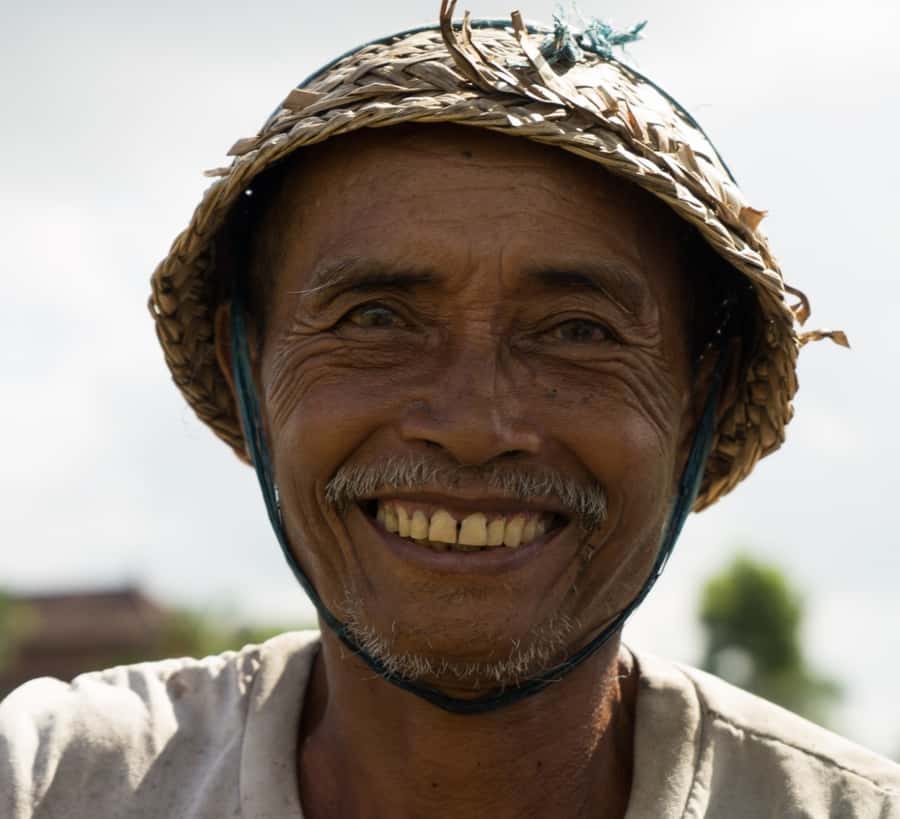
The day begins with a morning hotel pickup and a drive toward Tampaksiring. Pickup is roughly 8:30 to 9:00 AM from Ubud, 7:45 to 8:15 AM from Sanur, and 7:30 to 8:00 AM from Nusa Dua, Jimbaran, Kuta, Legian, Seminyak, or Canggu.
That timing matters. If you stay in one of the southern resort areas, you may spend a good part of the morning in the vehicle before the walking portion begins. The free return transfer is useful, especially if you do not want to arrange a private driver, but the tour makes more sense from Ubud, where the pickup is later and the cultural sites are closer.
The group is limited to six people. That is a real advantage on a walking route with temple etiquette and a family visit. You can ask about ritual details without trying to catch a guide’s words across a large crowd, and the guide can usually adjust the pace more easily.
English, French, Italian, and Spanish guiding is available. Wayan is one guide associated with this experience, and past arrangements have also included Nyoman as the driver. Your exact team can vary, so check the language and pickup details when booking.
A few more Bali experiences worth comparing
- Ubud: 3-Hour Walking Tour with Lunch
★ 4.8 · 85 reviews - Bali: Nusa Dua Underwater Sea Walking Experience
★ 4.8 · 69 reviews - Denpasar: Night Street Food Walking Tour
★ 4.5 · 60 reviews
A School Visit With a Practical Purpose
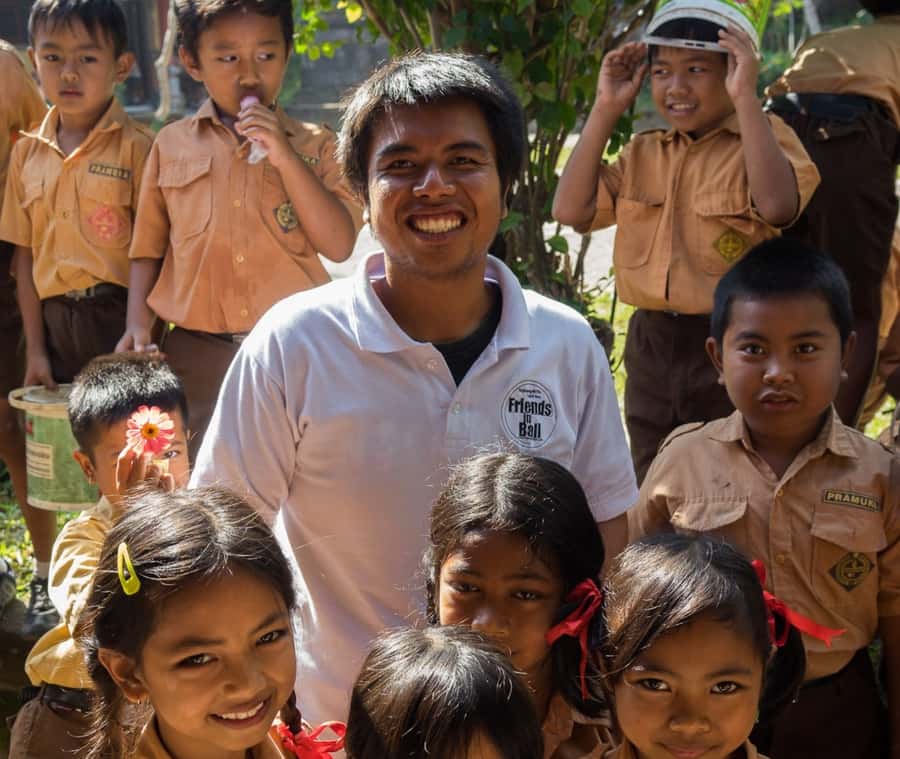
The first stop is a charity visit to a village school. This is a short part of the day, but it gives the tour a social purpose before the temples and tastings begin.
You should approach this stop with a little care. It is not a staged cultural show, and the value comes from meeting a local community in a respectful way. The tour includes a contribution to the school, so part of your fee supports that visit rather than paying only for transport and sightseeing.
The school stop also helps set the tone. Bali is often presented through ceremonies, statues, and rice terraces. Here you get a reminder that daily life, education, and family obligations are just as important as religious buildings.
Coffee, Spices, and the Plantation Stop
At the organic plantation, you learn about Bali’s coffee and spice crops and receive several free tastings. This is a pleasant break early in the route, especially if you enjoy comparing different drinks rather than simply ordering a standard cup.
The plantation visit can also be the most commercial-feeling stop. Free samples often lead naturally toward a shop, and souvenirs or plantation products are not included in the tour price. You are not required to buy anything, so treat the tasting as an introduction to local crops, not as an obligation to spend more.
One practical point: a substantial morning meal has been included on some departures, but the advertised inclusions specifically guarantee a Balinese lunch, not breakfast. Eat beforehand if you need a dependable early meal. The plantation stop should not be your only food plan for the morning.
Pegulingan Temple and Layers of Belief
The route continues to Pegulingan Temple, an archaeological site with Buddhist and Hindu elements. This is one of the most interesting stops for anyone who wants to understand that Bali’s religious culture did not develop in a single straight line.
Your guide’s explanations matter here. Without context, old stones and temple courtyards can blur together. With a good explanation, you can begin to see how different religious traditions left their mark and how Balinese practice brings several strands together.
The tour is cultural rather than purely devotional, but you still need to dress and behave appropriately. Sleeveless shirts are not allowed. Balinese cloths are provided for temple visits, which saves you from packing a full temple outfit, though modest clothing remains the sensible choice.
A different pace of day, same stretch of Bali coast:
- Bali: Mount Batur Sunrise Guided Hike and Natural Hot Spring
★ 4.8 · 9,284 reviews - Bali: Full-Day Instagram Highlights Tour
★ 4.8 · 7,817 reviews - Bali: Sunrise Mount Batur Hike with Breakfast
★ 4.8 · 6,973 reviews - Bali/Nusa Penida: East & West Highlights Full-Day Tour
★ 4.7 · 6,263 reviews
Tirta Empul and the Purification Bath
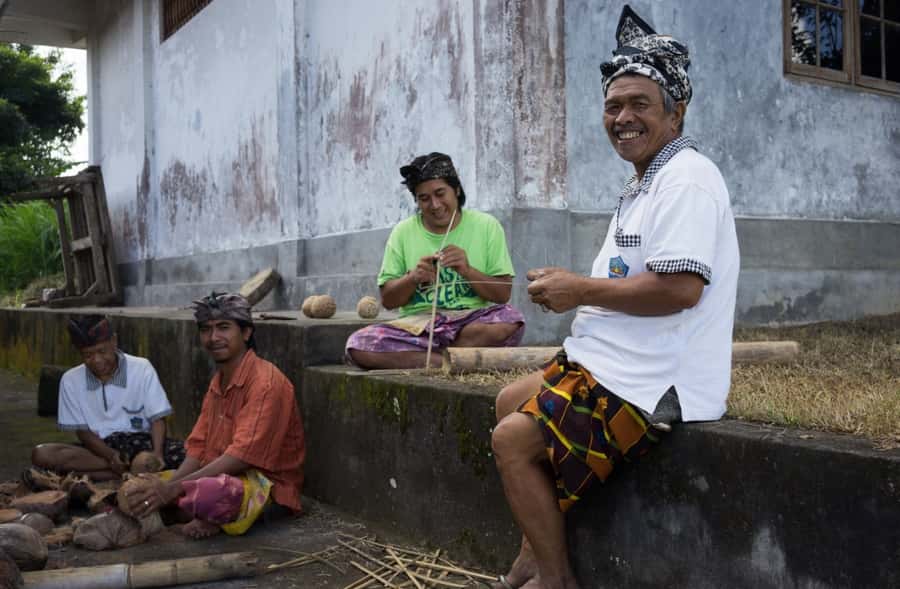
Tirta Empul is the spiritual center of the morning. The Holy Spring Temple is known for its purification ritual, in which worshippers move through a series of spring-fed waters as part of a blessing bath.
You have the chance to witness the ritual and may take part in the purification blessing. The tour supplies the necessary equipment and temple clothing, making participation easier for first-time visitors. Still, do not treat the ceremony as a tourist performance. Watch quietly, follow your guide’s instructions, and allow people who are there for religious reasons to have priority.
The bathing ritual is physically straightforward, but the schedule may not suit anyone who wants to spend a long time at the temple. This is a six-hour route with several stops, so your time at each place is limited. Pregnant women should not book this activity, according to the tour’s restrictions.
Tirta Empul is also where dress rules become especially important. No sleeveless shirts, and temple cloths must be worn as directed. Bring sunblock because it is not supplied, and the open-air portions of the visit can feel hot.
Walking to Gunung Kawi Through the Valley
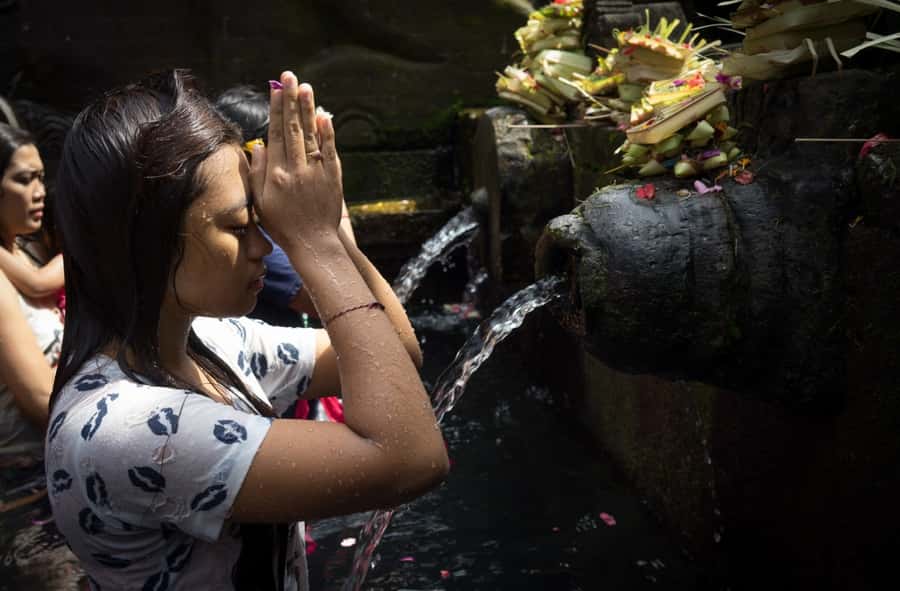
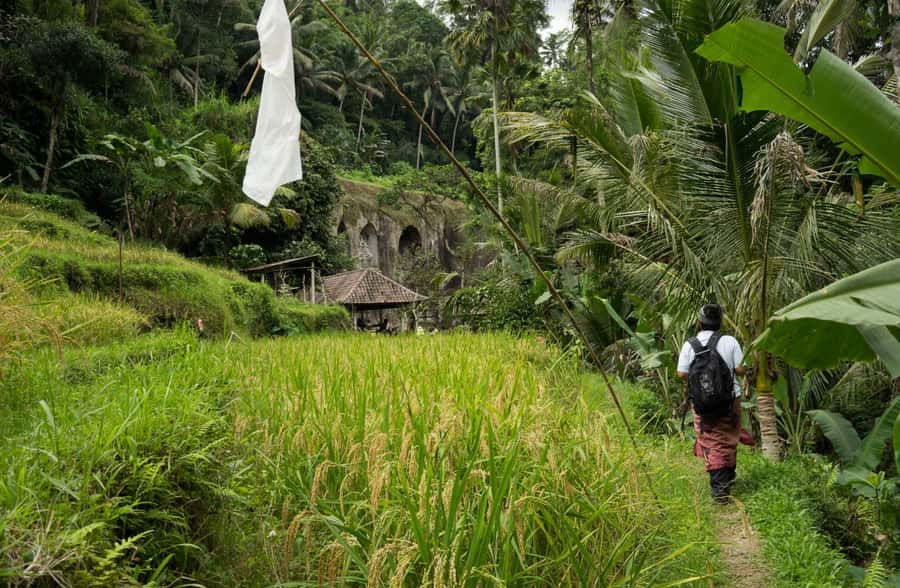
After the temple visits, the tour continues on foot toward the centuries-old Temple of Gunung Kawi. The walk passes through native villages and an unexploited rainforest valley, giving you a closer look at the countryside between the major sites.
This is the portion that makes the experience more than a temple transfer. You are not simply stepping out of a car, taking a picture, and getting back in. The route connects sacred places with homes, paths, vegetation, and working agricultural areas.
At the same time, you should be honest about your fitness. The experience is called a walking tour for a reason. You may encounter uneven paths, heat, and extended time on your feet. The supplied information does not give a precise walking distance or terrain rating, so ask before booking if you need a highly predictable route.
Several breaks are scheduled, and fresh coconut water is served along the way. Mineral water and coconut water are included. These are welcome details in Bali’s heat, but they do not replace sunblock, a hat, or comfortable shoes.
Gunung Kawi adds another kind of visual interest. The temple is associated with large stone monuments cut into the rock, and reaching the site through the valley makes the setting part of the experience. Your guide can help connect the architecture with the religious and royal traditions behind it.
Inside a Balinese Priest’s Family Compound
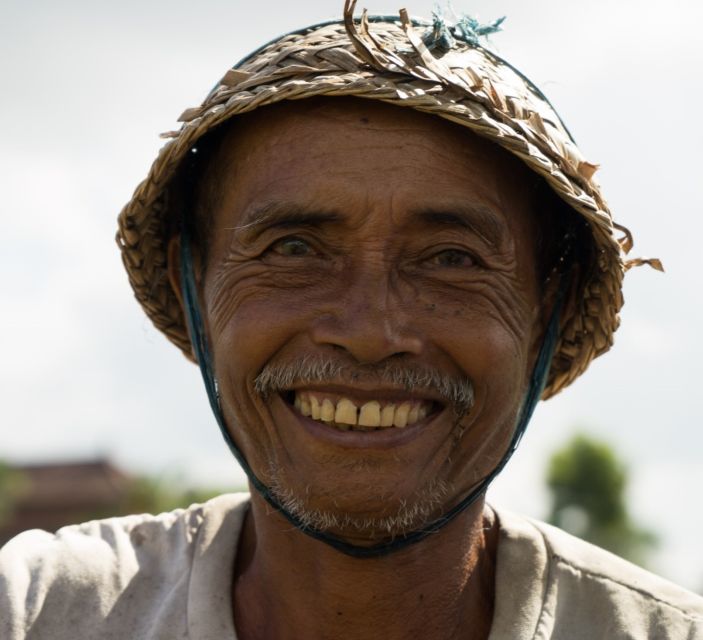
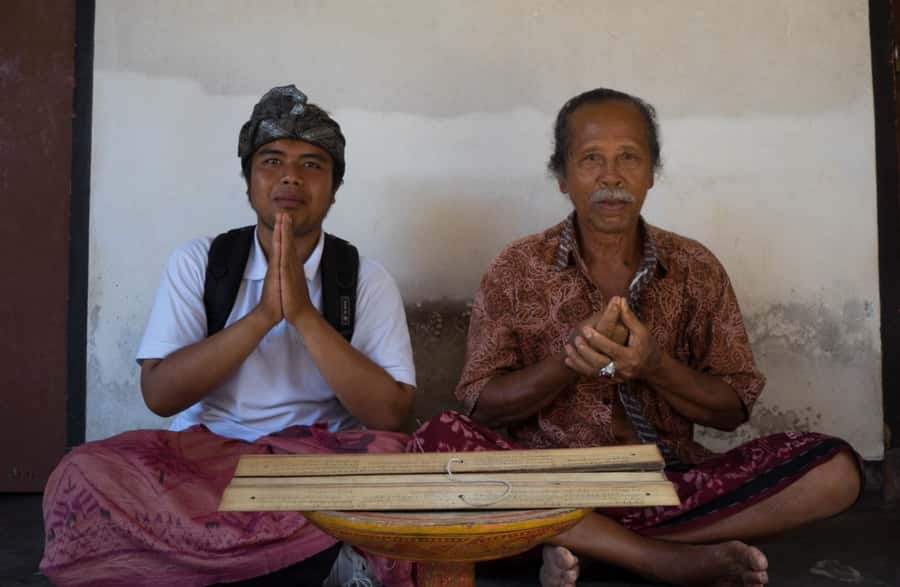
The visit to a local priest’s compound is the most personal part of the day. You are welcomed as a guest and meet the family while learning how Balinese people organize community and household life.
This is a useful counterpoint to the formal temples. A temple can show you public religious practice, but a compound shows how family, ritual, and everyday living fit together. The tour describes the compound as part of Bali’s unique community living system, so listen for the links between the household and the wider village.
This stop calls for good manners. Ask before taking photographs, avoid treating private areas as a museum, and let the guide explain what is appropriate. The experience is valuable because it offers contact with local people, not because it gives you unlimited access to a private home.
The amount of conversation can depend on the guide, the family, and the language being used. Guides such as Wayan have been praised for explaining customs clearly and taking photographs for participants, but the main benefit is the exchange itself. Come ready to ask simple questions and listen.
Subak Pulagan and the Rice Fields of Laplapan
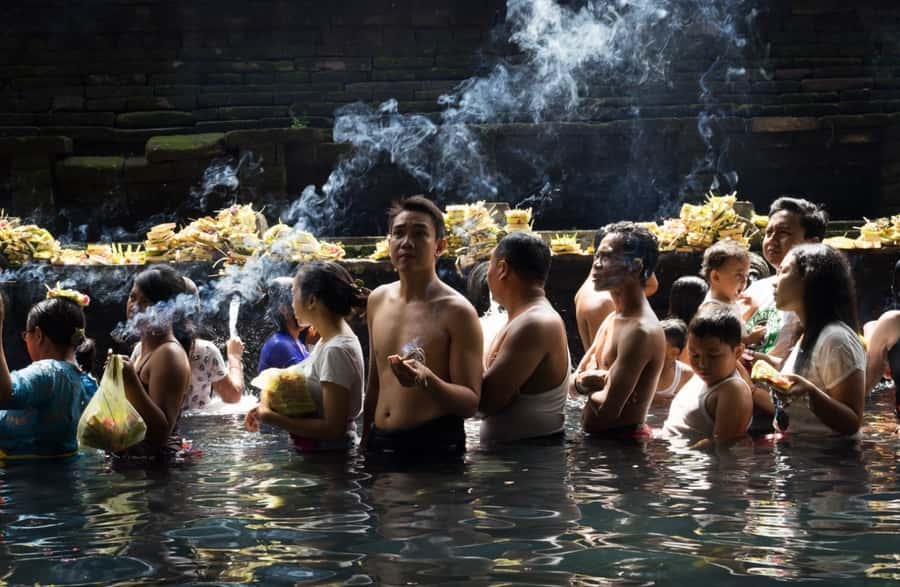
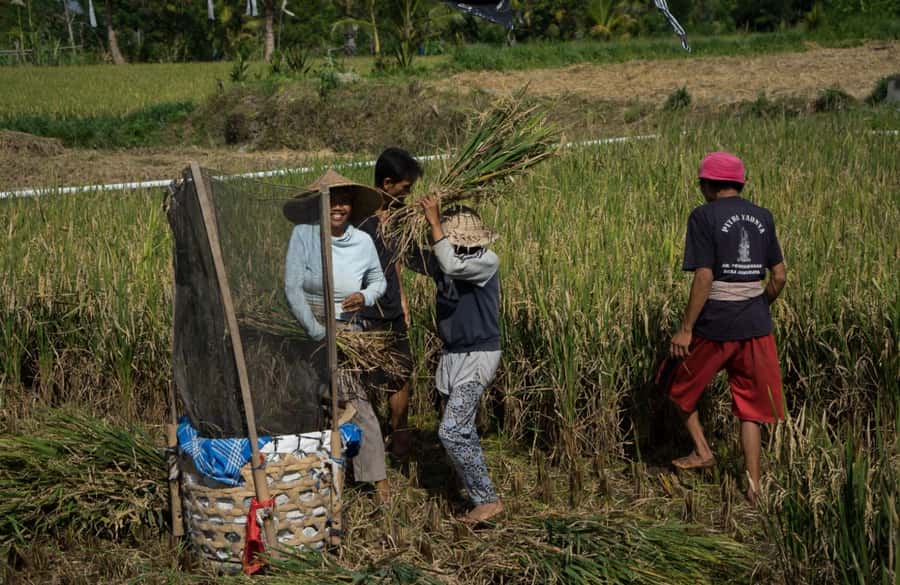
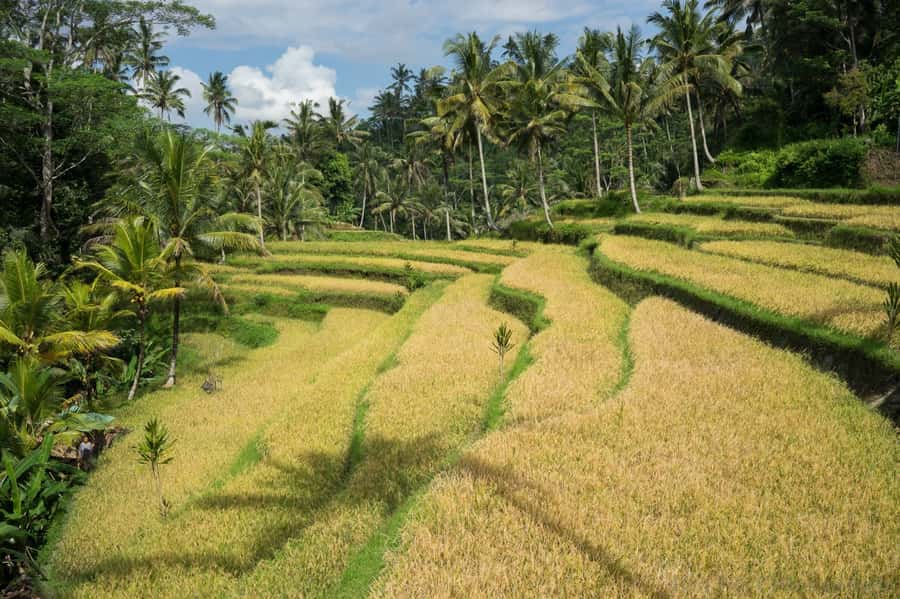
The walk ends with a view across hectares of rice fields and an introduction to Subak Pulagan, Bali’s traditional irrigation system. Subak is not just a canal network. It reflects cooperation among farmers and the relationship between agriculture, village organization, and religious life.
This final stop gives the morning a practical ending. After temples and rituals, you see how water supports the food, work, and community systems of the island. The rice fields also offer the kind of open view that makes a good closing scene, especially after the shaded valley walk.
Lunch is served at a local restaurant surrounded by rice paddies in Laplapan village. A Balinese meal is included, along with temple admissions, the purification equipment, transport, guiding, and the school charity visit.
The restaurant setting is part of the appeal, but do not expect a long, leisurely food tour. Lunch is the final meal in a tightly planned morning and early afternoon. Alcoholic drinks are not included, and personal purchases are your responsibility.
What the $50 Price Really Covers
At $50 per person, this is a strong package if you want a guided cultural day without arranging separate transport, entry tickets, and meals. You receive hotel pickup and return from several Bali areas, a small group, a multilingual guide, temple admission, drinking water, coconut water, temple clothing, purification equipment, school charity, and lunch.
A private driver and individual visits to these sites could cost more once you add entrance fees and food. The tour also saves planning time, which has real value in Bali, where sites are spread out and traffic can make a simple route take longer than expected.
The price is less attractive if you are staying far from Tampaksiring and dislike early starts or long drives. Southern resort pickups begin as early as 7:30 AM, and the return transfer is included but not given a fixed time. You are paying for a full cultural route, not a quick half-day temple visit.
The plantation tasting may also tempt you to buy coffee, tea, or spices. Those purchases are optional and not part of the $50. Budget a little extra only if you want souvenirs.
Who Will Get the Most From This Day
I would choose this tour if you want several sides of Bali in one manageable outing. It suits first-time visitors who want religious sites explained in context, couples or friends who prefer a small group, and curious eaters who enjoy a local lunch and plantation tasting.
It is also a good fit if you like meeting people and seeing ordinary settings. The school, family compound, village paths, and rice irrigation system give you more than a list of famous monuments.
I would think twice if your priority is long, quiet temple photography. The tour covers many places, so each stop has a limit. It is also a poor match if you need a gentle route, cannot wear modest temple clothing, are pregnant, or want a late start from the southern coast.
Wear comfortable walking shoes and a shirt with sleeves. Bring sunblock, since it is not included, and keep some money for personal expenses or plantation products. The tour supplies temple cloths, but modest dress still shows respect and keeps the morning simple.
The experience has a 4.7 rating from 17 submitted bookings, with especially strong praise for the guides’ friendliness, clear explanations, professionalism, and ability to adapt. That matters on a cultural tour, where a good guide can turn a stone carving or irrigation channel into something you understand rather than merely see.
Should You Book the Tampaksiring Cultural Walk?
Book it if you want a well-rounded Bali morning that joins spiritual sites with village life, agriculture, and personal contact. The family compound and Subak Pulagan stop give the tour more substance than a standard temple circuit, while the small group keeps the day personal.
Skip it if you want a slow spa day, a private itinerary, or a short ride to one major temple. The route is active, starts early in several pickup zones, and asks you to follow local dress and behavior rules.
For most visitors based in Ubud, the $50 cost is fair for the transport, guide, admissions, lunch, refreshments, and included cultural visits. I would reserve it with free cancellation up to 24 hours before departure, then confirm your pickup zone, language, clothing, and walking needs before you go.
FAQ
How long is the Bali cultural walking tour?
The activity lasts six hours.
What areas include free hotel pickup and return?
Transfers are included from Ubud, Sanur, Nusa Dua, Jimbaran, Kuta, Legian, Seminyak, and Canggu.
What are the pickup times?
Ubud pickup is approximately 8:30 to 9:00 AM. Sanur pickup is approximately 7:45 to 8:15 AM. Pickup from Nusa Dua, Jimbaran, Kuta, Legian, Seminyak, or Canggu is approximately 7:30 to 8:00 AM.
Which languages are available for the live guide?
Guiding is available in English, French, Italian, and Spanish.
How many people are in the group?
The tour is limited to six participants.
Is the purification blessing bath included?
The equipment for the purification blessing bath is included, and you have the chance to participate at Tirta Empul. Temple admission fees and Balinese temple cloths are also included.
Is lunch included?
Yes. A Balinese lunch at a local restaurant in Laplapan is included. Alcoholic drinks are not included.
What clothing is required?
Sleeveless shirts are not allowed. Balinese cloths are provided for temple visits, and modest clothing is recommended.
Recently added around Bali
- Bali: Private Lempuyang Temple, Water Temple & Rice Terraces★ 5.0 · 3 reviews
- Bali: Mountain Bike Tour and River Rafting with Lunch★ 5.0 · 3 reviews
- Bali: Sidemen Waterfall tour and temple purification★ 5.0 · 3 reviews
- Bali: Padangbai Blue Lagoon Scuba Diving Private Tour★ 5.0 · 3 reviews
- Bali’s Mystical Jungle Trek & Hidden Waterfall Adventure★ 4.3 · 3 reviews
- From Bali: Mount Bromo & Ijen volcanic private tour★ 5.0 · 3 reviews
- Bali: 7 Day Solo Traveler’s Yoga Retreat In Ubud★ 5.0 · 3 reviews
- Bali: Photo Shoot with a Private Vacation Photographer★ 5.0 · 3 reviews
Walking Tours, compared.
Bali Private Food Walking Tour With Locals: The 10 Tastings
Read our review →
Sidemen Trekking: A Walk from Different Perspective
Read our review →




Sidemen rice terraces trek and local village walk
Read our review →
Underwater Sea Walk, Uluwatu Temple, and Kecak Dance
Read our review →Browse the lists this tour appears in