
Reviewed · HIKING & TREKKING
Sidemen Trekking: A Walk from Different Perspective
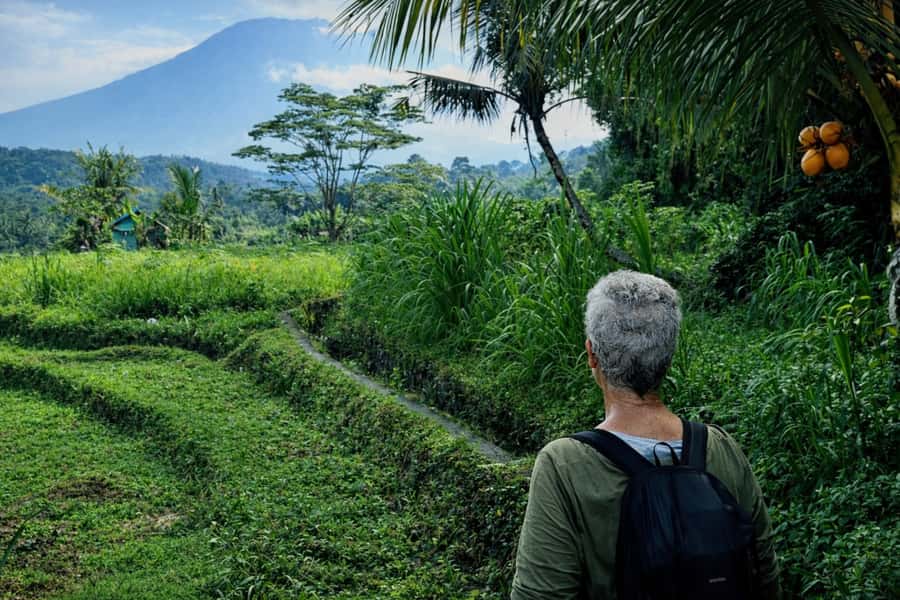
Sidemen’s best views do not come from a lookout platform. They appear as you walk between rice paddies, village lanes, and irrigation channels, with Mount Agung rising ahead when the clouds clear. This two-hour trek gives you a close look at how Sidemen works, not just how it photographs.
I like the small groups, limited to 10 people, and the local focus. Guides such as Darya, Gede, and Adi explain farming, religion, village life, and the traditional Subak water system in clear English. The main drawback is practical: you finish at Warung Ume Anyar in Ogang Village, about 3 kilometers from the market, so you need to plan your ride back.
In This Review
- Key points to know before you go
- Why this Sidemen walk feels different
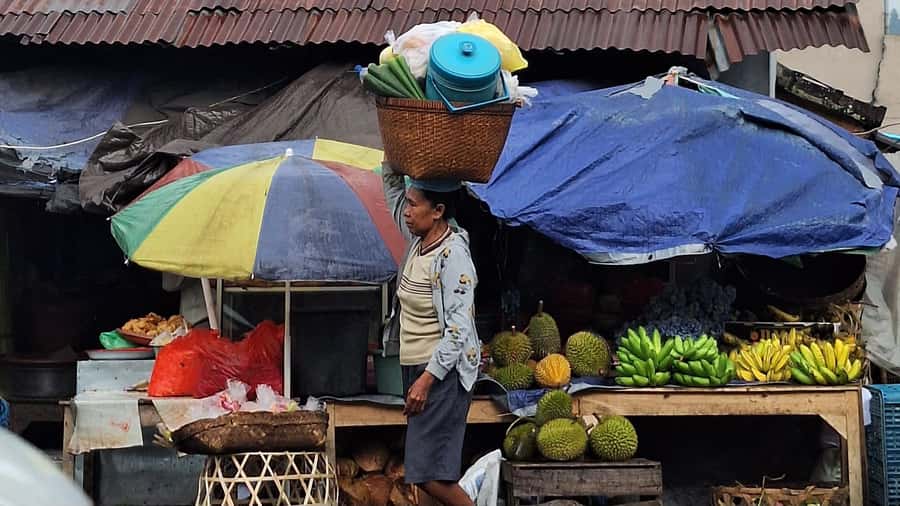
- Starting at Sidemen Traditional Market
- Following the water toward Mount Agung
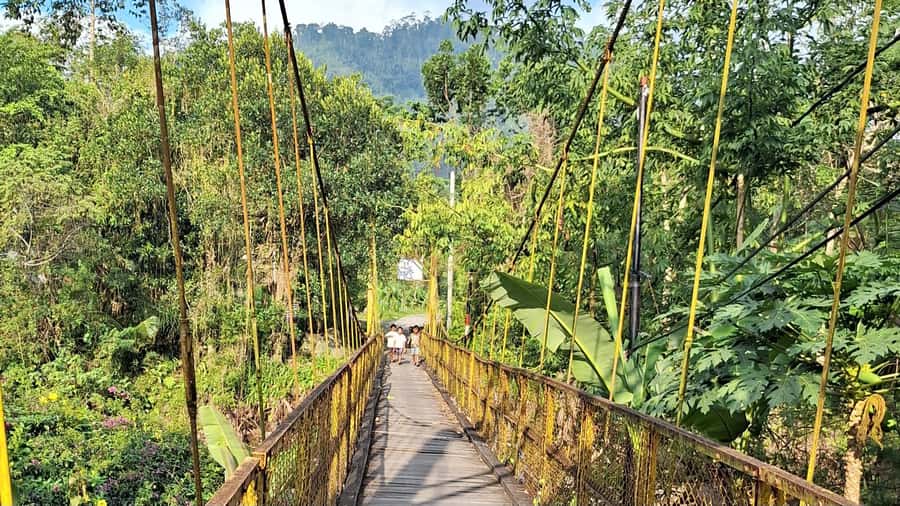
- Crossing Jembatan Kuning Tukad Yeh Unda
- Dukuh Village, temples, and everyday streets
- Babakan Dukuh Rice Terrace
- What the $14 price really buys you
- Timing, footwear, and physical effort
- Who will enjoy this most
- Should you book the Sidemen Trekking walk?
- FAQ
- How long does the Sidemen trekking tour last?
- Where does the tour start?
- Where does the tour finish?
- Is transportation included?
- Can I return to the market on foot?
- Can I visit the traditional market during the tour?
- What should I wear?
- Is the tour suitable for young children?
- Is the tour available in English?
Key points to know before you go
- Rice-field paths: Walk narrow raised banks between paddies, with some ups and downs and uneven footing.
- A working village: See people plowing, planting, tending crops, and harvesting rather than viewing rice terraces from a distance.
- Subak irrigation: Learn how shared water channels support Balinese farming at the Subak of Ogang.
- Local guides: Darya, Gede, and Adi have been praised for explaining culture, farming, religion, and daily life.
- Useful timing tip: The traditional market opens around 5 a.m. and closes around 10 a.m., so choose a morning start if the market matters to you.
- Good value: At $14 per person, the tour offers a guide, bottled water, and a small-group walk lasting about two hours.
Why this Sidemen walk feels different
Sidemen is one of Bali’s quieter rural areas, and this walk shows you why people come here. You are not simply driven to a viewpoint, given a few minutes for photos, and sent on your way. You move through the places that connect the village: the market, footpaths, bridges, temples, fields, and roadside homes.
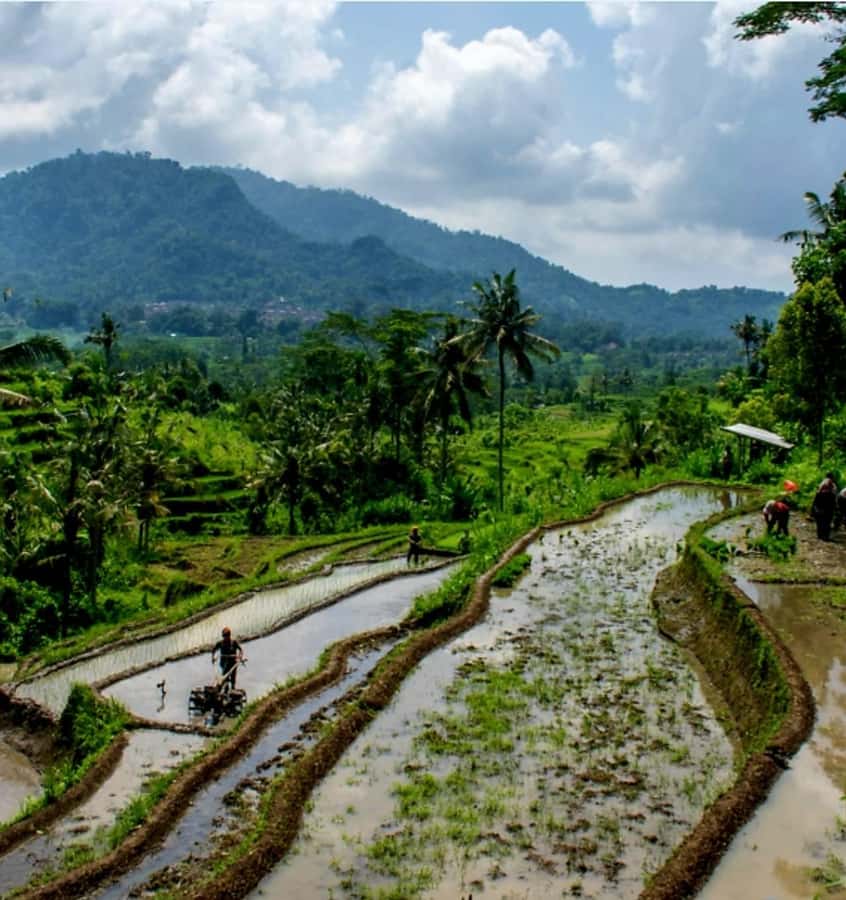
The walk is especially useful if you want to understand the relationship between farming and village life. Rice is not just a pretty foreground in a photo here. You may see farmers plowing, cultivating, planting seedlings, or harvesting, depending on the season and the work taking place that day.
The guide adds much of the meaning. Darya has been singled out for explaining local culture, farming, religion, and even some local politics. Gede is described as friendly and fluent in English, with a good eye for scenic stops. Adi also explains the rice terraces and market well. Guide assignments can vary, but the experience is designed around that personal explanation rather than a fixed audio script.
The walk is rated 4.9 from 91 reviews, and the strongest praise centers on three things: the guides, the peaceful rice fields, and the chance to see ordinary agricultural life. That does not mean every moment is polished or easy. You may walk through high grass, encounter insects, and balance along narrow field walls. Those rough edges are part of the rural setting, but they matter when deciding if this is your sort of outing.
More Hiking Trips in East Bali
- Sidemen rice terraces trek and local village walk
★ 5.0 · 41 reviews - Bali: Mount Agung Sunrise Trekking Experience
★ 4.8 · 91 reviews - [exclusive discount] Bali Mount Batur sunrise trekking
★ 5.0 · 5 reviews
Starting at Sidemen Traditional Market
The meeting point is on the main road at Pasar Sidemen, the traditional market. Look for the shop with the UPA BOGA sign, at Toko Upa Boga Pertenunan. When you arrive, your guide comes to meet you.
The market visit is listed as about 15 minutes. It is optional in practical terms because the market is open only around 5 a.m. to 10 a.m. If you want to see stalls and morning activity, book a morning start and make sure the chosen time fits those hours. A later departure can still provide the rice-field walk, but you may miss the market entirely.
Starting here gives you a useful contrast. The market is a place of trade and daily errands, while the fields beyond it show where much of the food and work behind village life begins. Do not expect a long food tour. The market portion is brief, so think of it as an introduction rather than the main event.
From the market, the route heads uphill toward the rice paddies. The road and village paths rise and fall, so comfortable footwear matters. The tour lasts only two hours, but it is not a flat stroll along a paved promenade.
Following the water toward Mount Agung
One of the most appealing parts of the route is the way it follows water coming through the irrigation system. Your guide explains Subak, Bali’s traditional cooperative irrigation system, as you pass through the Subak of Ogang.
This makes the walk more than a photo outing. You learn how water is directed through the fields and why irrigation is tied to cooperation between farming communities. The details you receive will depend on your guide and the conditions that day, but the route gives you something real to look at while the explanation unfolds: channels, field edges, planted plots, and the movement of water through the area.
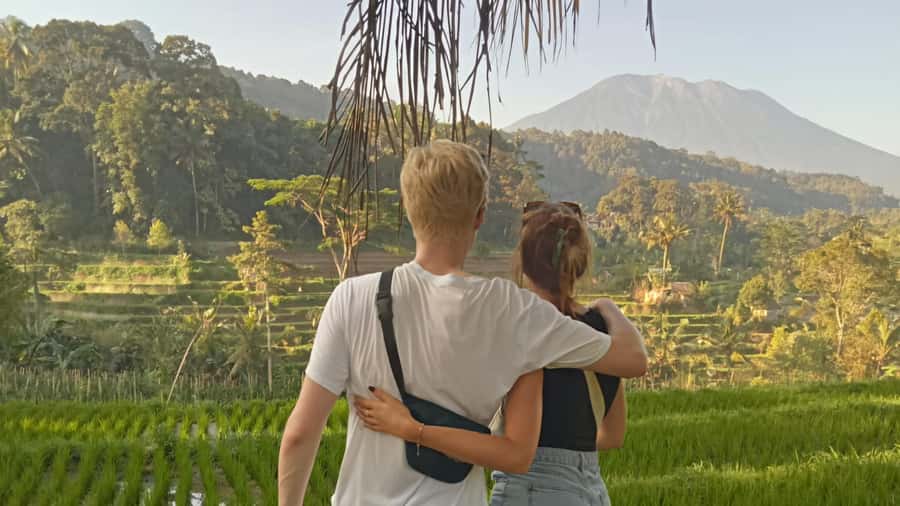
The route points toward Mount Agung, Bali’s great volcanic peak. Clear conditions may bring fine views, but clouds can block the mountain. Treat the view as a bonus rather than a guarantee. The rice terraces and working fields remain worthwhile when Mount Agung disappears.
There are several broad viewpoints where you can look back across the paddies. These are good places to pause for photos and get a sense of the valley’s shape. The walk also takes you closer to the crops, where the view is less sweeping but more intimate.
Crossing Jembatan Kuning Tukad Yeh Unda

The yellow bridge, Jembatan Kuning Tukad Yeh Unda, is one of the route’s memorable landmarks. It is built for both people and motorbikes, so it is not an isolated footbridge reserved for sightseeing. You cross as part of the village’s normal movement.
The bridge makes a good photo stop, but it also shows how rural transport works in Sidemen. Pay attention to your footing and give motorbikes room if one comes through. The stop is listed at about 10 minutes, enough for a look and a few photographs rather than a long break.
This is a good example of the tour’s character. You are not being shown a staged attraction. You are passing through a lived-in area, with the occasional inconvenience and charm that come with it.
More hikes around Sidemen Village:
- Bali: Mount Batur Sunrise Guided Hike and Natural Hot Spring
★ 4.8 · 9,284 reviews - Bali: Sunrise Mount Batur Hike with Breakfast
★ 4.8 · 6,973 reviews - Bali: Mount Batur Sunrise Trek With Guide and Breakfast
★ 4.8 · 3,461 reviews - From Ubud: Mount Batur Hiking With Hotspring
★ 4.8 · 1,850 reviews
Dukuh Village, temples, and everyday streets
After the bridge, the walk continues through Dukuh Village. You pass a local temple used for prayer and move through village streets before returning toward the fields.
The temple is important because it places the surrounding farms within Balinese religious life. Your guide can explain what you are seeing and how local people use the site. As always with temples, dress and behavior should be respectful. The supplied information does not specify a required dress code, so practical modest clothing is a sensible choice.
The village section includes more ups and downs. You are not walking only on a shaded trail or a level road. The route shifts between streets, field paths, and rice terraces, which gives you a fuller picture of the area but also makes sturdy shoes essential.
This is where a guide like Darya or Gede can make a big difference. The streets themselves may seem simple, yet questions about houses, farming, prayer, and daily routines can turn a short pass-through into a useful cultural lesson. Some guides may share personal experience, and one guide has even invited visitors for coffee at home. That kind of moment is not a guaranteed part of every departure, so do not book expecting it, but it reflects the friendly, personal tone the tour can offer.
Babakan Dukuh Rice Terrace

The longest stop is at Babakan Dukuh Rice Terrace, with about 45 minutes for walking, sightseeing, and scenic pauses. This is the heart of the experience.
From the terrace paths, you can see the patterned fields from above and then walk among them. The changing angle matters. From a lookout, rice terraces form broad curves and bands. On the narrow walls between paddies, you notice the soil, water, plants, and work that create that view.
The field paths are not wide. One person described them as narrow walls that require decent balance, and that is useful advice. Long pants are also worth considering because the route can pass through high grass, where insects and red ants may be present. Wear hiking shoes or other secure walking shoes, not sandals or flip flops.
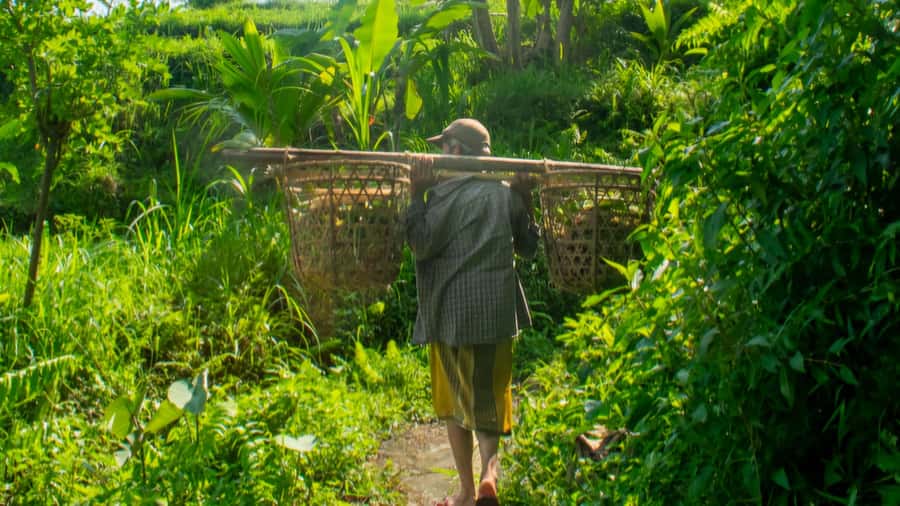
The farming activity can vary. You might see plowing, cultivation, seed planting, or harvesting. A local farmer may offer fresh fruit, such as papaya, but this is an unplanned local interaction rather than a promised tasting. The important point is that the fields are active places, not a decorative set built for visitors.
The rice terrace stop is also the best place for photographs. Morning light may be kinder, and an early departure helps if you want to combine the walk with the market. Still, the tour does not promise a particular light level or a clear view of Mount Agung.
What the $14 price really buys you
At $14 per person, this is inexpensive for a guided two-hour outing. You receive an English-speaking guide and bottled water, while hotel pickup and drop-off are not included.
The value comes from access and explanation. You could walk near Sidemen’s fields on your own, but you might miss the meaning of the irrigation channels, pass the temple without context, or struggle to find the best viewpoints. A guide also helps you follow a route through village paths and field edges without turning the walk into a navigation exercise.
The small-group limit of 10 keeps the price low without making the outing feel like a large bus excursion. It also gives you room to ask questions. Several guide names appear in the feedback, including Darya, Gede, and Adi, with especially strong praise for warmth, humor, English, and first-hand knowledge.
The tradeoff is that the price does not cover transport. The finish is at Warung Ume Anyar Restaurant in Ogang Village, where you can take a break after the trek. If you have a driver, arrange pickup there. Otherwise, book a Grab or Gojek car. Grab or Gojek bikes are not available in the Sidemen area.
You can also walk back to the market. The return is about 3 kilometers and takes roughly 30 to 40 minutes along the main road. That is manageable for some people, but after a warm walk it may not be your preferred ending.
Timing, footwear, and physical effort
The listed duration is two hours, with starting times shown during booking. Choose the start carefully if you want the traditional market included. A morning reservation is the practical choice for market access, since the stalls close around 10 a.m.
Bring comfortable shoes, sunglasses, a hat, and sunscreen. Hiking shoes are specifically recommended, and sandals or flip flops are not allowed. The route includes narrow rice-field banks, village roads, and uphill and downhill sections, so this is a walk with uneven footing rather than a gentle urban sightseeing loop.
You do not need to treat it like a serious mountain hike, but you should be comfortable walking for two hours in a rural setting. Good balance helps. Long pants may protect you from high grass and insects. Bottled water is included, but sun protection remains your responsibility.
Children under 5 are not considered suitable for this activity. The information provided does not give a wider age or fitness scale, so if you have concerns, ask before booking.
Who will enjoy this most

I would choose this walk if you want to see the working side of Bali. It suits people who care about farming, village life, local religion, and the details behind the scenery.
It is also a good match for photographers. You get market scenes, a bridge, village paths, temples, terraces, irrigation channels, and possible Mount Agung views in one compact outing.
The tour is less suitable if you want a fully paved path, guaranteed mountain views, or transport back to your hotel. It is also not the right choice if narrow paths and insects make you uncomfortable. The walk’s appeal comes partly from its closeness to ordinary life, and ordinary rural life is not always tidy or predictable.
The small-group format is helpful for couples, solo visitors, and families with older children who can manage the footing. You can ask questions and stop for photos without being lost in a large crowd.
Should you book the Sidemen Trekking walk?
At $14, this is an easy recommendation for most people staying in Sidemen who want more than a scenic viewpoint. You get a local English-speaking guide, a close look at Subak irrigation and farming, and a route through fields and villages that feels connected to daily life.
Book it if you can handle narrow paths and are willing to arrange your return from Ogang Village. Choose a morning start if the market matters, wear proper shoes, and keep expectations realistic about Mount Agung, since clouds may hide it.
Skip it if you need a flat, highly polished route or door-to-door transport. For everyone else, this is a modestly priced way to see Sidemen from ground level, where the water flows, farmers work, and the terraces make sense as part of a living village.
FAQ
How long does the Sidemen trekking tour last?
The walk lasts about two hours. Starting times depend on availability when you book.
Where does the tour start?
It starts at Pasar Sidemen, the Sidemen Traditional Market, on the main street. Look for Toko Upa Boga Pertenunan and the shop with the UPA BOGA sign.
Where does the tour finish?
The stated finish point is Warung Ume Anyar Restaurant in Ogang Village. This is about 3 kilometers from the starting area.
Is transportation included?
No. Hotel pickup and drop-off are not included. You can arrange collection with your driver or book a Grab or Gojek car from the finish point.
Can I return to the market on foot?
Yes. The walk back is about 3 kilometers and takes roughly 30 to 40 minutes by following the main road.
Can I visit the traditional market during the tour?
You can visit the market if your start time is early enough. The market is generally open from around 5 a.m. to 10 a.m. Later tour times may miss it.
What should I wear?
Wear comfortable shoes or hiking shoes, plus a hat, sunglasses, and sunscreen. Long pants may help protect you from high grass and insects. Sandals and flip flops are not allowed.
Is the tour suitable for young children?
The activity is not suitable for children under 5 years old. The route also includes narrow rice-field paths and uneven ground.
Is the tour available in English?
Yes. The tour has a live English-speaking guide and is limited to 10 participants.
More Walking Tours in Sidemen Village
- Bali Private Food Walking Tour With Locals: The 10 Tastings
★ 5.0 · 243 reviews - Ubud: 3-Hour Walking Tour with Lunch
★ 4.8 · 85 reviews - Bali Sea Walking Experience
★ 4.5 · 82 reviews - Bali: Nusa Dua Underwater Sea Walking Experience
★ 4.8 · 69 reviews
Recently added around Sidemen Village
- Bali: Blue Lagoon Snorkeling Tour with Bali Quad Bike★ 3.4 · 3 reviews
- Discover Sidemen’s First Silver Class at Agung Silver★ 5.0 · 3 reviews
- Sidemen activities (silverclass,tourwaterfall)★ 4.5 · 4 reviews
- Pedal Through Paradise: Bali Wanderlust Sidemen Cycling Tour★ 5.0 · 4 reviews
- Scenic Cycling Tours Through Bali’s Sidemen Countryside★ 5.0 · 5 reviews
- Sidemen Silver Artistry Class: Create Unique Jewelry in Bali★ 5.0 · 6 reviews
- Bali: Silver Jewelry Making Workshop in Sidemen Village★ 5.0 · 6 reviews
- Lokasari: Coffee Plantation Tour, Herbal Tea & Pure Honey★ 4.7 · 16 reviews
Hiking & Trekking, compared.

Mount Batur Sunrise Guided Hike and Natural Hot Spring
Read our review →

Mount Batur Sunrise Trek With Guide and Breakfast
Read our review →


Munduk Waterfalls Trek, Twin Lakes and Temple Tour
Read our review →Browse the lists this tour appears in