

Reviewed · RICE TERRACE TOURS
Sidemen rice terraces trek and local village walk
Sidemen’s rice terraces are best understood from the footpath, not a roadside viewpoint. This guided walk takes you through working paddies, vegetable plots, village lanes, and irrigation channels while a local guide explains how farming shapes daily life. Juni and Kadek are two guides frequently available for this experience.
I like the chance to see a real agricultural community rather than a staged attraction, and I like the personal scale of the walk. Guides can adapt the route, explain plants and farming methods, and take photos for you. The main drawback is the ground: after rain, paths can turn muddy, slippery, and wet enough to force an early finish.
In This Review
- Key points at a glance
- Why Sidemen works better on foot
- Meeting your guide in Tabola Village
- Starting with a short safety briefing
- Walking through rice paddies and irrigation channels
- Village life beyond the postcard view
- What the $17 price really includes
- Weather, mud, and the right packing list
- Choosing the route length and group style
- English guidance and personal attention
- Who should book the Sidemen rice terraces walk?
- Should you book it?
- FAQ
- Where does the Sidemen rice terraces walk meet?
- Can the guide meet me at my hotel?
- How much does the activity cost?
- How long does the walk take?
- Which languages are available?
- Is this a private tour?
- Is transportation included?
- Are meals and drinks included?
- What should I bring?
- Is the walk suitable for wheelchair users?
Key points at a glance
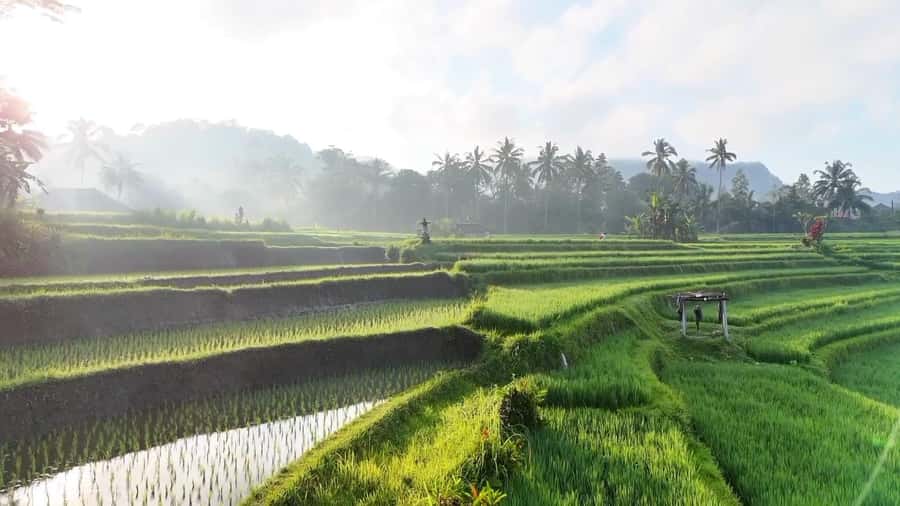
- Working rice and vegetable fields: See farming areas in use, not just a scenic terrace built for photographs.
- Local guides Juni and Kadek: Expect practical explanations about agriculture, community life, plants, and irrigation.
- Private or small-group format: A smaller group makes it easier to ask questions and adjust the pace.
- A $17 introduction to Sidemen: The price is strong value if you want a guide and local context, though transport, food, and drinks cost extra.
- Weather affects the route: Mud, river crossings, and slippery paths are possible after rain.
- Flexible starting point: Meet at Ming Homestay in Tabola Village, or ask for a hotel start if you are staying in central Sidemen.
Why Sidemen works better on foot
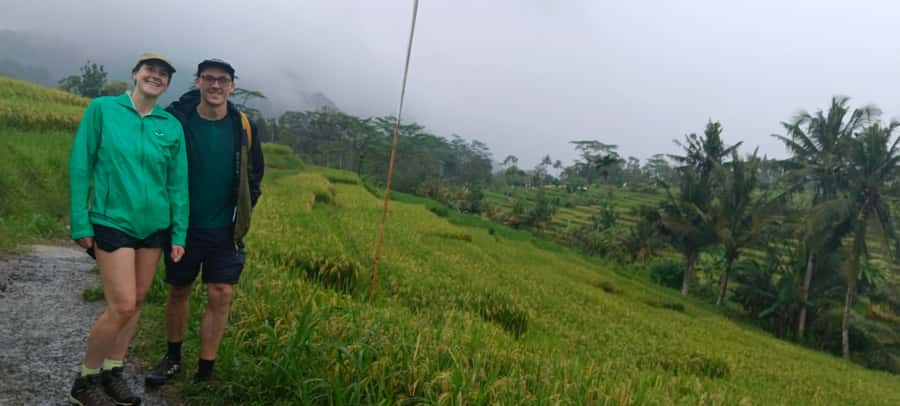
Sidemen offers a quieter side of Bali. The focus here is not a grand monument or a packed attraction. It is the everyday setting: rice paddies, vegetable fields, irrigation channels, village homes, and people working the land.
I like this kind of tour because the scenery has a purpose. The terraces are not simply green shapes for your camera. They are part of a farming system, and your guide can explain how water reaches the fields and how local agriculture supports the community.
The walk also gives you a closer look at the village itself. You may pass through small lanes and see parts of local life that are easy to miss from a car or scooter. The experience is strongest if you are curious about how Bali functions beyond its temples, beaches, and resort areas.
The setting is peaceful, but do not confuse peaceful with effortless. You will be walking on uneven paths, and the condition changes with the weather. Comfortable shoes are essential. Sandals, smooth-soled trainers, and anything you would hate to cover in mud are poor choices.
More Hiking Trips in East Bali
- Sidemen Trekking: A Walk from Different Perspective
★ 4.9 · 91 reviews - Bali: Mount Agung Sunrise Trekking Experience
★ 4.8 · 91 reviews - [exclusive discount] Bali Mount Batur sunrise trekking
★ 5.0 · 5 reviews
Meeting your guide in Tabola Village
The usual meeting point is in front of Ming Homestay at Tabola Village. If you are staying in the center of Sidemen, the guide can come to your hotel and begin there.
That hotel pickup arrangement is useful because Sidemen is spread out, and a short transfer to the start can otherwise be awkward. Confirm the meeting details before setting off, especially if your accommodation uses a different village or a name that is not familiar to the guide.
The local guides are a major part of the experience. Juni is described as friendly, attentive, and able to explain culture and farming in English. Kadek is also available and can discuss plants, rice, vegetables, nature, and the way the local community operates. Both names appear repeatedly in the experience details, so you can request one if a particular guide is available.
I would treat the guide’s local connection as more important than polished presentation. The value comes from being able to ask why a field is planted a certain way, how the water moves, or what you are looking at when a crop is unfamiliar.
Starting with a short safety briefing
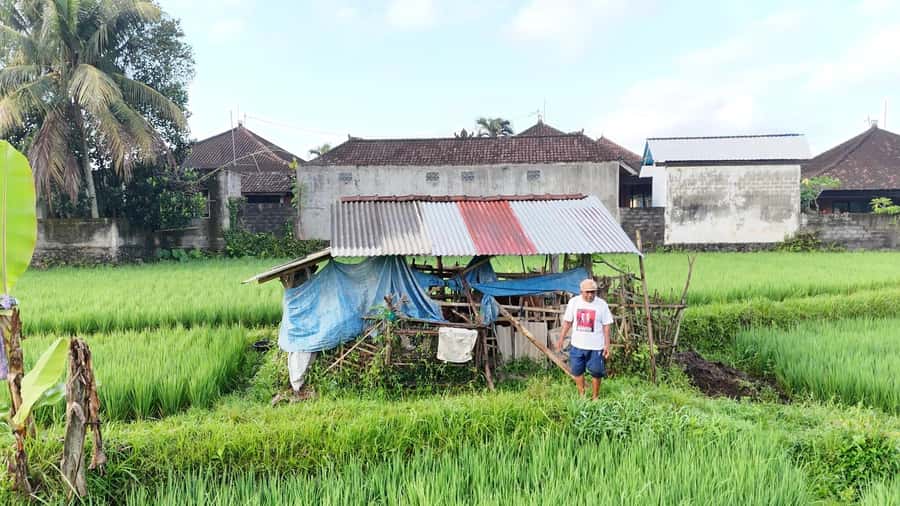
The activity details include a safety briefing at a stop described as a secret stop, with two hours listed in the itinerary. The advertised total duration ranges from two to seven hours, so the exact timing needs clarification when you check availability.
Do not assume every booking lasts seven hours. A shorter walk may suit you if you have limited time, while a longer route gives you more room for village paths, fields, photo stops, and conversation. Ask the provider what route and duration are available on your chosen date.
The safety information matters because this is not a paved promenade. You may encounter narrow paths, wet earth, muddy sections, and possible river crossings. One route included two river crossings, and another walk became so muddy that a participant fell into mud up to the hips. That is an unusually dramatic outcome, but it shows why footwear and weather preparation matter.
A briefing should also help you understand how to move through working farmland without damaging crops or blocking local activity. Listen closely, keep your camera ready, and let the guide set the pace on tricky ground.
Walking through rice paddies and irrigation channels
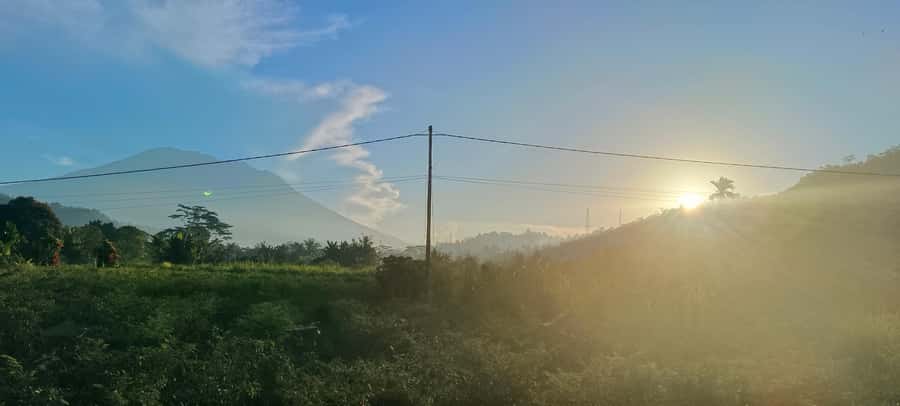
The central part of the tour takes you into Sidemen’s rice paddies. You will learn how the irrigation system works and how water is distributed through the fields.
This is where the tour earns its price. A viewpoint can show you the shape and color of the terraces, but it cannot explain the system behind them. With a guide, you can connect the channels, planting areas, field boundaries, and crops into a clearer picture of local agriculture.
The walk may also pass vegetable fields. That variety keeps the route from becoming a single repeated view of rice. You could see different stages of cultivation and learn how plants and crops fit into village life.
Expect plenty of chances to stop for photographs. Guides can take pictures of you, which is useful when you are traveling alone or when everyone in your group wants to be included. Still, I would keep your phone or camera protected from rain and mud. A waterproof pouch is a sensible extra, even though it is not on the required packing list.
The scenery is the quiet reward. Rice fields open toward the surrounding hills and countryside, and the fresh air gives the walk a slower rhythm than busy parts of Bali. You will have the best experience if you allow time to look around rather than rushing from one photo stop to the next.
More rice terrace tours around Sidemen Village:
- Ubud: Waterfall, Rice Terraces & Monkey Forest Tour
★ 4.9 · 4,269 reviews - Ubud: Rice Terrace, Waterfall, & Elephant Cave
★ 4.9 · 862 reviews - From Ubud: Downhill Bike Tour with Rice Terraces and Meal
★ 4.9 · 664 reviews - Ubud: Monkey Forest and Rice Terrace Private Tour
★ 4.8 · 631 reviews
Village life beyond the postcard view

The village walk adds meaning to the fields. Your guide can talk about local people, community life, nature, and the way farming fits into the area.
I especially like this part for visitors who have already seen Bali’s famous sights and want something less staged. You are not only collecting a terrace photograph. You are learning why the village looks the way it does and how people use the land.
The guides also adapt to the person in front of them. One guide shortened the route when a participant felt unwell. That sort of flexibility is valuable on a private or small-group walk, where the experience does not need to follow a rigid schedule.
You should still be clear about your comfort level before starting. The activity is not suitable for wheelchair users or people with mobility impairments. If you have a temporary injury, poor balance, or difficulty on uneven ground, ask about the easiest available route before booking.
What the $17 price really includes
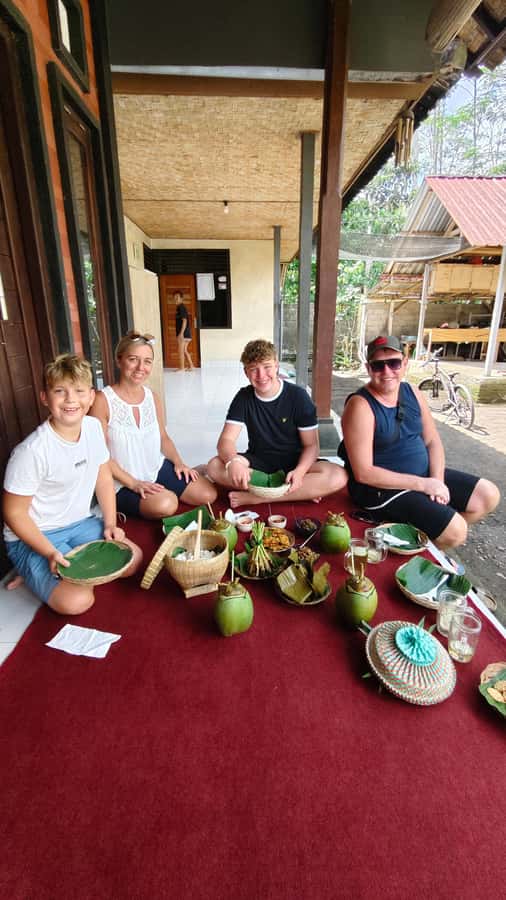
At $17 per person, this is an inexpensive way to add local context to a Sidemen stay. The fee includes a guided walk through the rice paddies, explanations of agriculture and irrigation, and the chance to photograph the fields.
The price is particularly good for a private or small group, since you get more opportunity to ask questions and adjust the pace. A group of four, for example, may have the guide to themselves rather than joining a large crowd.
The fee does not include transport to and from Sidemen, meals, drinks, or personal expenses. If you are coming from Ubud or another part of Bali, calculate the cost of reaching Sidemen separately. A participant staying in Ubud used this as a day outing, but the tour itself does not provide that transport.
Food requires a little care when comparing options. Lunch is not part of the standard inclusions, though a lunch option may be available when arranging the walk. One particularly favorable experience included a home-cooked meal prepared by the guide’s wife. Ask directly if you want lunch, what it costs, and where it takes place.
One important value question is how much local interpretation you want. If you only need a short walk for photos, you might prefer to explore independently. If you want the farming system and village life explained in clear English, the guide fee is modest.
Weather, mud, and the right packing list
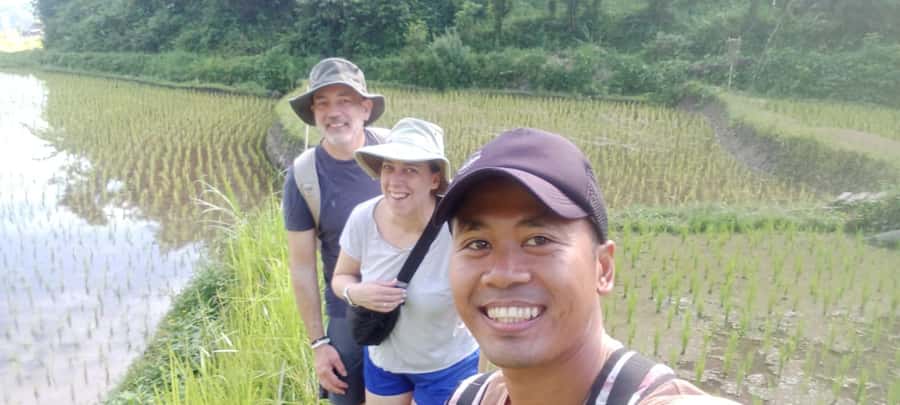
Bring comfortable walking shoes, a hat, sunscreen, water, and a camera. Wear light clothing that can handle heat and possible dirt.
Rain changes this experience. Wet conditions can make the paths muddy and reduce the number of people on the terraces, but they can also turn a simple walk into a more demanding outing. A guide may warn you about conditions and adjust the route, yet you should be prepared for wet feet.
I would wear shoes with good grip and avoid bringing luggage. Keep valuables in a small bag that closes securely. Do not smoke during the activity.
The sun can be strong even when the air feels mild. Apply sunscreen before leaving and carry water rather than relying on a stop along the route. The supplied advice specifically calls for hydration, and that is practical guidance for a walk through open fields.
If you fall or get soaked, the local support can be very hands-on. A guide once offered his own shoes and even used a scooter to help a participant return to a hostel after the walk ended early. That is not a promised service, but it shows why a local guide can be useful when conditions go wrong.
Choosing the route length and group style
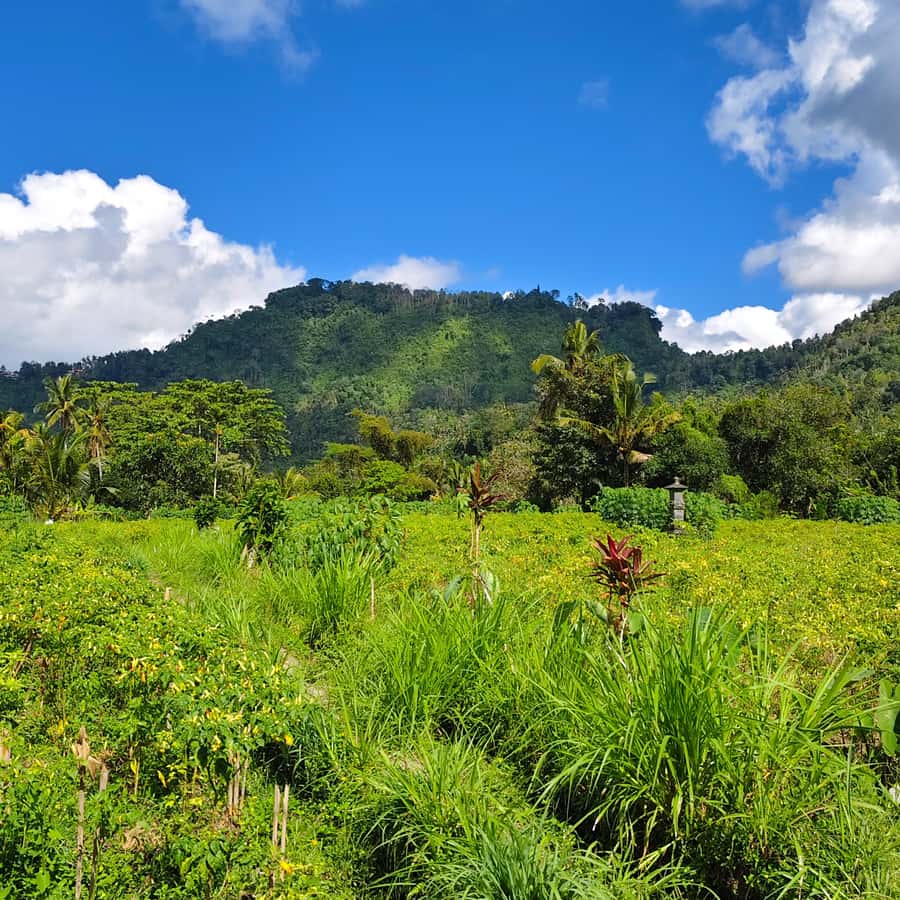
The stated duration is two to seven hours, with starting times dependent on availability. That is a wide range, so the route is not one fixed walk for everyone.
A shorter version suits you if you want a gentle introduction to Sidemen, have other plans, or are unsure how your legs will handle uneven ground. A longer version gives you more time for fields, village areas, questions, and photographs.
Private and small-group options are available. I would choose private or small group if you care about photography, have a slower pace, or want to ask detailed questions about farming and culture. It also makes it easier to stop when someone needs a rest.
Larger groups may cost less per person in some booking situations, but the supplied information does not give a group-size limit or a different price scale. Check the available option before paying.
English guidance and personal attention
Guidance is offered in Indonesian and English. For English-speaking visitors, Juni and Kadek are useful names to request, subject to availability.
The strongest feature is not a lecture. It is the ability to explain what you are seeing as you walk. A crop, irrigation channel, or village custom makes more sense when the guide can connect it to daily life.
The guides also appear attentive to individual needs. One adapted the route for someone feeling unwell, while another helped after a serious muddy slip. That does not remove the physical demands, but it makes the experience more manageable.
Photography is part of the appeal, and your guide may offer to take pictures. Do not let this become the whole tour. The best moments come from pausing to understand the working fields, then taking a few strong photos without treating the village as a backdrop.
Who should book the Sidemen rice terraces walk?
I recommend this experience to you if you want:
- A quiet countryside walk rather than a crowded attraction
- A clearer understanding of Balinese farming and irrigation
- Time with a local English-speaking guide
- A private or small-group experience
- A flexible route that can suit your schedule
- Good views without paying a high activity fee
I would be more cautious if you have limited mobility, dislike mud, or expect smooth paths. This is not a wheelchair-friendly activity, and wet weather can make it physically demanding.
It is also not the right choice if you want a full meal or transport included. Those extras need separate planning. The tour is mainly about walking, learning, and seeing Sidemen from ground level.
Should you book it?
Book this walk if you want the agricultural side of Bali explained by someone from the area. At $17, it offers strong value, especially for a private or small group, and the local connection is more useful than a simple self-guided photo stop.
Before booking, confirm the exact duration, route, guide, meeting point, and weather conditions. Request Juni or Kadek if possible, ask about the lunch option if that matters to you, and wear shoes you are willing to get muddy.
For an active visitor who enjoys village life, rice fields, and practical cultural detail, this is an easy recommendation. For anyone needing paved paths or guaranteed dry footing, choose a different Sidemen activity.
FAQ
Where does the Sidemen rice terraces walk meet?
The usual meeting point is in front of Ming Homestay at Tabola Village.
Can the guide meet me at my hotel?
Yes. If you are staying in the center of Sidemen, the guide can come to your hotel and start the tour there.
How much does the activity cost?
The listed price is $17 per person.
How long does the walk take?
The advertised duration is between two and seven hours, depending on the available start time and route. Confirm the exact length when booking.
Which languages are available?
Guides are available in Indonesian and English.
Is this a private tour?
Private and small-group options are available.
Is transportation included?
No. Transportation to and from Sidemen is not included.
Are meals and drinks included?
No. Meals and drinks are not included in the standard activity. A lunch option may be available if arranged separately.
What should I bring?
Bring comfortable walking shoes, a hat, sunscreen, water, and a camera.
Is the walk suitable for wheelchair users?
No. The activity is not suitable for wheelchair users or people with mobility impairments.
More Walking Tours in Sidemen Village
- Bali Private Food Walking Tour With Locals: The 10 Tastings
★ 5.0 · 243 reviews - Ubud: 3-Hour Walking Tour with Lunch
★ 4.8 · 85 reviews - Bali Sea Walking Experience
★ 4.5 · 82 reviews - Bali: Nusa Dua Underwater Sea Walking Experience
★ 4.8 · 69 reviews
More Hikes around Sidemen Village
- Bali: Mount Batur Sunrise Guided Hike and Natural Hot Spring
★ 4.8 · 9,284 reviews - Bali: Sunrise Mount Batur Hike with Breakfast
★ 4.8 · 6,973 reviews - Bali: Mount Batur Sunrise Trek With Guide and Breakfast
★ 4.8 · 3,461 reviews - From Ubud: Mount Batur Hiking With Hotspring
★ 4.8 · 1,850 reviews
Recently added around Sidemen Village
- Bali: Blue Lagoon Snorkeling Tour with Bali Quad Bike★ 3.4 · 3 reviews
- Discover Sidemen’s First Silver Class at Agung Silver★ 5.0 · 3 reviews
- Sidemen activities (silverclass,tourwaterfall)★ 4.5 · 4 reviews
- Pedal Through Paradise: Bali Wanderlust Sidemen Cycling Tour★ 5.0 · 4 reviews
- Scenic Cycling Tours Through Bali’s Sidemen Countryside★ 5.0 · 5 reviews
- Sidemen Silver Artistry Class: Create Unique Jewelry in Bali★ 5.0 · 6 reviews
- Bali: Silver Jewelry Making Workshop in Sidemen Village★ 5.0 · 6 reviews
- Lokasari: Coffee Plantation Tour, Herbal Tea & Pure Honey★ 4.7 · 16 reviews
Rice Terrace Tours, compared.

Waterfall, Rice Terraces & Monkey Forest Tour
Read our review →


Monkey Forest, Water Temple, Rice Terrace, Waterfall
Read our review →
Swing with Falls, Rice Terrace, & Monkey Forest Option
Read our review →
Full-Day Eat Pray Love Tour with Rice Terraces & Yoga
Read our review →
Private Hidden Waterfalls and Rice Terrace Tour
Read our review →Browse the lists this tour appears in