
Reviewed · TEMPLE TOURS
Bali: Archeology Museum, Gunung Kawi & Goa Gajah Temple Tour
Bali’s ancient sites make more sense when someone explains the symbols, legends, and rituals around you. This seven-hour private tour links Tirta Empul, Gunung Kawi, Yeh Pulu, Goa Gajah, and Gedong Arca Museum into one thoughtful day focused on archaeology and living Hindu culture.
I like the mix of grand temple grounds and quieter carved stonework. I also like the private format: guides such as Suker, Gusde, Dharma, Komang, and Sumadi have adjusted the pace, changed the order to beat crowds, and answered questions well beyond the formal history of each stop.
The catch is physical. Gunung Kawi and the other archaeological sites involve many steps, uneven paths, and little shade, so this is not a soft sightseeing ride. Food is not included, and optional extras can shift the day toward coffee, massage, adventure sports, or photo stops.
In This Review
- Key points at a glance
- Why this tour works for history-minded visitors
- Tirta Empul, where water is part of worship
- Gunung Kawi and the royal memorials
- Yeh Pulu, a long wall of daily Balinese life
- Goa Gajah and the cave entrance
- Gedong Arca Museum and ancient objects
- The guide makes the difference
- Optional extras: useful, but choose carefully
- What to bring and how to dress
- Price, transport, and the real value
- Who should book this Bali archaeology tour?
- Should you book it?
- FAQ
- How long does the Bali archaeology tour last?
- What sites are included?
- Is hotel pickup and drop-off included?
- Are entry fees included?
- Is food included?
- What language does the guide speak?
- Can I take part in the purification ritual at Tirta Empul?
- Is the tour suitable for wheelchair users?
- What happens if the museum is closed?
Key points at a glance
- Five distinct heritage stops: See a sacred spring temple, royal memorials, rock reliefs, a cave sanctuary, and a museum of ancient objects.
- A private seven-hour outing: Hotel pickup, drop-off, entry fees, and mineral water are included.
- Gunung Kawi means serious stair work: Comfortable shoes matter, especially after rain.
- Yeh Pulu offers everyday scenes in stone: Its long carved panel includes gods, mythical figures, and people carrying out village life.
- The guides are central to the experience: The strongest part of the day is the cultural explanation and the ability to set a comfortable pace.
- Optional add-ons change the character of the tour: Choose from coffee tasting, massage, a jungle swing, rafting, or ATV riding, depending on the selected option.
Why this tour works for history-minded visitors
Many Bali day trips lean heavily toward beaches, waterfalls, shopping, and staged photo stops. This one takes a different road. You spend the day around places tied to early Balinese kingdoms, Hindu practice, stone carving, and archaeological research.
The route is especially useful if you are staying in Ubud and want an organized introduction to central Bali’s old religious sites. You get a driver, private transport, entry tickets, and an English-speaking guide for $36 per person. That is strong value if you want context rather than simply being dropped at a temple gate.
The private setup matters. You can ask about temple customs, Balinese kings, religious traditions, or present-day life without holding up a large group. Guides have also been able to slow the day down, rearrange stops, and accommodate family needs. The published score is 4.9 out of 5 from 75 ratings, and transport has received a 98 percent perfect score.
The seven-hour length gives the route room to breathe, though it remains a full day. You will spend part of it in the vehicle and much of it walking outdoors. If your idea of a good holiday day is a chair and a cold drink, this is the wrong pick. If you want to understand what you are seeing, it earns its place.
More temple visits around Bali:
- Bali Sunset: Uluwatu Temple, Kecak Dance and Jimbaran Bay
★ 4.7 · 2,397 reviews - Bali: Besakih Temple & Lempuyang Temple Gates of Heaven Tour
★ 4.8 · 2,323 reviews - North Bali: Sunrise Tour with Dolphins, Waterfalls & Temples
★ 4.6 · 831 reviews
Tirta Empul, where water is part of worship
The usual first stop is Tirta Empul, a Hindu temple dating to the 10th century. Its name is closely tied to sacred spring water, and the temple is best known for its purification pools.
You can watch people carry out cleansing rituals at the bathing area, but follow your guide before entering or taking part. This is an active place of worship, not a decorative ruin. Quiet behavior and modest dress matter here, with shoulders and knees covered.
The temple grounds also give you a useful starting point for understanding Balinese Hindu practice. Your guide can explain why water, offerings, shrines, and ritual movement matter, rather than leaving you to guess from the carvings.
Bring sunscreen and water. Some parts of the complex are exposed, and the day gets warmer as it progresses. If you plan to enter the water, ask about the proper procedure and clothing before you begin.
One important local custom applies: people who are menstruating are not permitted to enter the temple. That rule is stated plainly for this experience, so plan your day with it in mind.
Gunung Kawi and the royal memorials
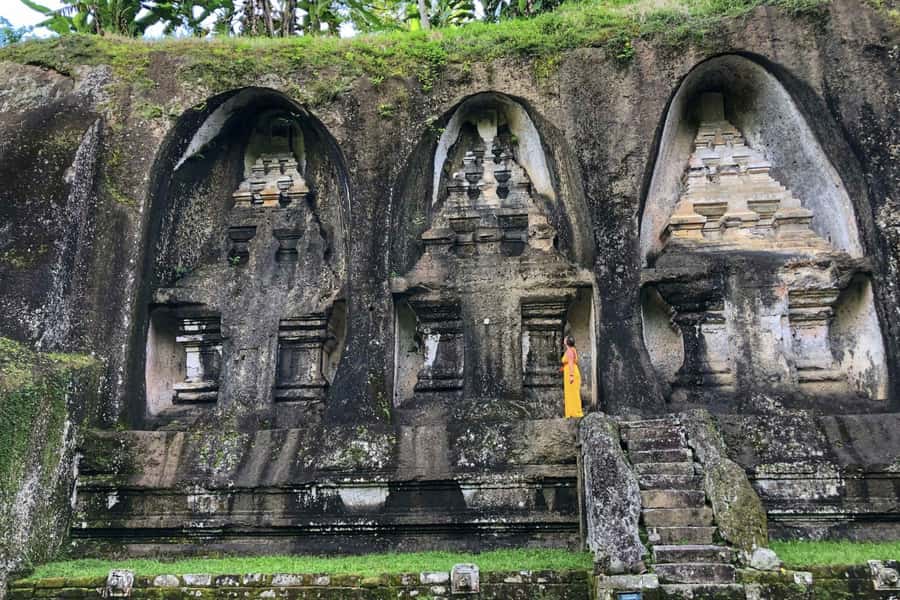
Gunung Kawi is likely to be the most demanding stop on your legs and one of the most memorable for your eyes. The 11th-century complex is reached by a long descent and ascent on stone steps. One guide gave a clear warning about roughly 300 steps, and that honesty is useful. You need to know what is ahead.
At the bottom, tall shrines are cut into the cliff face beside the Pakerisan River. They are often described as temple monuments, but the site is also linked with royal memorials and the rulers of an important period in Balinese history.
The setting helps. Water, stone, jungle growth, and the river create a strong sense of age, but the guide’s explanation gives the place its meaning. The stories of forgotten kings can be hard to piece together on your own, especially because the site belongs to a period that predates much of the Bali most people first encounter.
Take the stairs slowly. You do not need to race to the bottom or back to the vehicle. Guides including Dharma, I Komang Sparsa, and Sandi have been praised for setting a manageable pace, and a private tour lets you stop when needed.
Stone paths can be slippery after rain. The tour runs in light rain, but you should carry a light raincoat and wear shoes with a firm grip. This is not a suitable outing for wheelchair users, people with major mobility limits, pregnant women, or people over 70, according to the stated restrictions.
Yeh Pulu, a long wall of daily Balinese life
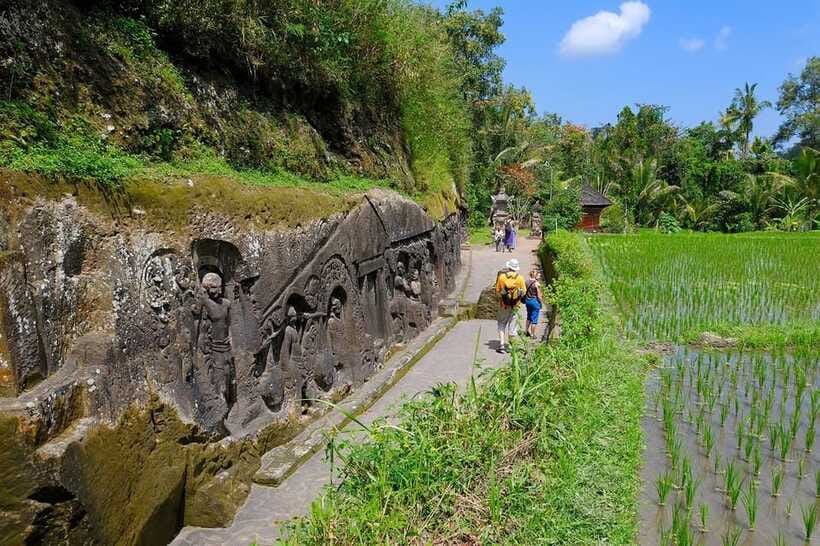
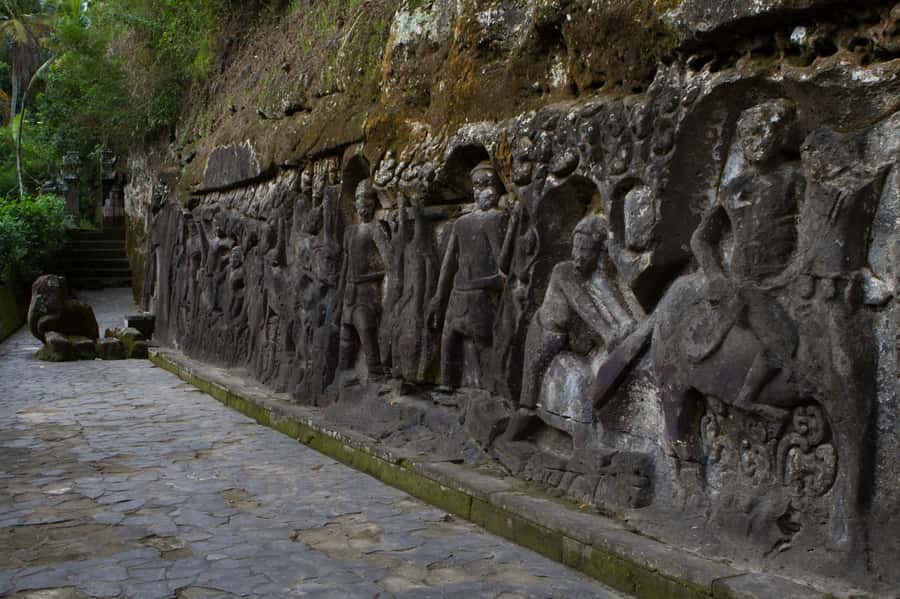
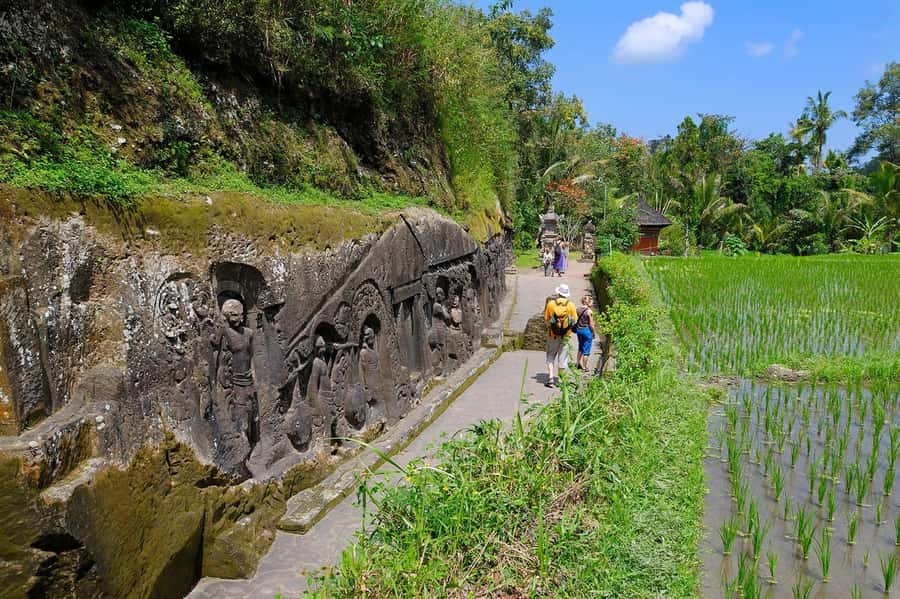
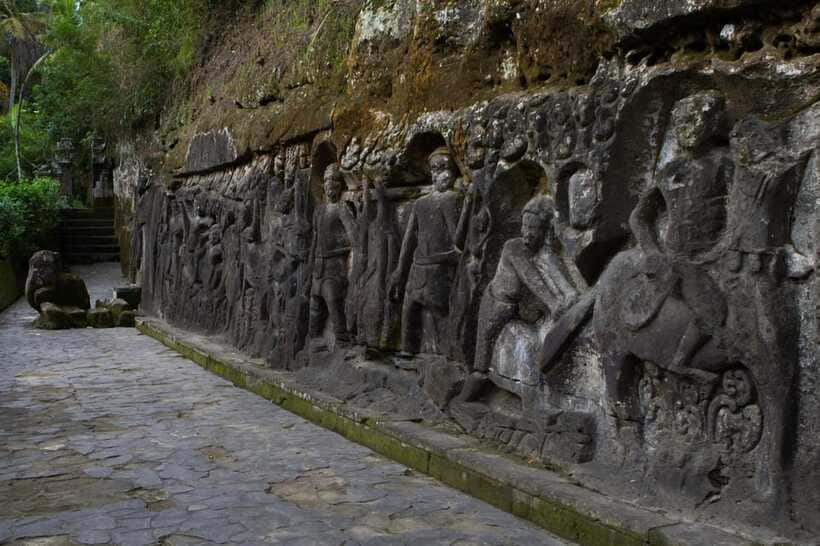
Yeh Pulu is smaller in scale than Gunung Kawi, but it brings a different kind of interest. Instead of focusing mainly on royal memorials, this archaeological site presents a roughly 25-meter-long sequence of carvings cut into a rock wall.
Look closely and you will find mythological characters, Hindu gods, and scenes of ordinary life. That combination is what makes Yeh Pulu valuable. Sacred stories sit beside images of people going about familiar tasks, giving you a glimpse of how belief and daily life could share the same visual world.
The carvings are not always easy to read at first glance. This is where a guide earns the fee. Ask what is known, what is legend, and what remains uncertain. A good explanation should help you notice the figures without pretending that every detail has one fixed answer.
There are uneven paths here too, and the site has limited shade. Keep your camera ready, but do not touch the carvings. Photography is allowed, while drones may be restricted at some temples and archaeological areas. Ask before flying one.
A few more Bali experiences worth comparing
- Denpasar: Museum, Traditional Market and Food Tasting Tour
★ 4.9 · 33 reviews - Nusa Dua: Museum Pasifika Admission Ticket with Audio Guide
★ 4.3 · 4 reviews
Goa Gajah and the cave entrance
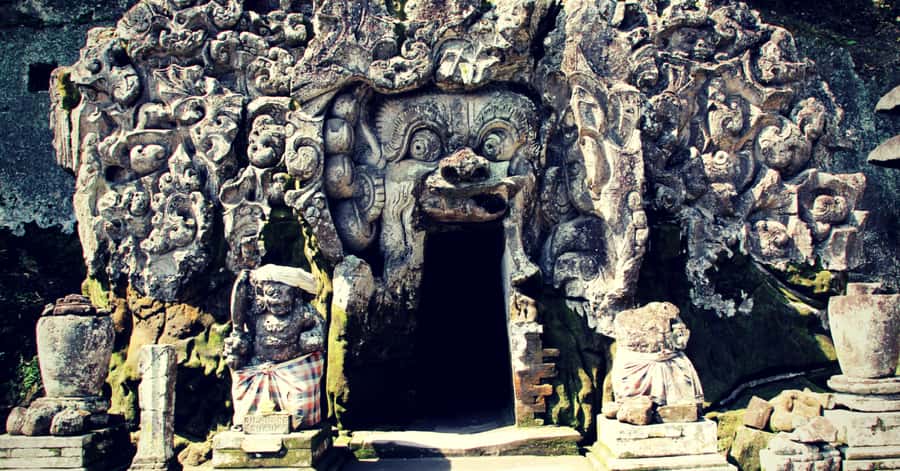
Goa Gajah, or Elephant Cave, dates to the 9th century. Its famous entrance looks like a demon’s open mouth, a dramatic gateway that leads into a small, dark sanctuary.
The cave itself is not vast. The interest comes from the stonework, the sense of enclosure, and the way the site was used for meditation and spiritual practice. Outside, you will find additional carved structures and a calmer temple setting.
Goa Gajah is a good place to ask your guide about the difference between a temple complex and a single shrine. Balinese sacred sites are often made up of several spaces, each with its own use and level of access. The result can look confusing if you are rushing through with only a camera.
Dress respectfully and keep your voice down. The cave is a religious place, not just an unusual doorway. Ancient carvings should be viewed from a respectful distance, and restricted areas are off limits.
The walk here is easier than Gunung Kawi for many people, but the ground is still uneven. After rain, use care on the stone surfaces.
Gedong Arca Museum and ancient objects
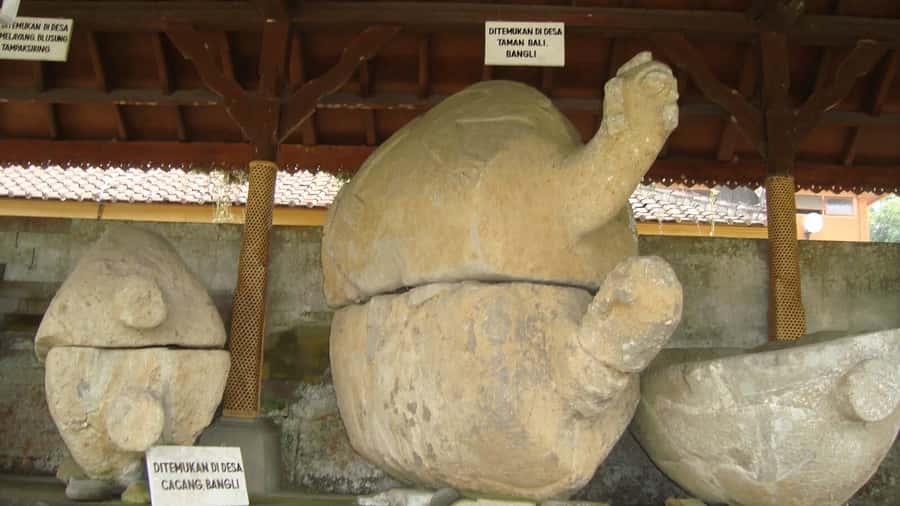
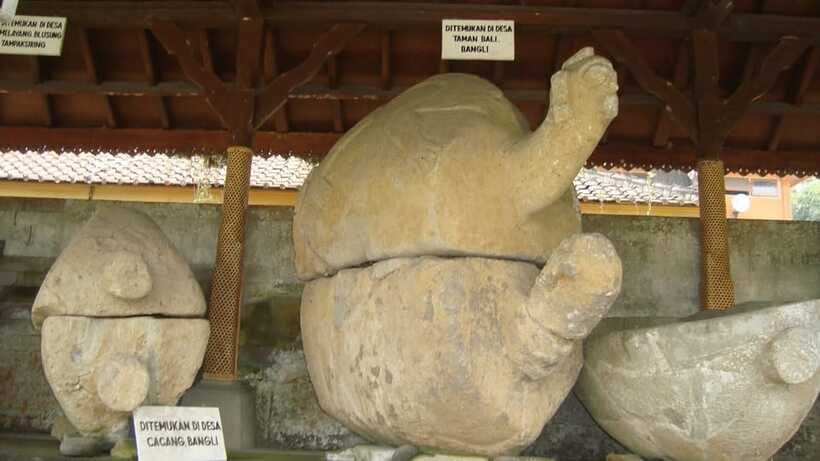
The final stop is Bali Gedong Arca, also called the Bali Archaeological Museum, in Tampaksiring Village. It houses heritage objects collected over the centuries, including sarcophagi and other ancient relics.
This museum gives the day a useful ending. At the temples, you see monuments in their original settings. At Gedong Arca, you can examine objects gathered for preservation and study. The change from open-air ruins to museum displays helps connect the individual sites to a wider story of Bali’s past.
Allow yourself time to look at shapes, inscriptions, burial objects, and stonework rather than treating the museum as a quick final stop. The collection may be less immediately photogenic than Tirta Empul or Goa Gajah, but it adds substance to the day.
Opening arrangements can affect the plan. On one previous outing, the museum was closed on a Sunday and the guide substituted another temple. If the museum is important to you, check its operating day before booking, then confirm the plan with your guide.
The guide makes the difference
The route has plenty to see, but the guide determines how much you take away. Names associated with especially strong outings include Suker, Gusde, Komang, Sumadi, Dharma, I Komang Sparsa, Joe, Subi Made, and Tirta. Availability is not guaranteed, so book for the itinerary and private format rather than a particular person unless the operator confirms it.
What should you expect from the guide? English is the listed language, and the best guides combine site knowledge with practical help. They explain religious customs, tell stories about kings and mythology, answer questions about modern Bali, and help with photographs when asked.
The private format also allows some flexibility. A guide may put the site with the most walking first, start early to reduce crowds, or adjust the order for traffic. One outing began around 8:30 a.m. near Ubud, which helped keep the first sites cooler and quieter.
Do not be shy about saying how fast you want to walk. You should also tell the guide if you want more time for photography, fewer extra stops, or a longer lunch break. The itinerary includes no food or drinks, so lunch must be paid for separately.
Optional extras: useful, but choose carefully
The base trip is already full. Add-ons can make it more personal, but they can also pull attention away from the archaeology.
Available extras may include:
- Luwak coffee tasting
- Jungle swing with coffee
- One-hour traditional massage
- Two-hour traditional massage
- Polaroid camera with 10 photographs
- Female guide
- German-speaking guide
- Korean-speaking guide
- Three-hour rafting with buffet
- One-hour solo ATV
- One-hour tandem ATV
The coffee stop has been a pleasant addition for some schedules, especially if you want to learn about local drinks and buy coffee. A swing can work well if you want posed photographs, and one family paid extra for a rented flowing dress at the swing. That type of stop is more commercial than the temples, so choose it only if you genuinely want the photo experience.
Massage, rafting, and ATV riding create a very different day. They may be appealing if you want to mix culture with relaxation or action, but a seven-hour archaeological route already contains a lot of walking. Check exactly which add-ons are offered with your chosen option, since not every extra is available on every booking.
What to bring and how to dress
The practical packing list is short:
- Comfortable walking shoes with good grip
- Modest clothing covering shoulders and knees
- Sunscreen and a hat
- A camera
- Cash for personal spending, food, or optional purchases
- A light raincoat
- A refillable water bottle, in addition to the provided mineral water
A sarong or temple covering may be needed at sacred sites, but the supplied information does not specify how coverings are handled. Ask your guide on arrival rather than assuming.
Do not bring pets, alcohol, or drugs. Keep your voice low at temples, follow instructions, and avoid touching carvings or entering restricted spaces.
Price, transport, and the real value
At $36 per person, this is a good deal for a private seven-hour trip that includes hotel pickup and drop-off, entry fees, and mineral water. The value is strongest for two or more people sharing a private vehicle, because you are buying both transport and interpretation.
Food and drinks are not included. You should also budget for personal spending and any selected extras. That is not a serious flaw, but it means the advertised price is the starting cost, not necessarily the final one.
The highly rated transport matters in central Bali, where traffic can turn a simple route into a tiring one. A comfortable, air-conditioned car gives you a place to rest between sites. One guide was also praised as a terrific driver, which is useful on a day with several stops.
The tour offers free cancellation up to 24 hours before departure and a reserve-now, pay-later option. Starting times vary, so check availability before committing to another activity the same day.
Who should book this Bali archaeology tour?
I would choose this trip if you want temples explained in cultural context, enjoy walking, and prefer a private day over a large coach group. It is particularly good for first-time visitors who want to see more than Ubud’s usual cafés and markets.
It also suits repeat visitors. One person who had visited Ubud many times still found these sites new, and the guide helped connect them to Bali’s customs and past.
I would skip it if you have mobility problems, cannot manage steep stairs, or want a relaxed day with little time in the sun. I would also avoid adding rafting, ATV riding, or a swing if the main reason for booking is archaeology. Those extras can be fun, but they dilute the focus.
Should you book it?
Book this tour if the words temples, ancient carvings, royal memorials, and Balinese ritual sound more appealing than a standard sightseeing loop. The combination of Tirta Empul, Gunung Kawi, Yeh Pulu, Goa Gajah, and Gedong Arca gives you several different ways to understand Bali’s past.
Go in prepared for stairs, uneven ground, modest dress, and a day without included meals. Choose an early start if possible, tell your guide your preferred pace, and treat the optional extras as choices rather than obligations. For an affordable private introduction to central Bali’s archaeology and religious culture, this is a sound pick.
FAQ
How long does the Bali archaeology tour last?
The tour lasts seven hours. Starting times vary, so check availability when selecting your date.
What sites are included?
The route includes Tirta Empul Temple, Gunung Kawi, Yeh Pulu, Goa Gajah Temple, and Bali Gedong Arca, also called the Bali Archaeological Museum.
Is hotel pickup and drop-off included?
Yes. Hotel pickup and drop-off are included.
Are entry fees included?
Yes. All entry fees are included in the tour price.
Is food included?
No. Food and drinks are not included. Mineral water is provided.
What language does the guide speak?
The standard live guide language is English. German-speaking and Korean-speaking guides may be available as optional add-ons for selected options.
Can I take part in the purification ritual at Tirta Empul?
The temple has bathing pools used for purification rituals. Ask your guide about the proper procedure before taking part.
Is the tour suitable for wheelchair users?
No. The tour is not suitable for wheelchair users or people with mobility impairments because it includes steep stairs, extensive walking, and uneven paths.
What happens if the museum is closed?
The schedule may be adjusted, and another temple or site may be substituted. Check the museum’s opening arrangements if Gedong Arca is a priority for you.
Recently added around Bali
- Bali: Private Lempuyang Temple, Water Temple & Rice Terraces★ 5.0 · 3 reviews
- Bali: Mountain Bike Tour and River Rafting with Lunch★ 5.0 · 3 reviews
- Bali: Sidemen Waterfall tour and temple purification★ 5.0 · 3 reviews
- Bali: Padangbai Blue Lagoon Scuba Diving Private Tour★ 5.0 · 3 reviews
- Bali’s Mystical Jungle Trek & Hidden Waterfall Adventure★ 4.3 · 3 reviews
- From Bali: Mount Bromo & Ijen volcanic private tour★ 5.0 · 3 reviews
- Bali: 7 Day Solo Traveler’s Yoga Retreat In Ubud★ 5.0 · 3 reviews
- Bali: Photo Shoot with a Private Vacation Photographer★ 5.0 · 3 reviews
Temple Tours, compared.
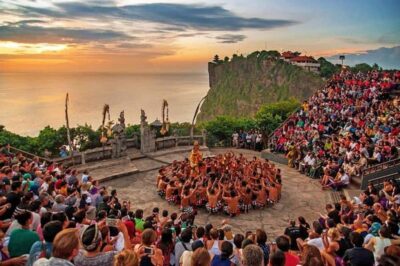
Kecak Fire Dance Show & Uluwatu Temple Entry Ticket
Read our review →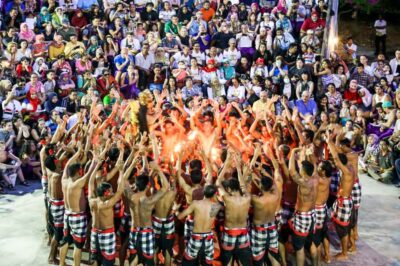
Bali Sunset: Uluwatu Temple, Kecak Dance and Jimbaran Bay
Read our review →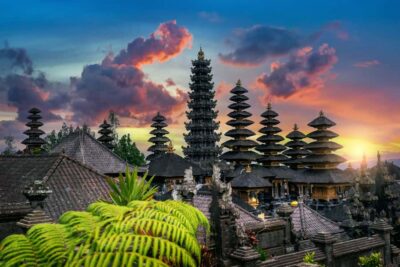
Besakih Temple & Lempuyang Temple Gates of Heaven Tour
Read our review →
North Bali: Sunrise Tour with Dolphins, Waterfalls & Temples
Read our review →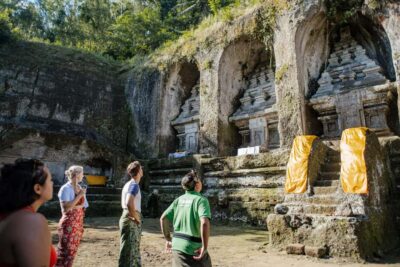
Hidden Canyon, Waterfall & Temples Small Group Tour
Read our review →
Munduk Waterfalls Trek, Twin Lakes and Temple Tour
Read our review →
Monkey Forest, Water Temple, Rice Terrace, Waterfall
Read our review →
Twin Lake Jungle Hike, Ulun Danu Temple, & Waterfall
Read our review →Browse the lists this tour appears in