
Reviewed · SCUBA DIVING
Open Water + Advanced Course – Premium Certifications Package in Tulamben
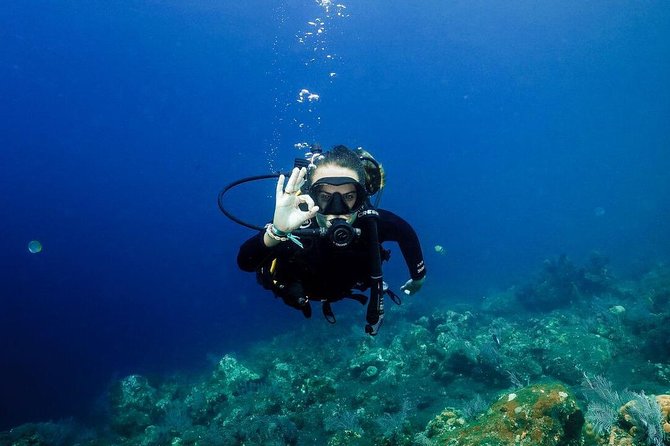
Tulamben gives you a rare chance to go from your first lesson to Advanced Open Water certification in about four days. You learn the basics, practice them in the sea, then work toward a 30-meter limit while exploring wrecks, coral, and marine life along Bali’s northeast coast.
I like the tidy all-in-one setup, with an instructor, full equipment, showers, lockers, Wi-Fi, and transfers from Amed or Tulamben. I also like the personal feel: instructors such as Yogi, Rifky, Budi, Nico, and Marlene are praised for patience, clear teaching, and a firm focus on safety.
The main catch is the pace. Four days is efficient, but not leisurely, and you need moderate physical fitness, suitable weather, and the confidence to keep learning after your first certification. At $660.39, this is best for someone serious about continuing with scuba, not someone merely testing the idea for an afternoon.
In This Review
- Key points to know before booking
- Why Tulamben works for a first certification
- The first two days: building your Open Water foundation
- The next two days: moving into Advanced Open Water
- Wrecks, coral, and the appeal of the underwater setting
- Instructors who shape the experience
- What the $660.39 price really covers
- Physical demands, timing, and practical planning
- Who should book this four-day course
- Should you book the Tulamben package?
- FAQ
- How long does the Open Water and Advanced course package take?
- How deep can I go after completing the advanced course?
- What advanced skills are included?
- Is scuba equipment included?
- Are transfers included?
- Is accommodation included in the price?
- What is the minimum age and cancellation policy?
Key points to know before booking
- Two certifications in one stay: Complete Open Water first, then begin Advanced Open Water immediately afterward.
- A 30-meter qualification: The advanced course trains you for descents to 100 feet, or 30 meters.
- Required advanced skills: Underwater navigation and deep-water training are part of the course.
- Three specialties of your choice: Options can include photography, buoyancy control, fish identification, and wreck exploration.
- Equipment and local transport included: Mask, snorkel, fins, buoyancy jacket, regulator, instruments, wetsuit, weights, and Amed or Tulamben transfers are covered.
- A private group setting: Only your group participates, which can make instruction more focused and comfortable.
Why Tulamben works for a first certification
Tulamben is one of Bali’s best-known bases for learning scuba. The important point for a beginner is not just the name of the place. You can use the same coastal area for both basic training and more demanding lessons, so you spend less time adjusting to new logistics and more time building skill.
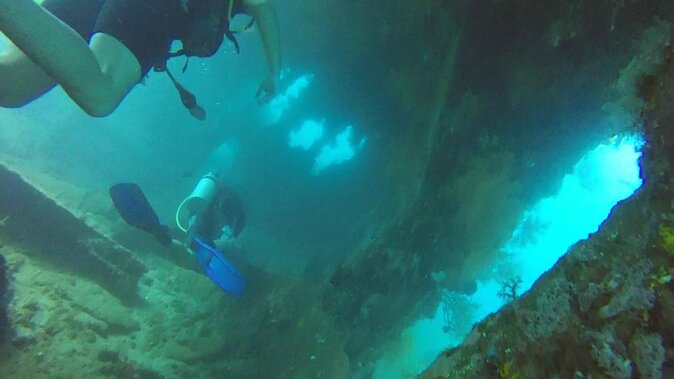
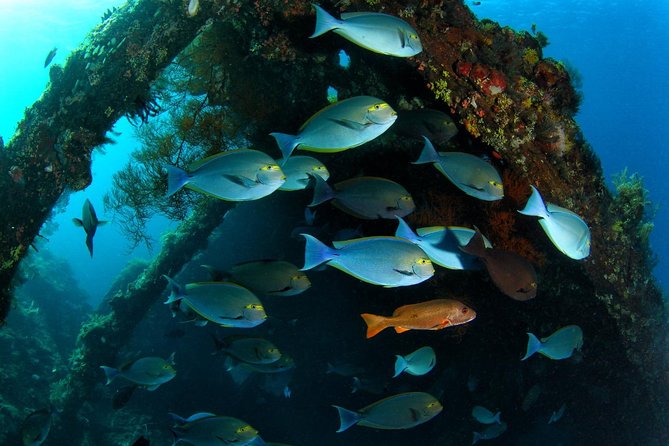
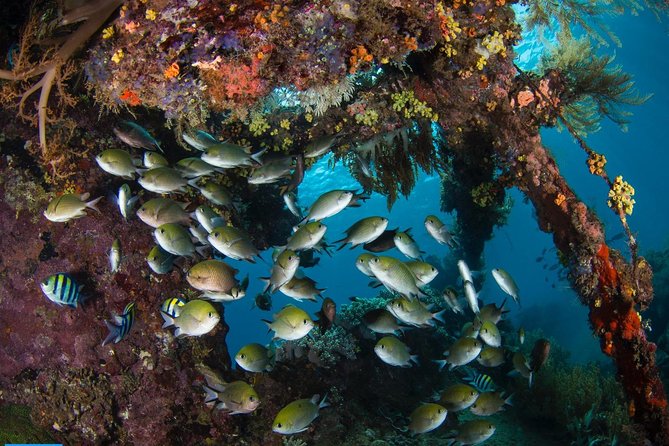
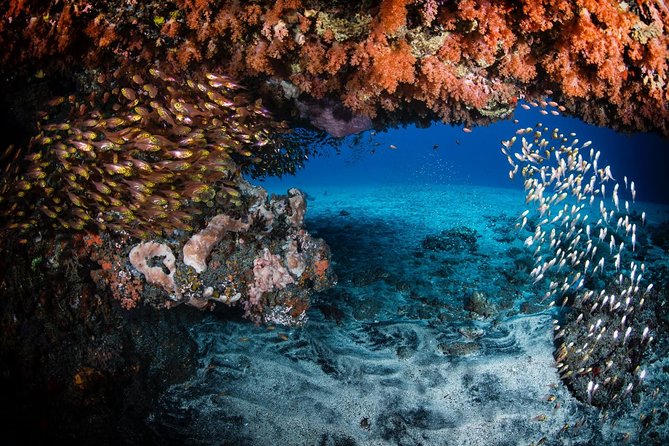
The local underwater sites also give the course some character. You might see coral, moray eels, stingrays, octopuses, and turtles, along with wreck scenery. That matters because your first certification should not feel like a classroom exam followed by anonymous practice. The setting can help you understand why people keep returning to the sport.
I would still keep your expectations sensible. The package gives you access to Tulamben’s sites, but it does not promise a particular animal or exact marine-life encounter. Sea conditions and visibility can change, and the course remains a training program first.
The base is Dive Concepts Tulamben on Jalan Raya Singaraja. Facilities include a toilet, shower, locker, changing room, and Wi-Fi. A warung or restaurant is available on site, though meals and drinks cost extra. These small comforts matter after time in the water, especially when you have a full training schedule.
More Diving Trips in East Bali
- Open Water Course in Tulamben – Get Certified in Bali
★ 5.0 · 495 reviews - Bali Diving for Beginners: Tulamben Liberty Wreck
★ 5.0 · 367 reviews - Discover Scuba Diving in Tulamben – Diving Initiation in Bali best diving sites
★ 5.0 · 353 reviews
The first two days: building your Open Water foundation
Your Open Water course is the starting point. You learn basic theory and essential skills before earning your first scuba certification. The course has introduced millions of people to the sport, and its value is that it gives you a structured way to handle equipment, communicate underwater, and respond to common problems.
You should expect a mix of instruction and practical work. The supplied details do not specify each session or the exact number of water entries, so your instructor will set the daily order. Plan on learning the fundamentals, practicing them under supervision, and applying them in open water before moving to the advanced portion.
The instructor matters greatly at this stage. Yogi is repeatedly praised for explaining clearly, teaching patiently, and paying close attention to safety. Budi is described as kind but suitably firm underwater, which is exactly the balance you want when you are trusting someone with your first serious lessons.
Rifky also receives strong praise for patience, care, and a calm manner. Marlene has taught groups in French, showing that the center can work with different language needs when the right instructor is available. Nico is described as detailed and patient, and some students continued with extra classes and recreational sessions after learning with him.
You should ask questions whenever a skill feels rushed. A good course is not about looking confident on the first attempt. It is about building habits you can repeat when the water is less calm, when you are tired, or when a small problem needs your attention.
The Open Water certificate is the key milestone. It gives you the foundation required to continue with the advanced course, but it does not mean you are suddenly an expert. You are still learning to control your breathing, position, equipment, and attention at the same time.
The next two days: moving into Advanced Open Water
The package is designed for you to begin Advanced Open Water as soon as you earn the first certificate. This makes the schedule efficient, and it also keeps your learning momentum going. You do not need to arrange a second visit or find another center after completing the beginner course.
The advanced program is aimed at confidence and more professional techniques. You will plan your learning path with the instructor and choose three specialties from a list of Adventure Dives. The exact choices should reflect what you want to improve, rather than what sounds impressive on paper.
Two parts are required: the Deep Adventure Dive and the Underwater Navigation Adventure Dive. The deep session works toward the 30-meter certification limit. The navigation session helps you become more capable of finding your way underwater instead of relying entirely on an instructor or another group.
Your other three choices can match your interests. The available examples include:
- Underwater photography
- Buoyancy control
- Fish identification
- Wreck exploration
This choice-based format is one of the package’s best features. If you are fascinated by wrecks, you can focus there. If you feel awkward with your position in the water, buoyancy control may deliver more practical benefit. If you want to remember what you see, photography could be the natural pick.
You should discuss the choices before the course begins. A specialty is most useful when it addresses a real need or interest. There is little point choosing photography if you are still struggling with basic equipment control, unless your instructor agrees that it fits your ability.
The advanced stage may revisit familiar local sites while adding new ones. That is useful. Repetition helps you compare how you feel now with how you felt during your beginner sessions, while new locations give you a fresh test of navigation and confidence.
Wrecks, coral, and the appeal of the underwater setting
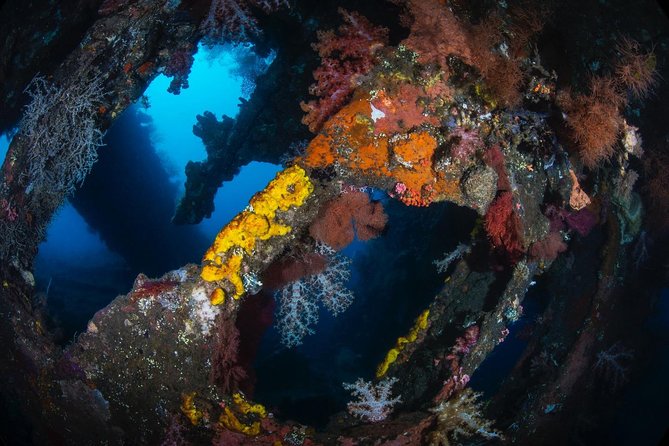
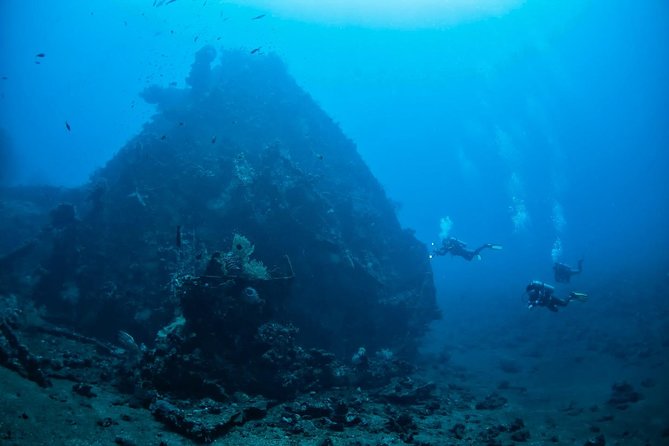
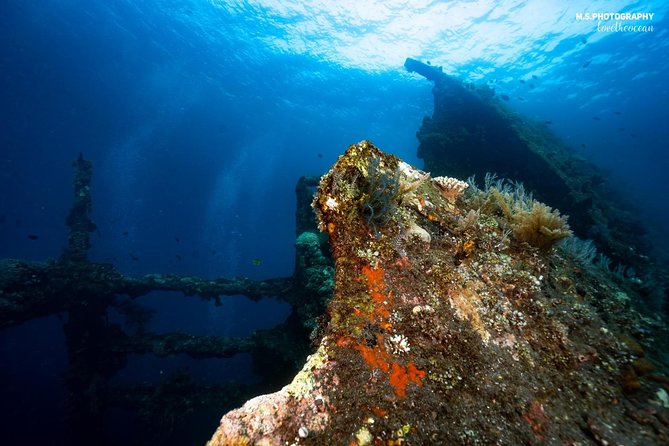
Tulamben’s wreck setting gives this certification package more personality than a course held only in a pool or a plain training area. You can combine formal lessons with the chance to see a wreck and coral reef populated by creatures such as moray eels, stingrays, octopuses, and turtles.
I would treat the marine life as a bonus, not a guarantee. The center cannot control what appears on a particular session, and the course is not a wildlife-spotting expedition. Still, the possibility of seeing interesting animals can make skill practice feel purposeful.
Wreck exploration is also more than sightseeing. It asks you to pay attention to positioning, surroundings, and buoyancy. If you choose it as one of your advanced specialties, listen closely to the instructor’s limits and directions. A wreck is not the place to improvise.
The same applies to the 30-meter qualification. Going deeper is not simply a matter of swimming farther down. It requires good judgment, controlled movement, careful air management, and respect for the limits of your certification. The course introduces these ideas under supervision, but you remain responsible for continuing to practice them safely afterward.
More dive trips off East Bali:
- Advanced Open Water Course – Advanced Certification in Tulamben
★ 5.0 · 127 reviews - 5 Fun Dives in Tulamben (for certified divers) – Discover famous diving sites
★ 5.0 · 93 reviews - 7 Fun Dives in Tulamben (for certified divers) – Premium Value Package
★ 5.0 · 69 reviews - Amed: Spearfishing, Freediving and Catch & Cook Adventure
★ 5.0 · 6 reviews
Instructors who shape the experience
The strongest part of this package is likely to be the instructor assigned to you. The center works with several named professionals, and the teaching styles described in the supplied information share a few useful traits: patience, clear explanations, friendliness, and a firm approach to safety.
Yogi appears often as a favorite for both beginner and advanced students. He is described as patient, professional, and good at making people feel safe. Budi is praised for creating a relaxed course while remaining strict about safety underwater. Rifky is noted for listening, caring for the group, and helping students feel at ease.
Nico is a good name to keep in mind if you value detailed instruction. Marlene’s French-language teaching may help if you are more comfortable learning in French, though you should confirm instructor availability before booking.
Because this is a private activity for your group only, you may have more room to ask questions and work through difficult skills than you would in a large class. The data does not state the maximum group size or instructor-to-student ratio, so do not assume a one-to-one lesson. Ask the center how your particular group will be arranged.
The private format is especially useful if members of your party have different levels of confidence. It does not remove the need to keep to course standards, but it can make the social side less intimidating.
What the $660.39 price really covers
At $660.39 per person, the package is not a casual low-cost introduction. It combines two certifications over four days, so the price makes more sense if you already intend to continue with scuba.
The included equipment is substantial:
- Mask and snorkel
- Fins
- Buoyancy control jacket
- Regulator and other instruments
- Wetsuit
- Weight belt
You also receive a certified instructor, use of the center’s facilities, and pickup and drop-off around Amed and Tulamben. That reduces the number of separate costs you need to arrange locally.
Accommodation is not included. Dormitories and bungalows are available at the center, but you pay separately. Food and drinks from the warung are also extra. Digital photos and videos can be purchased if you want a record of the course.
The value depends on how you use the four days. If you complete both certifications and use the included gear and transport, the package can be a sensible way to organize your training. If you are unsure about scuba, paying for two levels at once may be the wrong choice. A shorter introductory session would be less commitment, though this particular package is built for certification rather than a trial outing.
Physical demands, timing, and practical planning
The activity requires a minimum age of 12 and a moderate level of physical fitness. You need to be comfortable handling scuba equipment and following instructions in the water. The information does not provide a detailed medical screening policy, so ask the provider about any health concerns before booking.
The center is open daily from 7:00 AM to 8:00 PM during the stated operating period. Your exact lesson times are not provided, so keep your schedule flexible. Four consecutive training days leave little room for late arrivals, long excursions, or a packed sightseeing plan.
I would stay in Amed or Tulamben if possible. Local transfers are included from those surroundings, and staying nearby should make the early starts and return trips easier. Accommodation at the center is available separately if you want maximum convenience.
Bring ordinary personal items such as swimwear, sun protection, and a change of clothes, but the essential scuba equipment is supplied. You may also want money for food, drinks, accommodation, and optional digital images.
Weather matters. If poor conditions cancel the activity, you can choose another date or receive a full refund. That protection is useful, but it also means you should avoid scheduling the course immediately before an important flight or fixed connection.
Cancellation is free if you cancel at least 24 hours before the start time. Changes or cancellations inside that window are not accepted for a refund.
Who should book this four-day course
This package fits you best if you have already decided that scuba is more than a one-time holiday experiment. You get a clear progression from basic instruction to a 30-meter advanced qualification, plus the chance to sample specialties that can guide your next steps.
It is also a good match if you want a private group setting and prefer having equipment, transfers, and instruction handled together. Beginners who feel nervous may appreciate the patient teaching style associated with Yogi, Budi, Rifky, Nico, and Marlene.
I would think twice if you dislike structured learning or want a slow holiday with plenty of free time. The schedule is concentrated, and completing two courses in four days demands attention. It is also not the right fit if you are looking only for a sightseeing outing.
Should you book the Tulamben package?
Book it if you want a serious start in scuba, have four days available, and value a complete package with equipment and local transport included. The combination of wrecks, coral, marine life, navigation, deep-water training, and three chosen specialties gives you more substance than a basic certificate alone.
Before paying, confirm the available instructor, course schedule, accommodation needs, and language preferences. If you are comfortable with the pace and the physical demands, $660.39 can be a fair price for two certifications in one focused stay. If you are still wondering if scuba suits you, begin with a shorter introductory experience instead.
FAQ
How long does the Open Water and Advanced course package take?
The package lasts approximately four days. The Open Water and Advanced Open Water courses are completed one after the other, with the advanced course starting after you earn the first certification.
How deep can I go after completing the advanced course?
The Advanced Open Water course qualifies you to dive to 100 feet, or 30 meters, under the terms of the certification.
What advanced skills are included?
Deep-water and underwater navigation training are required. You can then choose three additional specialties, with examples including photography, buoyancy control, fish identification, and wreck exploration.
Is scuba equipment included?
Yes. The package includes a mask, snorkel, fins, buoyancy control jacket, regulator, other instruments, wetsuit, and weight belt.
Are transfers included?
Pickup and drop-off are included for accommodations around Amed and Tulamben. The activity begins and ends at Dive Concepts Tulamben.
Is accommodation included in the price?
No. Dormitory and bungalow accommodation is available at the dive center, but it is not included in the package price.
What is the minimum age and cancellation policy?
The minimum age is 12, and participants should have moderate physical fitness. You can cancel for a full refund up to 24 hours before the start time. If poor weather causes cancellation, you can select another date or receive a full refund.
Recently added around East Bali
- Bali: Blue Lagoon Snorkeling Tour with Bali Quad Bike★ 3.4 · 3 reviews
- Discover Sidemen’s First Silver Class at Agung Silver★ 5.0 · 3 reviews
- Bali: Gate Of Heaven and Water Palace Tirta Gangga Package★ 4.7 · 3 reviews
- Bali:Heaven Gate, TirtaGangga Palace, and Beach Escape Tour★ 5.0 · 3 reviews
- Blue Lagon Snorkeling, Waterfall, and Celuk Village Tour★ 5.0 · 3 reviews
- Lempuyang Temple: Gate of Heaven★ 5.0 · 3 reviews
- Bali: Sidemen silver class experience★ 5.0 · 3 reviews
- Bali: Mount Agung Sunrise Trekking Tour with Hotel Pickup★ 5.0 · 3 reviews
Scuba Diving, compared.
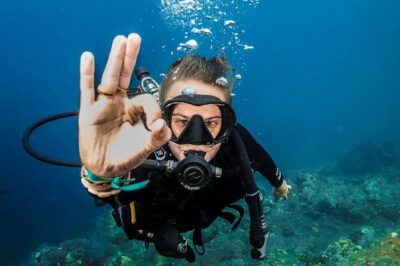
Open Water Course in Nusa Lembongan – Get Certified on remote island (next Bali)
Read our review →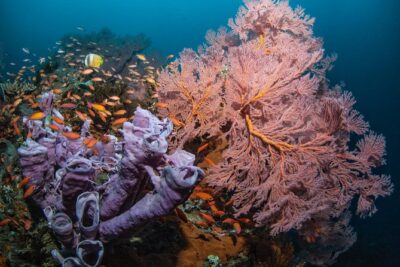
2 Days Discover Scuba Diving in Nusa Lembongan – Scuba Initiation
Read our review →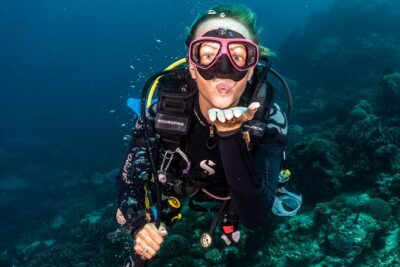
Open Water Course in Tulamben – Get Certified in Bali
Read our review →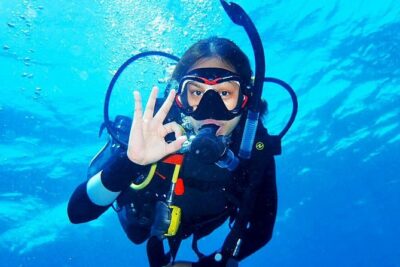
Bali Diving for Beginners: Tulamben Liberty Wreck
Read our review →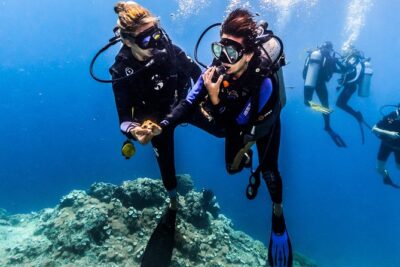
Discover Scuba Diving in Tulamben – Diving Initiation in Bali best diving sites
Read our review →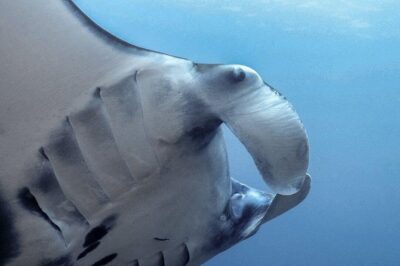
Advanced Open Water Course – Advanced Certification in Lembongan (next to Bali)
Read our review →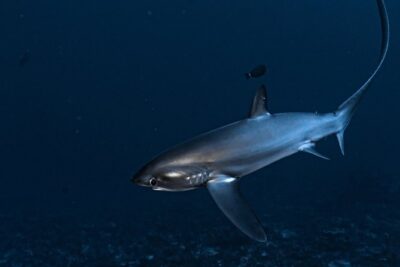
5 Fun Dives in Nusa Lembongan (for certified divers) – Swim with a Mola Mola
Read our review →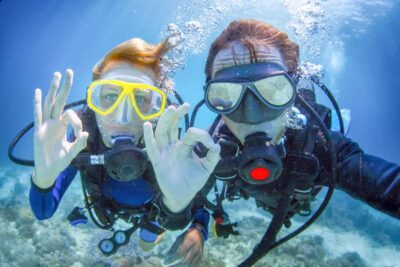
Padangbai Blue Lagoon Beginner’s Dive Experience
Read our review →Browse the lists this tour appears in