
Reviewed · WORKSHOPS
Ubud: 3-Hour Wood Carving Master Class
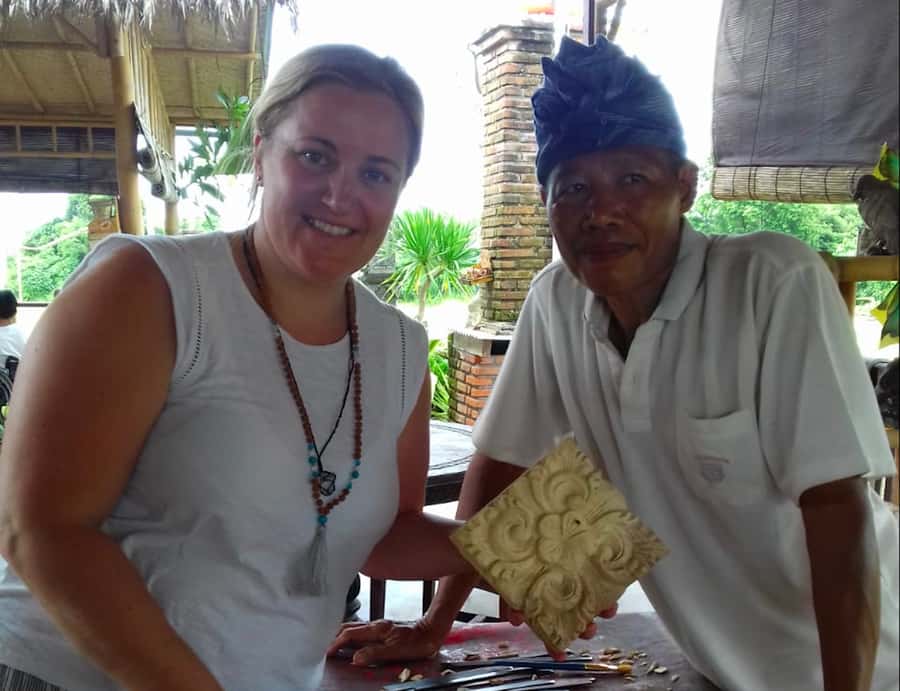
A plain block of wood becomes your own Balinese souvenir in this hands-on three-hour class at WS Art Studio. You choose a design, learn how the tools work, and carve beside an experienced local craftsman. The teacher helps you find the shape hiding in the wood, then steps in when your beginner technique needs rescuing.
I like two things right away: you do real carving rather than simply watching a demonstration, and the class feels personal because the group is limited to seven. The fried banana and pineapple with palm sugar, plus tea, coffee, or water, are small touches that make the afternoon feel warm and local.
The main consideration is time and difficulty. Three hours is enough for a small or moderately simple piece, but a detailed mask or animal can take longer. One participant waited between lessons in a small class, and several people said the instructor completed a large share of difficult designs.
In This Review
- Key points to know before booking
- A real Balinese craft lesson in Lodtunduh
- Choosing a design you can finish in three hours
- What the three hours actually feel like
- The teaching style: kind, close, and sometimes uneven
- The cultural value goes beyond making a keepsake
- Snacks, setting, and the little comforts
- Is $24 good value for Ubud?
- Who will enjoy this class most?
- How to get the best result from your lesson
- Should you book the Ubud wood carving class?
- FAQ
- Where is the wood carving class held?
- How long does the activity last?
- How much does the class cost?
- Do I need previous wood carving experience?
- What can I carve?
- Can children join the activity?
- Are tools and wood included?
- Is food or drink provided?
- Can I take my carving home?
- Is hotel transportation available?
- What languages are spoken?
- Is the activity wheelchair accessible?
Key points to know before booking
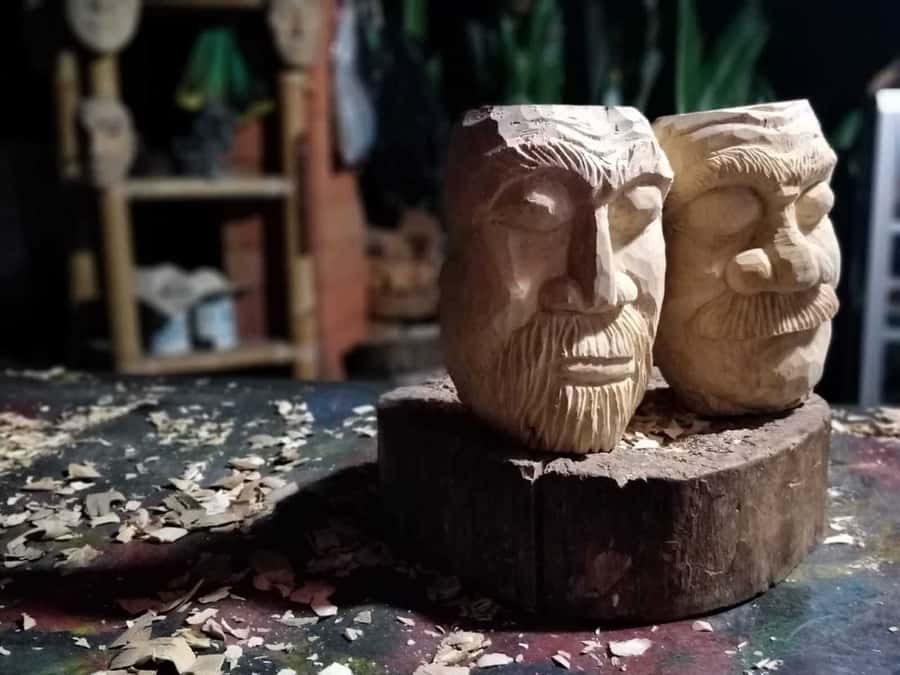
- You choose the subject: Pick from available designs or arrive with an idea for a mask, turtle, monkey, flower tile, animal, or abstract shape.
- The instruction is very patient: Beginners get step-by-step help, and the teacher can correct rough sections near the end.
- The class is genuinely hands-on: You use the carving tools yourself, though the amount of teacher assistance depends on your design and skill.
- The setting is outside central Ubud: WS Art Studio is in Lodtunduh, beside rice fields, with a relaxed home-style feel.
- The snack break is included: Expect a welcome drink and Balinese fried pineapple and banana with palm sugar.
- Your work goes home with you: You receive the finished or partly finished carving and a class certificate.
A real Balinese craft lesson in Lodtunduh
Wood carving is not a random holiday craft in Bali. The skill is passed through families, and carved masks, animals, figures, and decorative panels appear throughout the island. This class gives you a short, practical look at that tradition without asking you to commit to a long art course.
The meeting point is WS Art Studio on Jl. Raya Silungan in Lodtunduh, south of the busiest part of Ubud. The listed Google Maps code is C7X4+JFP. If you are staying in central Ubud, hotel transfers are available from the center, but confirm the transfer details when booking.
The studio setting is one of the activity’s pleasures. It is described as a charming, home-like place surrounded by rice fields, with friendly dogs around the property. Do not expect a polished museum workshop or a large commercial school. The appeal is the ordinary working environment and the chance to sit close to a practicing carver.
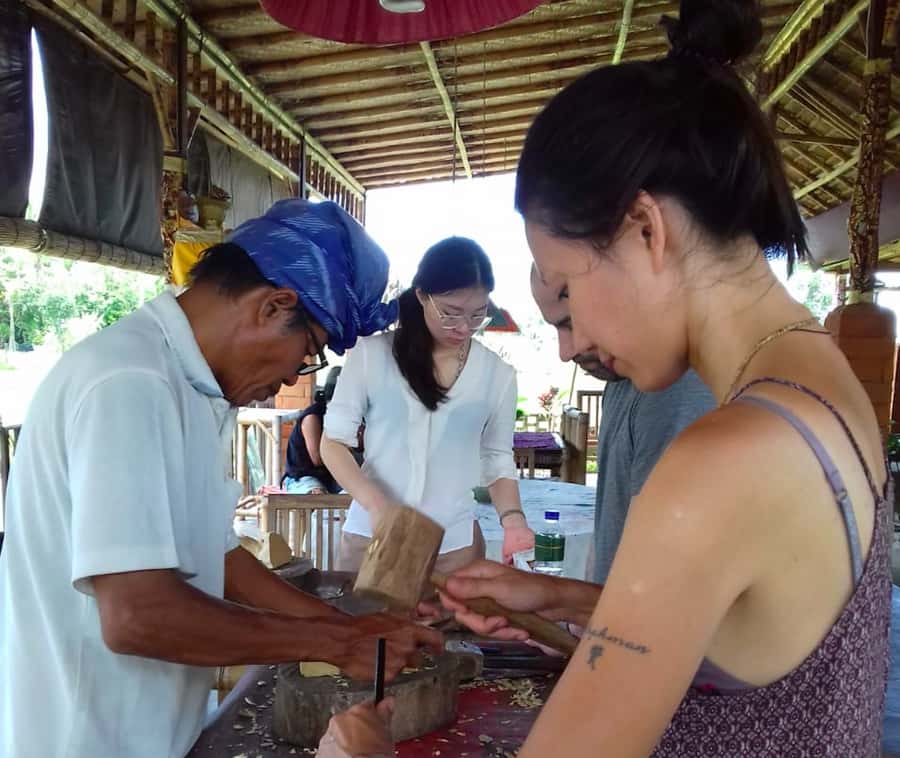
The class is taught in English and Indonesian. Names connected with the instruction include Bapa Raja and Wayan, both praised for their calm, careful approach. The instructor is not simply there to hand you a block and point at a knife. He demonstrates, watches your grip, corrects your cuts, and often improves the final details.
A few more Bali experiences worth comparing
- Ubud: Balinese Cooking Class at an Organic Farm
★ 5.0 · 1,786 reviews - From Ubud: Authentic Cooking Class in a Local Village
★ 4.9 · 1,325 reviews - Ubud: Handcrafted Silver Jewelry Workshop
★ 4.3 · 1,214 reviews
Choosing a design you can finish in three hours
Your first important decision is the subject. You may choose from designs at the studio, or bring an idea of your own. Past participants have worked on turtles, monkeys, masks, flower tiles, and other small wooden creatures.
Here is my practical advice: choose a small and fairly simple design. An abstract shape is especially forgiving because a crooked cut can become part of the form. A compact turtle or basic animal is also a sensible first project. A detailed face or elaborate mask can look tempting, but intricate carving takes time and demands more control.
One participant arrived with a design and received help turning it into a workable project. Another made two small turtles. Several beginners left with a good-looking result only because the teacher corrected the difficult sections. That is not a flaw, but you should understand what you are buying. This is a guided craft lesson, not a test of whether you can produce a professional Balinese carving alone.
The instructor prepares the wood for you, then shows you what to do. You work through the rough shape and gradually remove material. The teacher may take over for a tricky section or refine the piece at the end. If you want to do as much as possible yourself, say so clearly. If you mainly want the experience and a handsome souvenir, accept the help.
What the three hours actually feel like
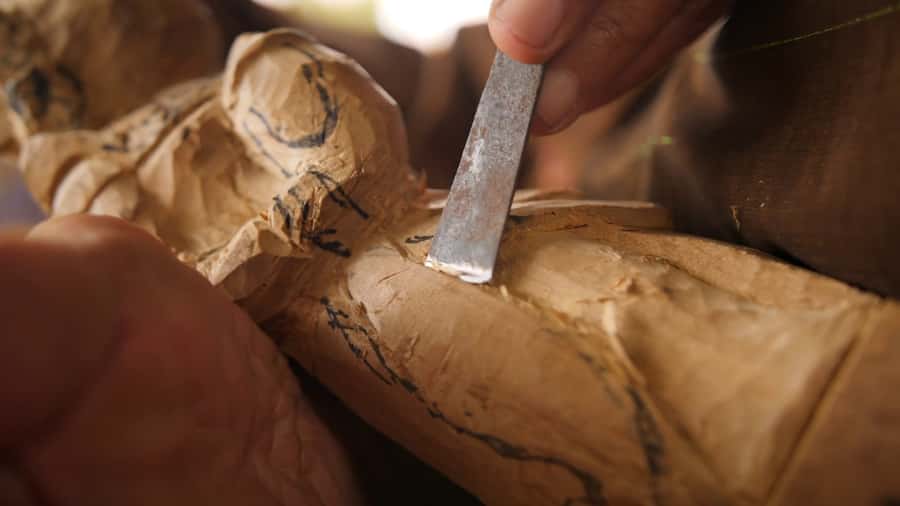
The class begins with a welcome drink of coffee, tea, or water and an introduction to the materials. You receive the wood and tools, then discuss what you want to make. The instructor explains the basic carving method and the reason for working the wood in a certain direction.
The early stage is usually the least glamorous. You remove larger sections and establish the outline. The work can feel slow, and the first cuts may not look like much. This is where patience matters. Wood carving is harder than it looks when a master is holding the tool.
As the shape becomes clearer, the class gets more interesting. You start to see a face, shell, animal, or other form appear. The teacher gives one-on-one demonstrations and lets you try the technique. Beginners often need repeated explanations, and that is normal here. The strongest part of the lesson is the steady guidance rather than a long lecture.
The final stage is where the instructor’s skill becomes obvious. He may spend ten minutes or more improving each piece, fixing mistakes, sharpening details, or making the design look more balanced. Some participants completed most of the carving themselves. Others needed the teacher to do half or even most of the work. Your finished souvenir will reflect both your effort and the instructor’s finishing hand.
The official duration is three hours, but the actual time can vary. Simple pieces may be finished in about an hour and a half. Detailed work can run longer, and some people stayed as long as five hours while completing a larger design. If you have a later appointment, choose a modest subject and tell the instructor about your schedule at the start.
The teaching style: kind, close, and sometimes uneven
The class earns its strong 4.6 rating from 278 ratings largely because the instructor is patient and generous with help. Beginners repeatedly received calm guidance, even when they needed the same step shown several times. A ten-year-old student managed a private lesson and enjoyed it enough to buy carving tools afterward.
The best teaching moments are side by side. The instructor demonstrates a cut, hands control back to you, and watches your progress. One participant described the process as a return to childhood creativity, with the teacher encouraging the fun rather than pushing for a perfect turtle or mask.
Still, the small-group format has a limit. Up to seven people may share the class, and the number of instructors working at one time can matter. One participant in a three-person class waited 20 to 40 minutes between demonstrations and left after five hours without finishing. Another found the instructor difficult to follow at the beginning and felt the teacher did about 80 percent of the project.
These experiences do not cancel out the many positive ones, but they offer useful booking advice. If your project is complex, ask how many instructors will be present. If you are a complete beginner, choose a simple form. If you want a private lesson, check whether that arrangement is available for your date rather than assuming it is included.
A different pace of day, same stretch of Bali coast:
- Bali: Mount Batur Sunrise Guided Hike and Natural Hot Spring
★ 4.8 · 9,284 reviews - Bali: Full-Day Instagram Highlights Tour
★ 4.8 · 7,817 reviews - Bali: Sunrise Mount Batur Hike with Breakfast
★ 4.8 · 6,973 reviews - Bali/Nusa Penida: East & West Highlights Full-Day Tour
★ 4.7 · 6,263 reviews
The cultural value goes beyond making a keepsake
The class explains some of the ideas behind Balinese carving and how the use of wood has changed over the decades. The information is practical rather than academic. You learn through the work itself, seeing why a curve is shaped a certain way and how a carver reads the grain.
I like this approach because it connects the object to the tradition. You are not just buying a wooden turtle from a shop. You are learning how a local craftsperson turns raw material into a recognizable form, using skills passed from one generation to the next.
The cultural lesson could be stronger in some areas. One participant wanted more information about the different timbers. The supplied details do not promise a full discussion of wood species, religious symbolism, or the history of every carving style, so you should not book this as a formal art-history course.
Instead, think of it as a working introduction. You sit beside a Balinese carver, use the same basic tools, and gain respect for the time hidden inside the island’s carved objects. Even if the instructor rescues your project, you will understand why fine carving takes practice.
Snacks, setting, and the little comforts
The included food is simple and welcome. You receive fried pineapple and fried banana with palm sugar, along with coffee, tea, or water. One participant specifically praised the snack after arriving on a hot day, and another called the fruit fritters delicious.
This is not a meal, so eat beforehand if you need lunch. It is a pleasant break during a tool-focused activity, especially for families. Alcohol is not included, though it is available for purchase.
The studio’s setting adds to the mood. Rice fields surround the area, and the house-style venue feels more personal than a large activity center. The dogs and informal atmosphere may appeal to you if you prefer local homes and workshops over highly staged attractions. If you need a quiet, perfectly timed production, the relaxed pace may test your patience.
Bring a camera. You will want a photograph of the raw block, the work in progress, and the finished piece. Wear clothes you do not mind using around wood shavings, though no special equipment is listed beyond the tools and materials supplied.
Is $24 good value for Ubud?
At $24 per person, the class offers solid value. The price includes all tools and materials, refreshments, instruction, a certificate, and the piece you make. Comparable souvenirs in Ubud may cost less for a small item, but they will not include three hours of personal instruction or the story of making the object.
The value is strongest if you care about the activity as much as the souvenir. You are paying for time beside a working carver and for the chance to try a traditional skill. The value is weaker if you want a flawless piece produced entirely by your own hands, since beginners often need substantial help.
A private session can make the cost feel better for a child, a couple, or anyone with a specific design in mind. But confirm the arrangement before you count on individual attention. The normal group limit is seven, which is small, yet one teacher cannot always give every person immediate help.
Free cancellation up to 24 hours before the activity and the reserve-now, pay-later option make it easier to fit into a changing Ubud schedule. Starting times depend on availability. The class is wheelchair accessible, though you should confirm the practical setup with the provider if you have specific mobility needs.
Who will enjoy this class most?
This is a good choice for families, creative beginners, couples, and anyone who wants a souvenir with a personal story. Children can take part, and the patient teaching suits people with no woodworking experience. You do not need to arrive artistic or confident.
It also suits people who enjoy slow work. Carving involves repetition, close attention, and a willingness to let the shape develop. If you prefer fast sightseeing with constant movement, three hours at a workbench may feel long.
I would recommend it to anyone curious about Balinese craft, especially if you have already seen carved objects in Ubud shops and want to understand the labor behind them. I would be more cautious about recommending it to someone with a tight schedule or a firm expectation of finishing a large, complex sculpture.
How to get the best result from your lesson
Use these simple tactics:
- Bring a small design idea: A simple turtle, animal, flower, or abstract form is easier to finish than a detailed mask.
- Tell the teacher your goal: Explain whether you want to do most of the carving yourself or prefer more help with the difficult parts.
- Allow extra time: Three hours is the planned duration, but larger pieces may take longer.
- Ask about the wood: If timber types matter to you, raise the question early since the basic class may not cover them in depth.
- Treat mistakes as part of the lesson: The instructor can repair and refine many rough sections.
- Plan transport carefully: The studio is in Lodtunduh, and hotel transfers are available from central Ubud only.
Should you book the Ubud wood carving class?
Book it if you want a friendly, low-cost cultural activity with a real object to carry home. The patient instructors, small group limit, rice-field setting, snacks, and strong beginner support make this one of Ubud’s more useful hands-on experiences.
Choose a simple design and keep your schedule open. That is the key. If you expect to carve an intricate mask without help, you may be disappointed. If you want to learn the basics, laugh at a few mistakes, and leave with a unique Balinese piece that carries your own effort, $24 is a fair price.
FAQ
Where is the wood carving class held?
It is held at WS Art Studio on Jl. Raya Silungan in Lodtunduh, Ubud, Gianyar Regency, Bali. The Google Maps address is C7X4+JFP, Lodtunduh, Ubud, Bali 80571.
How long does the activity last?
The scheduled duration is three hours. Some simple designs may take less time, while detailed projects can take longer than three hours.
How much does the class cost?
The listed price is $24 per person.
Do I need previous wood carving experience?
No. The class is designed for beginners, and the instructor guides you through the carving process step by step.
What can I carve?
You can choose from available designs or bring an idea of your own. Examples include masks, turtles, monkeys, flower tiles, animals, and abstract shapes.
Can children join the activity?
Yes. Families and children are welcome, and the class is intended for different ages and skill levels.
Are tools and wood included?
Yes. All tools and materials needed for the class are included.
Is food or drink provided?
Yes. You receive coffee, tea, or water, plus small snacks of Balinese fried pineapple and fried banana with palm sugar. Alcohol is not included but can be purchased.
Can I take my carving home?
Yes. You take home the piece you create, along with a class certificate.
Is hotel transportation available?
Return hotel transfers are available from central Ubud only. Check the available transfer details when booking.
What languages are spoken?
The instructors speak English and Indonesian.
Is the activity wheelchair accessible?
Yes, the activity is listed as wheelchair accessible. If you have specific access needs, confirm the setup with WS Art Studio before arrival.
Recently added around Bali
- Bali: Private Lempuyang Temple, Water Temple & Rice Terraces★ 5.0 · 3 reviews
- Bali: Mountain Bike Tour and River Rafting with Lunch★ 5.0 · 3 reviews
- Bali: Sidemen Waterfall tour and temple purification★ 5.0 · 3 reviews
- Bali: Padangbai Blue Lagoon Scuba Diving Private Tour★ 5.0 · 3 reviews
- Bali’s Mystical Jungle Trek & Hidden Waterfall Adventure★ 4.3 · 3 reviews
- From Bali: Mount Bromo & Ijen volcanic private tour★ 5.0 · 3 reviews
- Bali: 7 Day Solo Traveler’s Yoga Retreat In Ubud★ 5.0 · 3 reviews
- Bali: Photo Shoot with a Private Vacation Photographer★ 5.0 · 3 reviews
Workshops, compared.


Legian Beach, Bali: Beginner or Intermediate Surf Lessons
Read our review →
Canggu Jewelry Making Class with Creative Studio Vibes
Read our review →
Canggu & Uluwatu Puppy Yoga Class & Refreshing Drinks
Read our review →
Beginner & Intermediate Surf Lesson with Equipment
Read our review →
Browse the lists this tour appears in