
Reviewed · BALINESE COOKING CLASSES
From Ubud: Authentic Cooking Class in a Local Village
A market visit, a rice plantation, and a home-style cooking lesson make this more than a standard kitchen class. You spend the day in Laplapan village, learning how Balinese food fits into daily family life rather than simply watching a chef work.
I like the hands-on format, where you chop, pound, mix, and cook every part of the meal. I also like the warm welcome from Mama Puspa and her team, plus the recipe book that lets you repeat the dishes at home. The main drawback is simple: the afternoon class skips the market, and pickup times may need careful confirmation.
In This Review
- Key points
- Why this class feels different from a restaurant lesson
- Hotel pickup sets the day in motion
- The morning market is worth choosing
- A rice plantation connects food to the land
- Laplapan village offers a personal welcome
- The cooking is genuinely hands-on
- Dietary requests need to be discussed early
- The shared meal is the payoff
- Recipes make the experience useful after Bali
- Is $35 a fair price?
- Who will enjoy this most?
- Timing, transport, and booking advice
- Should you book Paon Bali Cooking Class?
- FAQ
- Where does the cooking class take place?
- Is hotel pickup included?
- Can I arrange pickup outside Ubud?
- Does every class include a market visit?
- How long does the experience last?
- What food will I prepare?
- Is the class taught in English?
- How many people can join the class?
- Can dietary requirements be accommodated?
- What is included in the price?
Key points
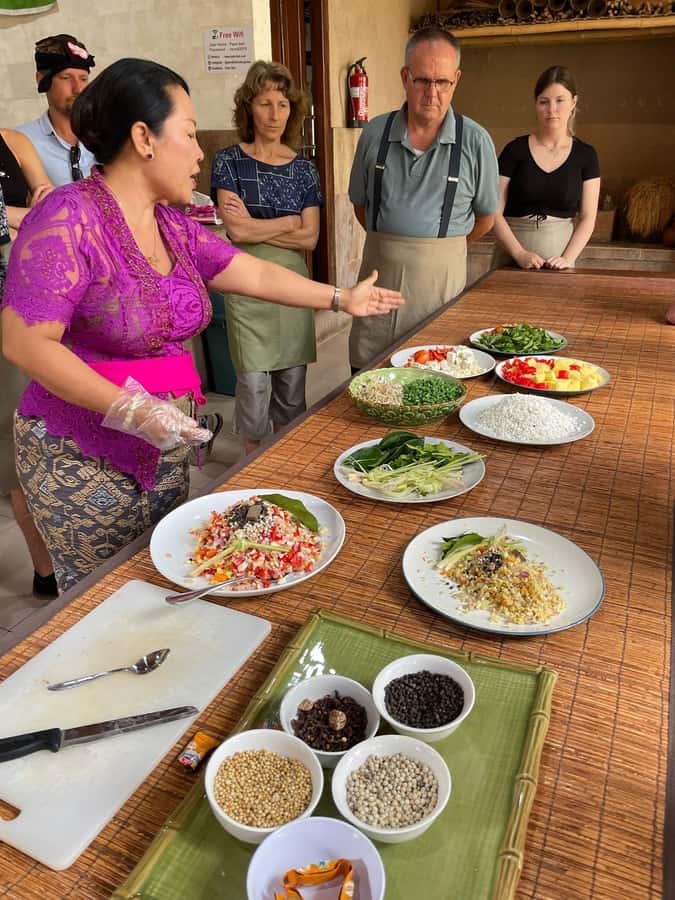
- Seven dishes from scratch: Prepare three starters, four main courses, and an authentic Balinese dessert, with the exact selection allowing for meat or vegetarian preferences.
- Morning market advantage: Choose the morning session if you want the local market, fruit tasting, and a closer look at Balinese herbs and spices.
- Family compound setting: The class takes place in a traditional home with a family temple, giving the meal a personal setting.
- Real participation: You are given cooking jobs throughout the class instead of standing behind a demonstration counter.
- Good dietary flexibility: Garlic, onion, capsicum, and gluten-free needs have been accommodated when arranged with the team.
- Strong value at $35: Hotel transport in Ubud, ingredients, drinks, a substantial meal, the lesson, and recipes are all included.
Why this class feels different from a restaurant lesson
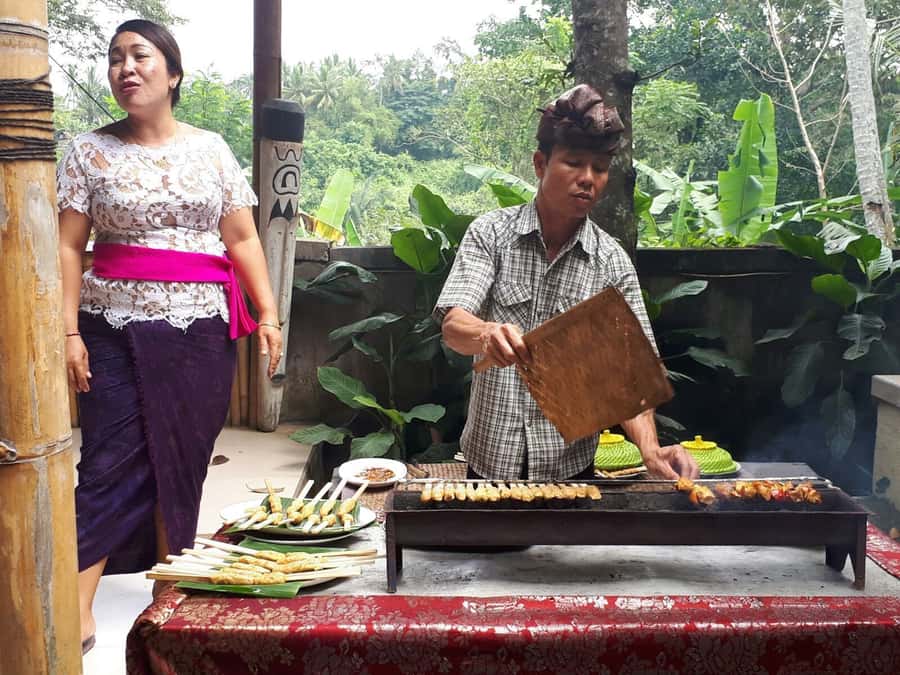
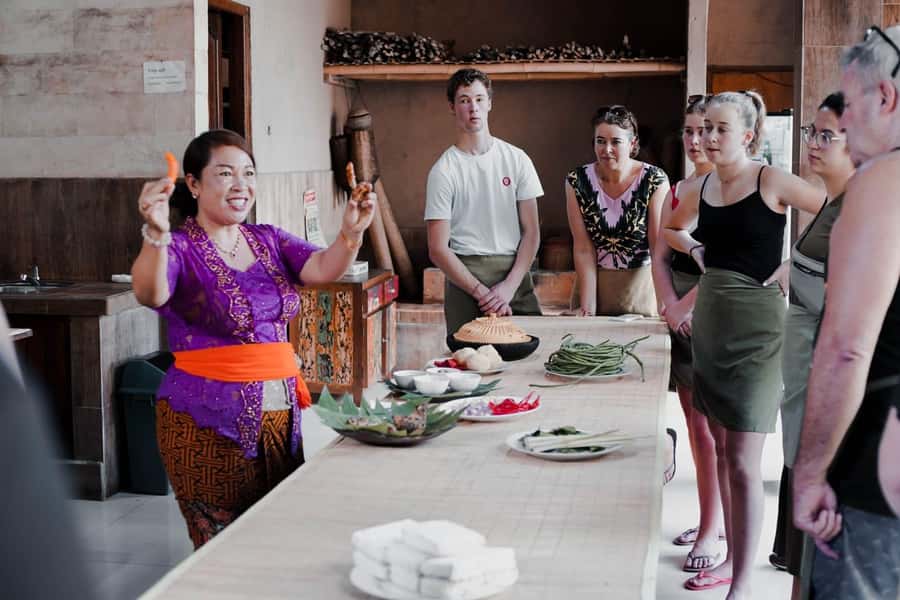
Ubud has no shortage of cooking classes, but the setting matters. Paon Bali takes you away from the town center and into Laplapan, a traditional village where the cooking school feels connected to a family home.
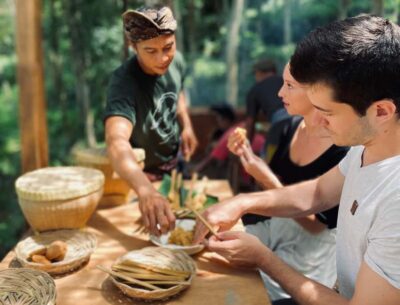
You are welcomed with Balinese tea, coffee, or a cool drink before getting started. The setting includes a beautiful home and family temple, and the team may show you around the compound. This gives the food some context. You are not only learning what goes into a spice paste. You are seeing the kind of place where these recipes belong.
Mama Puspa is the personality at the center of the experience. Her humor and easy manner help the class feel social rather than formal. Staff members guide the practical work, answer questions, and keep the food moving from one station to the next.
The group can include up to 15 people. That is small enough to work well, although the experience will feel more personal if your departure happens to have fewer participants. One group had only seven adults and two children, while another had around 15 adults.
More Balinese cooking classes in Bali:
- Ubud: Balinese Cooking Class at an Organic Farm
★ 5.0 · 1,786 reviews - Seminyak: Balinese Cooking Class & Market Tour
★ 4.9 · 458 reviews - Bali: Private Balinese Cooking Class in a Family Home
★ 4.8 · 87 reviews
Hotel pickup sets the day in motion
Pickup and drop-off are included for hotels in the Ubud area. This is useful because the class is outside the busiest part of central Ubud, and you do not need to arrange a taxi for an early start.
Drivers have generally been punctual and helpful. Wayan Arianta, one driver named in the feedback, was especially appreciated for answering questions about Bali during the ride. Another driver, Wayan, was praised for making visitors feel welcome before they even reached the cooking school.
Still, confirm your pickup time and location carefully. One person reported that the driver arrived early and called repeatedly while the group was still returning from another activity. It is a small problem, but a practical one. Keep your phone available and be ready a little before the stated time.
Hotels outside Ubud may be served for an extra charge if requested during booking. Do not assume this is included in the $35 price.
The morning market is worth choosing
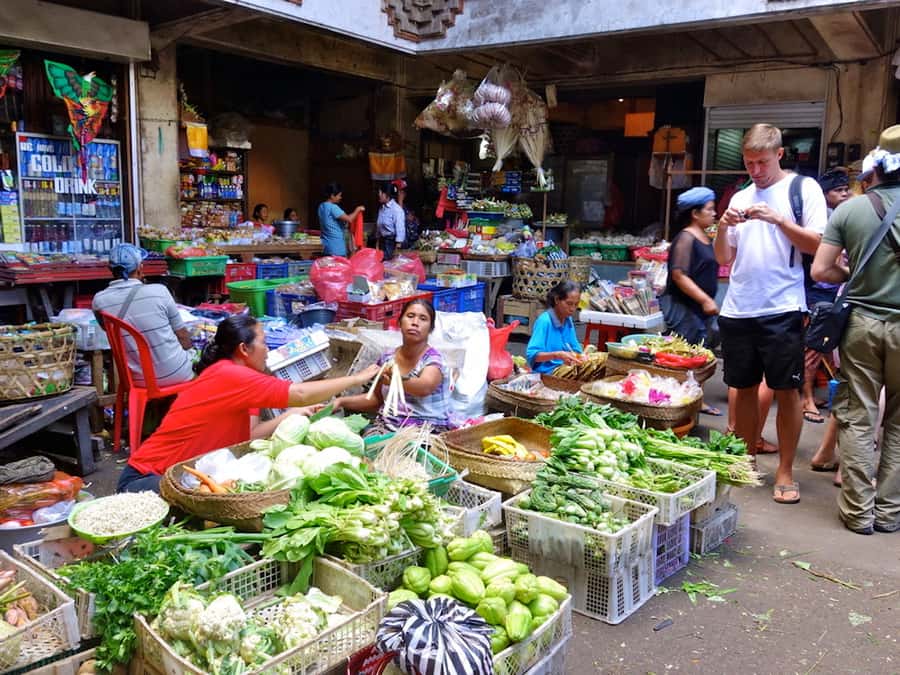
The morning class begins with a visit to a local fresh food market. This is one of the best reasons to choose the longer morning option.
Your guide helps identify the vegetables, herbs, meat, fruit, and spices used in Balinese cooking. You can see ingredients in their everyday market setting instead of meeting them only after they have been measured into bowls. Some people have also been able to taste unfamiliar local fruit and buy affordable spices or tea to take home.
The market is not simply a shopping stop. It helps you understand why Balinese food tastes the way it does. Fresh herbs, spice mixtures, vegetables, and aromatic ingredients are not abstract items from a recipe book. You see them in the place where local cooks buy them.
The market also adds a little ordinary Bali to the day. You are watching people shop for food, not visiting a staged cultural display. That distinction matters if you want a cooking class tied to local life.
The trade-off is timing. The morning option lasts longer, roughly three and a half to four hours depending on the schedule. The afternoon class is shorter because it does not include the market. If you have only a limited amount of time in Ubud, the afternoon still provides the main cooking experience, but it loses the strongest cultural introduction.
A rice plantation connects food to the land
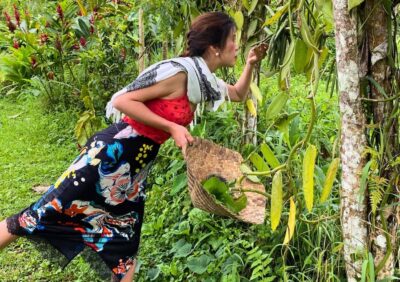
After the market, the route continues to a rice plantation. You learn how Bali’s staple crop is cultivated and prepared while taking in views of the surrounding countryside.
This is a short but useful piece of context. Rice is central to Balinese meals and daily life, so seeing where it comes from makes the cooking lesson easier to place. The plantation stop is also a change of pace after the market, with open views instead of crowded stalls.
The information provided does not set out a long farm walk or detailed agricultural workshop. Think of this as a scenic educational stop, not a full rice farming tour. Its value is in connecting the finished meal with the crop that supports so much of Bali’s food culture.
A few more Bali experiences worth comparing
- Ubud: Handcrafted Silver Jewelry Workshop
★ 4.3 · 1,214 reviews - Legian Beach, Bali: Beginner or Intermediate Surf Lessons
★ 4.9 · 1,019 reviews - Bali: Canggu & Uluwatu Puppy Yoga Class & Refreshing Drinks
★ 4.8 · 891 reviews - Bali: Seminyak Jewelry Making Class with Gold Plating Option
★ 4.8 · 436 reviews
Laplapan village offers a personal welcome
In Laplapan, the cooking class takes place in a traditional Balinese home and kitchen. The family compound and temple give the setting a sense of place that a purpose-built classroom cannot easily copy.
You may be offered time to see the family temple and take photos. Treat it as a home visit, not a museum. The appeal comes from the everyday setting and the welcome from the people who run the class.
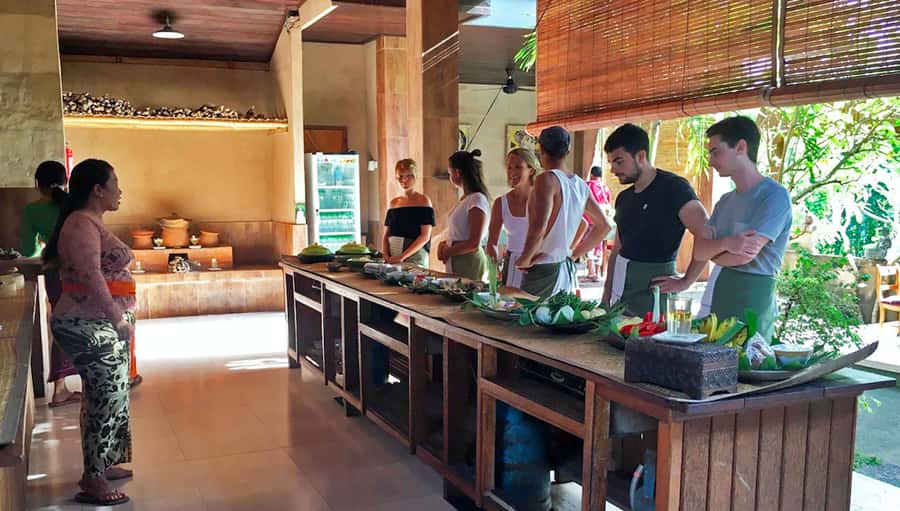
The kitchen is described as clean, attractive, and well arranged. That is important because the class involves several dishes and many working parts. Ingredients are prepared in advance where needed, but you still take part in the key steps.
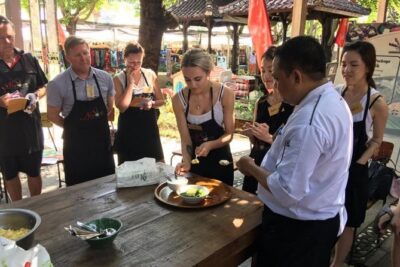
The staff keep the class moving with a clear division of tasks. You might work in pairs, alternate between dishes, and rotate through different jobs. That approach prevents one person from doing all the chopping while everyone else watches.
The cooking is genuinely hands-on
The main lesson covers three starters, four main dishes, and one dessert, for seven dishes in total. The descriptions also refer to six savory dishes plus dessert, so the exact menu may be presented slightly differently, but expect a large spread rather than one or two recipes.
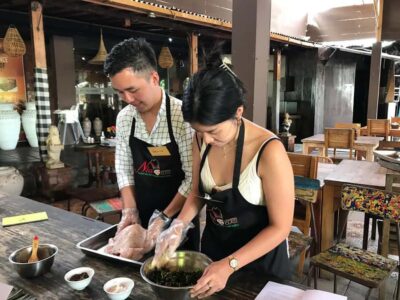
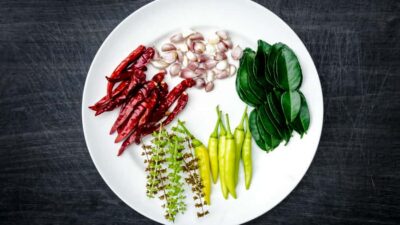
You will chop, pound, mix, shape, and cook. The pounding matters because Balinese cooking often depends on freshly worked spice mixtures rather than a quick shake of prepared seasoning. The class gives you a chance to see how those flavors are built.
The instructors explain each method in clear stages. They also offer suggestions for substitute ingredients that may be easier to find outside Indonesia. That is a practical touch. A recipe is much more useful if you know what to do when a local herb or spice is unavailable at home.
The pace is active but manageable. You are not expected to be an expert cook, and several people found the recipes easy to follow. The staff make sure each person gets a turn, which is especially helpful when the class includes children or people with little cooking experience.
There is also plenty of humor. Mama Puspa is known for keeping the room lively while still explaining the food and techniques. The combination works well: the class feels relaxed, but the cooking does not become an afterthought.
Dietary requests need to be discussed early
You can choose between meat and vegetarian dishes. Dietary adjustments have also been handled for allergies and special diets, including capsicum, garlic, onion, and gluten.
In some cases, the staff prepared separate versions in different pans and kept ingredients apart. That is encouraging, but you should still state your needs clearly when booking and remind the team at pickup or on arrival.
Do not assume every dietary issue can be handled simply because past adjustments were possible. Indonesian cooking often uses garlic, onion, and other strong base ingredients, so advance notice gives the kitchen time to plan a safe alternative.
Vegetarians are specifically catered for, and people with gluten-free or other requirements have been able to adapt their recipes. The team also explains which ingredients can be changed when you recreate the dishes at home.
The shared meal is the payoff
Once the cooking is finished, everyone sits down to eat the meal they helped prepare. This is where the class shifts from lesson to social occasion.
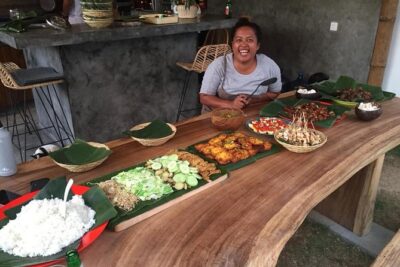
The menu gives you a broad taste of Balinese cooking rather than a single signature dish. You get starters, main courses, and dessert, with enough food for the group to share. It is a generous way to finish a half-day activity, and it makes the $35 price look strong.
I like that you eat your own work while the techniques are still fresh in your mind. You can connect each flavor to a task you performed, whether that was preparing a spice paste, mixing ingredients, or cooking one of the main dishes.
The shared table also helps solo participants meet others without forcing conversation. Families, couples, friends, and individual cooks can all take part. Children have also enjoyed the activity, though younger participants may need help with chopping and hot pans.
The food is the central test, and the class has consistently produced dishes that people found delicious. That is not guaranteed in any group cooking class, but the careful preparation and active instruction give you a good chance of ending with a satisfying feast.
Recipes make the experience useful after Bali
Many cooking classes end when you leave the kitchen. This one gives you recipes and notes to keep, usually in a small recipe book or booklet.
That adds real value. You can use the notes to try the dishes at home and refer back to the ingredient substitutions explained during the lesson. Several participants were particularly pleased to have a practical reminder of the food they had prepared.
The recipes also help you make a more informed choice when ordering Balinese food later in your trip. Once you know the ingredients and preparation, unfamiliar dishes on a menu become easier to understand.
Bring a little room in your luggage if you plan to buy spices or tea at the market. Those purchases are separate from the class price, but they are a useful way to extend the experience into your own kitchen.
Is $35 a fair price?
At $35 per person, this is a good-value half-day activity. The price includes Ubud hotel pickup and drop-off, the market visit for morning participants, drinks, all ingredients, instruction, the meal, a certificate, and the recipes.
Transport alone can add up during a Bali holiday, especially if you are staying outside central Ubud. Here, it is folded into the experience for Ubud-area hotels.
The strongest value comes from the amount of food and participation. You are not paying for a short demonstration followed by a small tasting. You prepare a full multi-course meal and eat it at the end.
The certificate is a pleasant extra, but it is not the reason to book. The real value lies in the market, the setting, the instruction, and the recipes you take home.
At the same price, the morning class offers more. The afternoon session is suitable if your schedule requires it, but the market and plantation sequence make the morning feel like a fuller cultural outing.
Who will enjoy this most?
I would recommend this class to anyone who wants to connect food with everyday life in Bali. It suits couples, families, solo visitors, groups of friends, and people who want a useful rainy-day activity in Ubud.
It is particularly good for:
- First-time visitors who want an introduction to Balinese ingredients
- Home cooks who enjoy practical recipes
- Families with older children and teenagers
- Vegetarians and people with dietary requirements, provided they give advance notice
- Solo participants who like meeting a small group over a shared meal
- Anyone who wants a break from temples, cafés, and sightseeing drives
You may want to skip it if you dislike group activities, have no interest in cooking, or prefer a quiet private lesson. A group of up to 15 means the experience is social, not intimate. The active pace may also feel busy if you want a slow, unstructured morning.
Timing, transport, and booking advice
Allow between 210 minutes and four hours, depending on the class time and whether the market is included. Check the start time before booking, since the morning and afternoon formats are not identical.
Choose the morning class if the market matters to you. It gives you the full sequence: hotel pickup, market, rice plantation, village welcome, cooking lesson, and shared meal.
Ubud-area pickup is included. If you are staying elsewhere, ask about the extra transport charge before paying. The provider offers free cancellation up to 24 hours before the activity, and you can reserve now and pay later, which is useful if your Bali schedule is still changing.
The class is conducted in English. The small-group limit is 15 people, and transport has received a very high satisfaction score, though I would still confirm the pickup details directly.
Should you book Paon Bali Cooking Class?
Yes, if you want a cooking lesson with a genuine sense of place. The market, rice plantation, family compound, and shared meal make this more rounded than a class that begins and ends in a commercial kitchen.
I would book the morning session whenever possible. You get the local market, fruit tasting opportunities, ingredient guidance, and a fuller look at how food fits into life around Ubud.
The class is also a smart choice for families and people with food allergies because the team has shown flexibility with separate ingredients and adapted recipes. Just communicate clearly in advance.
At $35, the combination of transport, food, instruction, and recipes is hard to fault. Skip it only if group cooking does not appeal to you. For everyone else, this is a warm, practical way to spend a morning in Bali and bring a little of that kitchen home.
FAQ
Where does the cooking class take place?
The class takes place in the traditional village of Laplapan, near Ubud, in a family-style Balinese home and kitchen.
Is hotel pickup included?
Yes. Free pickup and drop-off are included for hotels in the Ubud area.
Can I arrange pickup outside Ubud?
Yes. Pickup from other areas may be available as an add-on for an additional fee. Request it when booking.
Does every class include a market visit?
No. The fresh market tour is included with the morning class only. The afternoon class is shorter and does not include the market visit.
How long does the experience last?
The activity lasts between 210 minutes and four hours, depending on the selected class and schedule.
What food will I prepare?
You can expect to prepare three starters, four main courses, and one authentic Balinese dessert. The exact menu may vary, and you can choose meat or vegetarian dishes.
Is the class taught in English?
Yes. The live guide and cooking lesson are in English.
How many people can join the class?
It is a small-group experience limited to 15 participants.
Can dietary requirements be accommodated?
The team has accommodated vegetarian, gluten-free, capsicum-free, garlic-free, and onion-free requests. Tell the provider about your needs in advance so suitable adjustments can be prepared.
What is included in the price?
The $35 price includes Ubud hotel transport, the morning market tour when applicable, Balinese tea and coffee, the cooking lesson, all ingredients, the meal, and a certificate. Recipes and notes are also supplied to take home.
Recently added around Bali
- Bali: Private Lempuyang Temple, Water Temple & Rice Terraces★ 5.0 · 3 reviews
- Bali: Mountain Bike Tour and River Rafting with Lunch★ 5.0 · 3 reviews
- Bali: Sidemen Waterfall tour and temple purification★ 5.0 · 3 reviews
- Bali: Padangbai Blue Lagoon Scuba Diving Private Tour★ 5.0 · 3 reviews
- Bali’s Mystical Jungle Trek & Hidden Waterfall Adventure★ 4.3 · 3 reviews
- From Bali: Mount Bromo & Ijen volcanic private tour★ 5.0 · 3 reviews
- Bali: 7 Day Solo Traveler’s Yoga Retreat In Ubud★ 5.0 · 3 reviews
- Bali: Photo Shoot with a Private Vacation Photographer★ 5.0 · 3 reviews
Balinese Cooking Classes, compared.
Cooking class in the comfort of your own personal villa. Yes, I’ll come to you!
Read our review →Browse the lists this tour appears in