
Reviewed · BALINESE COOKING CLASSES
Balinese Cooking Class in Seminyak
The best part of this experience may happen before the cooking begins: on the optional morning visit to Jimbaran fish market, Chef Putu helps you choose fresh ingredients and explains how Balinese cooks judge quality. Back at The Amala, you prepare a three-course meal, then sit down to eat it.
I like the small-group feel, with a maximum of 10 people, and the practical recipes you can attempt at home. I also like the personal touches: you keep your apron and receive a certificate. The main drawback is that the class can involve more chopping and preparation than hands-on cooking, and one report found the finished food had cooled before it was served.
The three-hour class is a good fit if you want more than a restaurant meal but do not want to spend a full day cooking. You can choose a morning or afternoon session, though the market visit is available only with the morning option.
In This Review
- Key points to know before booking
- Starting at The Amala in Seminyak
- The Jimbaran fish market option
- First look at Balinese ingredients
- Choosing one of three menus
- Cooking the meal, one preparation at a time
- Sitting down to eat what you made
- The useful souvenirs at the end
- What the $66.67 price buys you
- Who will enjoy this class most
- Should you book the Balinese Cooking Class?
- FAQ
- Where does the Balinese cooking class begin?
- Is hotel pickup included?
- How long does the class last?
- Is the market visit included with every session?
- What food menus are available?
- What is the cancellation policy?
Key points to know before booking
- Jimbaran market adds real local context: You can shop for fish, vegetables, herbs, and spices with the chef before class.
- Three menus cover different tastes: Choose seafood and chicken dishes, a second menu with chicken satay, or a fully vegetarian menu.
- The Amala provides a calm setting: Cooking takes place at the Seminyak property, followed by a prepared dining area for your meal.
- Chef Putu receives especially warm praise: Other staff named in class feedback include Manik, Evi, and Christ.
- Transfers are limited by location: Round-trip private pickup is included within the Seminyak area, not all of Bali.
- The class suits older children and adults: The minimum age is 12, and at least two people are required.
Starting at The Amala in Seminyak
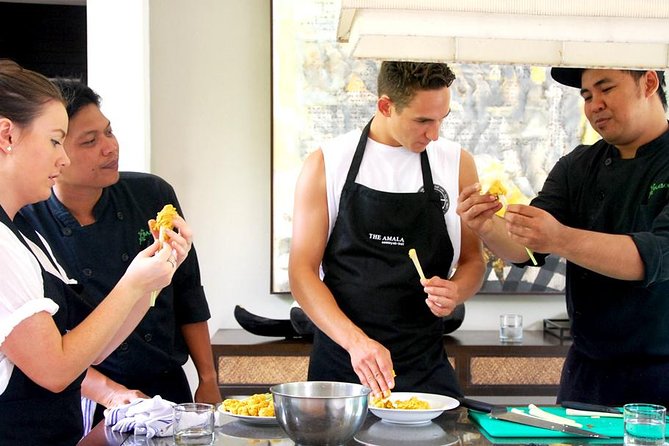
Your cooking class begins at The Amala Boutique Retreat on Jalan Kunti I in Seminyak. The setting is one of the experience’s pleasant surprises. You are not cooking in a noisy restaurant kitchen, but in a more relaxed property where the staff prepare an attractive place for you to eat afterward.
Pickup and return are included for hotels within the Seminyak area. This is useful because Seminyak traffic can make even a short transfer slow and awkward. The meeting point is still worth checking carefully when you book, especially if you are staying in Kuta, Nusa Dua, or farther south. One booking from Nusa Dua involved an extra transfer charge, so confirm the pickup boundary rather than assuming all Bali hotels are covered.
The class lasts about three hours. Morning participants meet the chef at 11:00 AM, while afternoon participants begin at 4:00 PM. The morning schedule includes the optional market visit at 9:30 AM, giving you time to see the buying process before cooking starts.
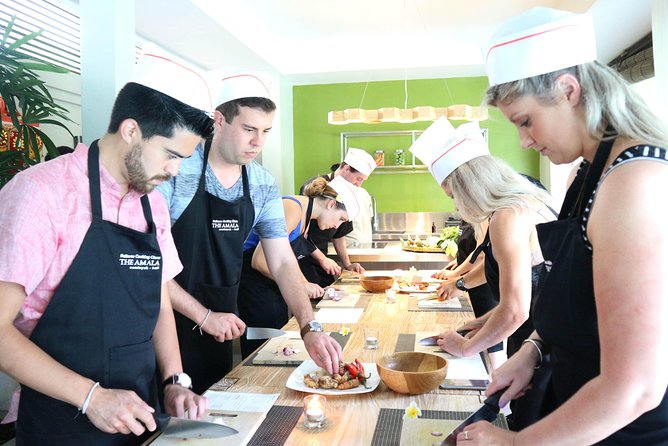
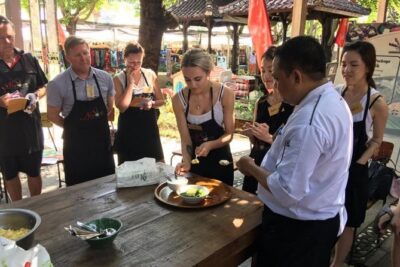
The class is capped at 10 people, with some sessions described as having around six participants. That size matters. You get a turn with the knife, cooking utensils, and ingredients, rather than simply watching a demonstration from the back of a large room.
More Balinese cooking classes in Seminyak:
- Ubud: Balinese Cooking Class at an Organic Farm
★ 5.0 · 1,786 reviews - From Ubud: Authentic Cooking Class in a Local Village
★ 4.9 · 1,325 reviews - Seminyak: Balinese Cooking Class & Market Tour
★ 4.9 · 458 reviews
The Jimbaran fish market option
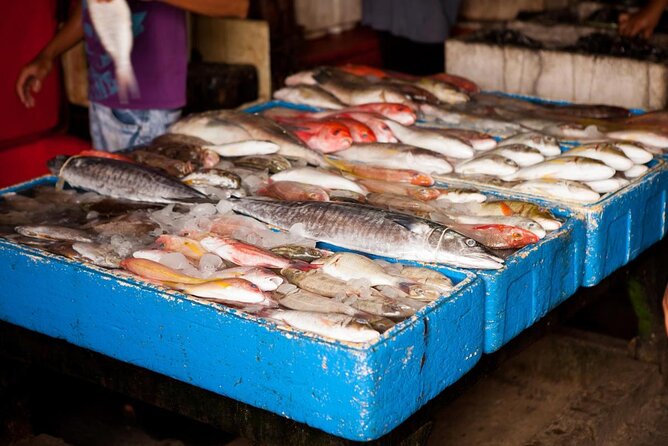
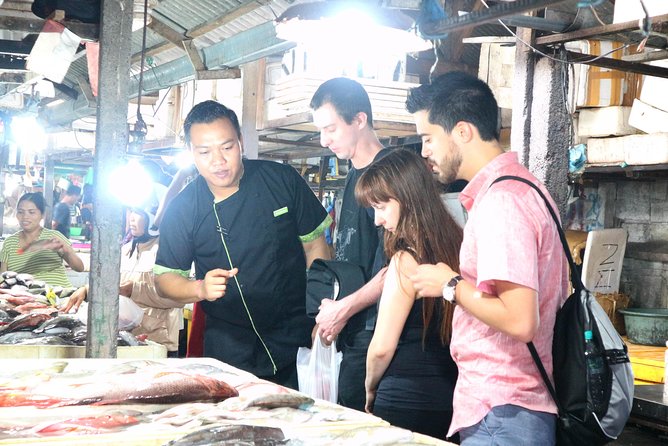
If you choose the morning market add-on, you meet the chef at 9:30 AM and visit Jimbaran fresh fish market. This is the most distinctive part of the outing because it connects your meal to the way ingredients are selected and bought.
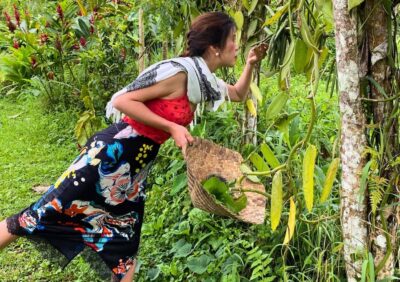
Chef Putu has shown participants how to choose a fresh red snapper, including the useful clue of looking at the eyes. You can also see vegetables, fruit, herbs, spices, and other produce used in Balinese kitchens. The chef helps select ingredients for the class, so this is not just a quick walk through a market with no connection to the cooking.
The market visit requires at least two people per booking. A solo booking can still add it, but an extra charge of Rp100,000 net applies. The visit is not included with the afternoon session, so choose your time carefully if shopping with the chef is a priority.
This stop also brings the strongest sense of everyday Bali. You see where some of the fish and produce begin their journey, and you learn small buying tips that are difficult to pick up from a recipe card. The trade-off is an early start. You need to be ready at 9:30 AM, then continue on to the cooking class at 11:00 AM.
First look at Balinese ingredients
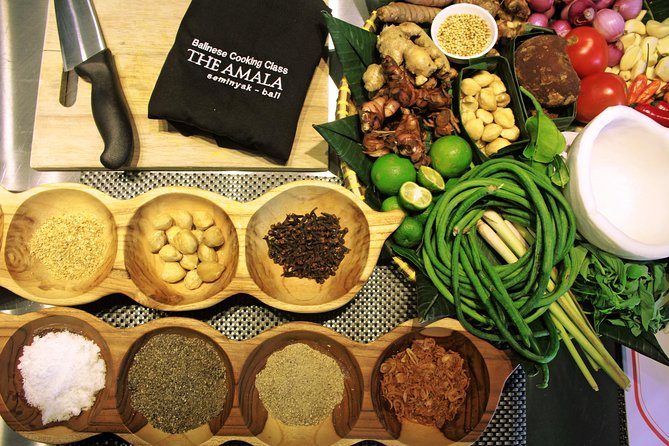
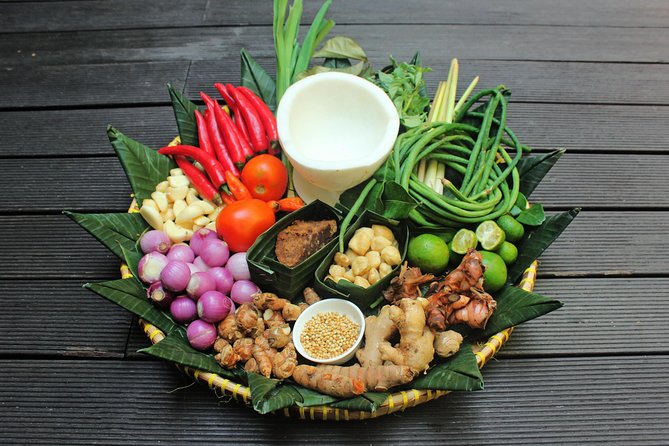
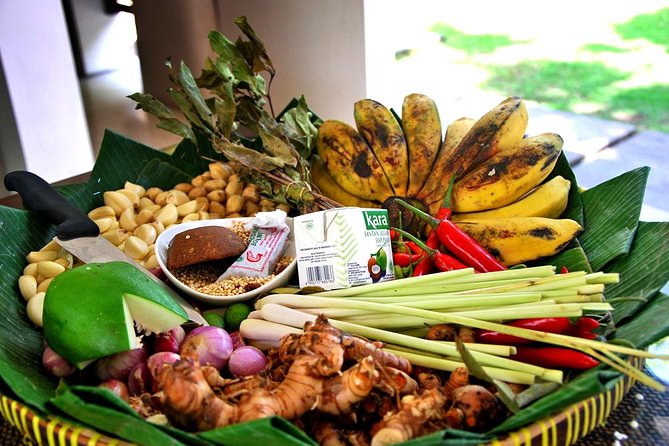
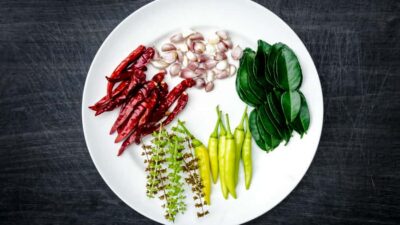
At the start of class, the chef introduces the ingredients and equipment. This is where the food begins to make more sense. Balinese cooking often depends on a carefully blended spice base, and the class explains how that base supports several dishes.
The chef also gives practical advice about ingredients that may be difficult to find outside Indonesia. That makes the class more useful than a one-time meal. You can ask what substitutes might work at home, and the recipes are supplied so you have something to follow later.
The teaching style appears to be friendly and easy to follow. Chef Putu is the main name associated with the class, while Manik and Evi have also helped lead sessions. The class is designed to include you in the preparation, though you should set your expectations properly. Much of the work involves chopping, mixing, shaping, and preparing ingredients under supervision. If you want a chef-school lesson with advanced techniques, this will feel basic. If you want a clear introduction to Balinese flavors, that simplicity is a strength.
Choosing one of three menus
Everyone in your session chooses the same menu, so decide as a group if you are booking with friends or family. There are two standard menus and one vegetarian choice.
Menu 1 includes:
- Lawar salad with green beans, fresh coconut, and chicken
- Tum ikan, fish steamed in a banana leaf
- Dadar gulung, a coconut pancake with palm sugar and grated coconut
This menu gives you a good spread of Balinese cooking methods. You work with a fresh salad, prepare fish in a banana leaf parcel, and finish with a sweet coconut dessert. It is a useful choice if you want a menu that feels varied without being too heavy.
Menu 2 includes:
- Jukut gedang mekuah, young papaya soup with seafood
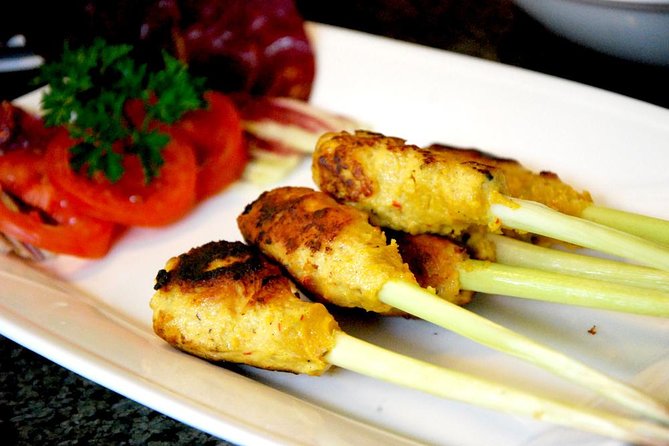
- Sate lilit ayam, chicken satay wrapped around a lemongrass stick
- Steamed rice
- Godoh biu, Balinese fried banana
The chicken satay is the hands-on centerpiece here. Instead of placing meat on an ordinary skewer, the mixture is shaped around lemongrass, which gives the dish its distinctive form and aroma. The soup and fried banana also make this menu feel generous, and portions have been described as plentiful.
The vegetarian menu includes:
- Gado-gado with vegetable salad and peanut dressing
- Pepes tahu, bean curd steamed in a banana leaf
- Bubur injin, Balinese black rice pudding
This is more than simply removing meat from a standard menu. The tofu parcel and black rice pudding give you two dishes with their own texture and character. The menu works well for vegetarians, though everyone in the class must choose the same menu, so your whole group should agree in advance.
A few more Seminyak experiences worth comparing
- Ubud: Handcrafted Silver Jewelry Workshop
★ 4.3 · 1,214 reviews - Legian Beach, Bali: Beginner or Intermediate Surf Lessons
★ 4.9 · 1,019 reviews - Bali: Canggu Jewelry Making Class with Creative Studio Vibes
★ 4.9 · 1,003 reviews - Bali: Canggu & Uluwatu Puppy Yoga Class & Refreshing Drinks
★ 4.8 · 891 reviews
Cooking the meal, one preparation at a time
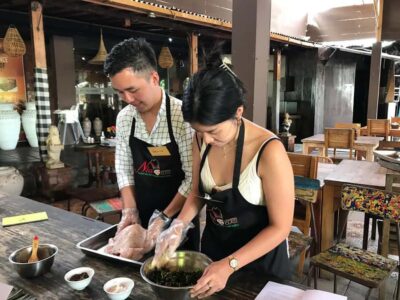
Once the introduction is finished, you start the first preparation under the chef’s supervision. The staff explain how to handle the ingredients, prepare the spice mixture, and assemble the dishes.
You are likely to rotate through several jobs rather than cook every dish from beginning to end alone. That keeps the class moving and allows the food to be ready within the three-hour schedule. It also explains why some people may find the session more preparation-focused than cooking-focused.
The banana leaf dishes are a particularly good lesson. The leaves are used to wrap fish or tofu before steaming, adding a traditional presentation and helping hold the filling together. The satay made around lemongrass offers another memorable technique, while the coconut desserts show how often Balinese cooking moves between savory and sweet uses of the same basic ingredients.
Chef Putu’s explanations are a major part of the value. The class is not only about following instructions. You learn why a spice base matters, how to choose ingredients, and how to adapt recipes when certain items are unavailable at home. You should ask questions as you go. The class format leaves room for conversation, and the chef has been praised for answering questions and keeping people involved.
Sitting down to eat what you made
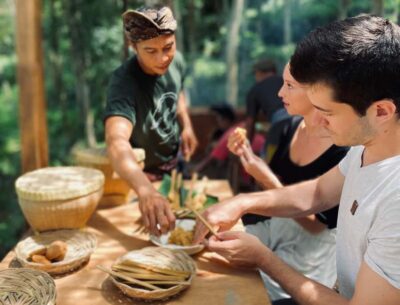
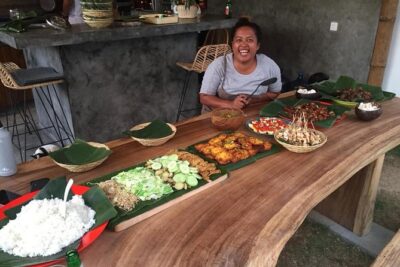
At the end of the session, the staff arrange a dining area and serve your finished dishes. Morning participants eat around 1:00 PM, while the afternoon group eats around 6:00 PM. The food is intended as lunch or dinner, not just a small tasting.
Eating the meal is the payoff. You have seen the ingredients, prepared the dishes, and watched the food come together. Even a simple dish such as fried banana feels different when you know how it was made.
There is one practical weakness to note. One person found the food had cooled by the time the group sat down. This may depend on timing and the number of dishes being finished, but it is worth mentioning if you care most about restaurant-style hot service. The meal remains part of the class rather than a separate dining experience, so the emphasis is on participation and learning.
The food itself has received strong praise, including the vegetarian dishes and the menu that avoids curry-heavy flavors. If you dislike curry, the chef can still produce food that tastes distinctly Balinese without relying on the curry profile you may associate with Southeast Asian cooking.
The useful souvenirs at the end
You receive more than a full stomach. The class includes a certificate from the chef, and you can keep your apron as a souvenir. These are small touches, but they make the activity feel finished and give you something useful to take home.
The recipes are another important benefit. You can try the dishes again for friends and family, although ingredients such as banana leaves, fresh coconut, specialty herbs, and certain fish may not be easy to find everywhere. The chef’s advice about substitutes helps, but you should not expect every recipe to transfer perfectly to a standard supermarket kitchen.
The certificate is fun rather than formal. It does not turn you into a Balinese chef, but it gives the occasion a pleasant ending, especially for families and couples who want a keepsake from Bali.
What the $66.67 price buys you
At $66.67 per person, this is not the cheapest cooking lesson in Bali. The price makes more sense when you count the included meal, private round-trip transfer within Seminyak, chef instruction, ingredients, apron, and certificate.
The optional market visit adds the most value for me. It gives the class a clear beginning and shows how the chef chooses fish and produce. If you are comparing this with a basic kitchen lesson, the market connection helps justify the higher cost.
The value is weaker if you are staying outside Seminyak and face an additional transfer charge. It is also less compelling if you mainly want to eat Balinese food rather than prepare it. In that case, a restaurant meal will cost less and require less time.
For a small group, though, the price covers a complete half-day plan with transport, instruction, and lunch or dinner. Ten is the maximum, and smaller sessions may give you more direct time with the chef. A minimum of two people applies, so this is not designed as a spontaneous one-person activity unless you confirm the arrangement first.
Who will enjoy this class most
I would recommend this experience to you if you like food, markets, and a little guided participation. It works especially well for couples, friends, and families with children aged 12 or older. The vegetarian menu makes it practical for groups with different eating habits, provided everyone selects that same menu.
It is also a good choice if you want to take home a skill rather than another souvenir. You learn several basic Balinese preparations, see how local ingredients are selected, and get recipes to try later.
You may want to skip it if you dislike chopping or prefer to stay on the sidelines. The class is not a theatrical cooking show. Your participation is central, and the work includes preparation as well as the more exciting moments at the stove.
Book the morning option if the market matters to you. Choose the afternoon class if you want a simpler schedule and are happy to go directly to The Amala.
Should you book the Balinese Cooking Class?
Yes, if you want a friendly, food-centered activity with a real connection to local ingredients. The strongest version of the experience is the morning class with the Jimbaran market visit, followed by Menu 1 or Menu 2 and the meal at The Amala.
Before paying, confirm three things: your hotel falls within the Seminyak transfer area, your group can agree on one menu, and you are comfortable with a class that includes plenty of chopping and preparation. If those details suit you, $66.67 is fair for the market option, cooking lesson, meal, transfers, apron, and certificate.
FAQ
Where does the Balinese cooking class begin?
The class begins at The Amala Boutique Retreat, Jl. Kunti I No.108, Seminyak, Bali. The activity ends back at the meeting point.
Is hotel pickup included?
Round-trip private transfer is included for hotels within the Seminyak area. The supplied details do not state that pickup is included from every part of Bali, so confirm your hotel location before booking.
How long does the class last?
The cooking class lasts approximately three hours. The morning class begins at 11:00 AM and the afternoon class begins at 4:00 PM. The optional morning market visit starts at 9:30 AM.
Is the market visit included with every session?
No. The Jimbaran fish market visit is an optional add-on available with the morning session only. It requires at least two people per booking, and a solo booking requires an extra Rp100,000 net charge.
What food menus are available?
You can choose Menu 1 with lawar salad, steamed fish, and dadar gulung; Menu 2 with young papaya seafood soup, chicken satay, rice, and fried banana; or a vegetarian menu with gado-gado, steamed tofu, and black rice pudding. Everyone in the class follows the same menu.
What is the cancellation policy?
You can cancel at least 24 hours before the start time for a full refund. Changes or cancellations made less than 24 hours before the start time are not accepted for a refund. If poor weather cancels the activity, you will be offered another date or a full refund.
Recently added around Seminyak
- Bali: Denpasar Market Food Tour with 7 Tastings Must-Try★ 3.9 · 3 reviews
- Gong Sound Healing on Nusa Lembongan, Bali★ 5.0 · 3 reviews
- Ubud: Healing & Purification with Shaman at Hidden Temple★ 3.3 · 3 reviews
- Private Tour: Half Day Tanah Lot Sunset Tours★ 5.0 · 3 reviews
- Bali: Customized Uluwatu Tour Including Transfer Hotel★ 3.9 · 3 reviews
- Bali: Blue Lagoon Snorkeling Tour with Bali Quad Bike★ 3.4 · 3 reviews
- Royal Orchid Spa 90 Minutes Relaxing Massage.★ 4.5 · 3 reviews
- Full-Day Customized Amazing Private Tours in Bali★ 5.0 · 3 reviews
Balinese Cooking Classes, compared.

Cooking class in the comfort of your own personal villa. Yes, I’ll come to you!
Read our review →Browse the lists this tour appears in