
Reviewed · BALINESE COOKING CLASSES
Bali: Private Balinese Cooking Class in a Family Home
The best part of this Bali cooking class is not simply learning to make satay or curry. It is being welcomed into a real Balinese family home, often in the countryside east of Ubud, then preparing food alongside the people who cook it every day. You visit a local market, handle the ingredients, and share the finished meal in an informal family setting.
I like the market visit because it gives the cooking a clear starting point. You see the vegetables, herbs, spices, and other ingredients before they reach the kitchen. I also like the hands-on format: you do not just watch a chef perform. You chop, mix, grill, and cook your own 5 to 6 dishes with help from an experienced instructor.
The main drawback is distance. From Seminyak or Nusa Dua, the drive can take two hours each way, and even from other parts of southern Bali, this may become a full-day outing. Confirm the exact family-home location before booking, especially if you want a short activity close to your resort.
In This Review
- Key points to know before booking
- Why this cooking class feels different
- The market visit starts the lesson
- The journey to the village can be long
- Entering a traditional Balinese family home
- Learning the basic Balinese spice paste
- What you cook on the standard menu
- The vegetarian menu is a full meal
- Eating what you prepared
- Optional add-ons and what they are worth
- Who should book it
- Should you book this Bali cooking class?
- FAQ
- How long does the Balinese cooking class last?
- Is hotel pickup and drop-off included?
- Where does the cooking class take place?
- Is the activity private?
- Which menu options are available?
- What language is the class conducted in?
- Is the market visit guaranteed?
- Can children join the class?
- Are food allergies accommodated?
- Can I cancel the activity?
Key points to know before booking
- A family home, not a restaurant school: You cook in a traditional Balinese household and meet members of the family.
- Market shopping comes first: You visit a local market to see and select fresh ingredients, although market activity can vary by time and local rules.
- Two menus are available: Choose the standard non-vegetarian menu or the vegetarian menu before the class.
- You cook 5 to 6 dishes: Expect a proper meal, including sauces, vegetables, a main dish, and dessert.
- The drive is part of the day: Hotel pickup and drop-off are included, but the route can be long from coastal resort areas.
- Add-ons change the shape of the experience: Options include Luwak coffee, a jungle swing, Polaroid photos, and one or two hours of traditional massage.
Why this cooking class feels different
Bali has many cooking classes, but this one puts the household at the center. You are not simply in a polished demonstration kitchen with a chef at the front. You are invited into a local family setting, where the food connects with daily customs, village life, and Balinese Hindu traditions.
That setting matters. Cooking becomes a way to understand how ingredients are treated, how food is shared, and why preparation methods are so precise. Several guides also use the drive to explain Balinese culture, village customs, and religious traditions. Sana, Indah, Putu, Nyoman, Wayan Sana, and other guides have led different departures, so the exact host and guide can vary.
The class is private, which makes it easier to ask questions and work at your own pace. You can book alone, as a couple, or with a private group. It also suits families with older children, though the published age guidance says children under 10 are not suitable for the activity. One older account describes younger children enjoying the cooking, but you should follow the current age restriction when booking.
More Balinese cooking classes in Bali:
- Ubud: Balinese Cooking Class at an Organic Farm
★ 5.0 · 1,786 reviews - From Ubud: Authentic Cooking Class in a Local Village
★ 4.9 · 1,325 reviews - Seminyak: Balinese Cooking Class & Market Tour
★ 4.9 · 458 reviews
The market visit starts the lesson
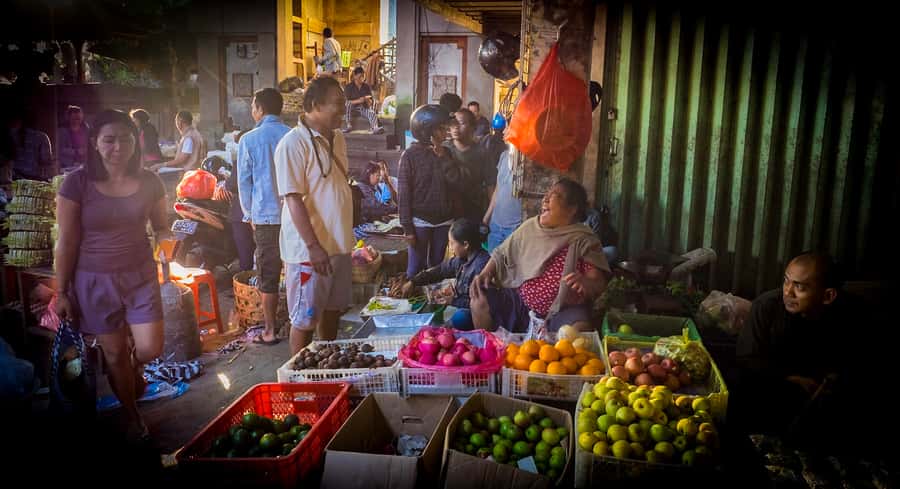
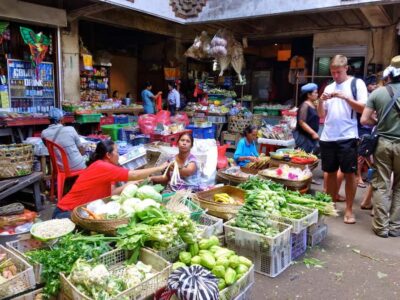
The day begins with hotel pickup, followed by a drive to a local market. The market is not just a quick shopping stop. It gives you a chance to see the raw materials of Balinese cooking before they are trimmed, ground, or turned into sauces.
Your guide can explain the ingredients and answer questions as you walk. You might find fresh vegetables, herbs, chilies, spices, coconut, noodles, meat, or fish, depending on the market and the menu. You select ingredients with the guide’s help, looking for good quality rather than simply buying a fixed basket prepared in advance.
Do not expect the same market scene at every departure. Market availability can change with the time of day, local regulations, or religious celebrations. One departure had to adjust its route because much of the market was closed for a celebration. The guide adapted by visiting other nearby places, including a coffee stop.
This flexibility is useful, but it also means you should not treat the market as a guaranteed long shopping session. Its value lies in the explanation and local context as much as in the buying itself.
The journey to the village can be long
After the market, you continue to the family home. The setting is often in a village or countryside area east of Ubud, and the drive can show you parts of Bali that are easy to miss if you stay around Seminyak, Kuta, or Nusa Dua.
Guides such as Putu and Wayan Sana have used the road time to point out places of cultural interest and explain local life. Some departures have included stops at coffee plantations, and one route even continued toward Ubud afterward. These extras are not guaranteed as part of every version, so check which add-ons or stops are attached to your chosen option.
The included vehicle and hotel transfers make the long route much easier than arranging separate transport. Still, comfort depends on the size of your private group and the vehicle provided. A group of five found the car cramped on a journey from Nusa Dua, while the door-to-door service was otherwise praised for being well organized.
I would ask two questions before paying: how long the drive is from your hotel, and how many people will share the vehicle. The class itself lasts about four hours within a six-hour activity, so a distant pickup can turn this into a major day trip rather than a quick cooking lesson.
Entering a traditional Balinese family home
At the house, you receive a welcome drink before the food preparation begins. Families have welcomed people with coffee, tea, and local snacks, then introduced the menu and the ingredients.
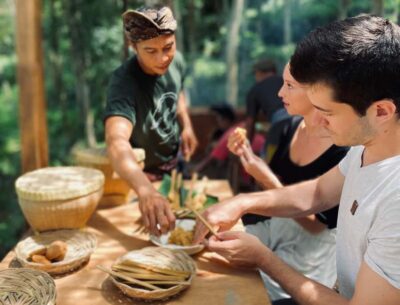
The home setting is the heart of the experience. You might meet a mother, aunt, brother, daughter-in-law, or several family members, depending on the host. Some families also show parts of their property, such as rice fields, cattle, or chickens. These details help you see how cooking fits into village life rather than treating Balinese food as an isolated restaurant product.
You should arrive with respect for the household. This is a private family space, not a public attraction. Follow your instructor’s directions, observe local customs, and dress and behave in a way that suits a community home. Alcohol and drugs are not allowed, and pets are not permitted during the activity.
The language of instruction is English. Guides such as Indah and Sana have been praised for explaining both the food and the culture clearly. In some cases, a family member may speak little or no English, so the guide acts as the main bridge between you and the kitchen. If direct instruction from the cook matters greatly to you, request a guide who can translate throughout the class.
A few more Bali experiences worth comparing
- Ubud: Handcrafted Silver Jewelry Workshop
★ 4.3 · 1,214 reviews - Legian Beach, Bali: Beginner or Intermediate Surf Lessons
★ 4.9 · 1,019 reviews - Bali: Canggu & Uluwatu Puppy Yoga Class & Refreshing Drinks
★ 4.8 · 891 reviews - Bali: Seminyak Jewelry Making Class with Gold Plating Option
★ 4.8 · 436 reviews
Learning the basic Balinese spice paste
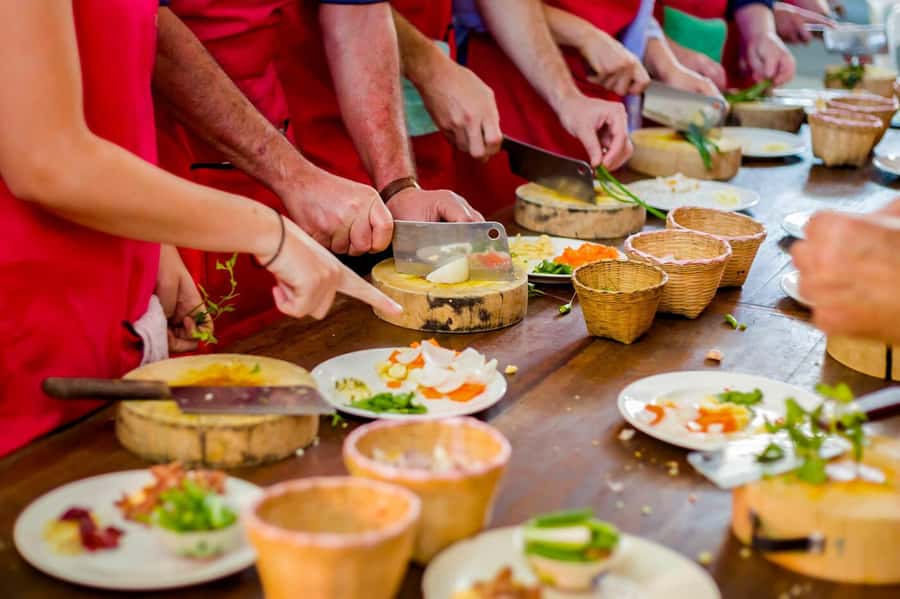
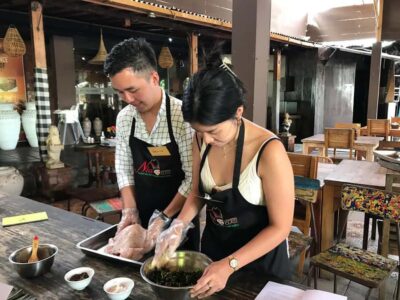
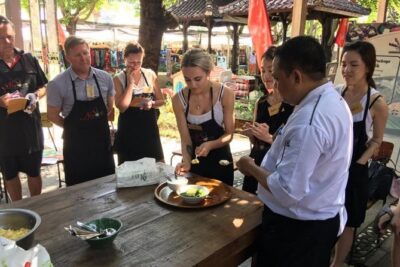
The class begins with a demonstration. The instructor prepares the dishes while you watch, then you move to the workstations and start cooking. Each class includes a fully equipped workspace, apron, and utensils.
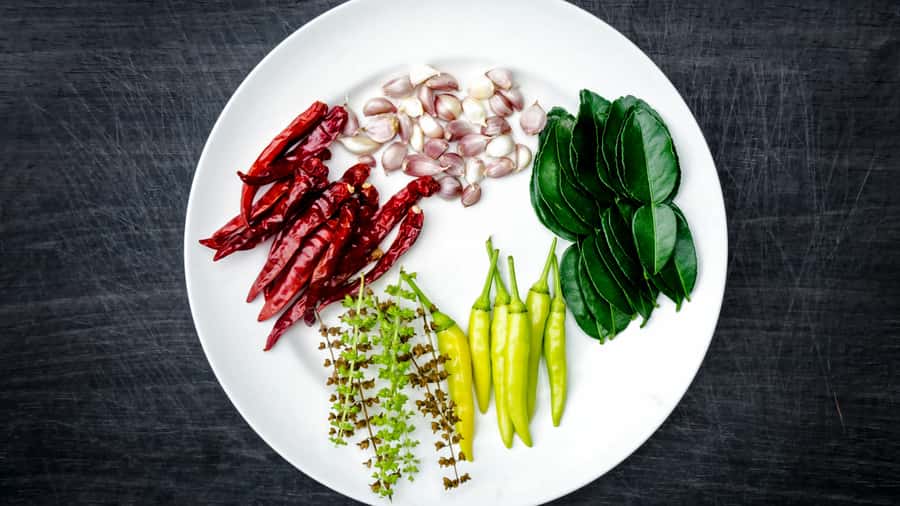
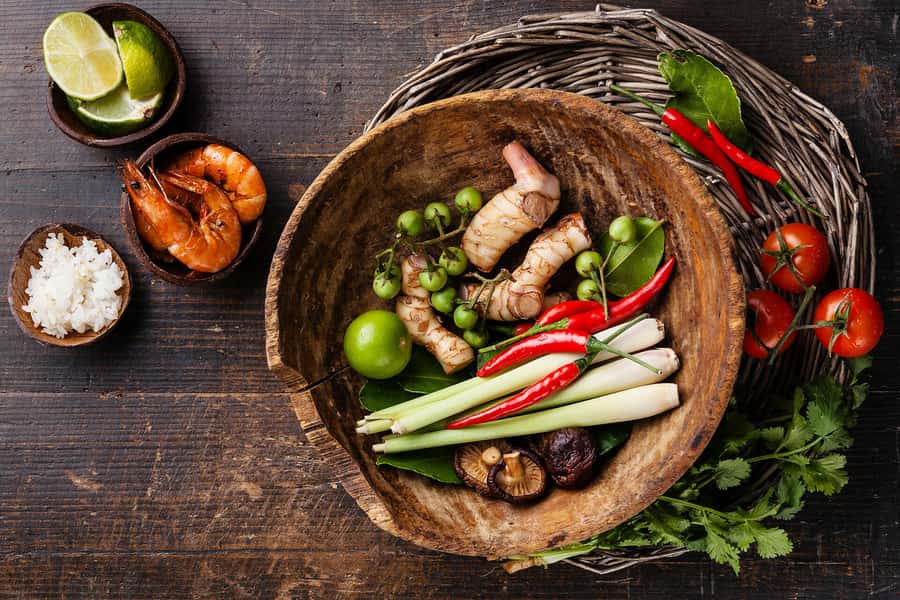
The menu shows why this is more than a simple recipe card session. You work with a basic yellow sauce and peanut sauce, then use those foundations in vegetable dishes and other recipes. The preparation itself is part of the lesson. Balinese food depends on finely chopped herbs, spices, chilies, shallots, garlic, and other aromatics, and the cutting technique can affect the final taste.
You receive help as you go, rather than being left alone with unfamiliar ingredients. The instructors are described as patient and encouraging, which matters if you have little kitchen experience. You can also ask about substitutions and methods, though the supplied information does not promise that every ingredient can be changed.
Two breaks are included. You sample fresh tropical fruit and Loloh Cem Cem, a homemade herbal drink associated with Bali. These pauses break up the work and give you a taste of local ingredients beyond the main meal.
What you cook on the standard menu
The standard menu is a large meal with meat, fish, vegetables, noodles, and dessert. The exact recipes are:
- Basic yellow sauce and peanut sauce with vegetables
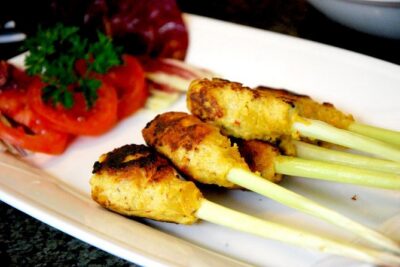
- Sate Lilit Bawi, charcoal-grilled pork sticks
- Pepes Ikan, fish cooked in banana leaves with herbs and spices
- Chicken Kare, Balinese fried chicken
- Lawar Bali, a mixture of vegetables, coconut, meat, herbs, and spices
- Mie Goreng, fried noodles
- Kolak Pisang, banana braised in palm sugar gravy
You are not necessarily cooking every item listed as a separate full portion. The activity describes 5 to 6 recipes, while the standard menu contains seven named preparations. Expect a generous cooking session and confirm the final number with the provider if you need exact timing.
Sate Lilit is a particularly useful dish to learn because it shows a method associated with Balinese cooking. The seasoned mixture is shaped around sticks and grilled over charcoal. One class also highlighted that its satay recipe does not use peanuts and requires very fine chopping, a useful detail if you plan to recreate it at home.
Pepes Ikan adds another distinct technique. Fish and seasoning are wrapped in banana leaves before cooking, which gives you a practical lesson in using local plant materials as part of food preparation. Lawar Bali brings together vegetables, coconut, meat, herbs, and spices in one dish, while Kolak Pisang provides a simple sweet finish with palm sugar.
The vegetarian menu is a full meal
The vegetarian option is not a reduced version of the standard class. It includes its own set of substantial dishes:
- Basic yellow sauce and peanut sauce with vegetables
- Balinese vegetable soup, also described as a Balinese green curry
- Pepes Tempeh, tempeh cooked in banana leaves with herbs and spices
- Tempeh Manis, stir-fried tempeh with sweet soy sauce
- Gado Gado, vegetable salad with peanut dressing
- Kolak Pisang, banana braised in palm sugar gravy
This menu gives you several ways to work with tempeh, coconut, vegetables, herbs, and peanut dressing. It is a good choice if you want to understand how Balinese cooks build satisfying flavor without meat or fish.
Choose the menu before the class. Do not assume you can change from one to the other after arrival, since the ingredients and preparation are arranged in advance.
The vegetarian menu still includes possible allergens, especially peanuts and soy. Tell the team about allergies or dietary restrictions before booking. The activity is specifically marked as unsuitable for people with food allergies, so this is not the right choice if your safety depends on strict allergen control.
Eating what you prepared
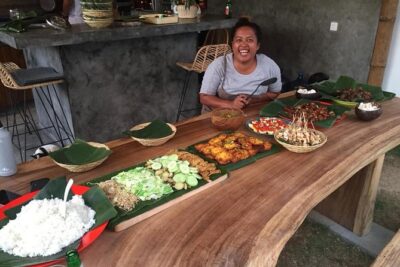
Once the cooking is complete, you move to the dining area and eat the food you made. The atmosphere is informal, and meals may be shared with the family or driver, depending on the departure.
This is where the class pays off. You are not sampling a standard restaurant menu. You taste the exact dishes you prepared, with the textures and seasoning shaped by your own work and the instructor’s guidance. Several people have described the meal as the best Balinese food they ate during their stay, but your results will depend partly on how actively you take part.
You can take the remaining dishes home after the class. That is a practical bonus, especially after a six-hour day. Ask about containers and how much food will be left, since the amount will depend on your group and appetite.
A handwritten ingredient list has also been provided on some departures. Keep it, take notes, and photograph the work as you go if you want to repeat the recipes later. The activity’s Polaroid camera and 10 photographs are an optional add-on, not a standard inclusion.
Optional add-ons and what they are worth
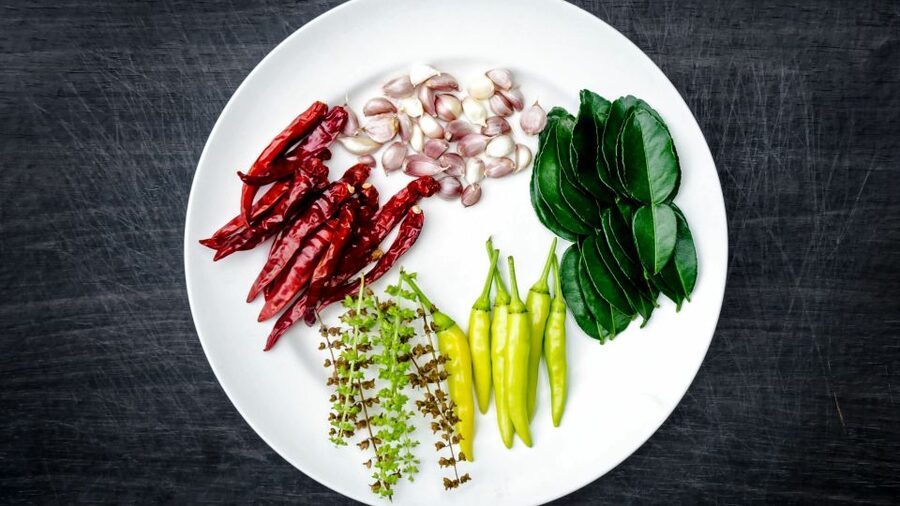
You can add extras to shape the day around your interests. Available options may include:
- Luwak coffee tasting
- Jungle swing with coffee
- One-hour traditional massage
- Two-hour traditional massage
- Female guide
- German-speaking guide
- Japanese-speaking guide
- Korean-speaking guide
- Polaroid camera with 10 photographs
Some add-ons are available only with certain booking options, so check the exact package rather than assuming everything can be added.
The coffee stop can work well if you already want to visit a plantation or enjoy learning about Bali’s coffee culture. The jungle swing is a different sort of activity, aimed more at photos and scenery than food. A massage changes the outing from a cooking-focused day into a broader cultural and relaxation package.
Language and guide add-ons may be worth considering for a private group with specific needs. The standard instruction is in English. The activity also offers a female guide option, which some people may prefer for comfort or cultural reasons.
At $52 per person, the base price is fair if you use the transport, market visit, private instruction, meal, and family setting. You would be paying not only for recipes, but also for a full day of driving and hosting. The value drops if your hotel is very far away and you want only a short kitchen lesson. In that case, a nearby cooking school may be more efficient, though it is unlikely to offer the same household setting.
Who should book it
I would choose this experience if you want personal contact with Balinese family life, not just a polished food demonstration. It suits people who enjoy asking questions, trying unfamiliar ingredients, and giving up a large part of the day for a slower cultural experience.
It is especially good for couples, solo visitors, private families with older children, and anyone who wants a break from Bali’s resort areas. Solo booking is possible within the private format, and the guide can make the day feel social rather than awkward.
You should think twice if you dislike long drives, have limited mobility, or need strict control over ingredients. The activity is not suitable for wheelchair users, children under 10, or people with food allergies. The cooking space is traditional and hands-on, so it may not provide the same accessibility or precision as a modern culinary studio.
Free cancellation is available up to 24 hours before the activity, and you can reserve now and pay later. Those terms help if your Bali schedule is still changing, but they do not solve the distance issue. Confirm pickup time, location, menu, and add-ons before the day arrives.
Should you book this Bali cooking class?
Book it if you want to cook a substantial Balinese meal, meet a local family, and see village life beyond the resort belt. The strongest parts are the private format, the market stop, the patient guidance, and the chance to eat food prepared by your own hands.
Skip it if you are staying far from the class location and cannot spare a full day. The drive may take as long as the cooking itself. For everyone else, the combination of food, family hospitality, cultural explanation, and practical recipes makes this one of the more meaningful ways to spend a day in Bali.
FAQ
How long does the Balinese cooking class last?
The complete activity lasts six hours. The hands-on cooking session takes about four hours, with the remaining time used for hotel transfers, the market visit, and related stops.
Is hotel pickup and drop-off included?
Yes. Hotel pickup and drop-off are included in the activity.
Where does the cooking class take place?
The class takes place in a traditional Balinese family home, often in a village or countryside area east of Ubud. Confirm the exact location because driving times vary by hotel.
Is the activity private?
Yes. The experience is offered for a private group.
Which menu options are available?
You can choose a standard non-vegetarian menu or a vegetarian menu. The menu must be selected before the class.
What language is the class conducted in?
The standard instruction is in English. German, Japanese, and Korean-speaking guides may be available as optional add-ons.
Is the market visit guaranteed?
A local market visit is included, but market availability can change with the time of day and local regulations.
Can children join the class?
Children must be accompanied by an adult, and the activity is listed as unsuitable for children under 10 years old.
Are food allergies accommodated?
The activity is listed as unsuitable for people with food allergies. Some dishes may contain peanuts, soy, spices, or animal products, so you should tell the team about dietary restrictions before booking.
Can I cancel the activity?
You can cancel up to 24 hours in advance for a full refund. Reserve-now, pay-later booking is also available.
Recently added around Bali
- Bali: Private Lempuyang Temple, Water Temple & Rice Terraces★ 5.0 · 3 reviews
- Bali: Mountain Bike Tour and River Rafting with Lunch★ 5.0 · 3 reviews
- Bali: Sidemen Waterfall tour and temple purification★ 5.0 · 3 reviews
- Bali: Padangbai Blue Lagoon Scuba Diving Private Tour★ 5.0 · 3 reviews
- Bali’s Mystical Jungle Trek & Hidden Waterfall Adventure★ 4.3 · 3 reviews
- From Bali: Mount Bromo & Ijen volcanic private tour★ 5.0 · 3 reviews
- Bali: 7 Day Solo Traveler’s Yoga Retreat In Ubud★ 5.0 · 3 reviews
- Bali: Photo Shoot with a Private Vacation Photographer★ 5.0 · 3 reviews
Balinese Cooking Classes, compared.
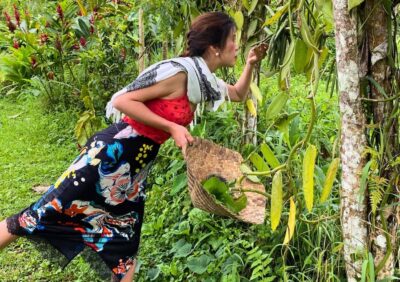
Cooking class in the comfort of your own personal villa. Yes, I’ll come to you!
Read our review →Browse the lists this tour appears in