
Reviewed · BALINESE COOKING CLASSES
Ubud: Balinese Cooking Class at an Organic Farm
The best part of this Ubud cooking class happens before you touch a knife. You visit a local market, walk through an organic farm, and pick the vegetables that will become your lunch or dinner. I like the market-and-farm combination, and I like that you cook a full spread rather than one token dish. The main thing to consider is the travel time: the farm can be about an hour from central Ubud, and traffic may stretch the day.
I also like the friendly, practical teaching. Guides including Buda, Depi, and Wayan explain the food clearly, keep the class moving, and often take photos or videos during the session. With a maximum of 14 people and cooking stations shared by two, you get a social class rather than a private lesson, but the setup still gives you plenty to do.
In This Review
- Key points at a glance
- Start early for Ubud’s market
- The ride from Ubud to a farm kitchen
- A welcome breakfast among the plants
- Cooking begins with Base Gede
- The vegetarian menu is a real alternative
- What the class feels like in practice
- Six dishes, then a very large meal
- Why the $32 price works
- Who should book this farm class?
- Small details that make the day better
- Should you book it?
- FAQ
- How much does the Balinese cooking class cost?
- How long does the experience last?
- Is transport from Ubud included?
- Does every class visit a local market?
- What happens at the organic farm?
- How many dishes will I cook?
- Is there a vegetarian menu?
- Are vegan participants catered for?
- How large are the groups?
- What is included with the meal and recipes?
Key points at a glance
- The early class includes a local market visit, with fruit tasting and explanations of Balinese ingredients.
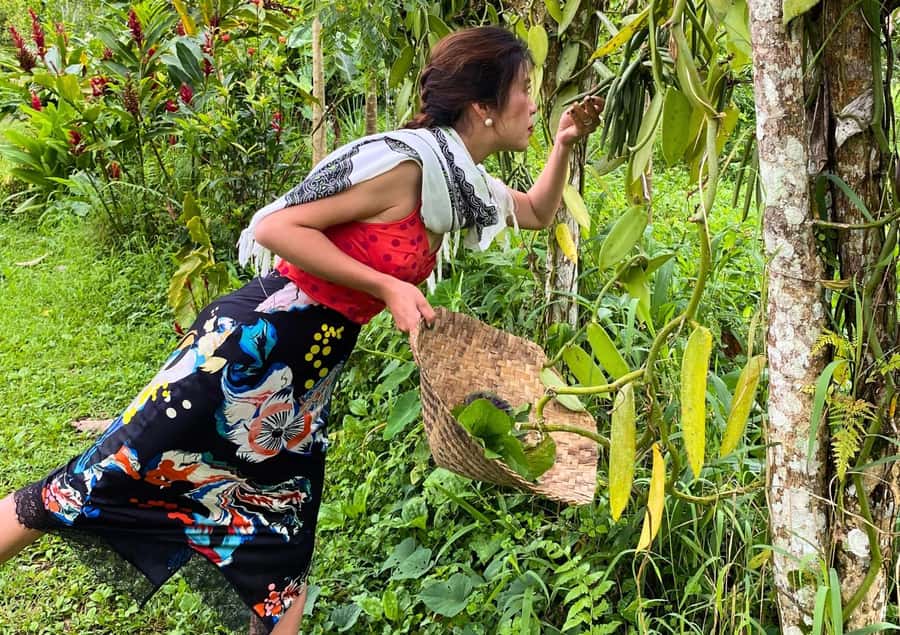
- You harvest vegetables at the organic farm, then use them in the cooking class.
- You prepare six Balinese dishes, including spice paste, curry, satay, vegetables, tempe, fish, and dessert.
- Vegetarian and regular menus are available, with plant-based dishes prepared separately when requested.
- The open-air farm kitchen feels calm and rural, a welcome change from central Ubud traffic.
- The $32 price includes transport from an Ubud meeting point, food, drinks, the farm tour, and recipes to take home.
Start early for Ubud’s market
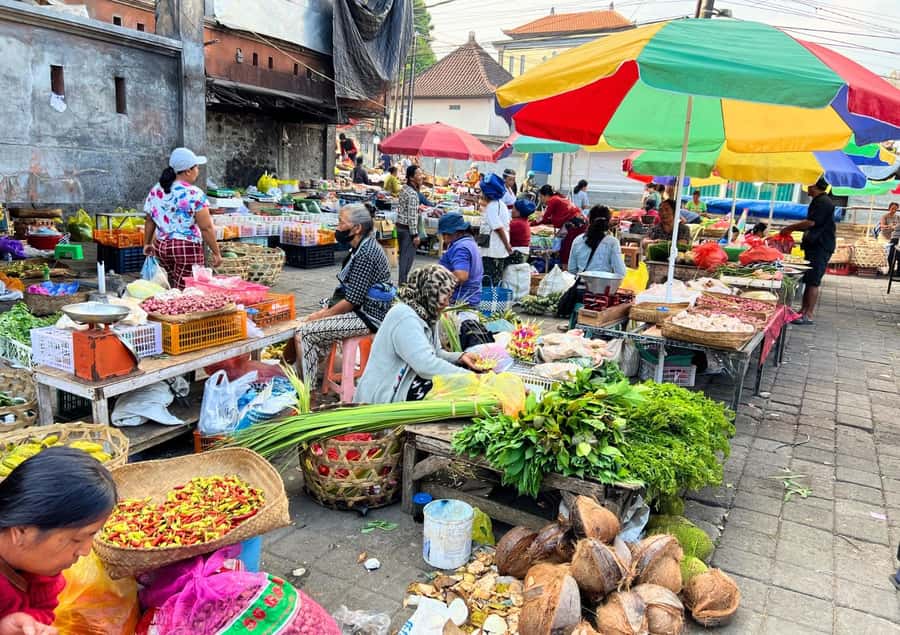
If you want the fullest version of this outing, choose the morning class. It begins with a visit to a local market, where the day is already underway and vendors are buying and selling ingredients for their kitchens.
This stop gives you useful context that a kitchen-only class cannot. Your guide can point out local fruit, vegetables, spices, and unfamiliar produce before you see them prepared. You may also get to taste some of the fruit, which makes the market visit more than a quick walk past stalls.
The market is also a small window into ordinary Balinese routines. You are not simply looking at food arranged for tourists. You are seeing the place where people start their day by finding what they need to cook.
That said, the market visit is available with the morning class only. If you choose an afternoon or evening session, you will miss this part. The later options may suit you better if you prefer a slower start or have a packed morning, but the early departure offers more local flavor.
The early start is usually around 7:15 a.m., according to the timing given by people who chose this option. Confirm the exact start time and meeting point when you book, since the pickup details can vary by option.
More Balinese cooking classes in Bali:
- From Ubud: Authentic Cooking Class in a Local Village
★ 4.9 · 1,325 reviews - Seminyak: Balinese Cooking Class & Market Tour
★ 4.9 · 458 reviews - Bali: Private Balinese Cooking Class in a Family Home
★ 4.8 · 87 reviews
The ride from Ubud to a farm kitchen
After the market, you continue to the cooking school at an organic farm. Shuttle service from an Ubud meeting point is included, which saves you the trouble of arranging a separate ride.
The drive is part of the change in mood. One transfer route passes rice terraces, small villages, and jungle scenery on the way out of Ubud. The farm itself is described as peaceful and tucked away from the town, so you should expect a rural setting rather than a polished cooking studio in the center of Ubud.
Here is the practical catch: the farm may be about an hour from the meeting point, and traffic on the return can be heavy. If you have a flight, spa appointment, or another fixed booking later that day, leave a generous buffer. This is a half-day to full-day outing, not a quick two-hour activity.
The total duration is listed as 330 minutes to eight hours, depending on the option and timing. That wide range likely reflects the difference between morning and later sessions, transport, and the amount of time spent at the market and farm.
A welcome breakfast among the plants
On arrival, you receive coffee or tea, mineral water, and a light breakfast. The breakfast can include fresh fruit and small bites such as cake, giving you a chance to try local flavors before the cooking begins.
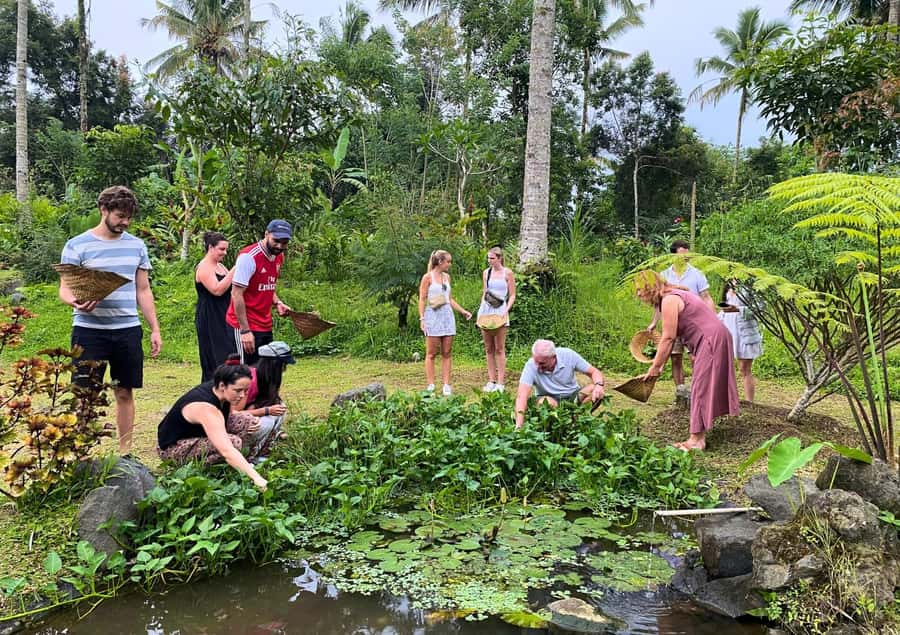
You then tour the farm. The point is not just to admire the setting. You learn how a Balinese family uses the natural resources around the property and how the farm supplies ingredients for the class.
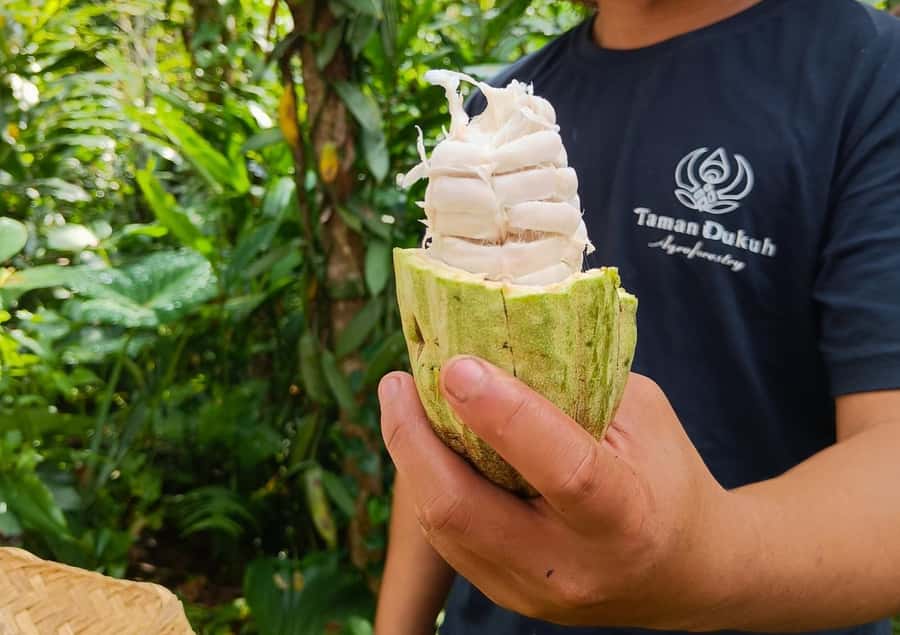
The produce varies, but you can expect to collect vegetables and see plants used in Balinese cooking. One particularly memorable detail is the chance to pick a cacao fruit and taste it. That sort of small encounter helps you understand ingredients as plants, not just items from a supermarket shelf.
The farm walk is a strong part of the experience for anyone interested in food, gardening, or village life. If you mainly want a fast cooking lesson, you may find the tour longer than expected. I would treat the garden time as half the point of the outing, not as filler before the kitchen.
Wear shoes that can handle an outdoor farm walk. The paths may be wet in rainy weather, although umbrellas are available when needed. You will also spend time in an open-air kitchen, so light clothing and protection from sun or rain are sensible.
Cooking begins with Base Gede
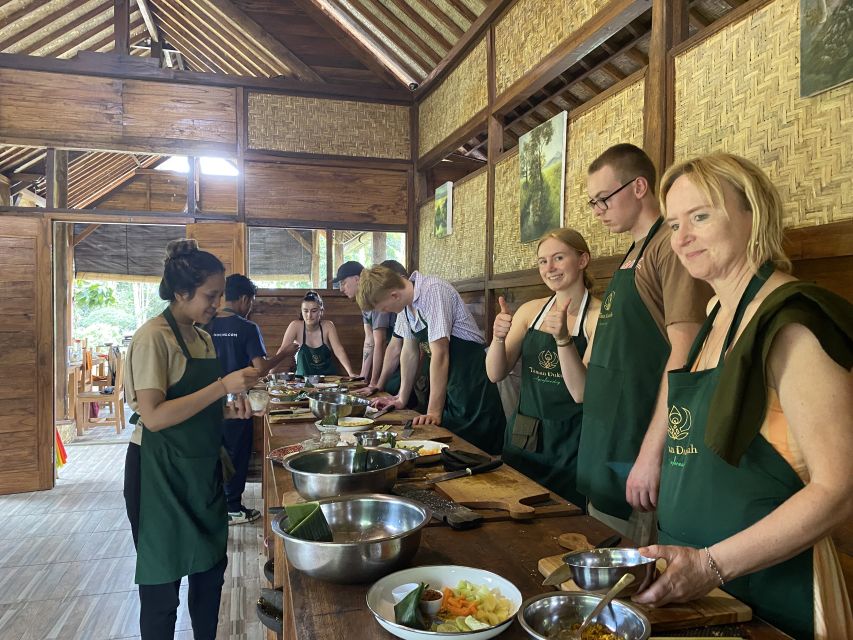
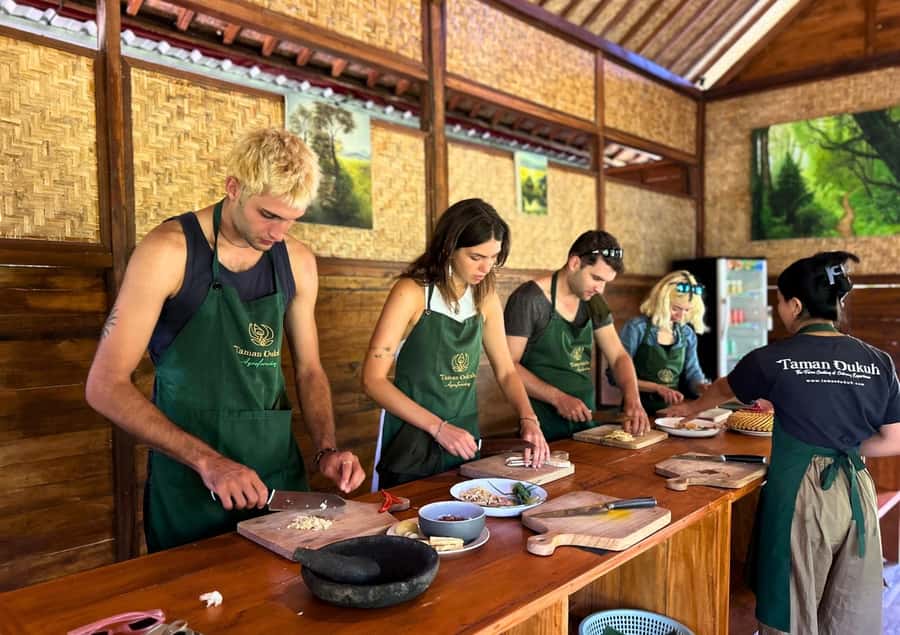
Your chef introduces the menu and explains the cooking process. The class is hands-on, but the instructors also handle some of the fiddly work that can slow a large group down. That balance works well: you get to chop, grind, mix, shape, and cook without spending the whole session on repetitive preparation.
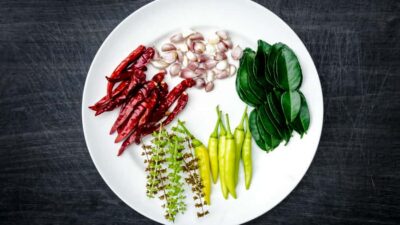
The foundation is Base Gede, a traditional Balinese spice paste. This is one of the most useful things to learn because it shows how many Balinese dishes build their flavor. You are not just following isolated recipes. You are learning a basic seasoning mixture that connects several parts of the meal.
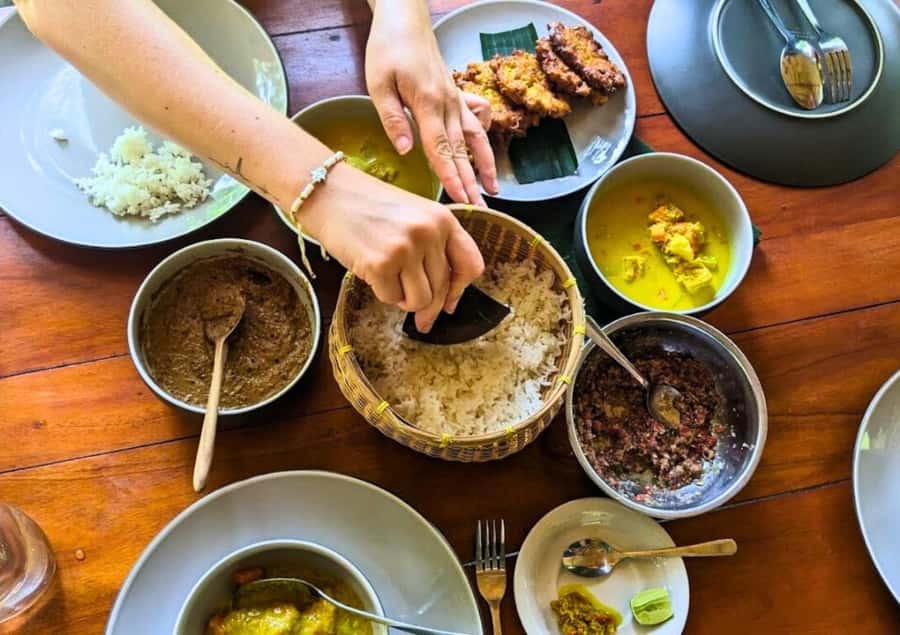
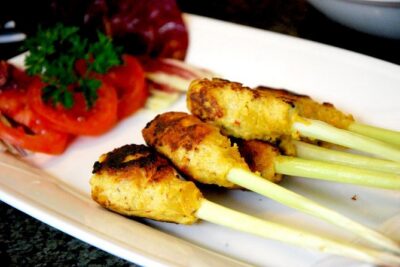
The regular menu includes Sayur Urab, a mixed green salad with coconut and spices. You also prepare Opor Ayam, a Balinese chicken curry, and sate lilit, a kebab made with meat, coconut, and spice paste.
Other dishes include pindang base tomat, fish with tomato sauce, and tempe asam manis, sweet and sour tempe. Dessert is either pisang goreng, banana fritters with coconut and palm sugar syrup, or bubur injin, a black rice pudding.
The menu offers a useful range of techniques and textures. You work with a spice paste, vegetables, curry, fish, shaped satay, tempe, and a sweet finish. You also get to see how coconut, palm sugar, peanuts, and fresh herbs fit into the wider food culture of Bali.
The exact menu may be presented as six dishes or six parts of a meal, since the listed preparations include several components. Either way, you should expect a substantial amount of food. Some classes serve the dishes as they are ready rather than waiting until every item is finished, which makes the meal feel more relaxed and keeps you from facing one enormous plate at the end.
More farm visits in Bali:
- Bali: Traditional Villages, Salt Farm & Tirta Gangga Tour
★ 4.9 · 31 reviews - Nusa Penida: Ecotourism, Seaweed Farming & East Tour
★ 5.0 · 4 reviews - Seaweed Farming Activity and Sightseeing at Diamond Beach
★ 4.5 · 3 reviews
The vegetarian menu is a real alternative
The vegetarian option is more than a meat-free version of the regular class. It has its own set of dishes and gives plant-based cooks plenty to prepare.
You begin with Base Gede, then make gado gado, blanched vegetables with traditional peanut sauce. The menu also includes opor tempe, a Balinese tempe curry, and bergedel, fried corn seasoned with Balinese spices.
You will also prepare tempe asam manis and vegan sate lilit, using jackfruit and spices in place of meat. Dessert is pisang goreng or bubur injin.
This is a good choice if you want to understand how satisfying Balinese food can be without chicken or fish. Plant-based participants have reported that the non-vegan dishes were cooked separately, which is useful if avoiding animal products is important to you. Still, tell the provider your dietary needs when booking so the correct menu is prepared.
What the class feels like in practice
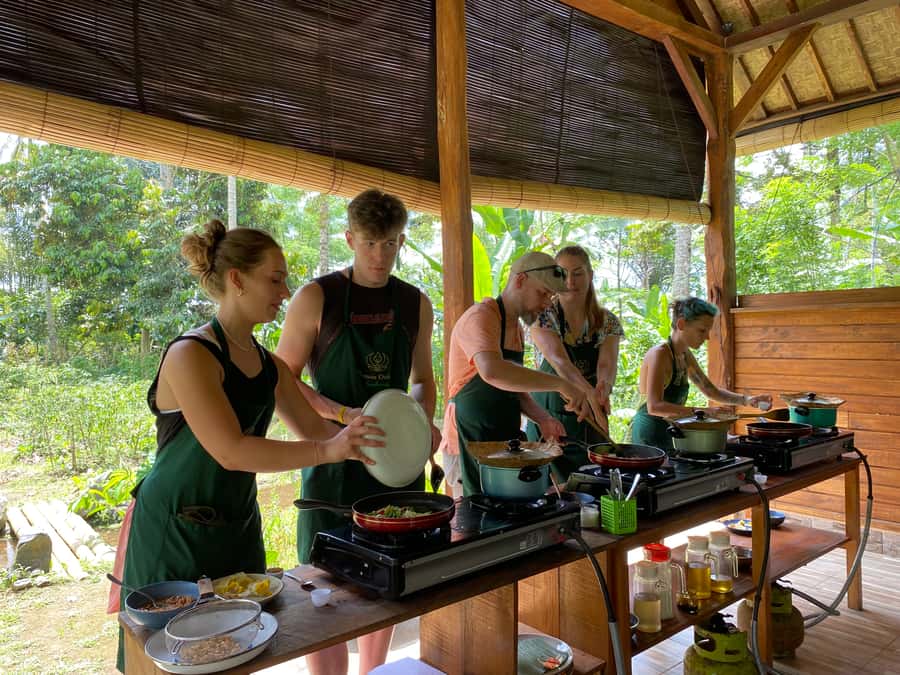
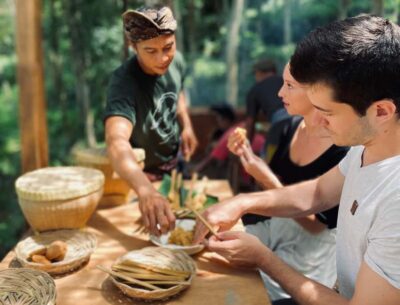
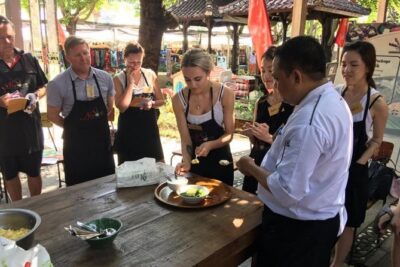
The class is designed for small groups, with up to 14 people. Each cooking station is shared by two participants. That means you are likely to work with a partner, which can be fun for couples, friends, and families.
It also means this is not a private chef lesson where every minute belongs to you. You may share chopping, stirring, and cooking tasks. If you want individual instruction on every technique, a private class would offer more control, but this format keeps the price low and gives the day a friendly social feel.
The instructors are a major part of the experience. Buda is repeatedly singled out for his humor and clear teaching, while Depi is praised for her patience, English, and careful explanations. Wayan is also noted as a strong guide and teacher. Staff may explain the cultural role of ingredients, answer questions, and help make sure the meal comes together on time.
English and Indonesian are the listed languages. The English instruction is suitable for following recipes and asking questions, based on the detailed teaching provided during the sessions.
The atmosphere is informal but organized. You do enough of the work to feel involved, while the staff step in when a task becomes too technical or time consuming. That is a good arrangement for beginners, and it still gives experienced home cooks new ingredients and methods to take away.
Six dishes, then a very large meal
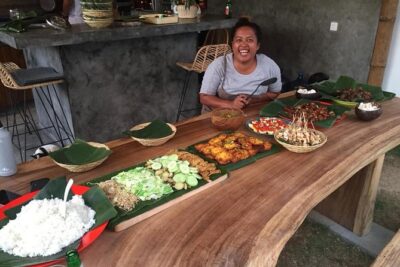
The food is the reward at the end, but it is also the point of the lesson. You sit down to eat what you prepared, and the portions can be generous enough to leave you very full.
The regular menu gives you a broad taste of Balinese cooking. Chicken curry brings a warm, spice-led dish to the table. Sate lilit shows a different way to use coconut and seasoning paste, while the fish in tomato sauce adds a lighter, sharper element.
Sayur Urab and the other vegetable preparations keep the meal from feeling too heavy. Tempe adds a firm, savory protein, and the dessert brings coconut and palm sugar into play.
I especially like that the meal is not limited to a single famous dish. You get a better sense of how a Balinese meal works as a group of contrasting dishes. The cooking also gives you a foundation for experimenting at home, rather than leaving you with one recipe that requires hard-to-find equipment.
The recipes are provided in a booklet, with a downloadable PDF of the latest recipes as well. Keep it somewhere easy to find. The most useful souvenir from this activity is not a decorative trinket, but a way to make the food again after you return home.
Why the $32 price works
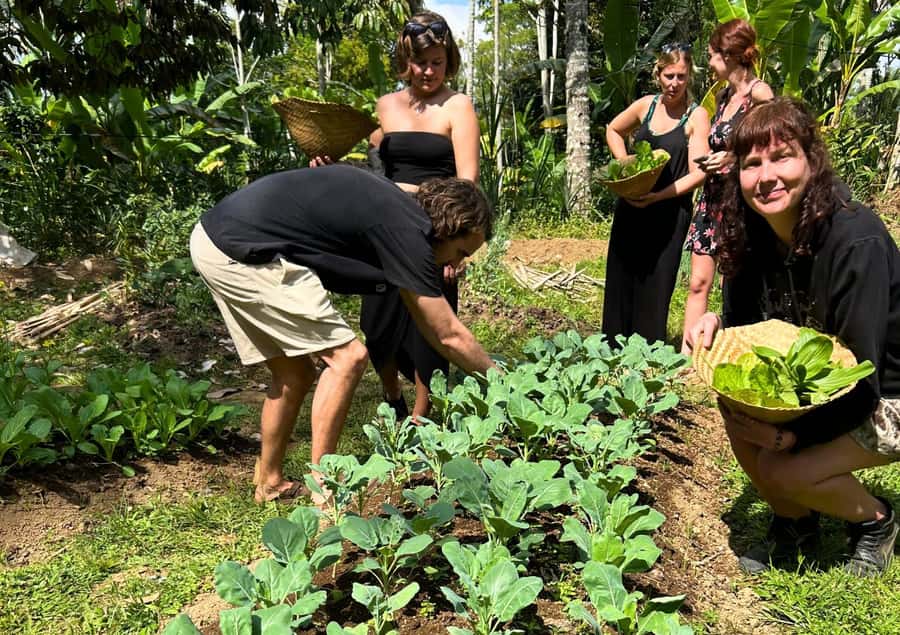
At $32 per person, this is strong value if you want more than a cooking demonstration. The price includes shuttle service from an Ubud meeting point, the market visit for morning bookings, the farm tour, ingredient harvesting, the cooking class, drinks during the class, the food you prepare, and the recipe material.
You are also paying for a full stretch of the day, with transport and several separate activities folded into one booking. A meal alone might cost less, but it would not include the farm walk, local market, instruction, and recipes.
The price is especially good for families and couples who want one activity that combines food and culture. It is also useful for anyone staying in Ubud without a scooter, since the shuttle removes one transport problem.
Extra soft drinks and beer are not included, but they are available to buy. Bring a little money if you want something beyond coffee, tea, or water.
Who should book this farm class?
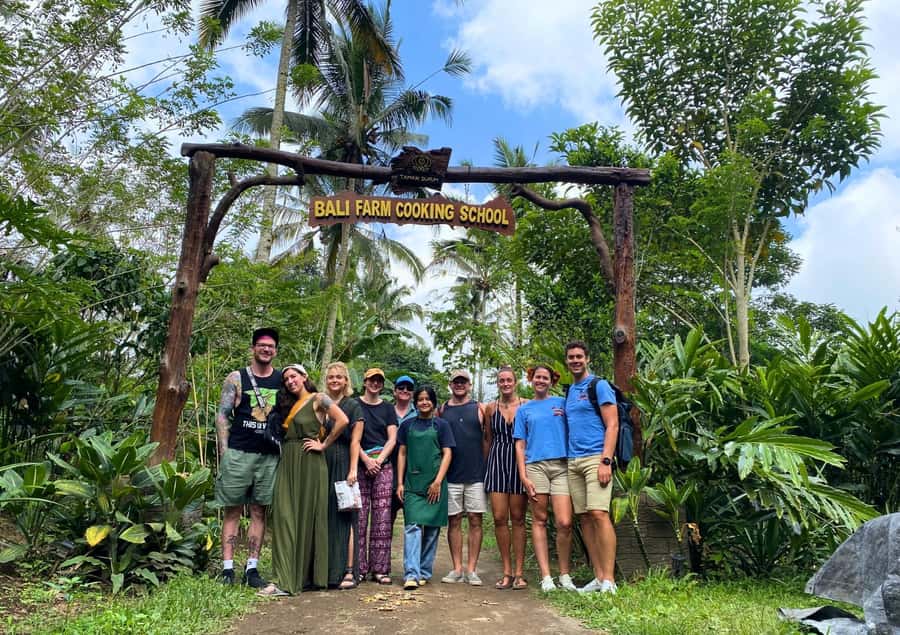
I would choose this class if you want a hands-on day with food, plants, and local life in the same outing. It suits first-time cooks because the instructors explain each stage and help with difficult tasks.
It works well for families, too. Children who enjoy picking vegetables, tasting fruit, and making food should have plenty to hold their attention, though adults should consider the long duration and outdoor setting.
Vegetarians and vegans have a particularly good reason to choose it, since the dedicated menu includes gado gado, tempe curry, jackfruit sate lilit, and other substantial dishes.
The class is less suitable if you dislike group activities, have limited mobility, or need to stay close to central Ubud. Wheelchair users cannot be accommodated, and the farm setting involves walking outdoors.
The early class is best for culture seekers who want to see the market at work. The evening class can suit people who prefer a later schedule, and it still includes the farm and cooking elements, but it does not include the morning market visit.
Small details that make the day better
Book the morning option if the market matters to you, and confirm the pickup point because it can vary by booking choice. Plan for a long day and avoid placing a tight appointment immediately afterward.
Expect to share a station with one other person. If you are booking with a friend or partner, that is easy. If you are solo, the format gives you a chance to meet someone, but you will not have a private work surface.
Wear practical clothing and shoes for the farm. Rain is possible, and umbrellas are provided when needed. You will eat a lot, so do not plan a large meal before the class.
The staff may take photos and make a short video of the day, then send the material afterward. This is not guaranteed as a formal inclusion, but it has been part of some sessions and is a pleasant extra.
Free cancellation is available up to 24 hours before the activity, and you can reserve now and pay later. Those terms make it easier to fit the class into a changing Bali schedule.
Should you book it?
Yes, if you want a cooking class that feels connected to its setting. The strongest reason to book is the complete chain from market to farm to plate. You see ingredients in daily use, pick some yourself, and then learn how they become a Balinese meal.
Choose the morning class for the best cultural context. Choose the later class if you mainly want the farm kitchen and cooking, or if an early market visit does not fit your schedule.
At $32, the package gives you a lot: transport, food, instruction, six dishes, a peaceful farm, and recipes for home. Just allow extra time for the drive back to Ubud, accept the shared station, and skip it if mobility access is a serious concern.
FAQ
How much does the Balinese cooking class cost?
The activity costs $32 per person.
How long does the experience last?
The listed duration ranges from 330 minutes to eight hours, depending on the option and start time.
Is transport from Ubud included?
Yes. Shuttle service from an Ubud meeting point is included, though the exact meeting point may vary by booking option.
Does every class visit a local market?
No. The local market tour is included with the morning class only.
What happens at the organic farm?
You receive a welcome coffee or tea and light breakfast, tour the farm, learn about local plants and natural resources, and harvest vegetables for the cooking class.
How many dishes will I cook?
You prepare a meal built around six Balinese dishes or meal components. The listed menus include spice paste, vegetables, curry, satay, fish or tempe, and dessert.
Is there a vegetarian menu?
Yes. The vegetarian menu includes dishes such as gado gado, opor tempe, bergedel, sweet and sour tempe, vegan sate lilit, and a choice of dessert.
Are vegan participants catered for?
Yes. The vegetarian menu includes vegan sate lilit made with jackfruit and spices. Non-vegan dishes may be prepared separately, but you should state your requirements when booking.
How large are the groups?
The experience has a maximum of 14 people per group. There may be two or three groups at the farm during a session, and each cooking station is shared by two people.
What is included with the meal and recipes?
Mineral water, coffee, or tea are included during the class, as are the meals you cook. You receive a recipe book and a downloadable PDF of the latest recipes. Soft drinks and beer cost extra.
More Workshops in Bali
- Ubud: Handcrafted Silver Jewelry Workshop
★ 4.3 · 1,214 reviews - Legian Beach, Bali: Beginner or Intermediate Surf Lessons
★ 4.9 · 1,019 reviews - Bali: Canggu & Uluwatu Puppy Yoga Class & Refreshing Drinks
★ 4.8 · 891 reviews - Bali: Seminyak Jewelry Making Class with Gold Plating Option
★ 4.8 · 436 reviews
Recently added around Bali
- Bali: Private Lempuyang Temple, Water Temple & Rice Terraces★ 5.0 · 3 reviews
- Bali: Mountain Bike Tour and River Rafting with Lunch★ 5.0 · 3 reviews
- Bali: Sidemen Waterfall tour and temple purification★ 5.0 · 3 reviews
- Bali: Padangbai Blue Lagoon Scuba Diving Private Tour★ 5.0 · 3 reviews
- Bali’s Mystical Jungle Trek & Hidden Waterfall Adventure★ 4.3 · 3 reviews
- From Bali: Mount Bromo & Ijen volcanic private tour★ 5.0 · 3 reviews
- Bali: 7 Day Solo Traveler’s Yoga Retreat In Ubud★ 5.0 · 3 reviews
- Bali: Photo Shoot with a Private Vacation Photographer★ 5.0 · 3 reviews
Balinese Cooking Classes, compared.
Cooking class in the comfort of your own personal villa. Yes, I’ll come to you!
Read our review →Browse the lists this tour appears in