
Reviewed · BALINESE COOKING CLASSES
Nia Bali Seminyak Cooking Class
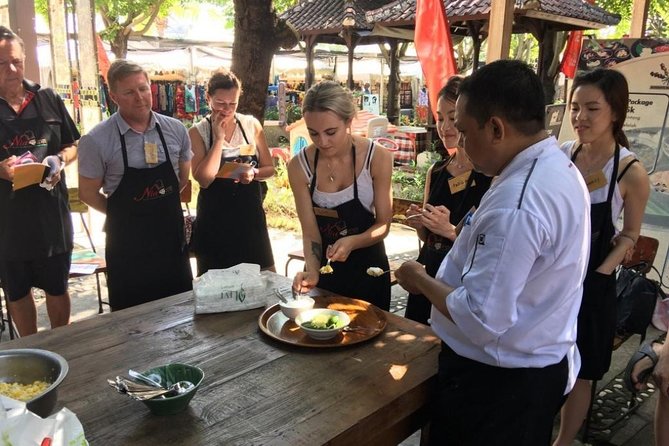
The big draw here is the sheer amount of food you make: up to 12 Balinese dishes, from chicken satay and nasi goreng to seafood satay, salads, spice pastes, and banana-leaf parcels. You begin at a traditional market, then bring those ingredients back to Warung Nia in Seminyak for a half-day cooking session and a full lunch.
I like the market visit because it gives the food some context before you start chopping. I also like the generous menu, especially since most cooking classes teach only a few dishes. The main point to consider is the format: it is described as a private activity, but the class can also operate with a large number of participants, so confirm the group arrangement if a small class matters to you.
In This Review
- Key points to know
- Why twelve dishes changes the value
- Starting at Seminyak Square and Warung Nia
- The morning market gives the food a setting
- Inside the class: pastes, parcels, satay, and rice
- Tommy Ford sets the tone
- The final lunch is part of the lesson
- What you take home
- Price, timing, and who gets the most from it
- Should you book Nia Bali Seminyak Cooking Class?
- FAQ
- Where does the cooking class start?
- What time does the activity begin?
- Is pickup included?
- Is drop-off included after the class?
- How long does the experience last?
- How many dishes will I cook?
- Is lunch included?
- What do I take home?
- Can I report food allergies or dietary needs?
- Is the activity private?
Key points to know
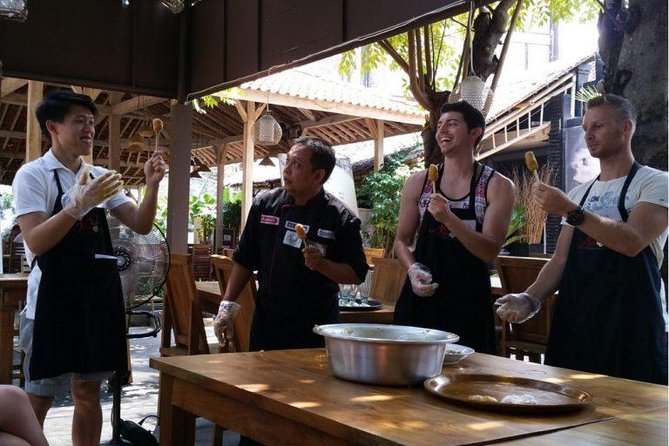
- Twelve dishes in one morning: You prepare spice pastes, meat, seafood, vegetables, snacks, and fried rice.
- Market shopping comes first: Learn about local meats, fish, poultry, spices, and tropical fruit before cooking.
- Lunch is the reward: You sit down to eat the food prepared during class.
- Tommy Ford brings the energy: The lead instructor is praised for humor, cultural context, and getting everyone involved.
- Useful take-home items: You receive a cookbook and completion certificate.
- Plan your own ride home: Pickup is offered from the Seminyak area, but drop-off is not included.
Why twelve dishes changes the value
At $71.50 per person, this is not the cheapest cooking lesson you will find in Bali. It is also not simply a short demonstration followed by a small tasting plate. The price covers roughly four and a half hours, market shopping, instruction, lunch, tea or coffee, a cookbook, and a certificate.
The menu is the real value. You work with two different spice pastes, chicken, pork, seafood, vegetables, coconut, peanuts, rice, and tropical produce. That gives you a much broader look at Balinese cooking than a class focused on one curry and one dessert.
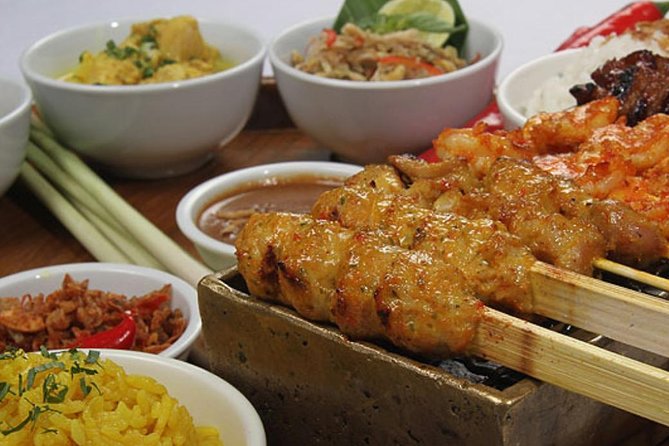
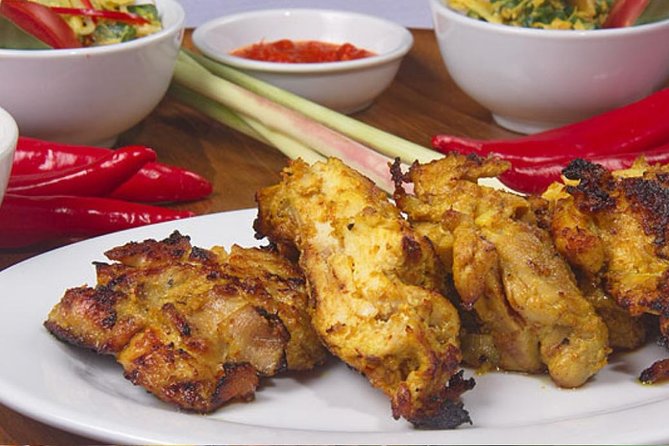
The food list includes base be pasih, an orange-colored spice paste for seafood, and base be siap, a yellow paste for chicken. You also prepare Ayam betutu Bali, chicken roasted in banana leaf; be celeng base manis, pork in sweet soy sauce; chicken satay with peanut sauce; sate lilit ikan, minced seafood satay; and tum ayam, minced chicken cooked in banana leaf.
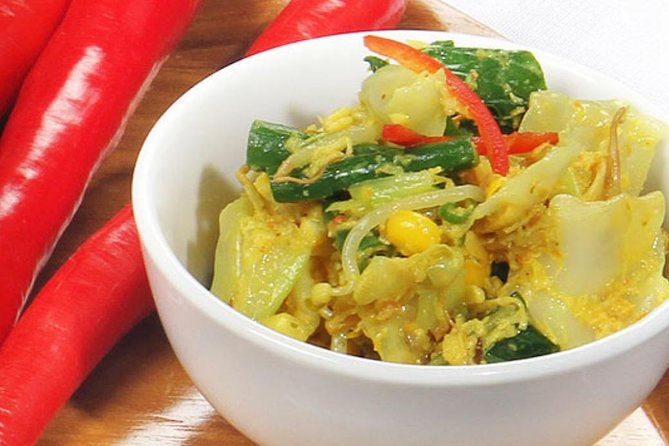
The vegetable dishes matter, too. Green papaya salad with chicken, pecelan vegetables with peanut sauce, and urab jagung, a sweet corn and coconut snack, show that Balinese food is not only about grilled meat. Fried rice with chicken rounds out the meal.
If you want a relaxed lesson built around two or three polished dishes, this may feel busy. If you want a wide sampling and plenty of recipes to take home, the menu makes the cost easier to justify.
More Balinese cooking classes in Seminyak:
- Ubud: Balinese Cooking Class at an Organic Farm
★ 5.0 · 1,786 reviews - From Ubud: Authentic Cooking Class in a Local Village
★ 4.9 · 1,325 reviews - Seminyak: Balinese Cooking Class & Market Tour
★ 4.9 · 458 reviews
Starting at Seminyak Square and Warung Nia
The listed meeting point is Warung Nia Balinese Food & Pork Ribs at Jl. Kayu Aya No. 19-21, Seminyak. The activity begins at 8 am, and free pickup is offered from the Seminyak area from that time.
The itinerary names Seminyak Square as the first stop, followed by Nia Cooking Class. The precise pickup arrangement should be confirmed when you book, since the included transport is pickup only. There is no return transfer, so you will need to arrange your own ride after the meal.
That lack of drop-off is easy to overlook. It is a small practical issue, but it matters if you are planning a tight schedule, have luggage, or want to go straight to another part of Bali. The activity ends back at the meeting point, so you are not left at a separate market or cooking venue.
The location is near public transportation, according to the supplied details. Still, Bali traffic can make short distances take time, so I would avoid booking another fixed appointment immediately afterward.
The morning market gives the food a setting
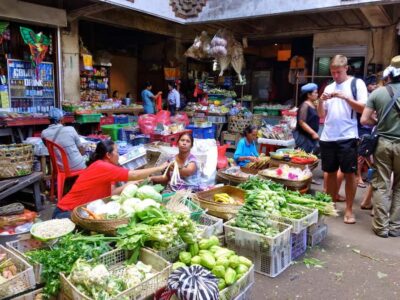
The market visit is more than a quick stop for supplies. You choose fresh ingredients and learn what goes into Balinese dishes before the cooking starts. The available produce and proteins include meat, fish, poultry, spices, and tropical fruit.
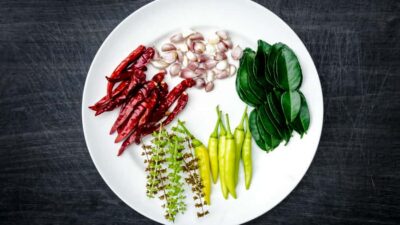
This is useful because many Balinese recipes depend on combinations of fresh ingredients rather than a single bottled sauce. Seeing the raw materials first helps explain why the class spends time making spice pastes. The orange base be pasih and yellow base be siap are not just colorful extras. They form the flavor base for different types of food.
The market also gives you a better sense of how the cooking class connects to daily food culture. You are not simply following a recipe written for an overseas kitchen. You are handling the ingredients used in the place where the dishes originated.
There is one practical limit. The supplied information does not give the market’s name or a detailed schedule for the visit. If you want a long, slow market tour with extensive shopping time, ask for the exact plan before booking. The morning market is clearly part of the experience, but the emphasis remains on getting ingredients and moving on to the kitchen.
Inside the class: pastes, parcels, satay, and rice
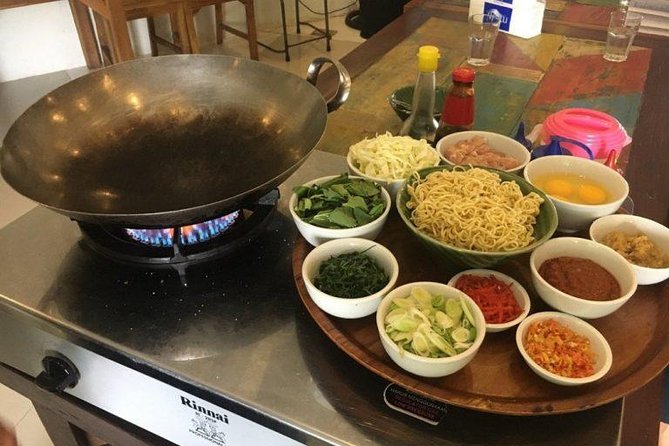
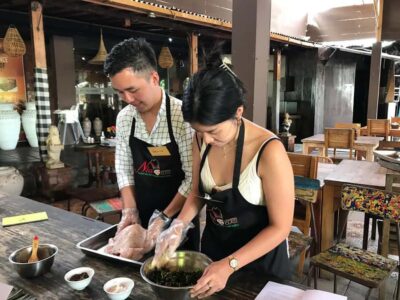
The cooking session covers a wide range of methods. You make spice pastes, shape satay, prepare salads, work with banana leaves, and cook rice. That variety keeps the class moving and gives you skills that transfer to other Indonesian recipes.
Banana-leaf cooking is one of the more distinctive parts of the menu. Ayam betutu Bali uses chicken roasted in banana leaf, while tum ayam uses minced chicken in banana leaf. These dishes show how wrapping food can help hold moisture and carry aroma.
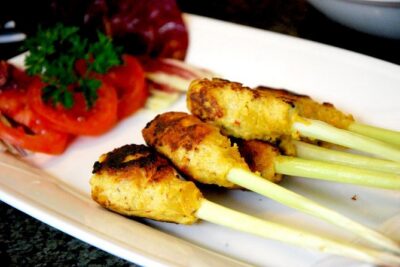
Sate ayam introduces the familiar skewer format, but the meal goes beyond standard chicken satay. Sate lilit ikan uses minced seafood, giving you a different texture and a useful example of how fish can be seasoned and formed for grilling or cooking.
You also prepare base sate, the peanut sauce served with satay. Since the sauce appears beside more than one dish, it is one of the most practical recipes to remember at home. Nasi goreng ayam is another good takeaway because fried rice is forgiving and adaptable when you need to replace an ingredient.
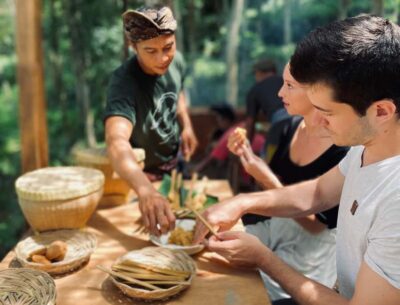
The class suits beginners. The activity is built around guided preparation, and the instructor gets people involved in different parts of the work. You do not need advanced cooking skills to take part, though the large menu means the morning may feel active rather than leisurely.
A few more Seminyak experiences worth comparing
- Ubud: Handcrafted Silver Jewelry Workshop
★ 4.3 · 1,214 reviews - Legian Beach, Bali: Beginner or Intermediate Surf Lessons
★ 4.9 · 1,019 reviews - Bali: Canggu Jewelry Making Class with Creative Studio Vibes
★ 4.9 · 1,003 reviews - Bali: Canggu & Uluwatu Puppy Yoga Class & Refreshing Drinks
★ 4.8 · 891 reviews
Tommy Ford sets the tone
Tommy Ford is the instructor name associated with the strongest praise in the supplied material. His teaching style is described as funny, energetic, and full of cultural and cooking context. That combination matters in a class with twelve dishes, because clear direction keeps a complicated morning from becoming a blur.
The best cooking teachers do more than tell you what to stir. They explain why a paste has a certain color, how a dish fits into Balinese food culture, and what you can use at home if an ingredient is hard to find. Tommy is specifically praised for explaining substitutions that make the recipes more practical outside Indonesia.
The teaching also appears suited to mixed skill levels. You may be an experienced home cook, a first-timer, or a parent cooking with older children. The format gives everyone a chance to take part in preparation and cooking rather than leaving the entire meal to the instructor.
The class has a social side, too. Solo visitors can meet people from several countries, while families and couples can work through the menu together. You should expect interaction with the rest of the group, particularly if the session is large.
One detail deserves a quick check before booking. The activity information calls this a private tour, meaning only your group should participate. At the same time, the class description includes accounts of a large class handled by the staff. Those details do not perfectly match. If privacy or a very small group is central to your plans, contact the operator, Wandernesia, and confirm the arrangement in writing.
The final lunch is part of the lesson
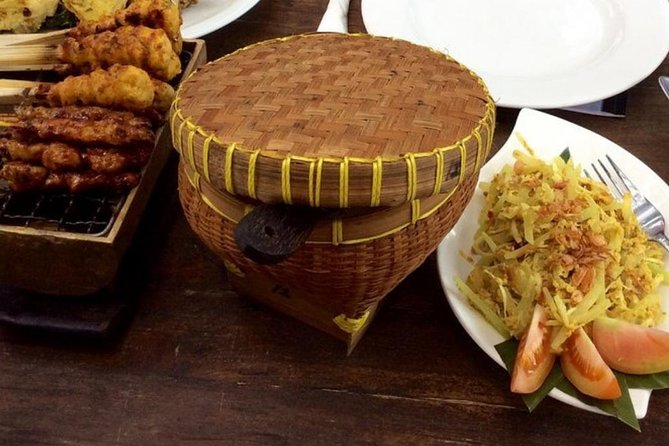
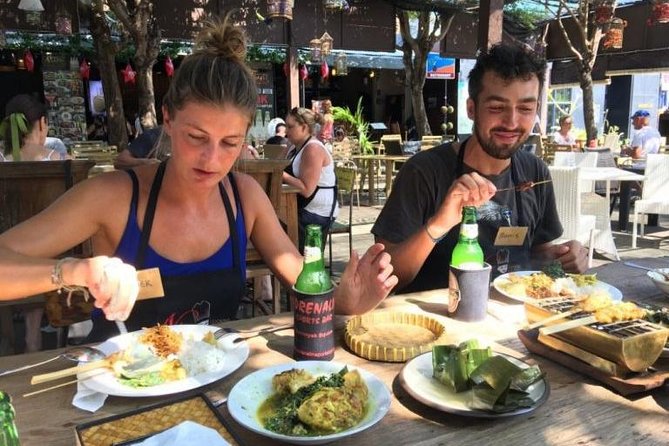
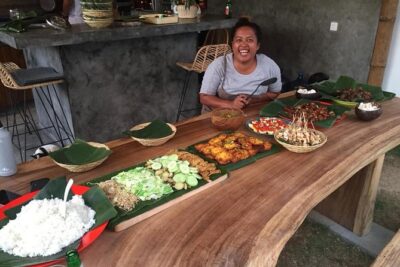
Lunch is included, and it is made up of the dishes prepared during the class. That gives the morning a satisfying purpose: you are not cooking a few samples and then being sent away. You sit down and eat the results as a full meal.
Come hungry. Twelve dishes create a substantial spread, especially when it includes rice, meat, seafood, satay, vegetables, salads, sauces, and snacks. The shared meal also gives you time to talk with the people at your table and compare which recipes you plan to repeat at home.
This is particularly useful for anyone unsure about Balinese flavors. You can taste the spice pastes in finished dishes, see how peanut sauce works with vegetables and satay, and compare the softer banana-leaf preparations with fried rice and grilled-style food.
Dietary needs should be raised before the class. The booking information specifically asks you to report allergies. A pescatarian participant was able to enjoy a tailored menu, but you should not leave this request until the morning itself. The listed dishes include pork, chicken, and seafood, so advance notice is important.
What you take home
The cookbook is more useful than a souvenir certificate because it gives you a chance to repeat the meal. With twelve dishes on the menu, written recipes can help you remember the order of preparation and the ingredients used in each paste.
The completion certificate is a pleasant extra, especially if you are taking the class as a family activity or marking a special trip. It does not add much practical value, but it gives the experience a clear finish.
I would pay close attention during the explanations about substitutions. Some Balinese ingredients may be difficult to find at home, and the advice about possible replacements can determine whether the cookbook ends up on your shelf or in regular use.
The strongest recipes for home cooking are likely to be the peanut sauce, chicken satay, fried rice, and vegetable salad. They are familiar formats that can be adapted. The banana-leaf dishes and spice pastes may take more effort, but they are also the recipes that make the class feel distinctively Balinese.
Price, timing, and who gets the most from it
The $71.50 price works best for you if you value a full morning rather than a quick cooking demonstration. Market time, instruction, lunch, drinks, recipes, and the certificate are all included, so the cost is easier to assess as a complete half-day activity.
The four-and-a-half-hour duration is long enough to make the morning feel substantial. It also means this is not a good choice if you want to fit in several other major activities before lunch. Pickup begins at 8 am, and the activity ends back at the meeting point.
I would recommend it most for:
- First-time visitors who want an introduction to Balinese food
- Solo visitors who like meeting people while doing an activity
- Couples and families with older children
- Home cooks who want a large set of Indonesian recipes
- Pescatarians or people with dietary needs who can provide advance notice
I would be more cautious if you dislike group activities, do not want to handle meat or seafood, or prefer a quiet lesson focused on just one or two dishes. The class can involve a large number of people, even though the activity is also described as private, so clarify that point first.
The cancellation terms are strict. The experience is non-refundable and cannot be changed for any reason. If the minimum number of participants is not met and the operator cancels, you are offered another date or experience, or a full refund. Since your own cancellation is not refundable, book only when your plans are firm.
Should you book Nia Bali Seminyak Cooking Class?
I would book this if you want maximum variety and a full meal, not a small, slow workshop. The market visit adds local context, the menu covers a remarkable range of dishes, and the teaching style associated with Tommy Ford sounds lively enough to carry a busy class.
The best reason to choose it is the combination of food and practical learning. You get spice pastes, satay, banana-leaf cooking, salads, rice, lunch, a cookbook, and advice that can help you cook at home.
Before paying, confirm the group size, pickup details, and dietary arrangements. If those points work for you, this is a strong half-day choice in Seminyak and a good value for anyone who wants to eat Balinese food by helping make it.
FAQ
Where does the cooking class start?
The listed meeting point is Warung Nia Balinese Food & Pork Ribs, Jl. Kayu Aya No. 19-21, Seminyak, Bali.
What time does the activity begin?
The activity starts at 8:00 am.
Is pickup included?
Free pickup is included from the Seminyak area, starting at 8:00 am.
Is drop-off included after the class?
No. Pickup is included, but drop-off is not. The activity ends back at the meeting point.
How long does the experience last?
The cooking class and market visit take approximately 4 hours and 30 minutes.
How many dishes will I cook?
You can learn to make up to 12 Balinese dishes.
Is lunch included?
Yes. Lunch made from the prepared dishes is included, along with coffee or tea.
What do I take home?
Each participant receives a cookbook and a completion certificate.
Can I report food allergies or dietary needs?
Yes. You should inform the operator about allergies or specific food requirements before the class.
Is the activity private?
The activity details describe it as private, with only your group participating. Since the class may also operate with a large number of participants, confirm the group arrangement before booking if this is important to you.
Recently added around Seminyak
- Bali: Denpasar Market Food Tour with 7 Tastings Must-Try★ 3.9 · 3 reviews
- Gong Sound Healing on Nusa Lembongan, Bali★ 5.0 · 3 reviews
- Ubud: Healing & Purification with Shaman at Hidden Temple★ 3.3 · 3 reviews
- Private Tour: Half Day Tanah Lot Sunset Tours★ 5.0 · 3 reviews
- Bali: Customized Uluwatu Tour Including Transfer Hotel★ 3.9 · 3 reviews
- Bali: Blue Lagoon Snorkeling Tour with Bali Quad Bike★ 3.4 · 3 reviews
- Royal Orchid Spa 90 Minutes Relaxing Massage.★ 4.5 · 3 reviews
- Full-Day Customized Amazing Private Tours in Bali★ 5.0 · 3 reviews
Balinese Cooking Classes, compared.
Cooking class in the comfort of your own personal villa. Yes, I’ll come to you!
Read our review →Browse the lists this tour appears in