
Reviewed · WORKSHOPS
Ubud: Traditional Basket Weaving Class
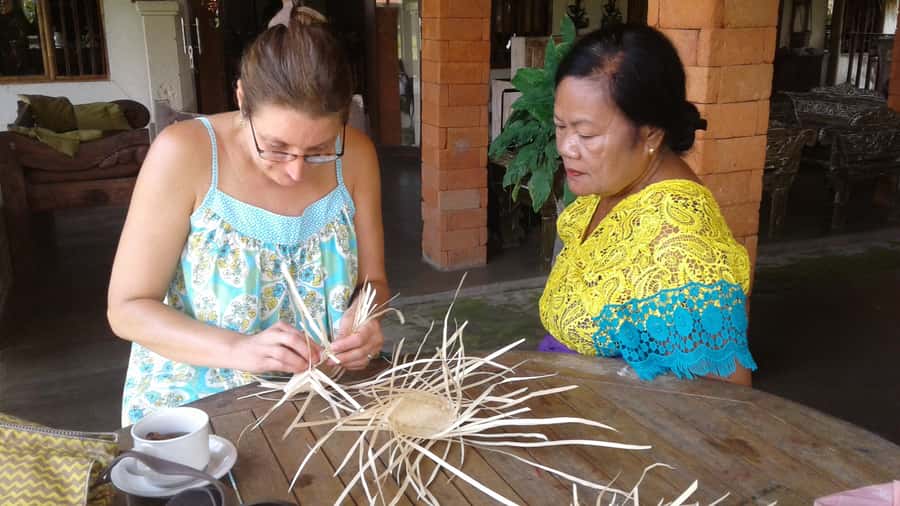
A few strips of lontar, a patient Balinese grandmother, and three unhurried hours can give you a better feel for everyday Balinese craft than another stop at a souvenir shop. You learn the basic weaving pattern step by step, then take home a basket or small woven pieces made by your own hands. I especially like the hands-on cultural lesson and the chance to spend time with a local artisan rather than simply watch a performance.
I also like that the class suits complete beginners, children, and people who already enjoy making things. The teacher is known for patient, encouraging guidance, and the fruit snack and fritter add a pleasant local touch. The main drawback is the location: WS Art Studio is outside central Ubud, and English instruction can be limited to simple words and gestures.
In This Review
- Key points to know before you book
- What the three-hour class is really about
- Why lontar baskets matter in Bali
- Learning from a patient Balinese teacher
- A closer look at the weaving process
- Snacks, drinks, and the small personal touches
- How much help will you get?
- The off-center location and getting there
- Is $24 a fair price?
- Who will enjoy this activity most?
- Booking flexibility and group details
- My verdict: should you book it?
- FAQ
- How long does the basket-weaving class last?
- What material will I use?
- Is the class suitable for beginners?
- What is included in the price?
- Where does the class meet?
- What languages are supported, and is the venue wheelchair accessible?
Key points to know before you book
- You weave with lontar: This native plant has long been used in Bali for practical household baskets.
- A Balinese grandmother teaches the class: Expect calm, personal guidance rather than a formal lecture.
- The class is beginner-friendly: You can try different weaving combinations, though the pattern may take patience.
- Your handmade basket goes home with you: You also receive the materials, welcome drinks, and a snack.
- Small groups keep help close by: The class accepts up to 10 people, and some sessions have only a few participants.
- Plan your ride back: If you are staying outside central Ubud, you arrange transportation yourself.
What the three-hour class is really about
This is not a quick craft demonstration where you sit back and take photographs. You spend most of the session working with your hands, learning how strips of lontar are folded, crossed, tightened, and shaped into a basket.
The advertised activity lasts three hours, while the actual weaving instruction is described as about two hours. That gives you a little breathing room for arrival, refreshments, conversation, and finishing your work. I would reserve a relaxed half-day slot rather than trying to squeeze this between tightly timed sightseeing stops.
The class takes place at WS Art Studio Balinese Handicrafts. You meet there instead of being collected from your hotel, so the experience begins with getting yourself to the studio. That matters in Ubud, where a short distance on a map can take longer than expected during busy periods.
Once you arrive, the materials are supplied. You do not need to bring your own tools or buy plant strips before class. A welcome drink and an appetizer are included, adding a small but useful pause before you settle into the work.
A few more Bali experiences worth comparing
- Ubud: Balinese Cooking Class at an Organic Farm
★ 5.0 · 1,786 reviews - From Ubud: Authentic Cooking Class in a Local Village
★ 4.9 · 1,325 reviews - Ubud: Handcrafted Silver Jewelry Workshop
★ 4.3 · 1,214 reviews
Why lontar baskets matter in Bali
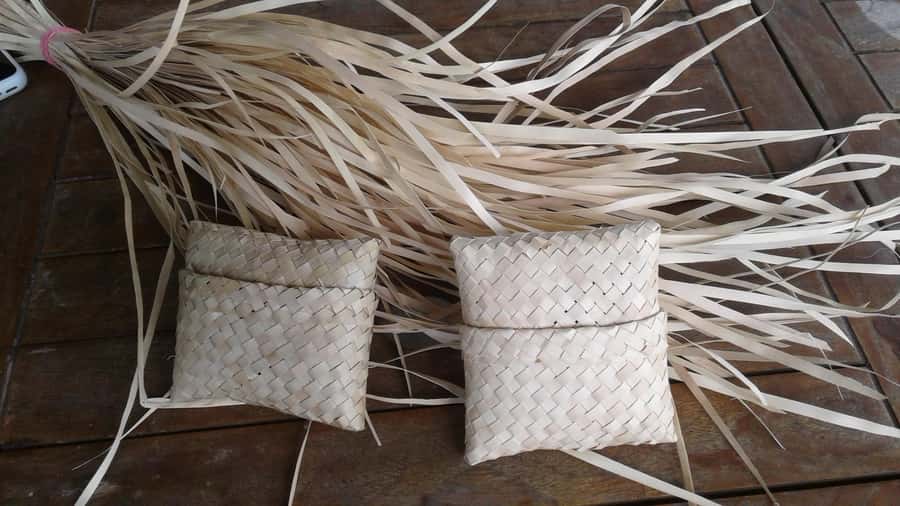
The most interesting part of the class is the material itself. Lontar belongs to the bamboo family according to the activity description and has been used in Balinese culture for centuries. Local families have traditionally woven it into baskets for practical needs, not just decoration.
That background gives the class a clear purpose. You are not making an unrelated souvenir with imported materials. You are learning one of the island’s useful household crafts, using a plant connected with Balinese life.
You will likely notice that the process is more exact than it first appears. A basket may look simple when finished, but the pattern depends on keeping the strips in the right order and maintaining even tension. If one section is loose or crossed incorrectly, the shape can become difficult to control.
That is part of the value. The class shows you the quiet skill behind an everyday object. It also gives you a better eye for woven goods you may see in markets and craft shops around Ubud.
Learning from a patient Balinese teacher
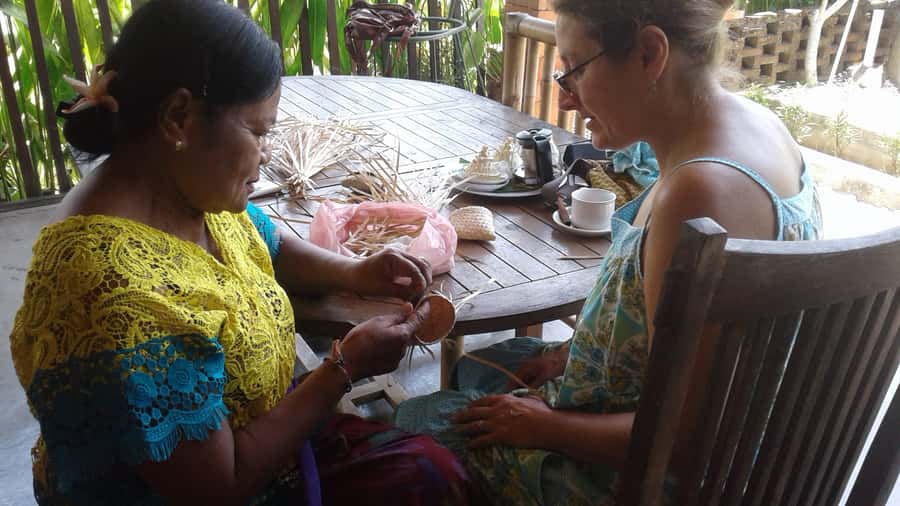
The teacher is described as a Balinese grandmother, and that personal element is central to the experience. She demonstrates the technique, then helps you copy it. Expect encouragement, smiles, hand gestures, and short instructions rather than a long spoken explanation.
English and Indonesian are the listed languages. The level of English can be limited, so you should not book this expecting detailed conversation about every stage of Balinese weaving. Several parts of the process are taught through showing rather than explaining.
For many people, that works well. The craft is visual, and you can watch the teacher’s hands, copy the movement, and ask for help when your pattern goes wrong. The teacher’s patient manner is especially useful when you feel certain that your basket has somehow developed a mind of its own.
If you need extensive verbal instruction, the language gap could slow you down. One practical tip is to pay close attention during the demonstration and keep your work in view so the teacher can quickly spot where you need help. You can also use simple questions and gestures.
A closer look at the weaving process
The class starts with the basic structure. You learn how to position the prepared plant material and begin the first rows. This early stage is the most important because it sets the shape and pattern for everything that follows.
At first, you may find the crossing pattern awkward. The strips need to pass over and under one another in a set order. Several participants have found the pattern tricky, but patient instruction and repeated practice make it manageable.
As the basket grows, the work becomes more rhythmic. You repeat the same movements, check the edges, and tighten the weave. This is a good activity for a hot part of the day because it gives you something calm and focused to do away from the pressure of sightseeing.
The class can include more than one weaving combination. That gives you a chance to see how small changes in the arrangement create different patterns or forms. The exact number and style of finished pieces can vary, but you return home with your handmade creations.
Do not expect every basket to look shop-perfect. A first attempt may have uneven edges or a slightly loose section. That is normal for a hand-made object, and it is precisely what makes the finished piece personal. You can use it for small souvenirs or give it as a gift.
A different pace of day, same stretch of Bali coast:
- Bali: Mount Batur Sunrise Guided Hike and Natural Hot Spring
★ 4.8 · 9,284 reviews - Bali: Full-Day Instagram Highlights Tour
★ 4.8 · 7,817 reviews - Bali: Sunrise Mount Batur Hike with Breakfast
★ 4.8 · 6,973 reviews - Bali/Nusa Penida: East & West Highlights Full-Day Tour
★ 4.7 · 6,263 reviews
Snacks, drinks, and the small personal touches
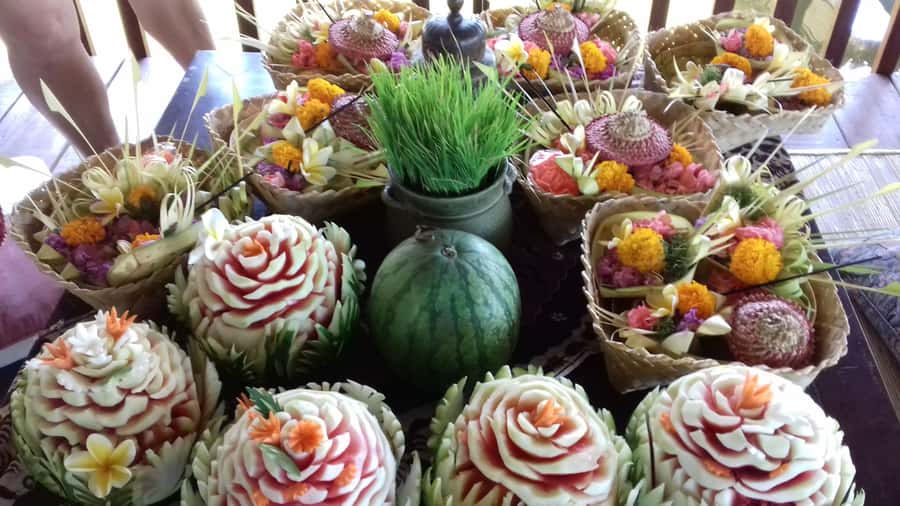
The included food is modest but adds warmth to the session. You receive a welcome drink and an appetizer. One class included banana and a pineapple fritter, a simple local snack that made a welcome break from concentrating on the weave.
You may also receive a small gift at the end. This is not listed as a guaranteed inclusion, so treat it as a possible extra rather than part of the price calculation.
These touches matter because the class is not only about producing an object. You have time to sit with a local artisan, work at a gentle pace, and enjoy a little hospitality. The atmosphere is more personal than a standard craft workshop with a large crowd.
How much help will you get?
The maximum group size is 10 people, which is small enough for individual attention. If you attend with one friend or during a quieter period, you may find the class feels almost private. A small class is particularly useful here because the teacher needs to check each person’s pattern by hand.
The quality of your experience depends partly on your willingness to ask for help. The instructor can show you the correct movement, but the basket still requires your own patience. This is not a craft where the teacher completes the difficult part while you watch.
Families can consider it, too. A nine-year-old participant reportedly took to the weaving faster than an adult companion, which says something about the activity’s broad appeal. Children who enjoy patterns and making things may find it easier to accept the trial-and-error process than adults who want instant results.
You do not need previous weaving experience. The activity is intended for both experienced weavers and curious first-timers. If your hands are not used to fine repetitive work, you may need more time to get comfortable with the pattern.
The off-center location and getting there
The meeting point is WS Art Studio Balinese Handicrafts. The studio is outside the main central Ubud area, so check the route before booking and allow enough time to arrive.
If you are not staying in central Ubud, you arrange your own transportation. You also need to plan your return. This is not a minor detail. One participant had trouble with a taxi driver who tried to charge an arbitrary fare after the class.
For the ride home, use a transportation option with a clear price or confirmed arrangement. Do not assume that finding a car outside the studio will be simple or inexpensive. The activity provider does not include transport in the stated package.
The out-of-the-way setting has a tradeoff. It adds planning and can make the class less convenient than a workshop in central Ubud. At the same time, the location helps the experience feel less like a tourist stop placed beside the busiest streets. You are going to a working handicraft studio, not simply adding a craft display to a central shopping route.
The activity is listed as wheelchair accessible. If access is important for your visit, confirm the current arrangements when booking, since the available information does not describe the exact entrance, surfaces, or restroom setup.
Is $24 a fair price?
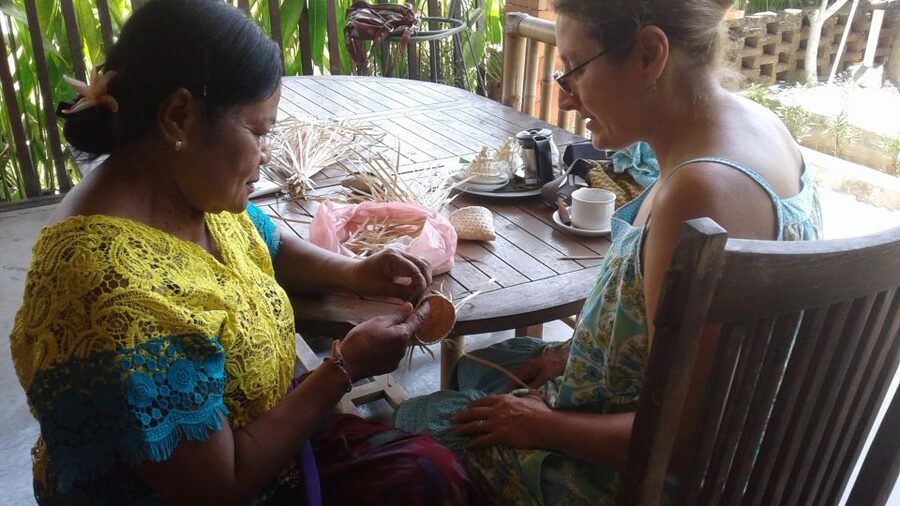
At $24 per person, the cost is reasonable for a three-hour small-group activity. The fee covers all class materials, instruction from a Balinese artisan, a welcome drink, an appetizer, and the woven item you make.
The strongest value is the time. Many Ubud craft souvenirs cost money without giving you any sense of how they were made. Here, your purchase includes a lesson and a personal connection with the maker. You also avoid having to source materials or tools separately.
The price is less compelling if you want a polished professional basket or a full cultural lecture. Your first piece may be uneven, and the limited English can restrict conversation. You are paying for participation and guidance, not for a museum-style presentation.
I would consider it good value for people who enjoy making things, want a useful souvenir, or need a slower activity during a busy Bali itinerary. It is less suitable if you prefer fast sightseeing, dislike repetitive handwork, or have no interest in taking home a handmade object.
Who will enjoy this activity most?
This class suits you if you like to understand a place by doing something connected to local life. It is also a good pick for families, couples, friends, and solo visitors who prefer a small group to a large organized tour.
You will probably enjoy it most if you:
- Like crafts, patterns, or practical creative work
- Want a souvenir you made yourself
- Prefer patient, informal teaching
- Are comfortable learning through demonstration and gestures
- Can spare three unhurried hours
- Are willing to arrange your own ride to and from the studio
Think twice if you need fluent English instruction or expect a detailed historical talk. The strongest communication happens through demonstration, repetition, and the teacher’s hands-on help.
Bring a camera if you want photographs of the process or your finished basket. The provided information specifically recommends this, and your own creation makes a more meaningful photo than another picture of a market shelf.
Booking flexibility and group details
The activity allows free cancellation up to 24 hours before the start time for a full refund. You can also reserve now and pay later, which helps if your Bali schedule is still changing.
Starting times depend on availability, so check the schedule before making transport plans. The class is limited to 10 participants, but the actual number in a session may be smaller.
The instructor support is listed in English and Indonesian. Keep your expectations practical: you can receive instruction in English, but detailed conversation may be limited. The calm teaching style and visual nature of the craft make this workable for many people.
My verdict: should you book it?
Book this basket-weaving class if you want an authentic, low-key activity with a real local craft at its center. The patient grandmother teacher, small group size, handmade souvenir, and traditional lontar material give the session more substance than a standard tourist craft stop.
I would especially recommend it for families and creative beginners. You do not need skill, but you do need patience. Arrange your return transportation before you arrive, and accept that gestures may do as much teaching as words.
Skip it if your schedule is packed, you want fluent cultural commentary, or an out-of-center studio creates too much transport trouble. For everyone else, $24 buys a useful break from sightseeing and a souvenir with your own fingerprints in it.
FAQ
How long does the basket-weaving class last?
The activity lasts three hours. The weaving portion is described as about two hours, with the remaining time allowing for arrival, refreshments, guidance, and finishing your handmade pieces.
What material will I use?
You will weave with lontar, a native plant that has been used in Balinese culture for centuries to make practical baskets.
Is the class suitable for beginners?
Yes. The class is intended for experienced weavers and first-timers alike. The pattern can be tricky at first, so patience and careful attention during the demonstration are useful.
What is included in the price?
The $24 price includes all class materials, time with a Balinese artisan, a welcome drink, an appetizer, and your handmade creation.
Where does the class meet?
You meet at WS Art Studio Balinese Handicrafts. If you are staying outside central Ubud, you need to arrange your own transportation.
What languages are supported, and is the venue wheelchair accessible?
Instruction is listed in English and Indonesian, and the activity is wheelchair accessible. The teacher may use simple English and hand gestures, so detailed conversation may be limited.
Recently added around Bali
- Bali: Private Lempuyang Temple, Water Temple & Rice Terraces★ 5.0 · 3 reviews
- Bali: Mountain Bike Tour and River Rafting with Lunch★ 5.0 · 3 reviews
- Bali: Sidemen Waterfall tour and temple purification★ 5.0 · 3 reviews
- Bali: Padangbai Blue Lagoon Scuba Diving Private Tour★ 5.0 · 3 reviews
- Bali’s Mystical Jungle Trek & Hidden Waterfall Adventure★ 4.3 · 3 reviews
- From Bali: Mount Bromo & Ijen volcanic private tour★ 5.0 · 3 reviews
- Bali: 7 Day Solo Traveler’s Yoga Retreat In Ubud★ 5.0 · 3 reviews
- Bali: Photo Shoot with a Private Vacation Photographer★ 5.0 · 3 reviews
Workshops, compared.


Legian Beach, Bali: Beginner or Intermediate Surf Lessons
Read our review →
Canggu Jewelry Making Class with Creative Studio Vibes
Read our review →
Canggu & Uluwatu Puppy Yoga Class & Refreshing Drinks
Read our review →
Beginner & Intermediate Surf Lesson with Equipment
Read our review →
Browse the lists this tour appears in