
Reviewed · SCUBA DIVING
PADI Open water Course in Tulamben – Get certified & dive anywhere in the world
Tulamben gives this PADI Open Water course an unusually friendly setting: calm water, easy access to underwater sites, and guides who know the local reef well. I like the small groups, capped at six, and the chance to learn with an instructor such as Made Sutama, whose patient style has helped nervous beginners and families build confidence.
I also like that the course uses a fixed center in Tulamben, so the staff and guides are familiar with the area rather than simply passing through. The main drawback is the firm cancellation policy: once booked, the course is non-refundable, except when poor weather forces the operator to cancel.
In This Review
- Key points at a glance
- Why Tulamben works so well for first-time scuba students
- Day one: theory, equipment, and controlled-water practice
- Days two and three: four ocean sessions in Bali
- What makes the underwater sites special
- Small groups and the value of patient instruction
- What the $325 price includes
- A realistic schedule for your three days
- Practical limits to consider before booking
- Who will get the most from this course
- Should you book Bali Diving Academy in Tulamben?
- FAQ
- How long is the PADI Open Water course?
- How deep can I scuba dive after certification?
- Is the PADI certificate recognized outside Bali?
- Is equipment included?
- Is food included in the price?
- What happens if bad weather cancels the course?
Key points at a glance
- Three days to certification: Complete online theory, pool practice, and four open-water sessions.
- Small groups: A maximum of six participants gives you more room for questions and individual help.
- Beginner-friendly Tulamben: The water around the sites is usually gentle, making it a sensible place to learn.
- Worldwide PADI qualification: Finish the course qualified to scuba dive to 18 meters.
- Made Sutama may be your instructor: He is praised for patient, calm, attentive teaching.
- Useful extras included: Equipment, a certified instructor, local pickup and drop-off, porter help, park fees, and community contributions are covered.
Why Tulamben works so well for first-time scuba students
Tulamben is a practical place to learn because the local sites usually have gentle currents. That matters when you are trying to remember several new tasks at once: breathing steadily, controlling your position in the water, clearing your mask, and communicating with hand signals.
Your attention can stay on the lesson instead of being spent fighting the sea. Conditions are never guaranteed, of course, and the course requires suitable weather, but the general setting is forgiving for a first qualification.
The area also gives the course more character than a pool-only introduction. You are not just learning how equipment works. By the second and third days, you are using those skills in the ocean around Bali, with four open-water sessions designed to turn classroom ideas into habits.
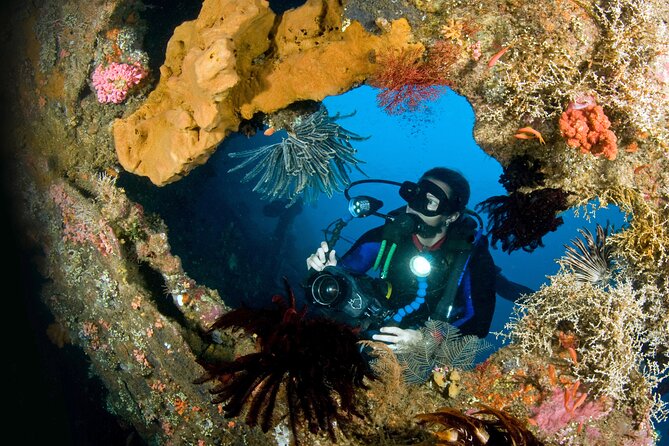
Tulamben is also known for several underwater sites, including the USAT Liberty wreck, Coral Garden, and the Drop Off. The exact places used for your lessons depend on the course plan and conditions, but these sites help explain why the area appeals to new and experienced scuba users alike.
More Diving Trips in East Bali
- Open Water Course in Tulamben – Get Certified in Bali
★ 5.0 · 495 reviews - Bali Diving for Beginners: Tulamben Liberty Wreck
★ 5.0 · 367 reviews - Discover Scuba Diving in Tulamben – Diving Initiation in Bali best diving sites
★ 5.0 · 353 reviews
Day one: theory, equipment, and controlled-water practice
The course begins with the basic principles of scuba. You study the material through the PADI e-learning platform, either before arriving or during the three-day program, then review it with a certified instructor.
Doing the online work before the course is the best use of your time. It lets you arrive ready for practical training instead of trying to absorb all the theory while also learning new physical skills. If you prefer to complete the material during the course, that option is available, but your schedule will feel fuller.
The theory covers the ocean, scuba principles, and the key facts needed to make sensible decisions underwater. This is not just paperwork before the fun begins. Understanding pressure, equipment, communication, and safe procedures gives you a reason for each exercise rather than asking you to memorize movements without context.
Your first practical work takes place in confined water, described as pool training. This controlled setting is important for beginners. You can stop, ask questions, and repeat a skill without the added demands of an open-ocean session.
Expect to learn the basic methods used to manage scuba equipment and deal with common situations. The course description does not list every individual exercise, but the purpose is clear: build comfort and control before moving into the sea.
This is where a calm teacher makes a real difference. Made Sutama is specifically praised for staying attentive and relaxed, including when students reached tricky moments. If you feel uncertain about breathing underwater or managing a skill for the first time, patient instruction is more valuable than a rushed schedule.
Days two and three: four ocean sessions in Bali
The second and third days are devoted to open-water training. Four ocean sessions let you use the skills from the pool while exploring the underwater world around Tulamben.
That progression is sensible. You first learn in a controlled setting, then apply one skill at a time in the sea. The instructor can watch how you respond to real conditions and help you adjust your technique.
For many people, the most memorable part is the simple sensation of being weightless while breathing underwater. It can feel strange at first, which is why the earlier pool practice matters. Once your basic routines become more familiar, you have more attention available for the reef and marine life around you.
The course qualifies you to scuba dive to 18 meters after successful completion. The PADI certificate is recognized worldwide, so this is not merely a Bali activity that ends at the airport. You can use the qualification when arranging future scuba trips in other parts of the world, subject to the rules of the operator you choose.
The four sessions also give you more than a quick trial. A single introductory swim can show you what scuba feels like, but it does not provide the same structured practice or certification. Here, you have several chances to repeat skills and gain steadier control.
What makes the underwater sites special
The USAT Liberty wreck is one of the best-known attractions in Tulamben. The provided course information does not promise that every student will visit every named site, so you should treat the wreck, Coral Garden, and Drop Off as examples of the area rather than a guaranteed route.
That said, the range of sites is useful for a course. Coral Garden offers a different setting from a wreck, while the Drop Off gives the local area another kind of underwater environment. Your instructor can match the site choice to course needs and conditions.
The benefit is not simply scenery. Different settings encourage you to practice awareness, buoyancy, and communication while the instructor is nearby. You are learning how to function in the ocean, not just how to operate equipment in a swimming pool.
A fixed Tulamben center also has a practical advantage. Bali Diving Academy keeps staff on location, and its guides are familiar with the reef and its inhabitants. That local familiarity can help the day run more smoothly, especially when the instructor needs to choose an appropriate site or adjust to conditions.
More dive trips off East Bali:
- Advanced Open Water Course – Advanced Certification in Tulamben
★ 5.0 · 127 reviews - 5 Fun Dives in Tulamben (for certified divers) – Discover famous diving sites
★ 5.0 · 93 reviews - Open Water + Advanced Course – Premium Certifications Package in Tulamben
★ 5.0 · 71 reviews - 7 Fun Dives in Tulamben (for certified divers) – Premium Value Package
★ 5.0 · 69 reviews
Small groups and the value of patient instruction
A maximum of six participants is one of the strongest features here. In scuba training, a small class gives you more chances to ask questions and receive corrections before a minor concern becomes a serious one.
It also matters emotionally. New students do not all gain confidence at the same speed. One person may be comfortable with the equipment but uneasy about clearing a mask. Another may understand the theory but need more time to control movement in the water.
The course is especially suited to beginners who want steady guidance. Made Sutama is named in several positive accounts, with specific praise for his patience, attentiveness, and ability to keep students calm. One family completed the qualification with children aged 12 and 14, showing that the course can suit younger participants when they meet the operator’s requirements and are ready for the physical demands.
That example should not be read as a guarantee for every child. The available information gives no separate age policy, so families should confirm eligibility before booking. The stated requirement is a moderate level of physical fitness.
Communication also seems to be a strong part of the operation. Fast replies and easy contact are useful when you are coordinating a three-day course, especially if you need to clarify pickup, online study, or the daily schedule.
What the $325 price includes
The listed price is $325 per person. For a three-day PADI qualification, that price is easier to assess when you look at what is bundled rather than treating it as a simple activity fee.
Included are a certified PADI instructor and scuba equipment. You also receive pickup and drop-off around the Tulamben area, along with community contributions, porter assistance, and park fees.
Those extras reduce the number of small charges that can catch you by surprise at a local site. Porter support is especially practical because scuba equipment is bulky and awkward to move. The local transport applies around the Tulamben area, so you should not assume that pickup from every part of Bali is included.
Lunch is not included. Plan for that separately during the three-day schedule. Camera rental and digital souvenir photos or videos also cost extra, if available and desired.
I consider the price reasonable for someone who wants a recognized qualification rather than a one-off underwater introduction. You are paying for instruction, equipment, four ocean sessions, pool work, and certification training. The value is weaker if you are unsure about scuba or only want to try it once, since a non-certification experience may involve less time and commitment.
Group discounts are available, which can improve the cost for friends or family booking together. Since the class is already limited to six, ask how the discount applies before paying.
A realistic schedule for your three days
The published start time is 8:00 a.m. You should expect early starts, especially because the course must fit theory review, practical lessons, equipment preparation, and ocean sessions into three days.
The exact division of activities can vary. The stated structure places confined-water training on the first day, followed by open-water sessions on days two and three. Online theory may be completed before the course or worked into those days.
Local pickup and drop-off around Tulamben are included, but the information does not provide a full door-to-door route or exact end times. Keep your schedule flexible rather than booking a tight transfer immediately after the final session.
The group limit helps with timing, but you still need to arrive ready. Bring the willingness to concentrate, ask questions, and repeat a skill if needed. Scuba training is not improved by pretending you understand something when you do not.
Practical limits to consider before booking
This course requires moderate physical fitness. You should be comfortable with the basic physical demands of swimming and handling scuba equipment, though the supplied information does not give a detailed medical checklist.
Weather can affect the schedule. If poor weather causes the operator to cancel, you are offered a different date or a full refund. The cancellation terms are otherwise strict: you cannot receive a refund or make changes simply because your plans shift.
That rule deserves serious thought before booking. Choose dates when you are confident you can attend all three days, and avoid placing the course at the very end of a complicated Bali itinerary.
The course is also not a casual drop-in activity. You need to complete theory, confined-water work, and four ocean sessions. If your schedule allows only a few spare hours, this is the wrong format.
On the other hand, the three-day structure is efficient for a genuine qualification. You gain time to practice rather than being pushed through a single short session.
Who will get the most from this course
I would choose this course if you want a PADI qualification that can support future scuba trips worldwide. It also suits beginners who prefer small groups, patient instruction, and a calm site rather than a crowded class with little individual attention.
Families may find the format appealing, provided each participant meets the operator’s requirements and can manage the physical side of training. Friends can benefit from the group discount, while solo students may appreciate the chance to work closely with an instructor.
You should look elsewhere if you want guaranteed access to one particular site, such as the USAT Liberty wreck. The course takes place in Tulamben, but site selection can depend on training needs and weather, and no fixed site list is promised for every session.
You should also skip it if you are not ready to commit three days or if the non-refundable policy creates too much risk. A scuba certificate is useful, but it is not worth forcing into a rushed holiday plan.
Should you book Bali Diving Academy in Tulamben?
Book this course if your goal is a recognized PADI qualification, not just a brief underwater outing. The combination of a six-person maximum, gentle local conditions, included equipment, and patient instruction from guides such as Made Sutama gives beginners a solid setting for learning.
The $325 cost is fair when you count the instructor, pool work, four ocean sessions, equipment, local fees, porter help, and Tulamben transport. Just budget for lunch and any photos or video, confirm pickup details, and choose dates you can keep.
For a nervous beginner, this is the kind of course where personal attention matters more than flashy extras. For a flexible learner who wants to leave Bali ready to scuba dive to 18 meters, it is a practical choice.
FAQ
How long is the PADI Open Water course?
The course lasts approximately three days. It combines online theory, instructor review, confined-water training on the first day, and four open-water sessions across the second and third days.
How deep can I scuba dive after certification?
After completing the course, you will be certified to scuba dive to a maximum depth of 18 meters.
Is the PADI certificate recognized outside Bali?
Yes. The PADI Open Water certification is recognized worldwide.
Is equipment included?
Yes. Use of scuba equipment is included, along with a certified PADI instructor.
Is food included in the price?
No. Lunch is not included. Camera rental and digital souvenir photos or videos are also available at an additional cost.
What happens if bad weather cancels the course?
If poor weather causes the operator to cancel, you can choose a different date or receive a full refund. The experience is otherwise non-refundable and cannot be changed for personal reasons.
Recently added around East Bali
- Bali: Blue Lagoon Snorkeling Tour with Bali Quad Bike★ 3.4 · 3 reviews
- Discover Sidemen’s First Silver Class at Agung Silver★ 5.0 · 3 reviews
- Bali: Gate Of Heaven and Water Palace Tirta Gangga Package★ 4.7 · 3 reviews
- Bali:Heaven Gate, TirtaGangga Palace, and Beach Escape Tour★ 5.0 · 3 reviews
- Blue Lagon Snorkeling, Waterfall, and Celuk Village Tour★ 5.0 · 3 reviews
- Lempuyang Temple: Gate of Heaven★ 5.0 · 3 reviews
- Bali: Sidemen silver class experience★ 5.0 · 3 reviews
- Bali: Mount Agung Sunrise Trekking Tour with Hotel Pickup★ 5.0 · 3 reviews
Scuba Diving, compared.
Open Water Course in Nusa Lembongan – Get Certified on remote island (next Bali)
Read our review →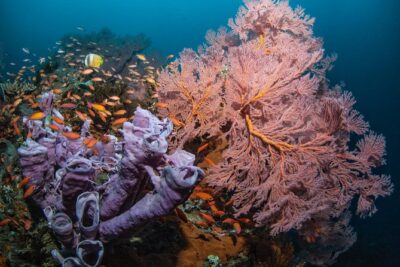
2 Days Discover Scuba Diving in Nusa Lembongan – Scuba Initiation
Read our review →
Open Water Course in Tulamben – Get Certified in Bali
Read our review →
Bali Diving for Beginners: Tulamben Liberty Wreck
Read our review →
Discover Scuba Diving in Tulamben – Diving Initiation in Bali best diving sites
Read our review →
Advanced Open Water Course – Advanced Certification in Lembongan (next to Bali)
Read our review →
5 Fun Dives in Nusa Lembongan (for certified divers) – Swim with a Mola Mola
Read our review →
Padangbai Blue Lagoon Beginner’s Dive Experience
Read our review →Browse the lists this tour appears in