
Reviewed · WORKSHOPS
Pure Bali Village Experience, Cooking & Jamu Class+VIP Transfer
Bali’s jamu-making session is the unusual centerpiece here. You pick herbs from a garden, turn them into two traditional Indonesian health drinks, then cook a full Balinese lunch in an open-air kitchen. The day also brings rice planting, village walks, a traditional compound, and a hot spring.
I like the small maximum of 12 people, since you get real time at the cooking stations rather than watching from the back. I also like the mix of food, farming, music, plants, and village life. The main drawback is the long day and the roughly 30-minute downhill walk, which may not suit everyone.
In This Review
- Key points to know before booking
- A mountain village day instead of another beach outing
- The 7:30 a.m. pickup and scenic mountain drive
- Rindik music gives the morning a local opening
- Forty plants and two kinds of jamu
- Cooking lunch at Paon Bali
- Lunch tastes better when you made it
- Rice planting, animals, and stingless bees
- A 30-minute walk through the village
- A traditional compound and Asta Kosala architecture
- Belulang Hot Spring as the final stop
- Is the $89 price good value?
- Who should book this village experience?
- Practical details that make the day easier
- Should you book it?
- FAQ
- How long does the experience last?
- What time does the tour start?
- Is hotel pickup included?
- What languages are available?
- How many people can join the group?
- Is lunch included?
- Can vegetarian dietary needs be accommodated?
- Is bathing at the hot spring required?
- What happens if the weather is poor?
Key points to know before booking
- Jamu is more than a tasting: You make two herbal drinks with plants picked from a garden containing more than 40 varieties.
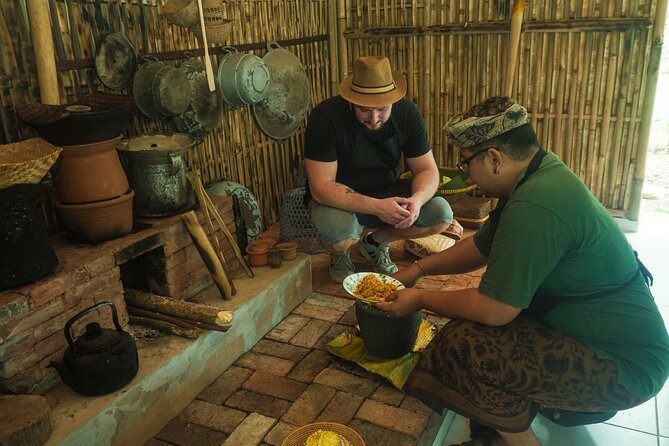
- Lunch is genuinely hands-on: Prepare nasi campur, Sate Lilit over a live bamboo grill, and Lak Lak dessert in a traditional clay pot.
- The setting is rural Batukaru: Expect mountain views, rice fields, farms, and a slower village pace away from Bali’s busy resort areas.
- The afternoon stays active: Rice planting, animal visits, a stingless bee area, and a downhill walk add physical work to the food class.
- Belulang Hot Spring closes the day: Bathing is optional, so bring what you need if you want to enter the water.
- Pickup is part of the value: An air-conditioned vehicle takes you from your hotel and returns you after about eight hours.
A mountain village day instead of another beach outing
This experience is built for people who want to see a working side of Bali. You leave your hotel around 7:30 a.m. and ride through tropical countryside toward a mountain village in the Batukaru region. The drive includes scenic stops, so the vehicle time is part of the day rather than a simple transfer.
The appeal is the range of activities. You are not spending eight hours on one cooking bench. You move from music to plants, from plants to food, and from food to farming. That variety makes the day a good fit for couples, families, and small groups who want more than a standard cooking demonstration.
The setting also matters. In the popular resort zones, it can be hard to see how food reaches the table or how village compounds are arranged. Here, rice fields, gardens, farm animals, and local homes give the cooking class a clear connection to daily life.
Still, keep your expectations practical. This is an organized experience, not an unplanned walk through a village. The day has a set program, and you will cover several activities in succession. If you prefer a quiet, slow morning with no schedule, the eight-hour format may feel full.
More private drivers in Bali:
- Bali: Full-Day Nusa Penida Highlights Tour with Transfer
★ 4.5 · 1,798 reviews - Bali: ATV Mason Jungle Buggy Adventure with Lunch & Transfer
★ 4.2 · 152 reviews - From Bali: Ijen Volcano Sunrise Hike with Transfer & All Fee
★ 4.8 · 139 reviews
The 7:30 a.m. pickup and scenic mountain drive
Hotel pickup and drop-off are included, which is useful in Bali. Reaching a mountain village on your own can take extra planning, and the air-conditioned vehicle gives you a comfortable start before the walking begins.
The exact driving time depends on where you are staying. The experience is listed for Bali, with the village located in the Batukaru mountain area, and one provided account places the journey at about an hour from Ubud. From another part of the island, it may take longer.
You will have a photo stop along the way. This is a small detail, but it helps break up the ride and gives you a first look at the rural scenery. Bring a phone or camera, but keep the morning relaxed. The main program begins after you reach the village.
Guidance is available in English or German. Other languages cost extra. If you need dietary adjustments, note them when booking. Vegetarian needs can be accommodated, but it is wise to state them in advance rather than wait until the cooking begins.
Rindik music gives the morning a local opening
The first village activity introduces you to the rindik, a traditional Balinese instrument. Rindik is made from bamboo and has a light, clear sound. You receive a chance to learn how it works rather than simply hearing a short performance.
This is a good opening because it sets the tone for the rest of the day. You are encouraged to take part, even if your musical skills begin and end with keeping a beat. The activity is not presented as a formal concert, so expect a simple introduction and some hands-on playing.
I like this kind of start because it gives cultural context without turning the morning into a lecture. It also helps small groups relax before the cooking begins.
Forty plants and two kinds of jamu
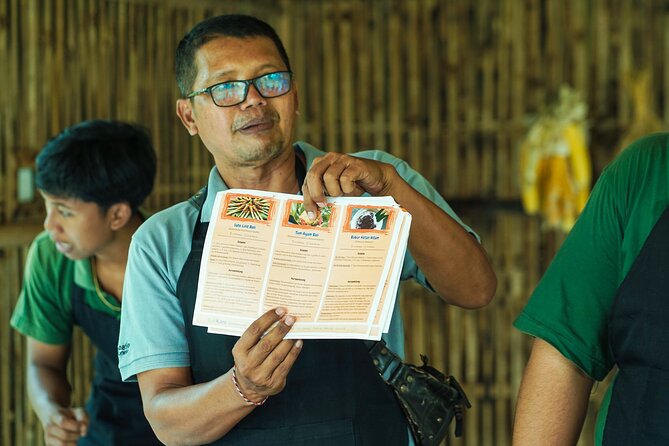
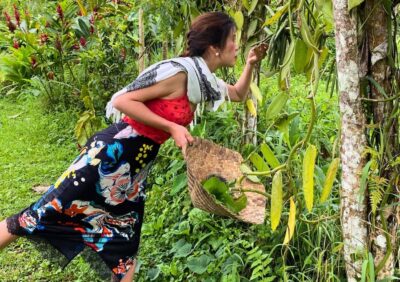
The guided herb and spice garden is one of the strongest parts of the experience. More than 40 varieties of plants grow there, and you learn which herbs and spices are used in Balinese food and traditional drinks.
The jamu session follows in a dedicated pavilion. Jamu is an Indonesian herbal drink with a long place in local health traditions. You make two types, taste them, and also receive fruit tasting as part of the session.
What makes this better than a quick drink sample is the connection between garden and cup. You see the plants, handle the ingredients, and take part in the process. For me, that makes jamu easier to remember and understand.
Do not expect every drink to suit your taste. Herbal tonics can be earthy, bitter, spicy, or sweet. That is part of the point. You are trying a traditional preparation, not ordering a fruit smoothie at a hotel bar.
This section is especially useful for anyone interested in Balinese ingredients. It also makes the tour different from cooking classes that focus only on recipes. You learn about drinks that many first-time visitors never encounter.
A few more Bali experiences worth comparing
- Ubud: Balinese Cooking Class at an Organic Farm
★ 5.0 · 1,786 reviews - From Ubud: Authentic Cooking Class in a Local Village
★ 4.9 · 1,325 reviews - Ubud: Handcrafted Silver Jewelry Workshop
★ 4.3 · 1,214 reviews - Legian Beach, Bali: Beginner or Intermediate Surf Lessons
★ 4.9 · 1,019 reviews
Cooking lunch at Paon Bali
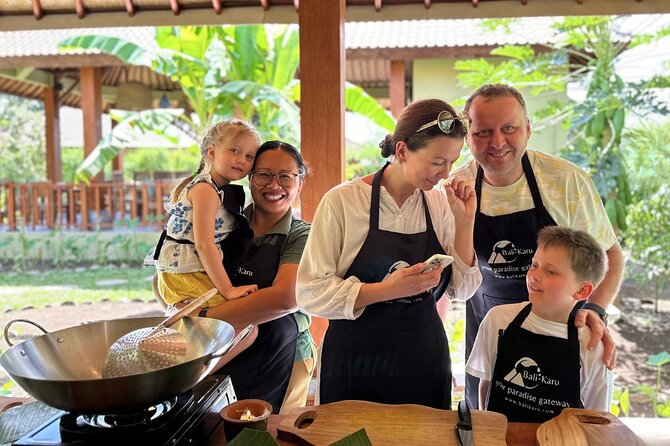
The cooking class takes place at Paon Bali, an open-air Balinese kitchen. You work with a chef and prepare an authentic meal before sitting down to eat what you made.
Lunch is listed as nasi campur tumping with dessert. Nasi campur means rice served with an assortment of side dishes, so the meal lets you work with several flavors and textures rather than one single recipe.
The liveliest station is the bamboo grill, where you prepare Sate Lilit. This Balinese specialty uses seasoned mixture shaped around a skewer, creating a hands-on task that works well in a small group. It is also the sort of dish that benefits from guidance, since shaping and grilling are easier when someone shows you the local method.
Dessert is Lak Lak, made with a traditional clay pot. That detail gives the class a strong sense of place. You are not just reproducing a recipe with modern equipment. You get a look at older cooking tools and methods still connected to Balinese food.
The open-air setting means you should be ready for heat, cooking smoke, and the ordinary sounds of a rural property. That is part of the experience, but it may be less comfortable than a cool indoor kitchen. Wear light clothing and shoes that you do not mind using around a farm and cooking area.
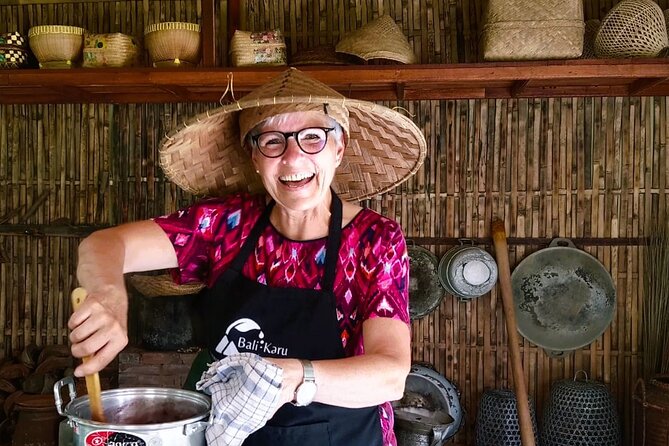
The food receives some of the strongest praise in the supplied comments. The preparation is described as fun, educational, and delicious, with special appreciation for the friendly staff and the attention given to each part of the meal. The practical takeaway is simple: you should expect to participate, not merely watch a chef work.
Lunch tastes better when you made it
After cooking, you sit down to eat the meal you prepared. This is not a restaurant lunch added between activities. The food is the result of the morning’s work, which gives the meal more meaning and makes it a natural pause before the afternoon walk.
You also get time to enjoy the quiet of the village and the surrounding nature. The schedule does not suggest a rushed buffet stop. Still, the full day includes several afternoon activities, so lunch is a rest break rather than the end of the program.
Drinks and personal expenses are not included. Plan to pay separately for anything beyond the stated meal and tastings. Tips are also not included.
Rice planting, animals, and stingless bees
After lunch, you help a farmer plant rice. This is a short activity, but it changes your view of the fields. Rice is not simply a scenic green patch beside the road. It demands labor, timing, water, and repeated care.
Expect muddy or wet conditions depending on the field and weather. The supplied details do not specify clothing or equipment, so practical footwear and clothes that can handle dirt are sensible choices.
The visit to Balikaru farm adds more variety. You may meet farm animals and see Trigona stingless bee hives. The bees are interesting because they allow you to learn about a small form of farming without the same concern associated with handling stinging honeybees.
The program also lists possible encounters with a cow, stingless bees, and other hands-on village tasks. Some activities may depend on timing and conditions. Think of them as part of the farm visit rather than guaranteed private demonstrations with every animal.
This afternoon portion is valuable because it connects the meal to the land. You have already used herbs and spices, cooked rice-based food, and now get a simple look at agricultural work.
A 30-minute walk through the village
The route includes soft trekking for about 30 minutes downhill. You walk through the village and see mountain views, rice fields, and local homes. The walk is not described as a demanding hike, but downhill paths can still be uneven, slippery, or tiring in wet weather.
Wear sturdy, comfortable shoes. Sandals may be fine for some people, but they are not the safest choice for a farm walk or damp village path. Bring water, even though the exact drink arrangements are not specified.
The walk is one of the best ways to slow the day down. A vehicle can show you the countryside, but walking lets you notice smaller details and gives you a chance to chat with local people. The return transfer also means you do not have to walk back uphill for the full route.
If you have limited mobility, ask before booking. The activity includes walking, rice planting, and a village route, and the data does not promise a fully step-free experience. Service animals are allowed.
A traditional compound and Asta Kosala architecture
The village visit includes a traditional Balinese house compound. You learn about Asta Kosala architecture, a system influenced by Balinese Feng Shui that guides the arrangement and design of a home.
This stop gives useful context to the buildings around you. Balinese compounds are not simply collections of pretty walls and ornate gates. Their layout reflects ideas about family life, sacred space, orientation, and the relationship between buildings.
I would give this section your full attention, especially if you have already seen temples and ceremonial gates elsewhere in Bali. It helps you understand the domestic side of Balinese design, not only the grand public version presented in major tourist sites.
The visit is cultural and educational, so dress respectfully. The supplied information does not state a specific dress code, but modest clothing is a sensible choice for a traditional home and a sacred region.
Belulang Hot Spring as the final stop
The day ends at Belulang Hot Spring. You can choose to bathe, making this a useful finish after cooking and walking. If you do not want to enter the water, the stop still provides a quieter close to the day.
Bring a swimsuit, towel, and a change of clothes if you plan to bathe. These items are not listed as included, and the experience does not specify towel service or changing facilities.
Some past experiences connected with this village day also included a purification ceremony. That is not stated as a standard inclusion in the core program, so do not book solely expecting a ceremony. Ask the provider if that spiritual element matters to you.
The hot spring is a fitting last stop because it gives you time to rest. The morning is social and practical, while the afternoon includes walking and farm work. A warm soak can help the day finish at a calmer pace.
Is the $89 price good value?
At $89 per person, the price is reasonable if you want a full-day package rather than a short cooking class. You receive hotel transport, a guide, scenic stops, the rindik lesson, the garden tour, two jamu preparations, fruit tasting, a cooking class, lunch, rice planting, a farm visit, a traditional compound visit, and the hot spring stop.
The included air-conditioned vehicle adds real value, especially for a mountain destination. Paying separately for a driver could make a self-arranged day less convenient, and you would still need to organize the cooking class and village activities.
The small group limit of 12 is another reason the cost makes sense. You get a better chance to handle ingredients, ask questions, and take part at the grill or clay pot. Group discounts may be available, which could help families or friends traveling together.
The price does not cover tips, drinks, or personal spending. Other languages beyond English and German cost extra. You also need to account for the early start and a full eight-hour commitment.
The best value comes if you take part in everything. If you only want to cook and would skip the farm walk, rice planting, and hot spring, a shorter class may suit you better.
Who should book this village experience?
I would recommend it most strongly to you if you want:
- A hands-on cooking class with a complete meal
- A first introduction to jamu and Balinese herbs
- Rural scenery near the Batukaru mountain area
- A small group rather than a large coach outing
- Hotel pickup and a planned full-day schedule
- Activities suitable for families who enjoy making and doing things together
- A cultural experience that includes homes, farms, food, and music
It is less suitable if you dislike walking, muddy farm work, early starts, or group activities. It may also feel too busy if you want a single-focus cooking lesson with lots of free time.
English is important for the standard experience unless you pay for another language. The available information specifically notes that participants should be able to speak and understand at least English for the activity.
Practical details that make the day easier
Book at least a day ahead if your plans may change. Free cancellation is available until 24 hours before the local start time, but changes or cancellations inside that period are not accepted for a refund. Poor weather can lead to a new date or a full refund.
Wear clothes that work for cooking, farming, and a possible hot spring visit. Closed or secure walking shoes are the safest choice. Pack sun protection, water, a swimsuit, and a change of clothes.
The experience is capped at 12 people and begins at 7:30 a.m. Confirmation is provided at booking. A farewell gift is included, and a personal cooking class certificate is sent by email after the day.
The program is offered with an English or German-speaking guide. Vegetarian dietary needs can be accommodated when noted in the special requirements section at booking.
Should you book it?
Book this if you want Bali to be more than beaches, temples, and restaurant meals. The strongest parts are the jamu workshop, the lively cooking class, the food you prepare yourself, and the chance to connect the meal with gardens and rice fields.
You should also be comfortable with a long scheduled day, a downhill village walk, farm work, and an optional hot spring visit. At $89, the experience offers good value for a small group because transport and lunch are included, but it is best for active participants who want to join each part of the day.
If that sounds like your kind of Bali, this is a smart way to spend one full day in the Batukaru region.
FAQ
How long does the experience last?
The experience lasts approximately eight hours.
What time does the tour start?
Hotel pickup begins at 7:30 a.m.
Is hotel pickup included?
Yes. Pickup and drop-off are offered, and transportation is provided in an air-conditioned vehicle.
What languages are available?
The standard guide language is English or German. Other languages are available for a surcharge.
How many people can join the group?
The maximum group size is 12 people.
Is lunch included?
Yes. You prepare and eat a Balinese lunch of nasi campur tumping with dessert during the cooking class.
Can vegetarian dietary needs be accommodated?
Yes. Vegetarian needs can be accommodated if you provide the details when booking.
Is bathing at the hot spring required?
No. Bathing at Belulang Hot Spring is optional.
What happens if the weather is poor?
The experience requires good weather. If it is canceled because of weather, you will be offered another date or a full refund.
Recently added around Bali
- Bali: Private Lempuyang Temple, Water Temple & Rice Terraces★ 5.0 · 3 reviews
- Bali: Mountain Bike Tour and River Rafting with Lunch★ 5.0 · 3 reviews
- Bali: Sidemen Waterfall tour and temple purification★ 5.0 · 3 reviews
- Bali: Padangbai Blue Lagoon Scuba Diving Private Tour★ 5.0 · 3 reviews
- Bali’s Mystical Jungle Trek & Hidden Waterfall Adventure★ 4.3 · 3 reviews
- From Bali: Mount Bromo & Ijen volcanic private tour★ 5.0 · 3 reviews
- Bali: 7 Day Solo Traveler’s Yoga Retreat In Ubud★ 5.0 · 3 reviews
- Bali: Photo Shoot with a Private Vacation Photographer★ 5.0 · 3 reviews
Workshops, compared.

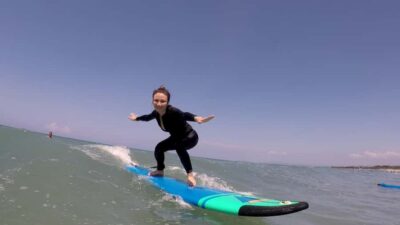
Legian Beach, Bali: Beginner or Intermediate Surf Lessons
Read our review →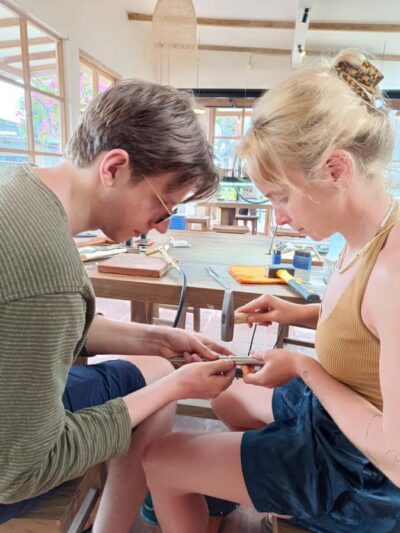
Canggu Jewelry Making Class with Creative Studio Vibes
Read our review →
Canggu & Uluwatu Puppy Yoga Class & Refreshing Drinks
Read our review →
Beginner & Intermediate Surf Lesson with Equipment
Read our review →
Browse the lists this tour appears in