
Reviewed · BALINESE COOKING CLASSES
Authentic Balinese Cooking Classes
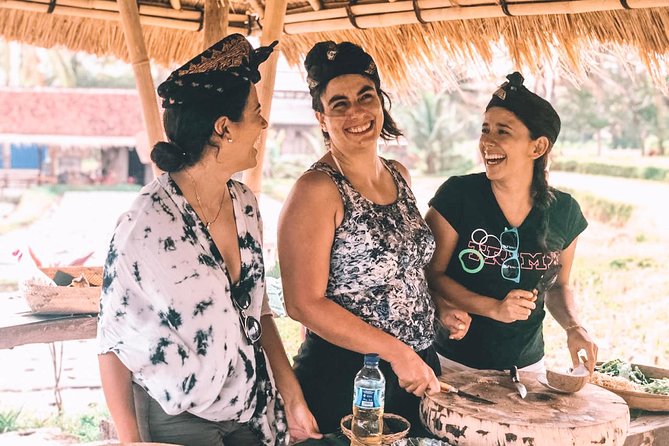
Bali’s best cooking lessons begin before the stove. Here, a morning class takes you to a local market to choose produce, learn Balinese bargaining, and understand the ingredients behind satay, nasi goreng, and black rice pudding. I like the hands-on cooking stations and the chance to work with local food rather than simply watch a demonstration. I also like the small group size, capped at 10 people, which should give you useful time with the chef.
The main drawback is distance. The class is in Bakas, near Klungkung, rather than in Jimbaran itself, and one account describes a drive of about 1.5 hours each way. A poor pickup can also damage the day, so confirm your pickup time and address carefully. For the best market experience, choose the morning departure.
In This Review
- Key points to know before booking
- A market morning that gives the food meaning
- The long ride to Bakas
- Rice fields, rainforest views, and a rural setting
- Your own station, tools, and recipes
- Satay, nasi goreng, and black rice pudding
- How the $65 price measures up
- Who will enjoy this class most
- Timing, group size, and practical planning
- Should you book Bakas Cooking Class?
- FAQ
- How long does the cooking class last?
- Is a market tour included?
- Where can pickup be arranged?
- How many people can join the class?
- What dishes will I cook?
- Can I cancel for a full refund?
Key points to know before booking
- Morning market visit: Shop for meat, fish, produce, and unusual ingredients while learning how locals select fresh food.
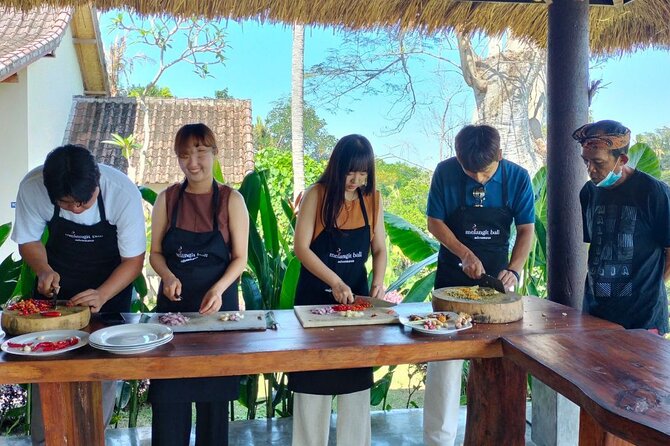
- A real cooking session: You receive your own station and utensils, then prepare every dish yourself in English.
- Classic Balinese menu: The food includes satay, nasi goreng, and black rice pudding.
- Small group setting: The class accepts a maximum of 10 participants, helping you get personal guidance.
- Scenic rural setting: The cooking location has been praised for rice-field and rainforest views.
- Hotel pickup: Round-trip transfers are offered from Ubud, Denpasar, Benoa Harbor, and much of south Bali.
A market morning that gives the food meaning
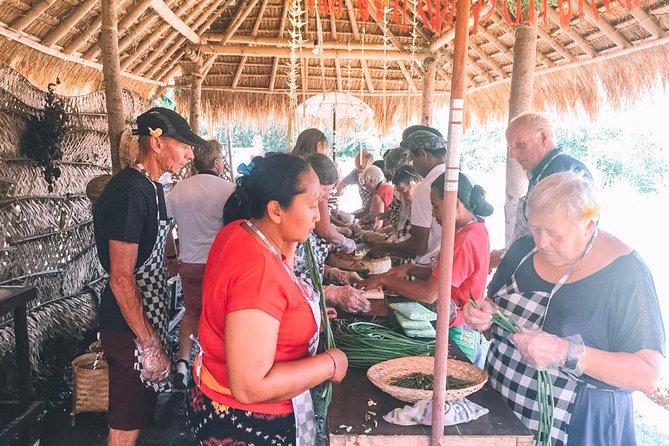
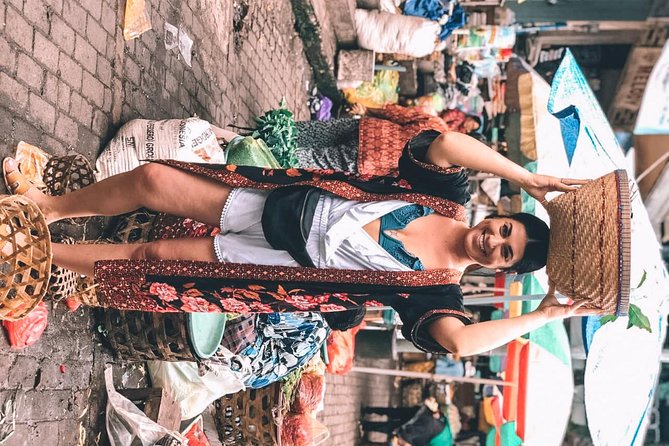
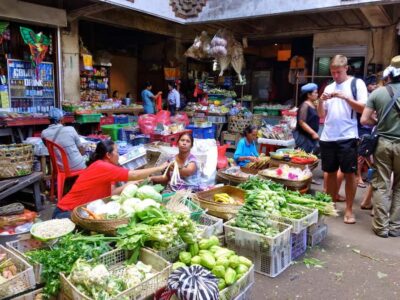
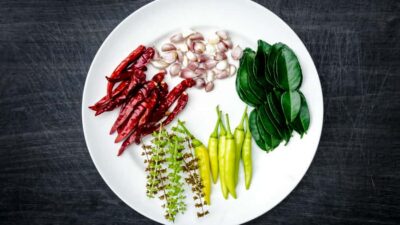
The most useful part of this class may happen before you touch a knife. Morning bookings begin with a visit to a local food market, where the chef explains Balinese tastes, customs, meats, fish, and produce.
This matters because many cooking classes hand you a neat tray of ingredients with no sense of where they came from. Here, you get to see the buying stage. You learn what to select, what to reject, and how freshness is judged in a traditional market. The bargaining lesson is also practical. You are not just learning a recipe. You are getting a small lesson in how food shopping works in Bali.
Markets open early in Bali, so the morning schedule makes sense. Go early if you want the fullest market experience. One important caution: the market visit is tied to morning bookings. If you choose a later start, do not assume the market tour is included.
The market is also where the day’s local character is strongest. The food itself is familiar enough to enjoy, but the shopping adds context. You can ask about ingredients while they are still part of the normal buying process, rather than seeing them only after they have been washed and arranged at the class.
More Balinese cooking classes in Jimbaran:
- Ubud: Balinese Cooking Class at an Organic Farm
★ 5.0 · 1,786 reviews - From Ubud: Authentic Cooking Class in a Local Village
★ 4.9 · 1,325 reviews - Seminyak: Balinese Cooking Class & Market Tour
★ 4.9 · 458 reviews
The long ride to Bakas
The cooking school is described as being in Bakas, Klungkung, while the experience is marketed with Jimbaran pickup and broad coverage across Bali’s south and Ubud. That distinction matters when you plan your day.
Pickup is offered from Seminyak, Legian, Kuta, Nusa Dua, Jimbaran, Sanur, Ubud, Denpasar, and Benoa Harbor. You receive round-trip transportation from the listed areas, which removes the hassle of finding the rural cooking location yourself. For many visitors, that is a serious part of the value.
The tradeoff is time on the road. One account describes a 1.5-hour drive to the site. Actual travel time will depend on your pickup point and traffic, but you should not think of this as a quick class near your hotel. It is a full-day outing of about six hours, with transportation taking a meaningful share of the day.
I would treat the ride as part of the decision, not a minor detail. If you are staying in Ubud or east of Denpasar, the location may fit more naturally into your day. From the western side of south Bali, the drive may feel long. Confirm the pickup time the evening before, and keep your phone available. A late pickup can create real problems when the class has a fixed schedule.
There was also a report of a delayed pickup and a market that was partly closed. That does not define every departure, but it gives you a useful planning tip: ask the operator to confirm both the pickup time and the morning market stop. Clear communication is especially important when your day depends on a long transfer.
Rice fields, rainforest views, and a rural setting
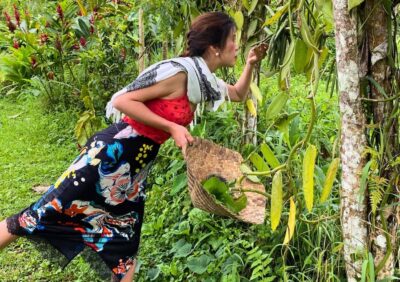
The cooking location is one of the strongest reasons to accept the distance. The setting has been praised for views of rice fields and rainforest, and one account describes a visit to rice fields near the class location with useful information about the area.
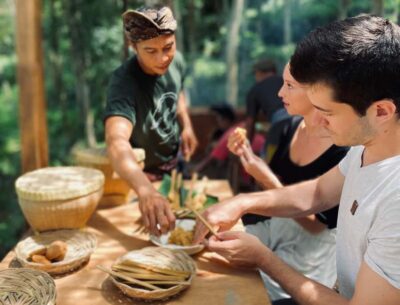
The scenery changes the feel of the lesson. You are not cooking in a generic indoor studio with traffic outside the window. You are in a rural part of Bali, where the surroundings help connect the food to the island’s farming life.
Keep your expectations sensible. The available information does not promise a formal sightseeing tour or a long walk through the countryside. The rice fields and rainforest views are part of the setting, and the program may include a look at the nearby fields, but cooking remains the main event.
That balance suits me. You get a sense of rural Bali without turning the day into a rushed checklist of stops. The scenic setting also gives companions who are less interested in cooking something else to enjoy.
Your own station, tools, and recipes
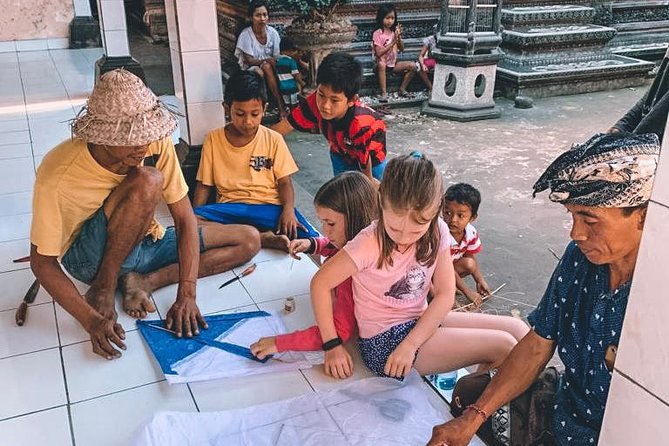
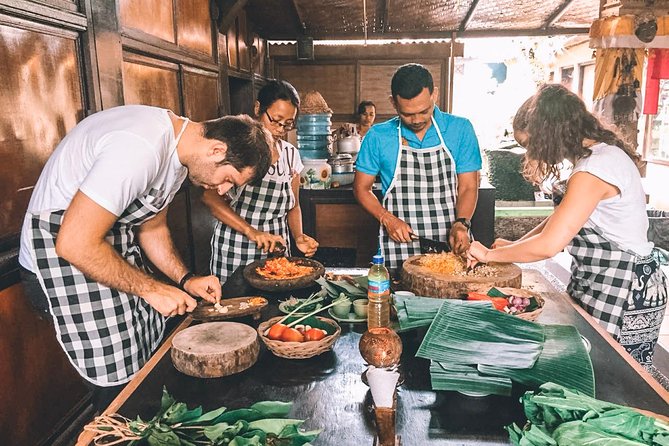
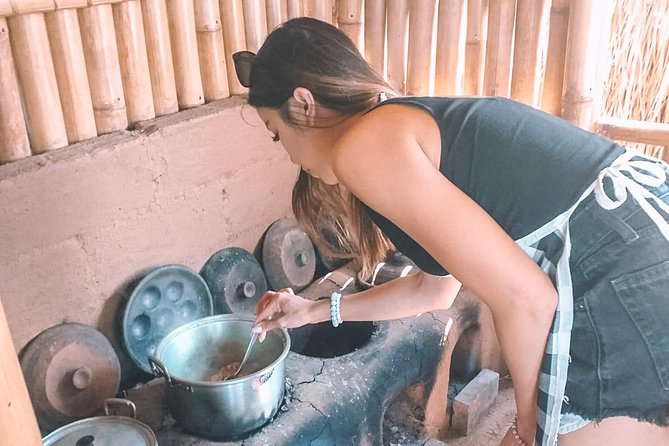
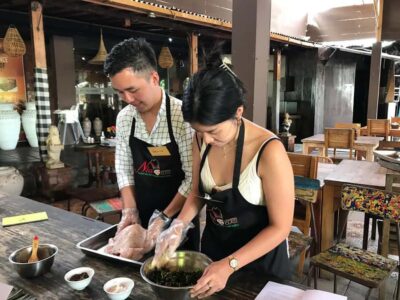
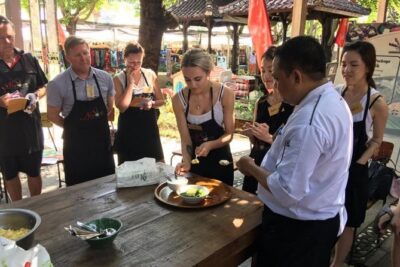
This is a proper participation class rather than a chef cooking while you watch. The instruction is conducted in English, and each participant receives a cooking station and utensils. You prepare and cook the dishes yourself, with the chef and staff available to guide you.
That setup is important for beginners. A demonstration can look easy because the instructor has already done the difficult chopping, grinding, and timing. At your own station, you see where the work takes time. You can ask why an ingredient is used, how a mixture should look, or when a dish is ready.
The class is designed around a small maximum of 10 participants. That is not the same as a private class for every booking, but it is small enough to offer a better chance of individual help than a large group demonstration. If you are unsure with a knife, unfamiliar with local ingredients, or simply want to ask many questions, this limit adds value.
The teaching team is described as skilled, friendly, and able to explain the food in a fun atmosphere. Gede is named in the responses, and one account says Gede and his wife handled the hotel pickup. The operator is Bakas Cooking Class. You should expect English-language instruction, but the specific chef leading your class may vary.
The recipes are also a practical souvenir. You are not only eating lunch and then moving on. You can take the recipes home and try to recreate the dishes for friends. That gives the $65 price more staying power than a meal alone.
A few more Jimbaran experiences worth comparing
- Surfnesia Surf Lesson and Guiding
★ 5.0 · 46 reviews - Private Surf Lessons in Padang Padang – Uluwatu – Bali
★ 4.0 · 30 reviews - Uluwatu: Surf Lessons Beginner
★ 5.0 · 3 reviews - Ubud: Handcrafted Silver Jewelry Workshop
★ 4.3 · 1,214 reviews
Satay, nasi goreng, and black rice pudding
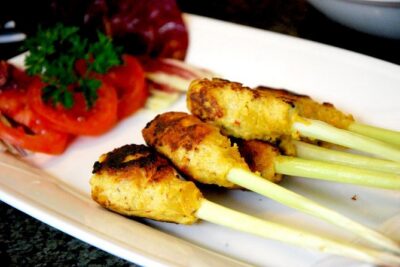
The menu includes three well-known Balinese treats: satay, nasi goreng, and black rice pudding. Together, they cover savory grilling, seasoned rice, and a sweet finish.
Satay gives you a chance to work with skewered food and the seasoning that makes it distinct. Nasi goreng is familiar to many visitors, but preparing it in a Balinese class helps you understand how local ingredients and flavor choices shape the dish. Black rice pudding provides a different texture and a sweet end to the meal.
The supplied information does not give a full menu or promise exact recipes beyond these dishes. You should think of them as the named highlights, not a guarantee of every item you may cook. Menus can also depend on available market produce.
The best part is eating what you prepared. A shared meal after the work makes the class feel complete, and you can judge the results while the instructions are still fresh. If you mainly want to eat Balinese food without cooking, this is not the efficient choice. You are paying for the process as much as the plate.
How the $65 price measures up
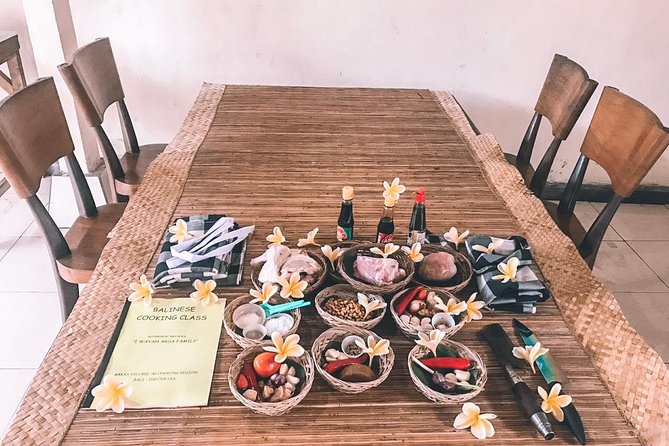
At $65, the experience is not a cheap meal, but it includes much more than food. The price covers an approximately six-hour activity, market instruction for morning bookings, hands-on cooking, recipes, and round-trip transfers from a long list of pickup areas.
Transport can make a major difference in Bali. A private taxi to a rural location, especially with a return journey, can add up quickly. The included pickup is most valuable if you are staying in Ubud or one of the listed south Bali areas and would otherwise need to arrange a driver for the day.
The value is weaker if you are close to a simple cooking school and only want a short lesson. It is also less attractive if you do not enjoy group activities or have no interest in shopping for ingredients. The class asks you to give up about six hours, plus the possible 1.5-hour drive each way, so the rural setting and market visit need to appeal to you.
I see the price as reasonable for a full experience with transport, especially for someone who wants food, local shopping, and countryside scenery in one day. The value depends heavily on pickup reliability. Confirming details in advance is worth the effort.
Who will enjoy this class most
I would recommend this class to you if you want to understand Balinese food rather than simply order it. It works especially well for:
- Couples looking for a food-focused day outside the main resort areas.
- Families who want a structured, hands-on activity.
- Beginners who prefer personal instruction at their own station.
- Home cooks who want recipes to use after returning home.
- Visitors staying in Ubud or south Bali who value included transportation.
- Anyone interested in markets, local produce, and rural scenery.
It may not suit you if your Bali schedule is tight, your hotel is far from the pickup zone, or you want a quick class close to the beach. The long transfer is the central compromise.
The experience also suits mixed-interest groups reasonably well. The cook in your party gets the hands-on lesson, while others can enjoy the market, rice-field surroundings, and final meal. Still, everyone should be comfortable spending much of the day on the activity.
Timing, group size, and practical planning
The stated operating hours run daily from 7:00 AM to 3:00 PM, and you can choose a start time within the available schedule. The morning option is the one to favor if the market is important to you.
Allow the full six hours and avoid booking a tightly timed evening commitment. Traffic and pickup delays are possible, and the distance to Bakas means you should leave room in your plans.
The maximum group size is 10 people. Confirmation is provided when you book, and the location is near public transportation, though the included transfer is likely the simpler choice for most visitors coming from the listed areas.
Cancellation is free if you cancel at least 24 hours before the local start time. Changes or cancellations inside that window are not accepted for a refund. This is worth noting before you commit a full day to the class.
Should you book Bakas Cooking Class?
Book it if you want a full food day, not just a recipe lesson. The market visit, bargaining practice, personal cooking station, named Balinese dishes, rural views, and included transfers make this a well-rounded choice at $65.
Think carefully if you are based far from Bakas or have only a few hours in Bali. The long drive and the need to confirm pickup details are real drawbacks. I would choose a morning departure, verify the pickup time directly, and treat the class as a countryside outing with cooking at its center.
FAQ
How long does the cooking class last?
The experience lasts approximately six hours, not including any extra time that may be needed because of pickup traffic.
Is a market tour included?
A local market tour is included for morning bookings. It covers choosing produce, local meat and fish, and Balinese bargaining.
Where can pickup be arranged?
Round-trip pickup is offered from Seminyak, Legian, Kuta, Nusa Dua, Jimbaran, Sanur, Ubud, Denpasar, and Benoa Harbor.
How many people can join the class?
The activity has a maximum of 10 participants.
What dishes will I cook?
The named dishes include satay, nasi goreng, and black rice pudding. The class also provides recipes to take home.
Can I cancel for a full refund?
Yes. You can cancel at least 24 hours before the experience start time for a full refund. Cancellations or changes made less than 24 hours before the local start time are not accepted for a refund.
Recently added around Jimbaran
- Bali: Customized Uluwatu Tour Including Transfer Hotel★ 3.9 · 3 reviews
- Cretya Ubud and Monkey Forest Sanctuary Tours★ 5.0 · 3 reviews
- Uluwatu: Surf Lessons Beginner★ 5.0 · 3 reviews
- LuxMe Bali Four Hands massage with Hotel Transfer★ 5.0 · 3 reviews
- Half day tour Nusa penida★ 5.0 · 3 reviews
- Full-Day Scuba Diving Experience of USAT Liberty in Tulamben★ 5.0 · 3 reviews
- Bali: Full Day All Inclusive Uluwatu Temple South Bali Tour★ 5.0 · 3 reviews
- Jimbaran: Exotic Culinary Fish and Seafood Tour★ 5.0 · 3 reviews
Balinese Cooking Classes, compared.
Browse the lists this tour appears in