
Reviewed · BALINESE COOKING CLASSES
Spice Garden, Jamu & Cooking Class in Bali Village
The best part of this Balikaru experience is that cooking is only one piece of the day. You walk through rice terraces, pick herbs, learn a bamboo instrument, make two kinds of Jamu, and cook lunch over an open fire with a village family near Mt. Batukaru. I like the hands-on village setting and the chance to see food traditions connected to farms, animals, and family life.
I also like the range of activities: you can feed the cow Manis, visit stingless-bee hives, help plant rice, and finish with an optional hot-spring bath. The main consideration is the pace and terrain. A 30-minute downhill walk, outdoor cooking, and Bali’s weather may not suit everyone, and the $55 price is best value if you plan to take part in the whole morning rather than only cook.
In This Review
- Key Points
- A Morning Near Mt. Batukaru, Not Just a Cooking Class
- Starting With Fruit, Herbs, and a Garden Walk
- Learning Rindik Before the Cooking Begins
- Making Two Kinds of Jamu
- Cooking Lunch in Paon Bali
- Farm Animals, Bees, and Rice Fields
- A 30-Minute Walk Through the Mountain Village
- Optional Bath at Belulang Hot Spring
- What the $55 Price Covers
- Who Will Enjoy This Best
- Practical Details Before You Book
- Should You Book the Balikaru Village Class?
- FAQ
- Where does the experience start?
- What time does the activity begin?
- How long does the experience last?
- Where does the activity end?
- What food will I prepare?
- Is lunch included?
- Is an English-speaking guide included?
- Can vegetarian dietary needs be accommodated?
- Is the activity suitable for a larger group?
- What happens if the weather is poor?
Key Points
- Cook a full Balinese meal: Prepare Nasi Campur Tumping, Sate Lilit, Jamu, and Lak Lak in an open-air kitchen.
- Walk through a working village: Visit rice terraces, meet farmers, gather herbs, and help with rice planting.
- Learn local traditions: Try the Rindik, a bamboo instrument traditionally played by farmers.
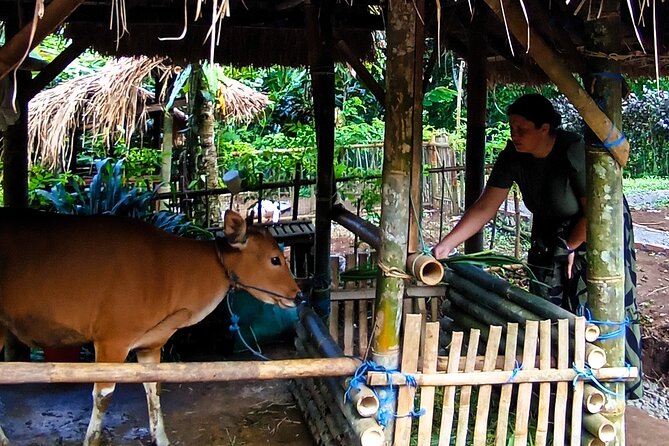
- Meet the farm animals: Visit Balikaru farm, feed Manis the cow, and see Trigona stingless-bee hives.
- Add a hot-spring stop: Belulang Hot Spring is included as an optional bath near the end.
- Keep the group small: A maximum of 12 people allows more direct help during cooking.
A Morning Near Mt. Batukaru, Not Just a Cooking Class
This experience begins at 9:00 a.m. at BalikaruBelulang Bali in Mengesta, in the Tabanan region. You return to the same meeting point after roughly four and a half hours, so you should expect to finish around early afternoon.
I see this as a good choice if you want your food lesson tied to the place where the ingredients grow. The setting near Mt. Batukaru gives the morning a rural feel, with rice terraces, gardens, farm animals, and the sounds of nature around the open kitchen.
The host families come from the surrounding village and share their customs as part of the day. That matters because you are not simply following a recipe in a cooking school built for visitors. You are spending time in a community that uses these foods, plants, tools, and methods as part of daily life.
The group limit of 12 is another useful detail. It is small enough for an English-speaking guide and chef to offer hands-on help, though the exact amount of individual attention can still depend on the group size and how many people need assistance at once.
More Balinese cooking classes in Bali:
- Ubud: Balinese Cooking Class at an Organic Farm
★ 5.0 · 1,786 reviews - From Ubud: Authentic Cooking Class in a Local Village
★ 4.9 · 1,325 reviews - Seminyak: Balinese Cooking Class & Market Tour
★ 4.9 · 458 reviews
Starting With Fruit, Herbs, and a Garden Walk
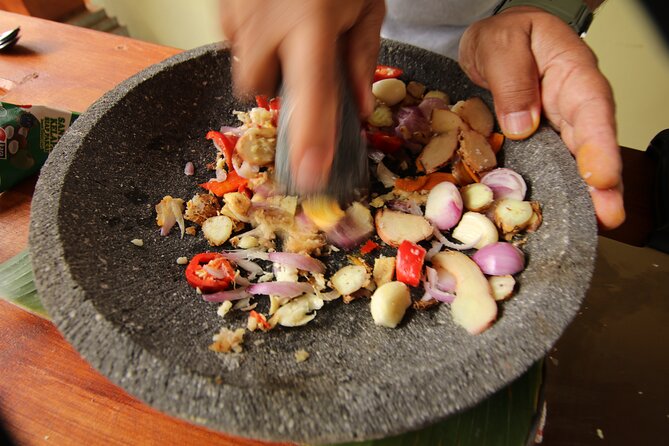
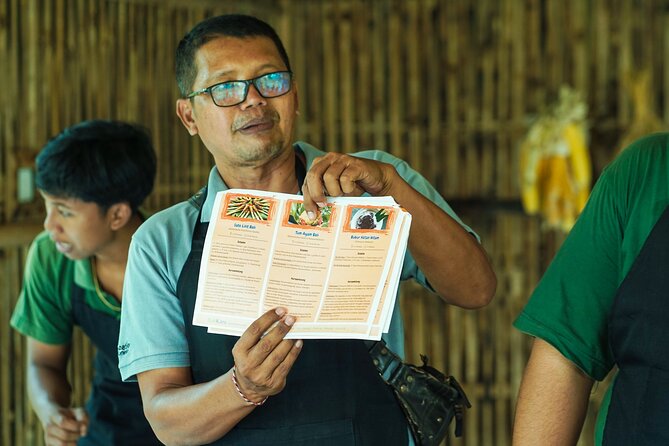
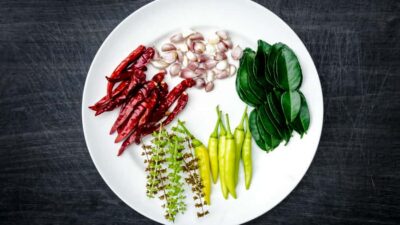
On arrival, you receive a welcome drink before taking a guided walk through the herb and spice garden. The garden visit gives you a useful introduction to Balinese cooking before you sit down to prepare food.
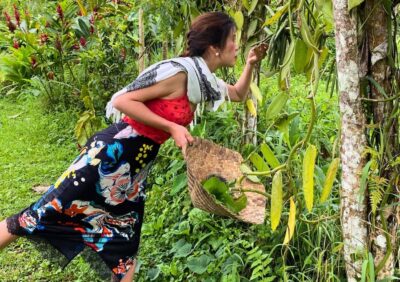
You can pick fresh herbs and see ingredients in their growing setting rather than meeting them first as chopped items on a cutting board. The welcome tasting may include fruit such as mangosteen, which gives you an early taste of local produce before the cooking begins.
I like this opening because it slows the morning down. You are not rushed straight into a recipe. Instead, you begin by connecting plants, flavor, and place. The guide can also explain how herbs and spices are used outside the kitchen, including their role in traditional health drinks.
Vegetarian dietary needs can be accommodated, but you should state them when booking. The available information does not spell out every possible menu substitution, so it is wise to give clear details about allergies or other restrictions in advance.
Learning Rindik Before the Cooking Begins
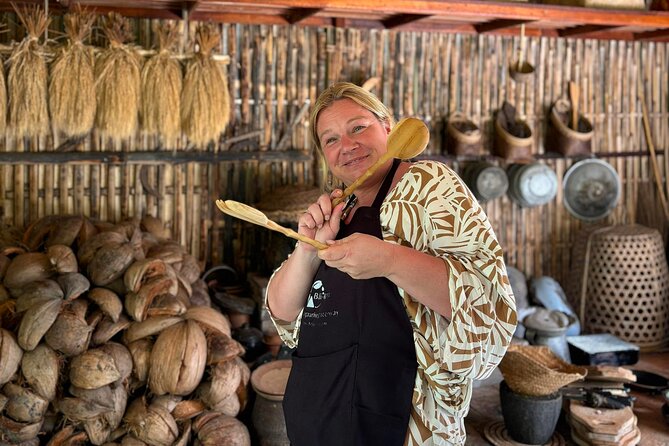
Before the meal preparation, you learn to play the Rindik, a traditional bamboo instrument associated with Balinese farmers. This is a short cultural activity, not a full music lesson, but it adds a pleasant change of pace before the cooking work starts.
The Rindik helps show how ordinary materials such as bamboo can serve practical, artistic, and social purposes in village life. You get a small taste of local music without needing previous experience.
I like that this is included because it keeps the class from becoming a long kitchen session. The morning has several short chapters, and the instrument lesson gives you a chance to listen, try something new, and interact with the hosts before handling the ingredients.
Making Two Kinds of Jamu
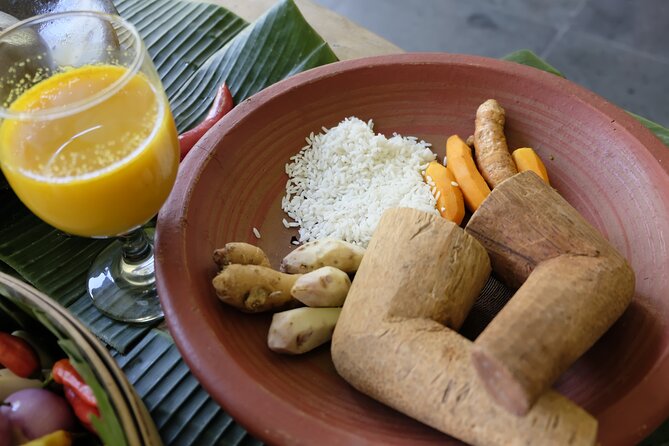
Jamu is an Indonesian herbal drink with a long tradition of home preparation. During the class, you prepare two kinds of Jamu, followed by Jamu and fruit tasting.
This part should appeal to anyone interested in the way food and traditional wellness overlap in Indonesia. You learn that the garden is not only a source of seasoning. Plants can also become drinks that families have prepared and used for generations.
The exact recipes are not specified, so you should not expect a fixed list of ingredients before arrival. What is clear is that the activity is practical. You do not merely watch a guide mix the drinks. You take part in their production and taste the results.
I would pay close attention here and take notes if you want to recreate the drinks at home. A recipe book is sent by email after the class, which makes the cooking lesson more useful after your Bali visit.
A few more Bali experiences worth comparing
- Ubud: Handcrafted Silver Jewelry Workshop
★ 4.3 · 1,214 reviews - Legian Beach, Bali: Beginner or Intermediate Surf Lessons
★ 4.9 · 1,019 reviews - Bali: Canggu & Uluwatu Puppy Yoga Class & Refreshing Drinks
★ 4.8 · 891 reviews - Bali: Seminyak Jewelry Making Class with Gold Plating Option
★ 4.8 · 436 reviews
Cooking Lunch in Paon Bali
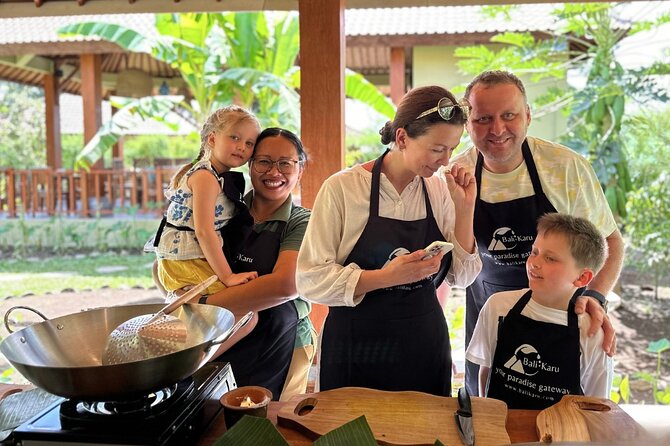
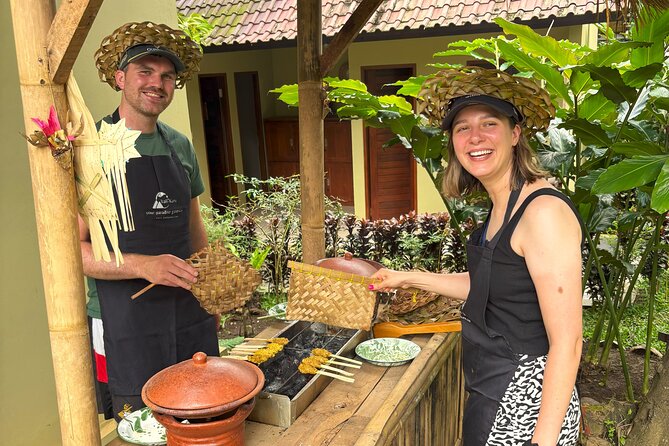
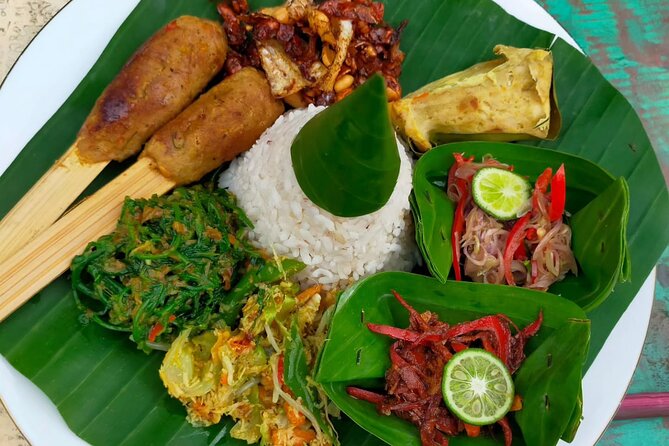
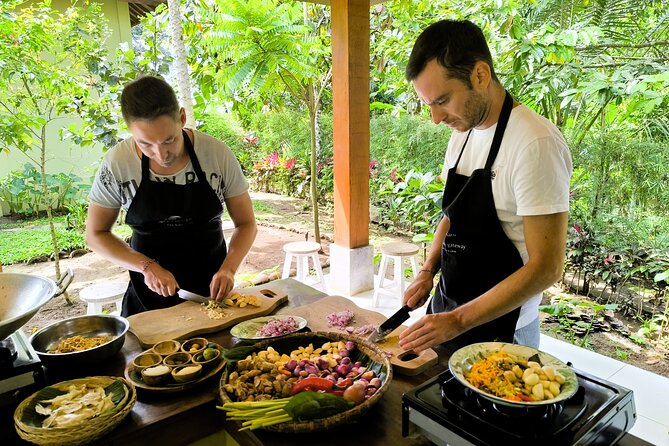
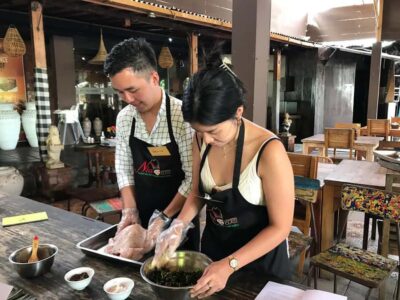
The main cooking session takes place in Paon Bali, the open-air kitchen. You prepare a full Balinese meal called Nasi Campur Tumping, along with dessert.
Cooking over an open bamboo fire gives the lesson a more traditional feel than using a modern indoor range. It also means you should expect an outdoor work area and the practical effects of cooking with heat, smoke, and changing weather.
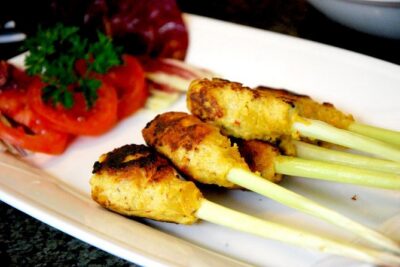
The cooking covers a broad range of food. You prepare Sate Lilit, a Balinese dish of seasoned mixture shaped around skewers, and grill it at Gerobak, the live bamboo grill. You also make Lak Lak, a traditional Balinese dessert cooked in a clay pot.
This variety is one of the strongest reasons to book. In one session, you work with savory dishes, grilled food, a traditional drink, and a dessert. You also see different cooking methods rather than repeating one basic technique several times.
The meal you eat is the meal you prepare. Lunch includes the Nasi Campur Tumping and dessert, so the class is not just a demonstration followed by a small sample. You should arrive hungry. One particularly useful tip is to leave room for the final meal, since the class covers several dishes and the portions may be generous.
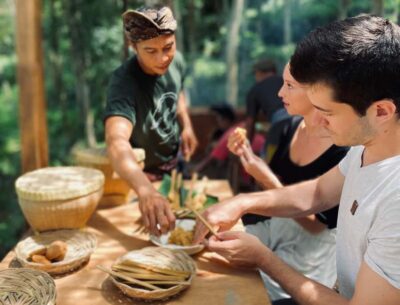
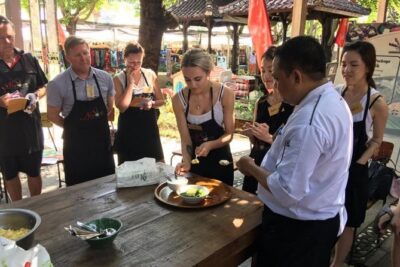
The staff provide support during the preparation. The experience is designed to be fun and social, with time for cooking, laughing, and sharing stories with the family. Still, you should expect to participate rather than sit back and photograph the process.
Farm Animals, Bees, and Rice Fields
After lunch, you visit the Balikaru farm. The stop includes animals and Trigona beehives, which contain stingless bees and their unusual honey.
The bees are a small but memorable part of the experience. You can learn about a local form of beekeeping and see how food production extends beyond crops and livestock. The honey is described as rare and healthy, but you should treat that as part of the host’s presentation rather than as a medical claim.
You may also feed Manis, the farm’s cow. That simple activity gives the farm stop a friendly, personal touch, especially for families and anyone who enjoys seeing how animals fit into village life.
The rice-field portion lets you give the farmer a helping hand with planting. It is not a full agricultural workday, but it gives you a better sense of the labor behind the rice that appears in so many Balinese meals.
I like this part because it puts the lunch in context. You have just cooked and eaten food, and now you can see some of the farming world connected to it. The value is not only the activity itself. It is the link between garden, field, kitchen, and table.
A 30-Minute Walk Through the Mountain Village
The program includes a soft trek of about 30 minutes downhill with mountain views. You also visit an authentic Balinese compound in the mountain village.
This walk is likely one of the most scenic parts of the morning, but it is also the clearest physical consideration. Downhill paths may be uneven, and the information does not promise a fully paved route. Wear secure footwear and clothing suited to walking, gardening, and outdoor cooking.
The village compound offers a look at traditional residential life. Since the visit takes place in a working mountain community, dress with respect. Beach clothing or going topless is considered offensive here. A shirt, pants, and slippers are acceptable according to the provided dress guidance, though secure walking footwear may be more practical than loose slippers for the downhill section.
The mountain views and village setting help distinguish this experience from cooking classes held in a resort. You are not only learning what goes into a dish. You are seeing the homes, fields, paths, and family spaces connected to that food.
Optional Bath at Belulang Hot Spring
Belulang Hot Spring is included as an optional bath. You can decide during the day whether you want to use it.
This flexibility is helpful because not everyone wants to bathe after cooking and walking. If you do want the bath, bring whatever personal items you need, since drinks and personal expenses are not included and no extra bathing equipment is specified.
The hot spring works well as a relaxed ending after the farm and village activities. If you prefer to keep moving or simply do not want to bathe, you can treat it as an optional stop rather than a required part of the morning.
The activity ends back at the starting point, BalikaruBelulang Bali, so plan your onward arrangements from Mengesta after the class. No transportation from a Bali hotel is included in the details provided, so confirm your own route to the meeting point before booking.
What the $55 Price Covers
At $55 per person, this is more than a basic cooking lesson. The price includes the welcome drink, garden walk, English-speaking guide, Rindik lesson, two Jamu preparations, fruit tasting, cooking instruction, lunch, dessert, farm visit, bee hives, rice planting, soft trek, village compound visit, and optional hot spring access.
The value is strongest if you want a full half-day of varied activities. A person interested only in recipes might find a shorter city cooking class more efficient. You are paying for the setting, the family connection, the farm visit, and the chance to take part in several village traditions.
An English-speaking guide is included. Other languages are available for a surcharge, but the specific languages and prices are not stated. Group discounts are offered, which may make the experience more appealing for families or small parties.
A personal cooking-class certificate and a recipe book are sent by email after the tour. The certificate is a modest extra, while the recipe book has more practical value because it gives you a way to repeat the dishes and Jamu at home.
Tips, drinks, and personal expenses are not included. The welcome drink and food tasting are part of the experience, but you should not assume that every drink consumed during the morning is covered.
Who Will Enjoy This Best
I would choose this for anyone who wants food connected to culture and agriculture. It suits couples, families, and small groups who enjoy hands-on activities and do not mind spending much of the day outdoors.
It is especially good for:
- People who want a village setting instead of a resort kitchen
- Home cooks interested in Balinese spices and traditional drinks
- Families who enjoy animals, gardens, and simple farm activities
- Visitors who want a half-day experience near Mt. Batukaru
- Vegetarians who share their dietary needs at booking
- Anyone who likes a busy morning with several short activities
I would think twice if you want a relaxed, seated class with little walking. The downhill trek, outdoor fire, farm visit, and rice planting make this more active than a standard cooking demonstration.
The group can include up to 12 people, so it is not a private class by default. If you need a private session, ask the provider what options are available rather than assuming one.
Practical Details Before You Book
The meeting point is BalikaruBelulang Bali, Mengesta, in the Tabanan region. The start time is 9:00 a.m., and the activity returns to the same meeting point after about four and a half hours.
Confirmation is received at booking. Service animals are allowed. Dietary requirements, including vegetarian needs, should be written in the special requirements section when you reserve.
Dress modestly for the traditional village setting. Shirts and pants are suitable, while topless clothing and beachwear are not acceptable. For comfort, I would choose clothing that can handle outdoor cooking and a pair of shoes with a secure grip for the downhill walk.
The experience requires good weather. If poor weather forces cancellation, you are offered another date or a full refund. You can cancel for a full refund up to 24 hours before the local start time. Cancellations or changes made less than 24 hours in advance are not accepted for a refund.
Should You Book the Balikaru Village Class?
Book it if you want a full cultural morning, not simply a recipe lesson. The strongest parts are the open-air cooking, the Jamu preparation, the warm family setting, and the way the farm and rice terraces explain where the meal begins.
The $55 cost is fair for the amount included, especially if you use the garden, farm, village walk, cooking class, lunch, and hot spring option as one connected experience. I would skip it only if you dislike outdoor conditions, have difficulty with a downhill walk, or prefer a short and tightly focused cooking lesson.
For most food-minded visitors who want to see a quieter side of Bali, this offers a useful mix of cooking, village life, nature, and personal contact. Arrive hungry, dress respectfully, allow extra time for the walk, and tell the host about dietary needs before the day begins.
FAQ
Where does the experience start?
It starts at BalikaruBelulang Bali, Mengesta, in the Tabanan region of Bali.
What time does the activity begin?
The start time is 9:00 a.m.
How long does the experience last?
It lasts approximately 4 hours and 30 minutes.
Where does the activity end?
It ends back at the meeting point.
What food will I prepare?
You prepare Nasi Campur Tumping, Sate Lilit, Lak Lak dessert, and two kinds of Jamu.
Is lunch included?
Yes. Lunch and dessert prepared during the cooking class are included.
Is an English-speaking guide included?
Yes. An English-speaking guide is included. Other languages may be available for an additional charge.
Can vegetarian dietary needs be accommodated?
Yes. Vegetarian needs can be accommodated, and you should provide dietary information when booking.
Is the activity suitable for a larger group?
The maximum group size is 12 people. Group discounts are available.
What happens if the weather is poor?
The experience requires good weather. If it is canceled because of poor weather, you will be offered another date or a full refund.
Recently added around Bali
- Bali: Private Lempuyang Temple, Water Temple & Rice Terraces★ 5.0 · 3 reviews
- Bali: Mountain Bike Tour and River Rafting with Lunch★ 5.0 · 3 reviews
- Bali: Sidemen Waterfall tour and temple purification★ 5.0 · 3 reviews
- Bali: Padangbai Blue Lagoon Scuba Diving Private Tour★ 5.0 · 3 reviews
- Bali’s Mystical Jungle Trek & Hidden Waterfall Adventure★ 4.3 · 3 reviews
- From Bali: Mount Bromo & Ijen volcanic private tour★ 5.0 · 3 reviews
- Bali: 7 Day Solo Traveler’s Yoga Retreat In Ubud★ 5.0 · 3 reviews
- Bali: Photo Shoot with a Private Vacation Photographer★ 5.0 · 3 reviews
Balinese Cooking Classes, compared.
Browse the lists this tour appears in